
Understandably so, there are a lot of people who want to invest as an LP in real estate deals. They have been pitched the idea of tax losses, outsized returns, and the mystique of real estate.
However, most investors should refrain from participating as an LP in real estate deals.
Even though I am a GP, I typically recommend that people not invest in our deals. Unfortunately, an LP investment is only advantageous for a small number of investors.
Side Note: I am taking a quick diversion from the depreciation series. It will take me a little while to finish the next part of the series, so I wrote a quick post to tide you over.
What is GP/LP:
LP stands for limited partner. In the context of real estate, a limited partner is a passive investor in a real estate deal. A limited partner invests money into a deal and, in return, receives some form of equity and return.
A GP is a general partner. A general partner sources the deal, raises money from LPs, acquires the property, manages the property, and receives compensation through equity and fees.
SideNote: I need help to gauge my readers' knowledge base. Email me if you need help understanding the traditional sponsor model. If there is enough interest, I can write a crash course.
Why You Shouldn't Be an LP:
Investment minimums are the core reason you should refrain from investing in real estate deals as an LP.
Investment minimums can range from $50k to $500k, depending on the sponsor's notoriety and structure.
Investment minimums are an issue because you need diversification to be a successful investor in private market deals.
For Example:
VC Firm: Invest in 30 Startups. 29 go under. One sells for 100x.
Real Estate LP: Invest in 30 deals. 1 principal loss. 29 others compensate.
However, without diversification, any principal loss will set you back years.
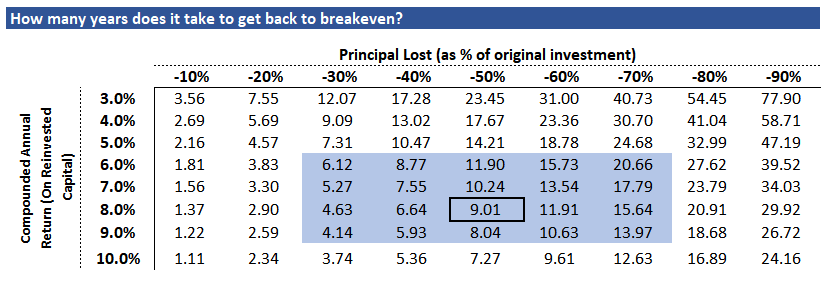
As you can see above, any principal loss is catastrophic to overall returns without diversification. If you only invest in one deal as an LP and lose your principal, it will take years to recoup it.
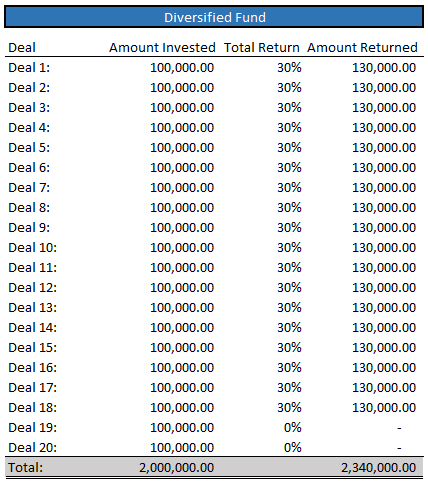
However, as you can see above, even with two complete principal losses, we are still up even with modest returns. Without diversification, you are taking large amounts of risk.
Total principal loss in real estate is rare but still reasonably common. Due to the market shift and sponsors purchasing overpriced deals, we have seen an unprecedented number of deals go belly up in 2023, with more to come.
Capital Calls:
To get the juicy tax benefits as an LP means you are an equity owner in the deal. Being an equity owner means that you will have to pay up if the deal needs more capital.
Therefore, you should only be an LP if you are liquid enough to fund a capital call of 30%+ of your original investment amount. In the case of a $200K original investment, you have to be liquid enough to cut a $60K check within a short time frame.
If you don't fund a capital call, your original equity will likely be entirely wiped out. This would be a complete principle loss.
Knowledge:
To be a successful LP investor, you must have experience as an investor and real estate knowledge. It is up to you to determine whether a deal is lucrative.
You must know about common splits, fee loads, asset classes, real estate fundamentals, general investing guidelines, and more. Without this information, you will invest based on the sponsor, which is always a poor idea.
Who Invests as an LP and Why?
The ideal investor is wealthy enough to diversify into enough deals and has the liquidity to fund capital calls.
These investors are typically UNHWs, funds, family offices, etc.
When you pass a certain threshold of capital, the goal of investing turns to capital preservation rather than return maximization. Investing as an LP by no means produces life-changing returns. However, it does provide an alternative to traditional asset classes with relatively low risk.
Who Should Invest as an LP:
The threshold for investing as an LP comes down to how much money you have available to invest.
To be a successful LP, you must have a large enough pool to obtain diversification.
Since investment minimums are so high, you will need a minimum of $1-2 Million in proceeds dedicated to LP investments.
The $1-2 Million should also not be a large percentage of your net worth. Only 10-20% of your NW should be allocated to LP investing.
You can invest in one-off deals, but you will take outsized risks for marginal returns.
If You Want to Be an LP:
If you are still determined to be an LP, I highly recommend learning for at least 6 months before you make any investments.
Resources:
Real Estate Finance and Investments by Peter Linneman is a great book to understand the basics of how to value real estate.
Investing in Real Estate Private Equity by Sean Cook is a great book that will provide you with all the basics of how deals are structured.
Aleksey’s blog is a wealth of information on LP Investments.
Tips:
Meet the Sponsor in person. Never invest site unseen. Zoom can work. Phone calls are not sufficient.
Show the potential deal to more knowledgeable people whether you pay them to review or not.
Any deal projecting rental increases or cap compression is a no-go.
Ask for previous deal materials.
Ask for a sample report package.
Thoughts:
This is all just my opinion at the end of the day, so feel free to disregard it.
However, I believe LP investment is only valuable for a small group of investors.
If you can't make those minimums, you will be much better served by buying real estate or investing unsexy in the S&P.
Remember, no one got rich investing as an LP. It is a tool for capital diversification, not for producing extraordinary returns.
Therefore, if you need more money to be an LP, focus on finding investments to move your needle. Or, if you are focused on retiring with a decent cash stack, stick it in the S&P and enjoy your life.
Thanks for reading. If you have any thoughts or want to reach out, please message me on substack or email me.
If you enjoyed the article, I would appreciate your sharing the word with a friend.
Here is the link if you want to buy me a coffee or get access to my previous posts.
Comments
Nothing yet. Say the first thing.
Sign in to join the conversation.