
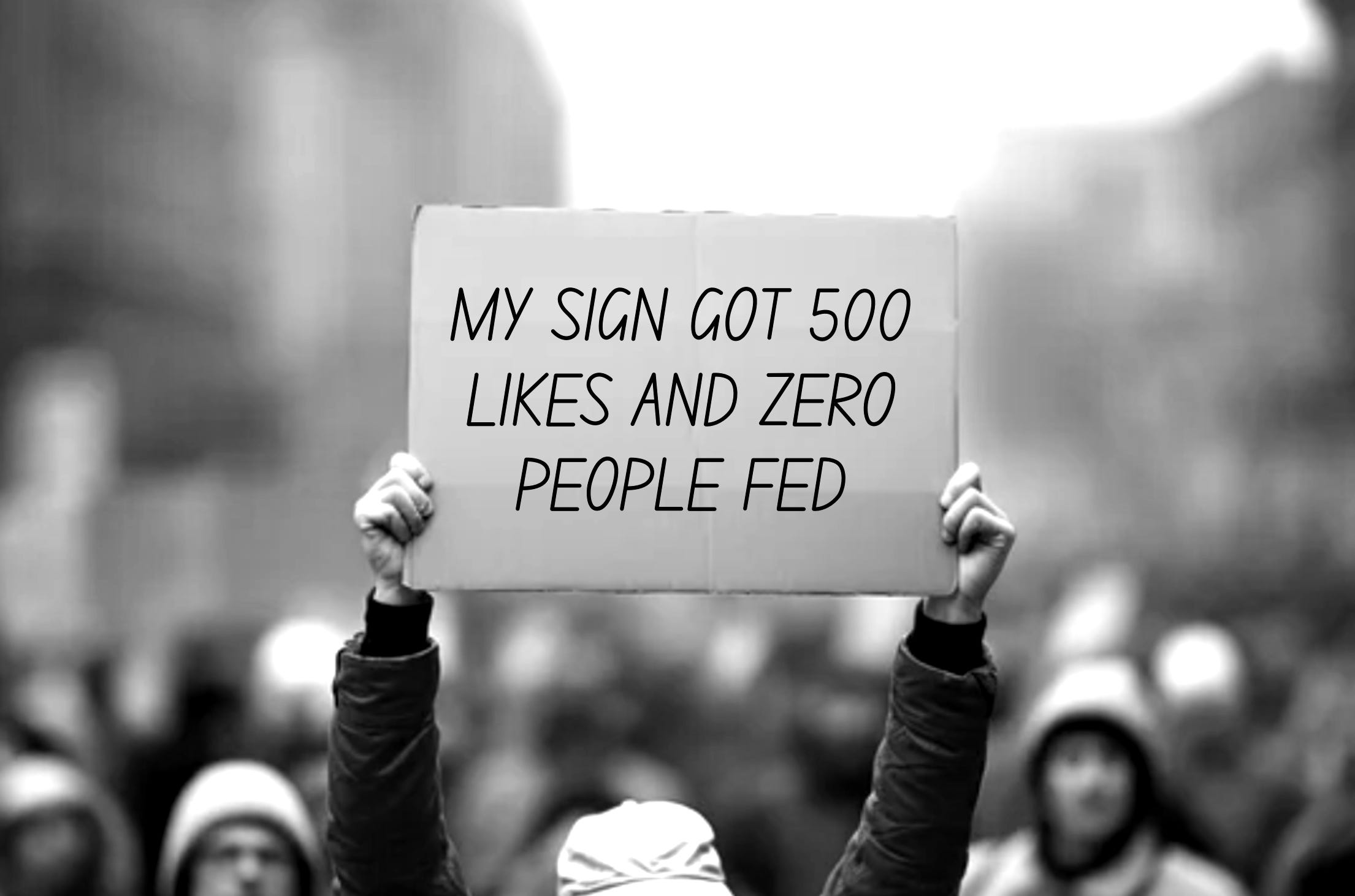
SO THE WORLD’S ON FIRE. Literally, metaphorically, politically — pick your poison. Every morning brings fresh fuckery to our doorstep: Border agents playing fascist bingo, politicians competing for who can say the most horrifying thing with the straightest face, Climate accords abandoned.
Meanwhile, our social media feed resembles a doom-scrolling Olympics, and everyone wants you to be perpetually outraged about everything all at once. We all seem to expect each other to have nuanced takes on global geopolitics while simultaneously plotting revolutionary action from our couch. It’s exhausting, and — spoiler alert — it’s designed to be.
Yes, I’ve said this before, but I cannot say it enough: This perpetual state of reactive outrage isn’t an accident. It’s the point. The *flood the zone* strategy pioneered by certain political operatives works precisely because when we’re drowning in outrage, we can’t think straight, can’t organize effectively, and can’t build anything better. We’re just treading water, desperately trying not to go under in our best Jack-at-the-end-of-Titanic impersonation.
But there is another way. One I’ve been thinking about while my hands are covered in dirt and I’m researching what grows well in Connecticut besides cynicism and property taxes.
Because here’s what I’ve realized: I cannot control whether the U.S. rejoins the Paris Climate Accord. I cannot control whether politicians suddenly grow functioning moral compasses. I cannot control the Electoral College or the Supreme Court or the next headline designed to make my blood pressure rival Mount Vesuvius.
But I can grow food.
I can build and nurture community.
And I can help sustain spaces where human dignity isn’t up for debate.
And oddly enough, there’s a profound peace in that realization.
When you’re planting seeds, they don’t grow faster because you’re anxious about the state of democracy. They don’t care about your Twitter follower count or how many likes your last post about climate collapse received. Seeds respond to consistent care, conditions, and patience. That’s it. That’s the deal.
In our hyperconnected, hyperpolitical world, we’ve forgotten something essential: “Resistance” doesn’t have to look like a clever protest sign, a viral post, or a perfectly crafted argument that finally convinces your conspiracy-loving uncle. Sometimes — often, even — it looks like a community garden. It looks like a mutual aid network. It looks like teaching your neighbor’s kid how to save seeds or repair a bike instead of buying new.
The system wants us to believe that only massive, global policy changes matter — that our small actions are meaningless without governmental action. And yes, we absolutely need policy change. But waiting around for politicians to save us feels a bit like expecting arsonists to join the fire department.
So while they’re busy setting fires, I’ll be growing food with my kids. Is that enough? Of course not. My modest vegetable plot won’t single-handedly reverse climate change or topple fascism. But that’s precisely the point — I’m at peace with what I *can* control. Quiet, consistent, dependable action in my small corner of the earth. Not big performative nonsense that does nothing but fuel the fire.
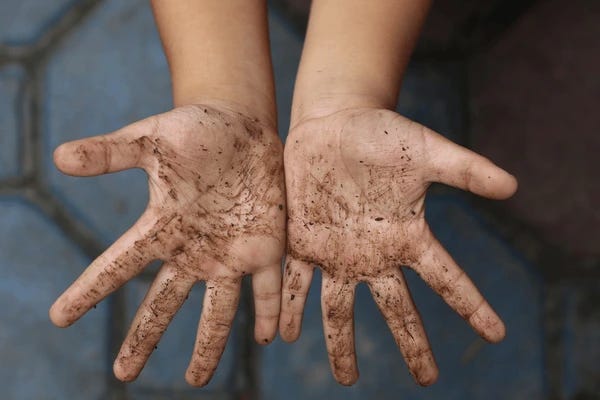
The problem with so much *activism* these days is that it’s become theater, a competition for who can be the most radical, the most outraged, the most visibly committed. We’ve forgotten that meaningful change has always happened through thousands of small, unremarkable actions that never made headlines or garnered likes.
Consider this . . . every tomato you grow is one less trucked across the country burning fossil fuels. Every meal shared with neighbors is a tiny rebellion against corporate food systems designed to extract maximum profit while providing minimum nutrition. Every skill you learn — gardening, preserving, repairing, building — makes you less dependent on systems designed to keep you perpetually consuming and discarding.
That’s not just gardening — it’s climate action.
That’s not just cooking for others — it’s mutual aid.
That’s not just learning how to fix things — it’s resistance.
Every community fridge stocked with local produce.
Every tool library that reduces consumption.
Every ride share that eliminates car trips.
Every rainwater collection system.
Every solar panel installed by neighbors helping neighbors.
Every repair café that keeps perfectly good stuff out of landfills.
Every seed saved and shared.
Every local food network that bypasses corporate supply chains.
This is how we build climate resilience from the ground up while the talking heads debate whether climate change is real between commercial breaks. This is mutual aid with a side effect of emissions reduction. This is community power that doesn’t require permission from people who profit from our collective destruction.
My inbox is a revolving door of contradictory demands right now — people sliding into my DMs wanting me to crank my outrage up to an eleven, or those who want me to be “more positive” and tone it down completely. Then there are the folks begging for different actions to the ones I keep giving, or seeking validation that their approach is the only right one. They seem disappointed when I talk about community gardens and mutual aid networks instead of offering blistering political analysis. They’re looking for someone to cosign their feelings rather than challenge the very systems causing their distress in the first place. Absolutions rather than solutions. They want me to be their political priest, offering forgiveness for their complicity in exchange for the correct level of performative outrage. Sorry Janice, but I left the priesthood years ago.
Constant outrage, however righteous, is still constant outrage. It exhausts you. It clouds your thinking. It leaves you perpetually reactive rather than proactive. And most importantly, it doesn’t actually build a damn thing except ulcers and social media, umm, *clout*.
The paradox is that the most radical thing you can do in a world that wants you perpetually consuming outrage is to resist that outrage and instead create something. Anything. Grow food. Start a tool library. Teach someone a skill. Build community resilience. These actions aren’t just coping mechanisms — they’re the building blocks of the world we’re trying to create. And unlike posting the perfect hot take that gets you 15 minutes of digital applause, these actions actually fucking work to reduce emissions, build resilience, and create systems that operate outside the profit motive that’s cooking our planet.
When the news makes you feel helpless, remember this: You were never meant to solve global problems as an individual through the perfect expression of outrage. You were meant to be part of a community that creates solutions together. The mistake isn’t caring too little — it’s thinking you have to care about everything equally all at once, alone.
So no, I’m not spending my days crafting the perfect outraged thread or the most devastating political analysis. I was offered that path, by the way — invited to important places, offered money to post political content that carefully avoided connecting too many dots. But the second I started talking about systemic issues rather than individual villains? Suddenly I was “divisive”. Funny how that works.
These days, I’m growing food. I’m working on some writing with a dear friend. I’m in the early stages of planning a community fridge project. I’m learning the art of shutting the fuck up. I’m contributing to spaces where questions like “do people deserve to eat/be housed/receive medical care?” aren’t up for debate. And honestly? I sleep better at night knowing I am helping actual people.
This isn’t a purity test or a competition for Most Radical Human©. We all have different capacities, different skills, different circumstances. Not everyone can grow food or build mutual aid networks or divest from capitalist systems entirely.
And let me be crystal clear about something: Choosing to focus on what I can tangibly control doesn’t mean I’ve gone politically blind or morally numb. I still see the full spectrum of global fuckery. I still bear witness to human rights abuses across continents. I still cry in the shower after scrolling through my social media feed. I still try to help others connect the bloody dots of imperialism.
But I’ve stopped performing my awareness like it’s an audition for Woke Broadway.
Instead, I channel my resources where they actually create change — sending money directly to grassroots organizers with minimal overhead instead of NGOs with seven-figure CEO salaries — supporting bail funds that get people home tonight instead of think tanks that produce white papers nobody reads — sustaining mutual aid networks that feed people today instead of political campaigns promising to maybe feed them after the next election cycle.
Being aware and being effective aren’t mutually exclusive: They’re partners in actual revolution.
You don’t need to a PhD in ‘Instagram Infographics’ to enact change. You don’t need a massive following or perfect hot takes. The beauty of this work is that it scales from the smallest personal choice to community-wide transformation. I.e., everyone can do something. Everyone can find their way to contribute, however small, to the world they wish existed.
The system wants us endlessly outraged, perpetually reactive, constantly exhausted. It wants us sharing our shock online rather than creating alternatives offline. It wants us debating the latest atrocity rather than growing food for our neighbors.
Refuse that role.
It’s a game where the house always wins and we always lose. Find your peace in purposeful creation instead.
I’m at peace with what I’m doing. Are you?
No posts
Comments
Nothing yet. Say the first thing.
Sign in to join the conversation.