
Another day, another depressing article about how American students are increasingly expected to subsist on a diet of excerpts and extracts and incomplete fictional worlds.
Whenever another article like this hits the feed, my big question is, “What went wrong?” As the New York Times article shows, very few people are happy about The Great Excerpting, other than the people who make the excerpting curriculum. Parents don’t like it. Teachers don’t like it. Students—the supposed beneficiaries of this new, non-taxing approach to reading fiction—don’t like it. Even the educator who developed the Common Core doesn’t seem that pleased by it, even as she tries to defend it. So how does a major shift in educational policy like this happen? How does it come about, if nobody wants it?
I have a theory, and it’s not a comforting one. It’s just this: when we defend longform fiction against its attackers, we concede the terms of their argument.
I’ve made a quiet little study of the defenses of reading fiction, ancient and contemporary. On one level, they’re earnest, humanistic, and say things that I think are probably true. I came across one on Henry Oliver’s (excellent, by the way) The Common Reader blog the other day, from a parent pleading with his child’s school to reconsider moving towards The Great Excerpting. In addition to being a well-organized and moving piece, it cited all of the studies that I would have cited. Concentration improves with longform fiction. Empathy strengthens. An appreciation for complexity develops.
Great, you think. Great. Let’s read a book all the way to the end.
But then you read more about The Great Excerpting, and you realize something: the opponents and the promoters are making their respective arguments on the same terms.
Which is that reading fiction is a means to some other desirable end.
Take Timothy Shanahan, the primary villain of the New York Times piece. He claims that there’s no evidence that excerpts are any worse at teaching “skills” than full-length fiction. Now, one might take issue with Mr. Shanahan’s claim by arguing that there are “skills” beyond the ones he cites (in addition to noting that his defense is almost entirely comprised of personal anecdote and an absence of evidence for a claim that he constructs very narrowly to suit his own ends, and presumably, the claims of the person who pays his salary), but even when people talk about loftier values associated with longform fiction, what they ultimately seem to end up defending is that reading is a kind of mental strength training that allows us to pursue some other end. This is true of even some of the more moving defenses of reading fiction that I’ve encountered. Almost as soon as the author of one of these pieces gets close to describing the transcendence that is immersing yourself in a story world, they slip into quoting cognitive scientists about the brain benefits of deep concentration or training empathy. Then, predictably and in direct proportion to how much of a philistine the commentator happens to be, it’s pointed out that these are valuable skills for the middle managers and HR reps of tomorrow.
The problem with that argument is that it allows the Mr. Shanahans of the world to respond with, “But what if only reading a chapter of Middlemarch can have the same effect on reading skills and concentration?” Or: “What if reading a short anecdote with the appropriate values is all that we can expect of our attention-addled youth?”
Historically speaking, every generation finds itself having to defend reading fiction, and those defenses always tell you more about its particular anxieties than about reading fiction. This goes back, as far as anyone can tell, to Plato and Aristotle. Plato thought that fiction was another layer of obfuscation that prevented us from seeing the truth from the shadows dancing on the walls of our cave. Aristotle replied that fiction and drama were able to tell a more universal truth than any existed in any particular and real set of events. The Puritans, hating the spectacle and pretense of drama on similarly totalitarian grounds to Plato, were treated to Philip Sidney’s Defense of Poesy (really a defense of all forms of fiction) which makes the unassailable counterargument that fiction can’t be lying because it “nothing affirmeth.” David Hume, in the eighteenth century, thought that fiction must necessarily be worse than history at activating our impressions and ideas and moral feelings, possibly because Hume made most of his money writing history. Adam Smith came along and pointed out that “real people” and their emotions and thoughts are essentially just impressions formed in our minds, too, because “our senses never did and and never can, carry us beyond our own person, and it is by the imagination only that we can form any conception of what are his sensations.” So why not learn proper moral feelings from fiction?
The sheer number of these defenses and the fact that a new one needs to be launched in every generation to comply with that particular age’s concerns and bugaboos makes me wonder, though, what defenders of fiction are doing wrong. And I’m led to the inexorable conclusion that the entire approach is the problem.
I propose a solution. Fiction is not a means to an end. It’s an end in itself.
There are certain human things that are like this. Relationships. Community. The irreducible experience of being alive in the world. These aren’t things that teach us to do some other thing; they’re valuable for themselves and in themselves. It’s true that you often find in these late days defenses of the importance of occasionally having a face-to-face conversation with others even if it involves a bit of uncomfortable friction or sometimes leaving one’s house, but that’s just one of those gathering signs of the apocalypse, into which category we might also place the fact that we have to defend spending concentrated time with longform fiction on the grounds that it makes better HR reps. The point is, we don’t make friends and form families because we think it will enhance the development of our neurocircuitry. We make friends and form families because this is the end of human life.
We don’t know much about the deep history of humanity. But here’s something we know: for as long as there have been humans, they have been creating longform fictional worlds with whatever tools were available to them, whether it was pigment on the side of a cave or the voice of the bard reciting the exploits of Achilles and Gilgamesh around a fire. They did this whether times were good or bad, whether they had more or less difficulty with the simple hardscrabble act of survival. There are few enough things that distinguish humans as a species from other mammals, and more of them are being knocked down every day, but this is one of them: we enjoy making and experiencing longform stories that follow imaginary people over a period of time.
I’m not a snob about what form these stories take, for the record. I can’t be if I’m tracing our shared cultural heritage back to a time when most people couldn’t read or write. Children start experiencing stories because we read or tell them these stories. Reading a physical book comes much later for most of them, and only after they’ve been immersed in the importance of storyworlds. For my part, although I was a good reader by the time I was 12, I doubt I would have ever picked up Pride and Prejudice—and then subsequently devoured all of Jane Austen’s other work—without the BBC’s superior 1995 adaptation hitting me at a moment where I was just starting to develop heterosexual feelings. I loved the moment in the early 2000s when dumb anecdotal sitcoms gave way to elaborate multi-season dramatic TV shows. I can trace my adoration of Shakespeare not to reading the plays in the doorstop Norton edition with the tissue-thin pages but because, in my effort to avoid as much of eighth grade as possible, I volunteered to be my high school teacher father’s assistant when he took his history classes to see the Henriad in Stratford, Ontario.
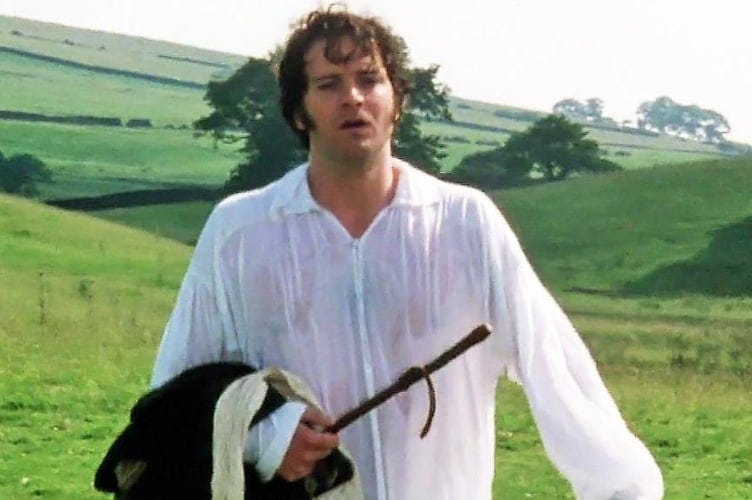
My point is, whatever the form of the engagement with longform fiction, it is a human thing. Maybe the human thing.
So, look. I’m grateful to our cognitive scientists and science journalists and all defenders of the prospect that spending time with characters might teach us not to be little psychopaths with focus problems. I think that’s probably true, and I know that it can be somewhat persuasive at the margins to policy makers and school boards and all of the other people out there who apparently need to be convinced that Shakespeare isn’t a waste of tax dollars somehow. But I do wonder if we haven’t already given the game away when we just don’t say to people up front that fiction isn’t a means to whisking away whatever sin or moral defect it is that we happened to be worried about with the kids now, but an end in itself. I can say for myself that I’ve never picked up a book because I thought it would help me “learn the dangers of a corrupt version of the American dream” (I’ve got real life for that) or better inhabit the perspective of a hyper-intelligent, mystery-solving octopus.
No. I inhabit fictional worlds because, as a human, I can’t do anything else. Reading doesn’t “make us more human.” It is the way that we know that we are human.
No posts
Comments
Nothing yet. Say the first thing.
Sign in to join the conversation.