

Plnty Walks, Now in Writing 🫛
A month ago I started a podcast called Plnty Walks. It’s as much for my own research and entertainment as it is for yours — I walk with doctors, founders, parents, experts and practitioners of all kinds, and ask them what they actually know and do when it comes to the most transformative experience of all: becoming a parent.
I’ve learned a lot since I started recording these episodes. From entrepreneurs building serious businesses while raising multiple kids — some without a nanny in sight — to a sexologist who completely reframed how I think about connection and desire after baby, a paediatric GP with the closest thing to a formula for a calmer family life, and a string of mothers and fathers who’ve been generous enough to share what’s actually hard, and what actually helps.
Not everyone loves a podcast. So here’s the easy version: the ideas, the gold nuggets — written down, so you can get to them however you like.
She’s a dear friend of mine, and she decided to try for a baby at 40. Her confidence that it would happen naturally (and immediately) was impressive, but it quickly had to make room for the realisation that IVF was going to get them there faster. Fast forward to today, and she’s the happy mama to three-month-old Riley, but when Thera and I walked and talked, she was 29 weeks pregnant, ready to open up about her career, her IVF journey, and everywhere the two collided.
Listen to the full conversation on Spotify: Plnty Walks, Ep. 1, Part 1 & Plnty Walks, Ep.1, Part 2
Guest: Thera Navarro - 20 years in marketing (Luxottica, Vida, Dermalogica), now a mom of one via IVF at 41.
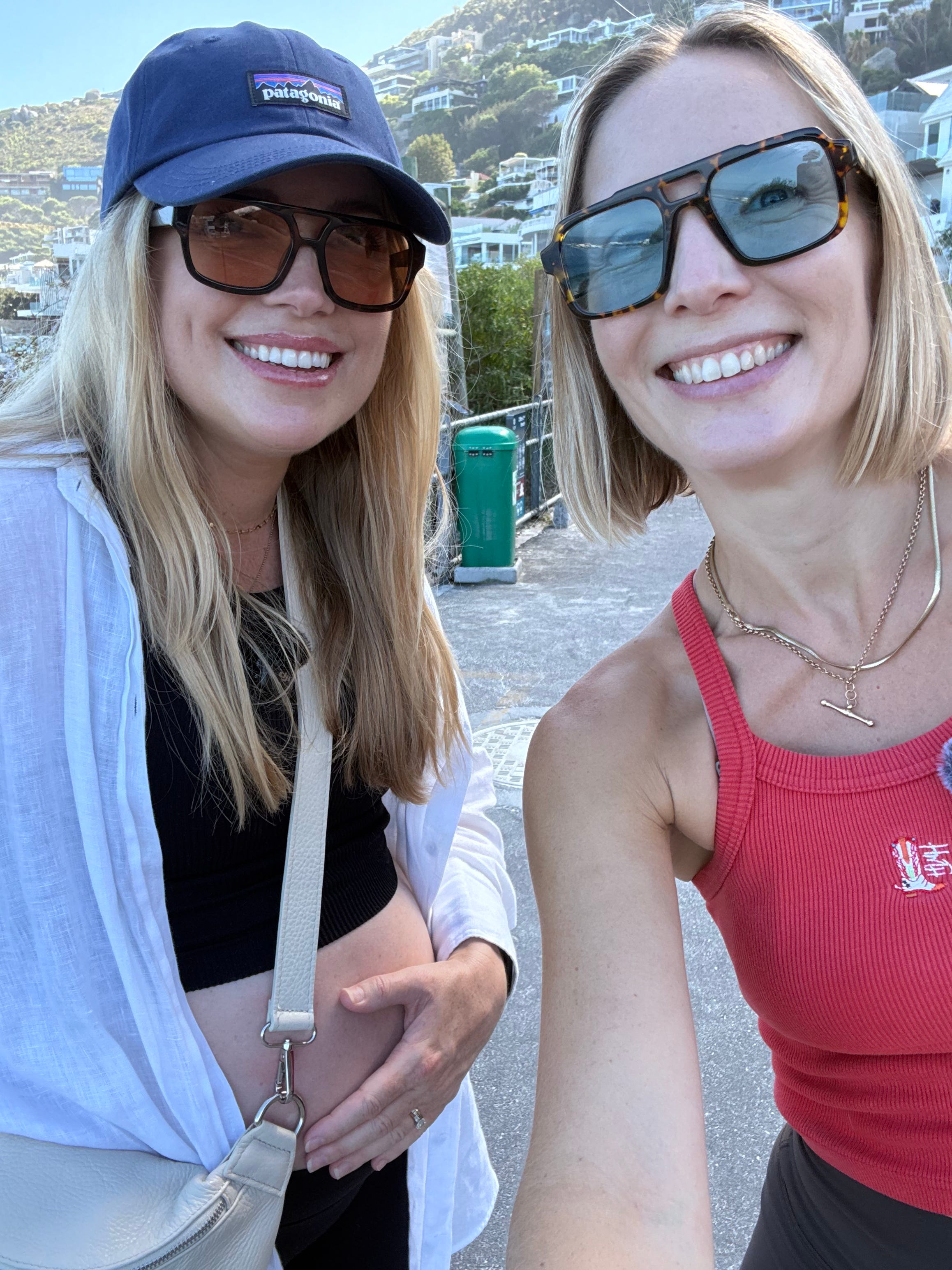
I am what they call an “older mom”, fell pregnant at 41, although I embrace that. I’ve always wanted to be a mom, I think it’s just in me. I’m an aunt to three little ones I’m obsessed with, so I can’t imagine the love when this one arrives. We started trying when I was 40, at the end of 2024.
When I was 35 and single, I went back and forth on whether to freeze my eggs. I went to the fertility clinic, did all the tests, they told me my AMH levels were high, and it just felt daunting doing it alone, injecting myself every morning as a single woman. So I thought, let me not, what’s meant to be will be. And then you meet someone, and you think you’re falling in love, and another year passes. I never froze my eggs. In hindsight, it would have been a good idea, mainly because this journey, while we were lucky, means we don’t have “insurance” for a sibling now.
We started trying in August 2024 and fell pregnant straight away, then miscarried around six or seven weeks. We said, okay, we’re planning the wedding anyway, let’s enjoy the next few months, we’ll try again after. So easy to say. We started again that December. Tried IUI in January. Still nothing by February. We went to Japan for our honeymoon in April — the longest time I’d taken off work in twenty years — and came back still not pregnant. So we went to Cape Fertility. Dr. Joanne Pottow was incredible. She walked us through everything, all the tests, no reason we wouldn’t fall pregnant again — just the odds of getting what she calls a pink egg, a good one, getting further apart as you move through your twenties into your thirties into your forties. We gave it another month or two trying naturally, knowing we had a backup plan. We didn’t want to waste time. My husband and I are very decisive and if it hasn’t happened by then, we do the treatment.
We started IVF in June. Ten eggs retrieved, seven viable, six embryos. Then came the genetic testing, which is optional but recommended, because otherwise you put one embryo in, it doesn’t work, another month goes by, and five months later you’ve gone through almost everything you had. We got the results back: one euploid embryo. One with 23 chromosomes. Dr. Joanne walked in and said, you’ve got one, and we said, one? And she said, this is the most incredible news. So we did the transfer, and hoped it would take. It was almost like we had this one shot and I remember thinking, I don’t know if I can go through that again. And we were lucky. It took.
We’d love another one. If it happens naturally, it’s meant to be, but we know so many people whose first was IVF and second was spontaneous. I think attitude is a huge part of this whole journey. How much stress you’re carrying about it needing to happen right now, versus, we’re going to do everything we can, and approach it like a project. Having someone who can hold your hand and guide you through it is worth so much, because you’re not wading through fog. It felt like a seamless journey, honestly.
I’m 41 and I had no idea about certain things — the order things happen in, what your options even are. That’s appalling, if you think about it. Why don’t we get taught about fertility, female or male, in school? Nobody talks about it enough. And when you do talk about it — when you say, I had a miscarriage — people say, me too. I had three. And you didn’t even know. Your own friends went through it in silence, hush-hush. That’s part of why I think what’s happening now, people being more honest about their struggles, matters so much.
One of the scariest things is when do you share your news with the world. The first time we fell pregnant, I told everyone — family, close friends — and then a few weeks later I had to tell them the other news too. But you also had that support to lean on. With IVF, it landed differently, because I was open with my friends, with my boss, with close colleagues, the whole way through. Everyone knew, everyone wanted the update — how are the injections going, when’s the next scan. Everyone was invested. It’s your own little reality show, in a way. It added a bit of pressure, definitely, but I wouldn’t do it any other way. Knowing you had all these cheerleaders on the journey with you, that if things didn’t go right again, you weren’t suffering in silence, that mattered more than the pressure cost.
I’ve always been active, so staying fit, eating well, drinking lots of water, cutting back on alcohol through the process, meditating, because it’s all connected. And talking positively about it. We’d constantly say, we know this baby is coming, we can’t wait. Getting your tribe to know you’re trying, instead of keeping it a secret the way people used to and as soon as people knew, that’s when my sister-in-law said, go meet Dr. Joanne. So if I had to sum it up: get everybody on team baby early, so they’re working toward it with you. Look after yourself in the way you eat and drink. Move in a way that feels good to you and your body — you don’t have to overhaul your routine once you’re pregnant, just keep living well.
Boundaries mattered too. Finding what worked with work, managing stress, asking whether something is actually worth stressing about when there’s something so much bigger going on. That probably came easier to me for having spent so long in corporate, in stressful jobs, long hours — you start to realize what’s actually important at this stage of life. I have a friend whose boss once said to her, outright, well, you don’t have children, you can stay later. That’s so wrong. He doesn’t know her story, whether she’s been trying for years, whether she can’t meet someone, what journey she’s on. It’s incredibly insensitive, and you wouldn’t think it still happens in 2026. But it does.
Leaving was a big step. I had this amazing role, this beautiful brand, all these years that had built up to it, and my ego was definitely in the way. My husband and I talked about it for a long time. He’s a serial entrepreneur, a different approach to risk than me, and he guided me through it without ever pushing me. He just said, I can see you moving into another season, you want the change, but you’re too scared to make it. He was right. There are still days I look at the big projects I built, now coming to life, and I’m not there to see them land. But I knew it was time to step away. If I want to climb the ladder again in a few years, nothing will stop me, I’ve got the experience, and I don’t regret any of it. I loved it, the highs and the lows both. I haven’t even really gone looking for work since, I was approached for the consulting I’m doing now, and I know once I do start reaching into my network, it’ll flourish. I couldn’t have done any of this in my twenties, because I didn’t know what I know now.
I didn’t want to work right up until maternity leave and then wake up the next day with a child and no corporate identity left. So I gave myself about four months between resigning and the baby arriving, to start figuring out who I am outside of that world, on my own terms, before I had to. It’s had its ups and downs, you miss the rhythm, the routine, but I’d rather figure that out now than in the fog of the fourth trimester.
You step into a room, meet someone new, and they ask what you do. I used to say, I’m the head of marketing for Dermalogica, and people would light up — wow, tell me more. That’s where you leave your ego, I think. You immediately get placed somewhere the second you say “mom”.
I do see a real shift coming: people starting to talk about motherhood the way we used to talk about our careers. Not sugarcoating the hard parts, the exhaustion, the lack of sleep, but not leading with the complaint either. Being proud of it. This is what I’m doing, what I’m choosing and I’m flourishing.

Motherhood: but make it Yours, Vol. 16
·
Feb 16
I’m so excited that one of my Substack mum-friends Mica Keeney decided to write about finding her own version of motherhood — Mica is a mum of a little girl and a DJ, has a very cool career in fashion and a Substack called Motherhood Muses. She also honestly just knows how to enjoy life (with and without her baby!).
The Other Club
·
Feb 23

The Other Club is a space for the stories that sit alongside motherhood: The women who haven’t had kids (yet, or ever), the ones still deciding, and the ones building full lives in other ways.
Comments
Nothing yet. Say the first thing.
Sign in to join the conversation.