
My Canadian friend Mike Miller is probably the first to remind me each year, with a few days to spare, that it’s World Photography Day on the 19th of August. It’s like a friendly nudge to send an anniversary card. And every year, I completely forget, despite his thoughtful memory jogs.
Mike, your reminders have at last worked. Your persistence has paid off, and I thank you for it.
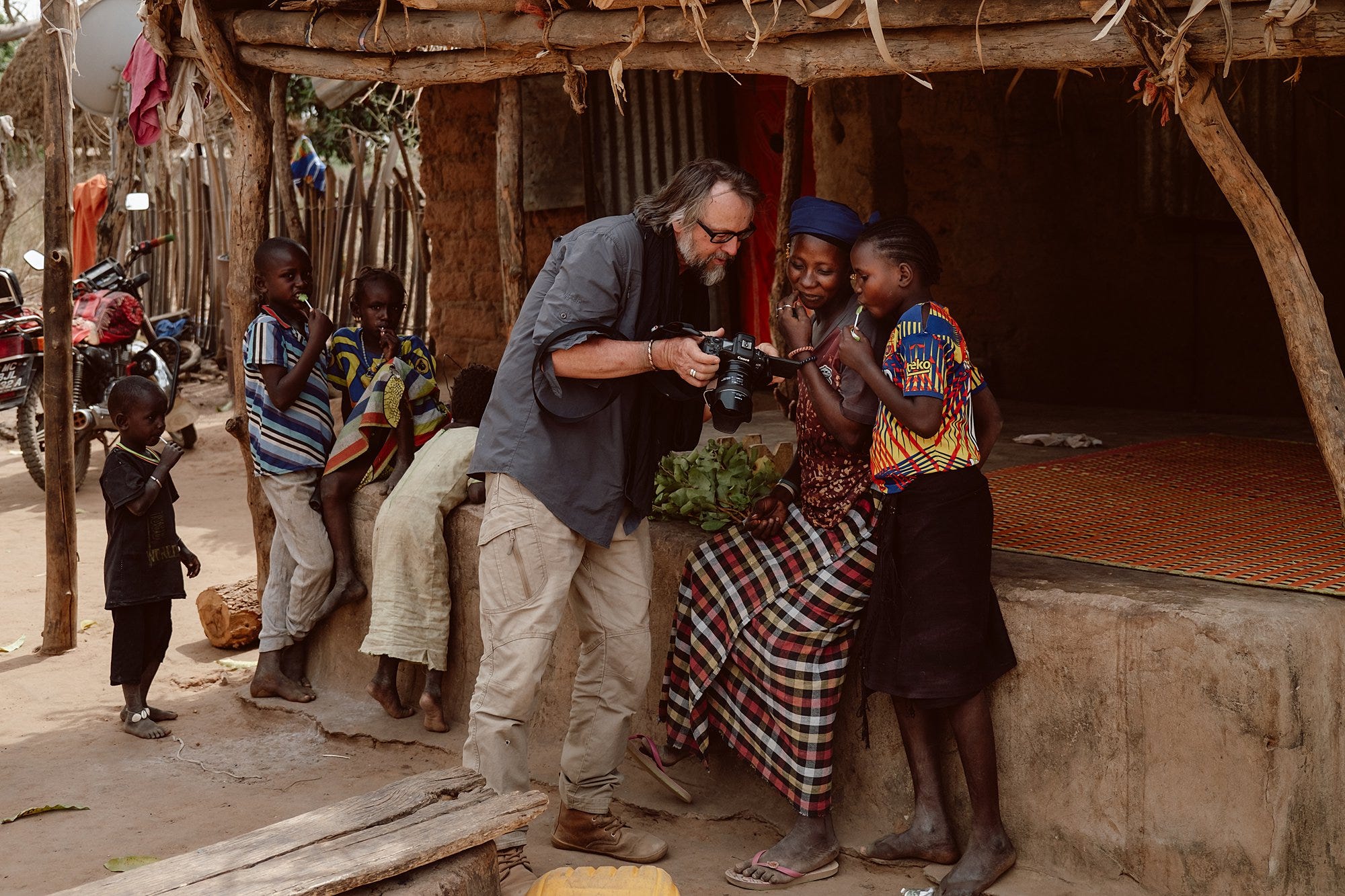
My good friend, photojournalist Jason Florio, sharing family portraits in The Gambia, 2024.
Today, then, is World Photography Day, and for historical context, the date takes us back to August 19th 1839, when the French government revealed the Daguerreotype to the world. They’d acquired the rights and then did something that feels almost unimaginable now; they gave the process away for anyone to use.
What?
For free?
No licensing deal?
No attempt to hang on to it and monetise every last part of it?
Are you mad?
Did you consume one too many artisan bottles of red whilst sitting in a riverside café beside the Seine, contemplating life, liberty and l’artiste?
There was a British patent, so the story has a small wrinkle (sorry on behalf of my nation), but elsewhere photography was essentially given to the world for free. I do wonder, in our rather more commercial age, whether we’d ever do the same thing now?
But here we are: photography is free for all to express their creative and curious leanings, bar kit, dev and print costs, oh, and the monthly cost to verify your Instagram profile.
To borrow from one of my favourite bits in Monty Python’s Life of Brian, when the revolutionaries ask, “But, what have the Romans ever done for us?” only to be confronted with an increasingly inconvenient list of aqueducts, sanitation, roads, medicine and education, let me ask this question: what has photography ever done for us?
Well, it’s recorded our families.
Yes, obviously. Apart from that?
It’s documented history.
All right, history and our families. But apart from those?
It’s taken us to places we’ll never visit, shown us wars we’d rather not see, changed opinions, provided evidence, advanced science, sold us stuff (upside and downside), made us laugh, cry buckets, and more than occasionally made us stop in our tracks.
Yes, yes, obviously all of that. But apart from that, what has photography ever done for us? Or more specifically, what has photography ever done for me?
I realise, of course, that photography can feed your creative spirit without you having to travel miles from your front door, so I recall this with that very much in mind.
But.
Photography has taken me to the world and its peoples in ways so profound that I can’t always find the language for them afterwards.
And strangely, when I think of some of the photographs that will always matter most to me, I don’t necessarily remember first what I saw. I remember what I heard. I remember heat, voices, music, feet on the ground, laughter, singing. I remember what it felt like to be standing there, not initially through a picture, or even the composition of one, but because a camera persuaded me to be a part of something my introverted self might not even have considered possible.
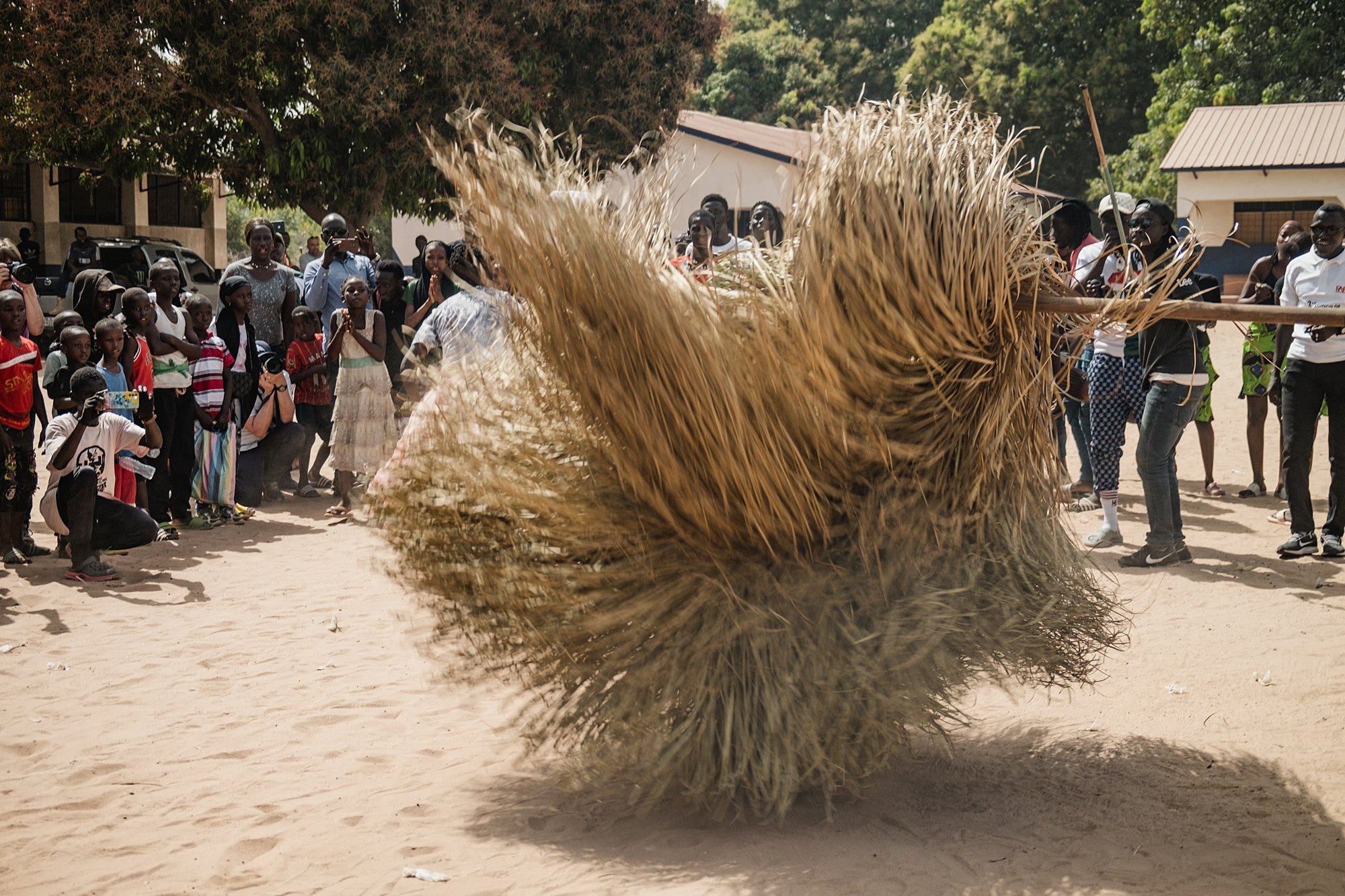
The Kankurang, Kumbo
In 2024, I was in The Gambia, at a Kankurang festival, a traditional Mandinka celebration of masquerade, music and dance.
I found myself in the middle of an African dance, surrounded by women moving and jumping in time with such a feverish, perhaps fervourous, sense of rhythm. The World seemed to be made of sound. Voices came from every direction. Singing, calling, clapping, the percussion, all of it gathering around me until I could feel it physically. It went through me. Just between you and me, it brought tears to my eyes. Perhaps it was the dust. Yes, the dust.
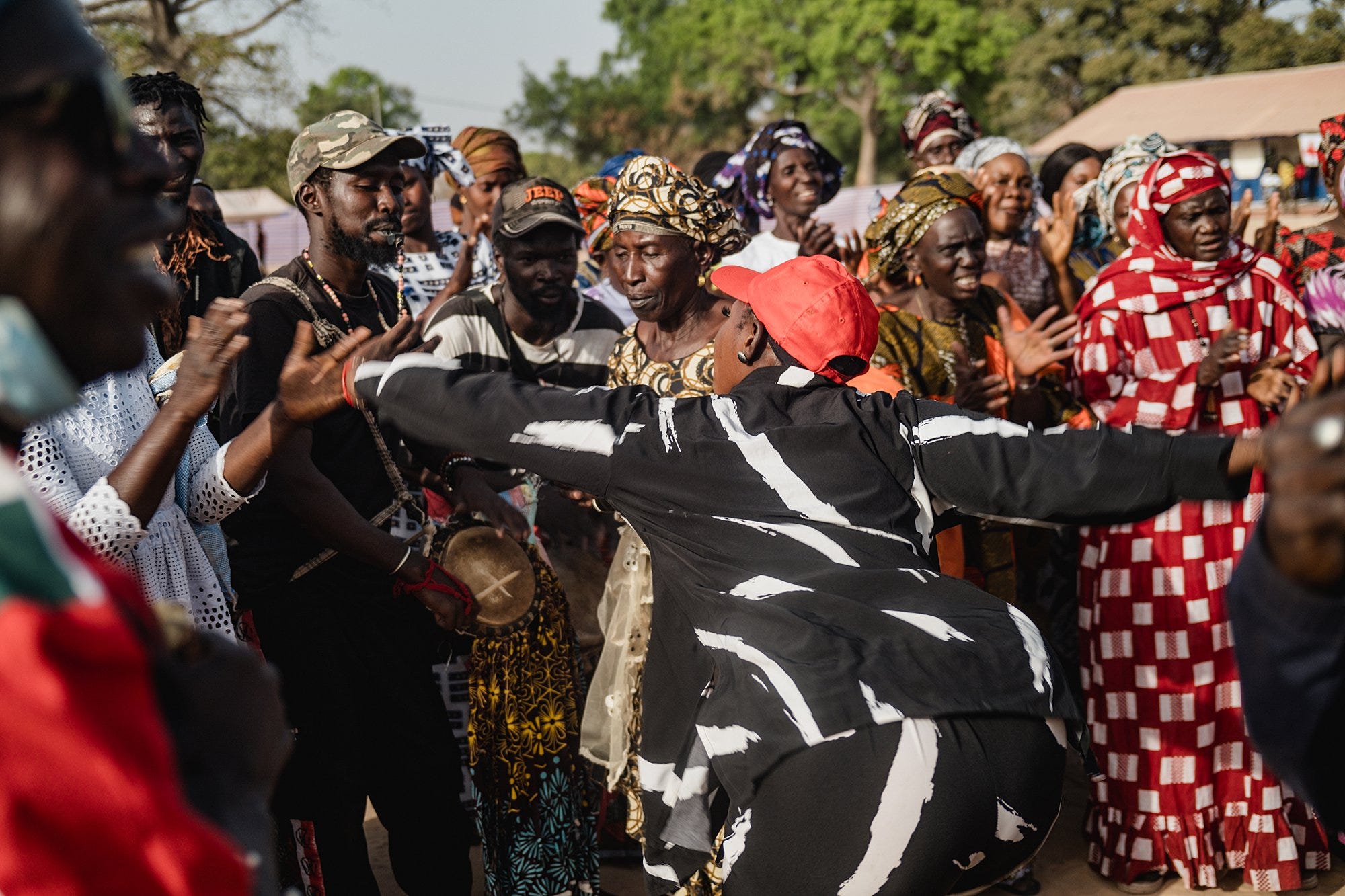
At the height of the dancing
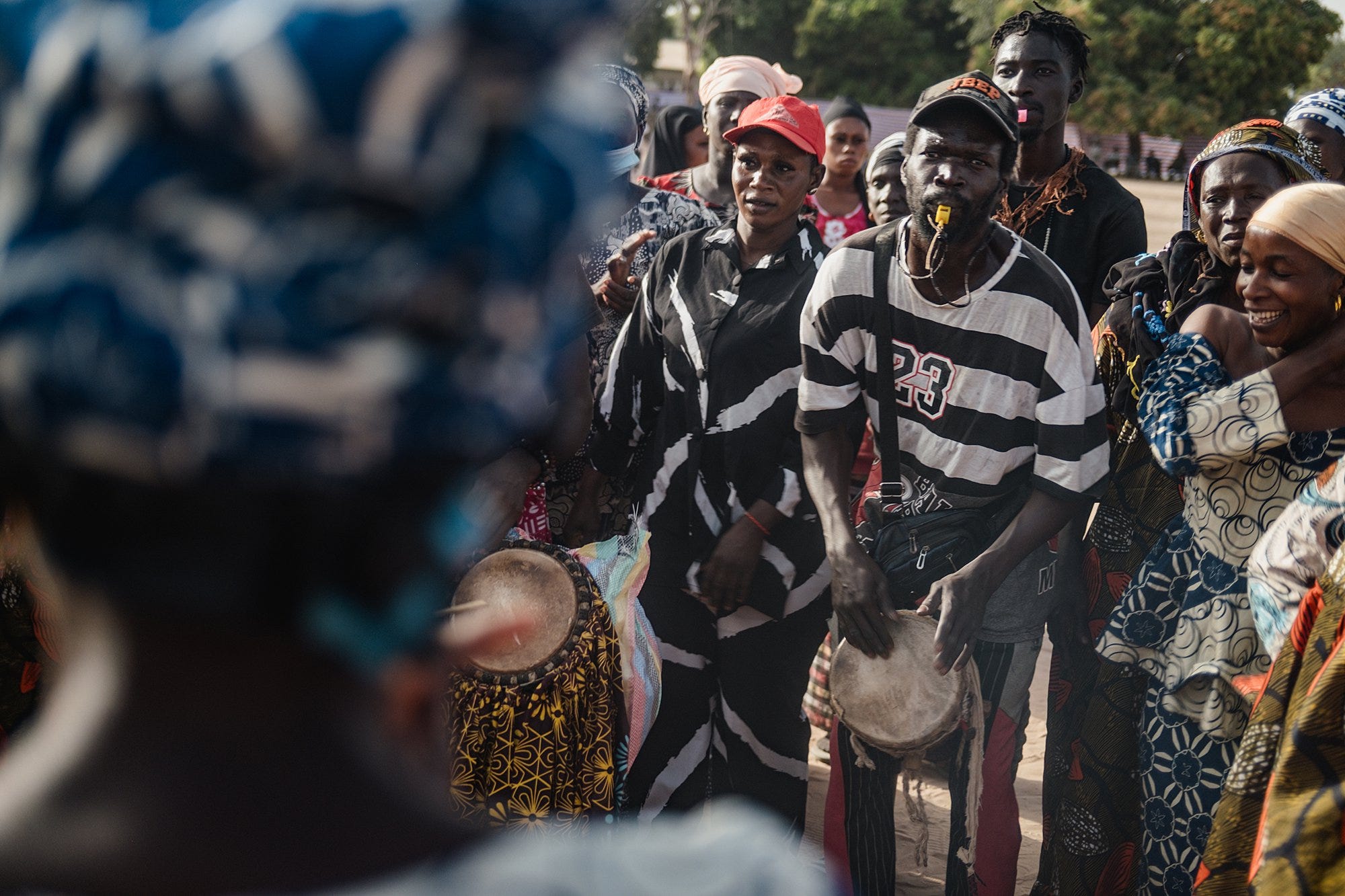
I remember being extraordinarily happy, in a sense I’d not conventionally felt before.
But in exactly that same moment, I felt this enormous sadness because the people I loved most weren’t there. I wanted Sam and the boys beside me. Not later, hearing me tell the story. I wanted them, right there, in the middle of that glorious cacophony, and somehow say, this. This is what it feels like to be here.
Of course, I couldn’t.
And perhaps this is the strange bargain we make with still photography. The camera couldn’t photograph the sound going through my body, or the happiness of being there, or the ache of wishing my family could experience it with me.
But I could make a photograph; that, now, I could do.
I could take a small part of that moment home and, one day, write a piece like this on such an important day as World Photography Day.
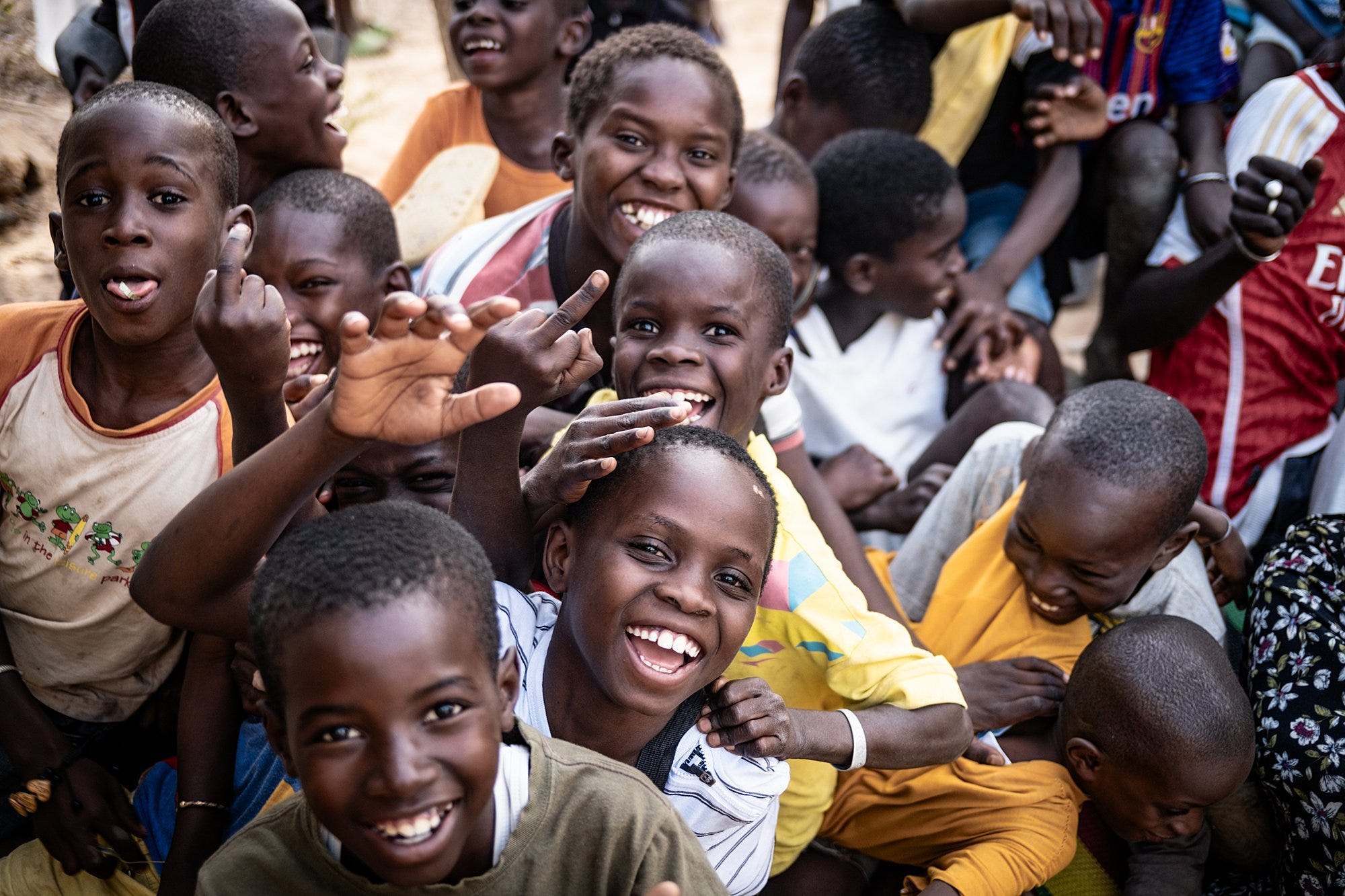
The Gambia, the Smiling Coast of Africa, will always be but a print away for me
I believe that’s the magic of photography, even though it’s hard to fathom just how precious that is during those moments we feel we have lost touch with it. That we can stand somewhere for a precious moment, press a button, and years later have something capable of taking us back. Not perfectly, and perhaps never completely, but maybe enough to unlock everything else that surrounded it at that second.
When Louis-Jacques-Mandé Daguerre was working out how to fix an image permanently onto a silvered plate, he could have understood the science, the chemistry, the extraordinary implications of making an image that would remain, but I wonder whether even he could have known what photography would eventually become to us.
Do you think he imagined it?
Did he know what the future may hold?
I faintly recall a school essay we were asked to write as a class about bringing someone from the past to witness the future. I don’t remember who I suggested, but I dare say it was something reasonably cliché, like a cave dweller from 20,000 years ago to witness cars, electricity and firelighters.
Ask me that question today, on this day when we celebrate photography, and I’m going to suggest Daguerre.
I’d love for him to see where his invention eventually went: from portraits and landscapes, to operating theatres and ocean depths, aboard aircraft and into the hands of astronauts who carried cameras to the Moon and photographed our entire world hanging behind them.
What would he think?
There is an old radio phrase: “Give us 22 minutes and we’ll give you the world.” It belonged to a news radio station called 1010 WINS in New York, which used it first in 1965. It went on to become one of those great lines from American radio that has inspired many other radio and TV stations around the world to use something similar.
I love radio, it being my first career. I love photography it having become the next.
Sometimes a photograph isn’t really about what we saw at all.
Sometimes it’s the closest thing we have to keeping what we heard, what we felt, who we missed, and who we were when we stood there.
I dare say Hallmark cards don’t have a greetings section for this auspicious day in their shop, despite photography being an important part of what they display, but I think photography deserves its own version of that old radio line. Give us a fraction of a second, and we’ll give you our world. Not all of it, of course, but enough to remember how it felt to be part of it.
Comments
Nothing yet. Say the first thing.
Sign in to join the conversation.