
Reading time: 7,20 minutes
If there’s one thing I’ve learned about self-trust, it is this:
It cannot be outsourced.
No amount of external recognition, validation, or praise will build your self-trust. Self-trust is built privately, through evidence.
More specifically:
Whether your actions match your words.
Said you’d stop after two trades? Respect it.
Said you’d put your phone away and be present with your family? Do it.
Said you’d complete the work before entertaining distractions? Follow through.
Small things add up.
Your mind is constantly collecting evidence about you:
Can I rely on this person? Do they mean what they say? What happens when things become uncomfortable?
Every time you follow through, you make a deposit. Every time you abandon an agreement without honesty or reflection, you make a withdrawal.
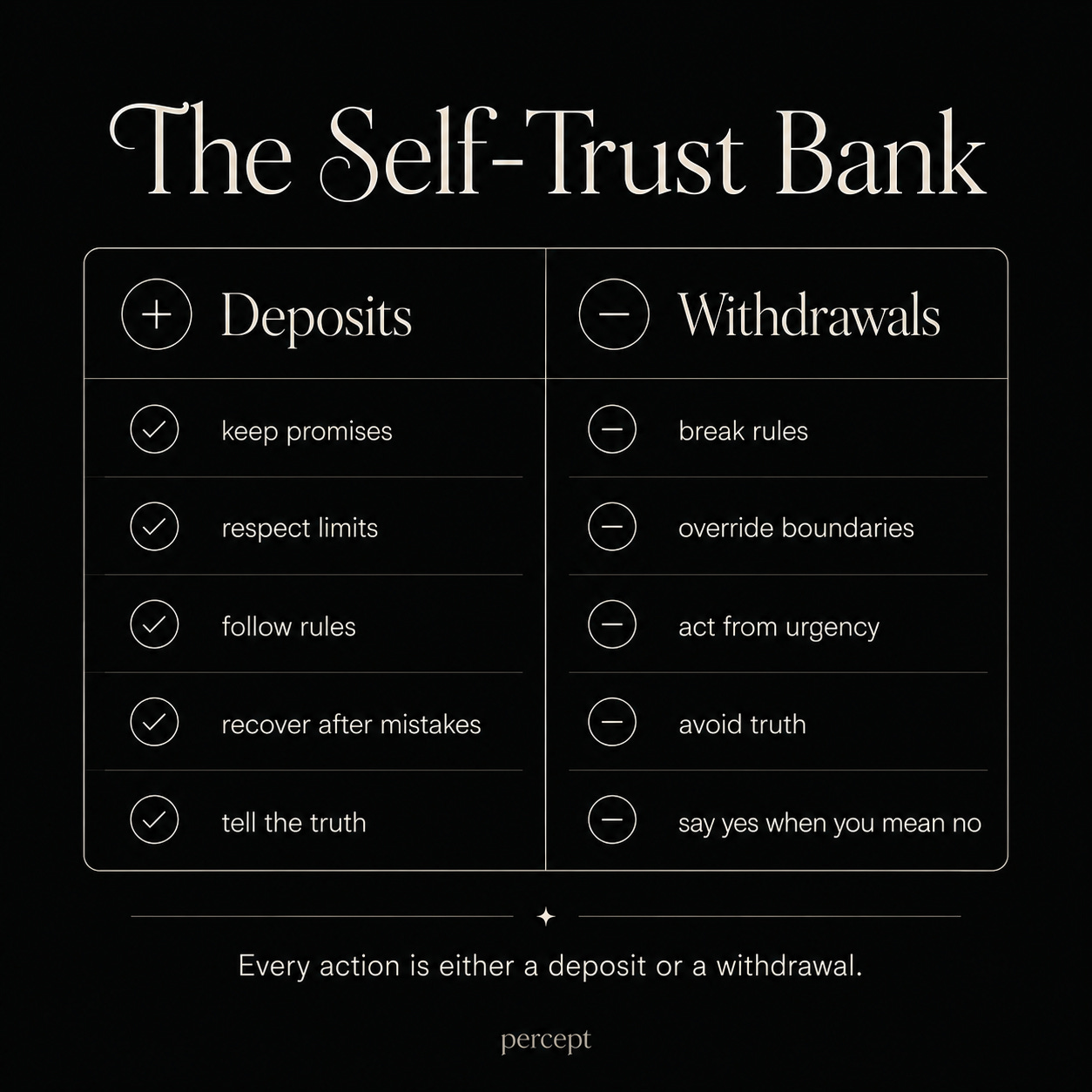
Self-trust is not built through crazy affirmations before you go to bed, telling yourself how confident you are. It’s not built through visualization of your desired life. Nor built through a dreamboard you look at first thing in the morning. Forget all of that.
Those things may help direct your attention. But they cannot replace evidence. Your brain only cares about two things:
what you repeatedly do
and whether your actions remain aligned with what you said you would do.
There is an important nuance, though:
“Just keep your promises” is incomplete.
Poorly designed promises weaken self-trust as much as breaking them.
Self-trust is not blind obedience to your own plans. It is knowing you can count on yourself to make promises that matter, keep them when it counts, adjust them when necessary, and return quickly when you fall short.
The next five principles will show you how to build that kind of trust.
Let’s dive in.
Comments
Nothing yet. Say the first thing.
Sign in to join the conversation.