
Hey, everyone! My name is Jordan, and I have a Ph.D. in Economics from the University of Pennsylvania. I want to ask important questions and answer them meaningfully using the hard work economists have put into their research. If you learn anything interesting from this, please like, share, and subscribe!
In high school, I took my first macroeconomics class and became fascinated by economics and politics. At the time, the U.S. national debt was about $19 trillion, which was stressful given my natural tendency to save all Christmas money I ever received. I worried the country might go “bankrupt,” like someone with too much credit card debt; I didn’t fully understand how government debt worked. In this post, I’ll explain why it’s not that simple.
Governments, like people, can have debt, but it works differently from personal debt. This is called public debt — the total amount owed to creditors, such as the country’s own citizens, its central bank, and foreign investors. If you have been keeping up with debt in the U.S., you may have seen the gross debt is almost $37 trillion. This is slightly different from public debt in that it includes debt the government owes to itself, which… is confusing. I will get back to this weird distinction later.
Economists have every reason to be interested in government debt. Government expenditures impact how much a country produces (GDP — Gross Domestic Product), but the debt itself impacts a country’s interest rates and investments made by people and businesses within the country. Economists often measure the debt-to-GDP ratio. This is simply a measure of how much gross (or public) debt a country has compared to how much it produces in a year, which measures how easily it can “pay off” this debt through taxes. This shows how easily a nation could repay its debt through taxes and lets us compare big and small economies on the same scale. Think of it like your own debt compared to your yearly income. Below is an animated graph that shows how debt has evolved for OECD countries over time — the OECD representing advanced economies.
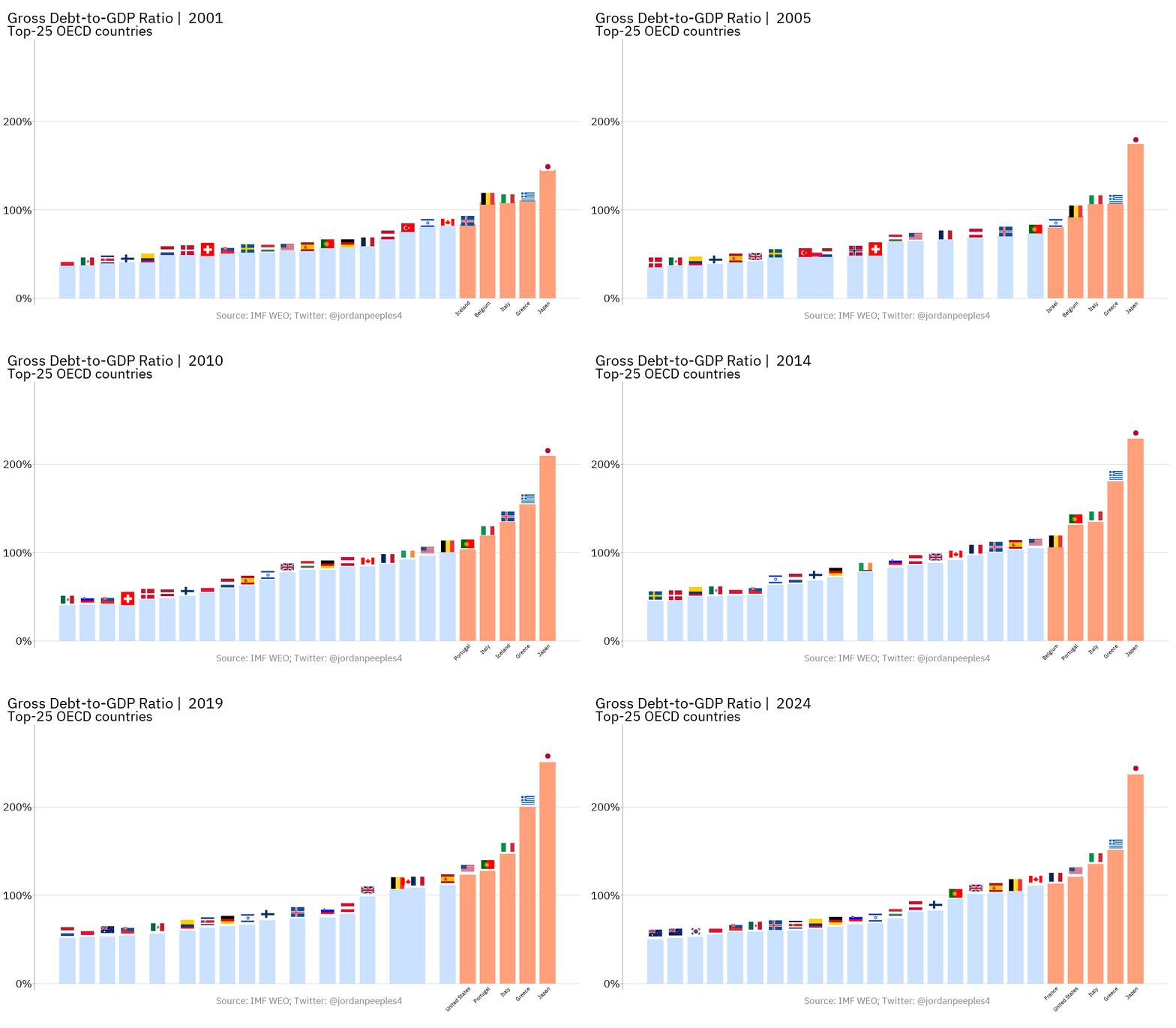
Many countries now have debt greater than their yearly economic output. Japan’s debt-to-GDP ratio is 237%, meaning it would have to tax everyone at 100% for over two years while spending nothing to pay it off, which is clearly impossible. So how can countries carry so much debt? And is there a limit to how much they can borrow?
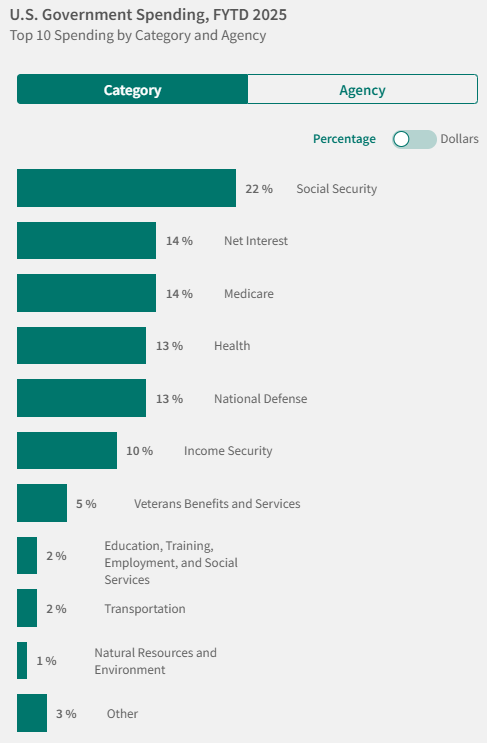
When a government spends on the military, social programs, roads, or other projects, it can pay for them by 1. raising taxes or by 2. borrowing. Higher taxes reduce the yearly deficit, while anything not covered by taxes is borrowed from “creditors,” which are usually citizens, foreign investors, or the central bank buying government bonds. The gross debt that I mentioned earlier also includes money the government owes itself, mostly for Social Security funds that will be paid to future retirees.
Businesses don’t invest as much
If you have ever taken an introduction to macroeconomics course, you may have learned that higher government spending has a “crowding out” effect. For those who didn’t, think about it this way: when the government needs to borrow money, it creates a higher demand for “loans” through its bonds. We can think of these as the same loans needed by businesses to invest in machines or buildings (called capital in economics). When the government starts taking out these loans, it “crowds out” the businesses in the country by driving up interest rates, making it harder for businesses to borrow, invest, and grow.
So, does this happen in the real world? Research suggests it does. Several studies find that higher debt-to-GDP ratios tend to raise interest rates (this paper, this paper, and this paper), and one study shows the effect is stronger in countries with above-average debt levels.
Short term economic output (GDP) increases while long term economic output (GDP) decreases
Governments often increase debt during recessions to boost the economy and create jobs. However, when debt grows, economic growth in the long run decreases. One famous economics paper found that the negative impact may be even stronger when the debt-to-GDP ratio is larger. Looking at all the studies on this relationship over the years, the effect is small. The logic here is that investment in capital (buildings and machines) decreases, so the economy doesn’t grow as quickly.
Since the recession, U.S. interest rates on loans and bonds have stayed low, where higher interest rates would mean a bond would make you more money and lower interest rates would mean less money. If you read my post on the fertility decline, I explained that the increasing age of our population is leading to larger deficits among countries due to the decreasing tax base and increasing funding of retirees, and this is also leading to lower interest rates.
At the same time, an aging population can actually support a higher debt-to-GDP ratio. As the workforce shrinks, 1. labor becomes more valuable and investment in buildings and machines declines, pushing interest rates down, and 2. older workers also prefer safer investments, like government bonds, and tend to save more as they live longer. This higher demand for bonds further lowers interest rates. Think about this as simple supply and demand.
Research backs this up. One study of multiple countries found that as populations age, investment in buildings and machines falls, and interest rates drop. This shows how aging affects the “supply side” of the economy. Another paper, using a mathematical model, finds that one country’s interest rates depend on other countries aging as well, driving down the interest rate in aside from its own domestic aging.
Demand for safe government bonds rises both because people save more and because they value the bonds’ safety. One paper argues that the increase in saving from longer life expectancy is a main channel. When this happens, the value of saving decreases, which means the interest rate decreases; you don’t get as much from saving.
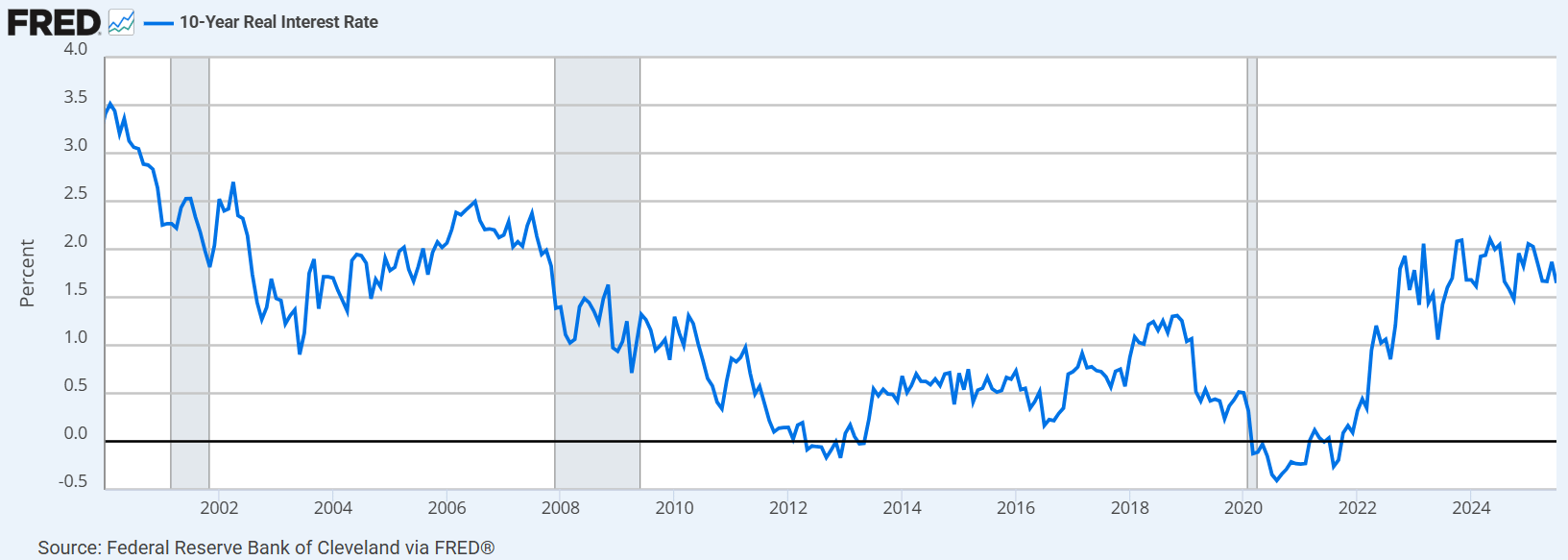
So, why are lower interest rates important for sustaining government debt? Well, just as when you have to borrow money for a house, a college education, or on a credit card, you consider the interest rates on each of these (hopefully). Having a lower interest rate makes debt more sustainable; imagine paying $300,000 for a house and facing a 1% interest rate versus a 5% interest rate. With a 20% down payment and 30-year loan, you would pay a total of $37,000 in interest on the 1% interest rate but a total of $223,000 in interest on the 5% interest rate. That’s much more than five times the 1% interest rate setting. When deficits are already large, the effect of increasing interest becomes exponential, which is why low rates are so valuable.
A well-known economics paper argues that government debt is less costly when interest rates are low and the economy is growing modestly. Since the interest rates for borrowing from all governments have been low since the Great Recession (until recently), the cost of a government borrowing from creditors has been low. We can think about this like a credit card: if you have debt on a credit card, you will have to pay interest every month. If the interest rate is low and you get a big raise at work, your ability to pay off the debt is higher, and you will start paying it off as well. The credit card company is then more confident in your ability to eventually pay off the debt than before the raise. This assumes you (or the government with its debt) do not begin spending even more each month.
There are many other complicated ideas related to the ability for countries to keep the debt-to-GDP ratio so high. Another reason countries can sustain high debt is strong demand for “safe assets” like U.S. government bonds, both at home and abroad. In fact, we have had a safe asset shortage due to emerging economies like China quickly growing the number of foreign investors. U.S. bonds are seen as safe because people expect them to hold their value during recessions. As long as that confidence remains, the debt is easier to sustain.
Thanks for reading The Peeples Economist! If you have learned anything so far, please like or share to help me grow.
Naturally, you might wonder what actually causes a country to go “bankrupt,” if it’s not simply hitting a 100% or even 237% debt-to-GDP ratio. The answer is more complex than when someone goes through personal bankruptcy, though there are similarities. Some key factors that lead to “bankruptcy” include how fast the economy is growing compared to interest rates, who holds the debt, and confidence in the government’s bonds. Even then, it is not obvious what the limit to borrowing is, and this is even confirmed by the popular paper mentioned earlier.
We call this “bankruptcy” a government default. It’s similar to going bankrupt with credit card debt, but there are key differences. Defaulting, for both your personal credit card debt and a country’s public debt, means missing a payment(s). With a credit card, default entails fees, collections, lawsuits, bankruptcy court, and loss of access to cheap credit. For a country, default means missing payments on bonds, ratings for the bonds plunge (credibility decreases), and the inability for a government to sell bonds. The government negotiates a plan with the creditors (often with help from the IMF, the International Monetary Fund, involved) and then lives with years of higher borrowing costs, tighter budgets, and a weaker economy. These defaults usually happen for emerging economies hit by hard recessions, which are easier to predict.
Greece is the only advanced OECD country to default in recent years, and it faced all the key triggers. When a newly elected Greek government found previous officials were hiding information on its debt, that situation came to light. Then, foreign investors were no longer willing to lend money to Greece, whom Greece had a large dependence on. With a large deficit and high debt-to-GDP ratio, Greece needed a bailout from the IMF and European Central Bank. After the default, unemployment soared and economic output decreased tremendously. It is still recovering.
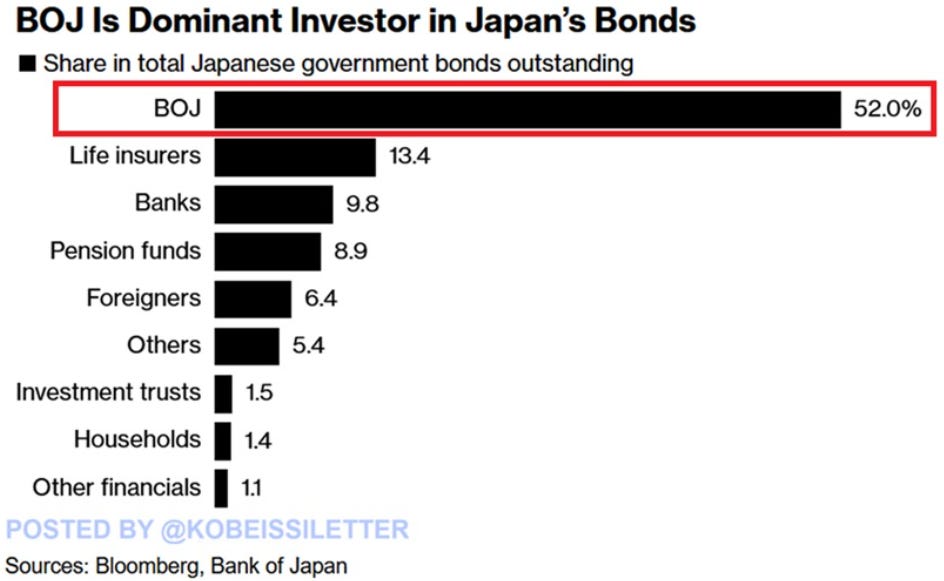
Japan’s debt-to-GDP ratio is now even higher than Greece’s during their default situation, but most of it is held by domestic investors and the central bank, making it less risky — unlike Greece. Still, economists warn it could become unsustainable if it keeps rising and domestic investors can’t keep up with government spending. One paper argued that while Japan keeping its current monetary (bank-related) policies will keep the debt sustainable, if the U.S. Federal Reserve decides to increase interest rates further or if global interest rates increase, debt may eventually become unsustainable. The IMF and OECD have both urged Japan to create a plan to gradually reduce its debt to prepare for future shocks, and we are now seeing the ramifications of increasing interest rates.
As mentioned earlier, low interest rates and steady economic growth are key to keeping debt sustainable. But if government spending rises sharply, it can make interest rates higher through crowding out and fuel inflation. So what happens if interest rates stay high for an extended period?
In recent years, central banks, including the U.S. Federal Reserve, have raised interest rates to fight inflation through a method known as quantitative tightening. Combined with the growing debt-to-GDP ratio reported by the CBO and IMF, this poses a risk to debt sustainability in the U.S. Still, higher debt alone wouldn’t trigger a default, as Japan’s even larger ratio shows. A U.S. default would require something more severe, like a loss of confidence in government data, the collapse of the Federal Reserve, or even a delay in increasing the debt limit for the Treasury.
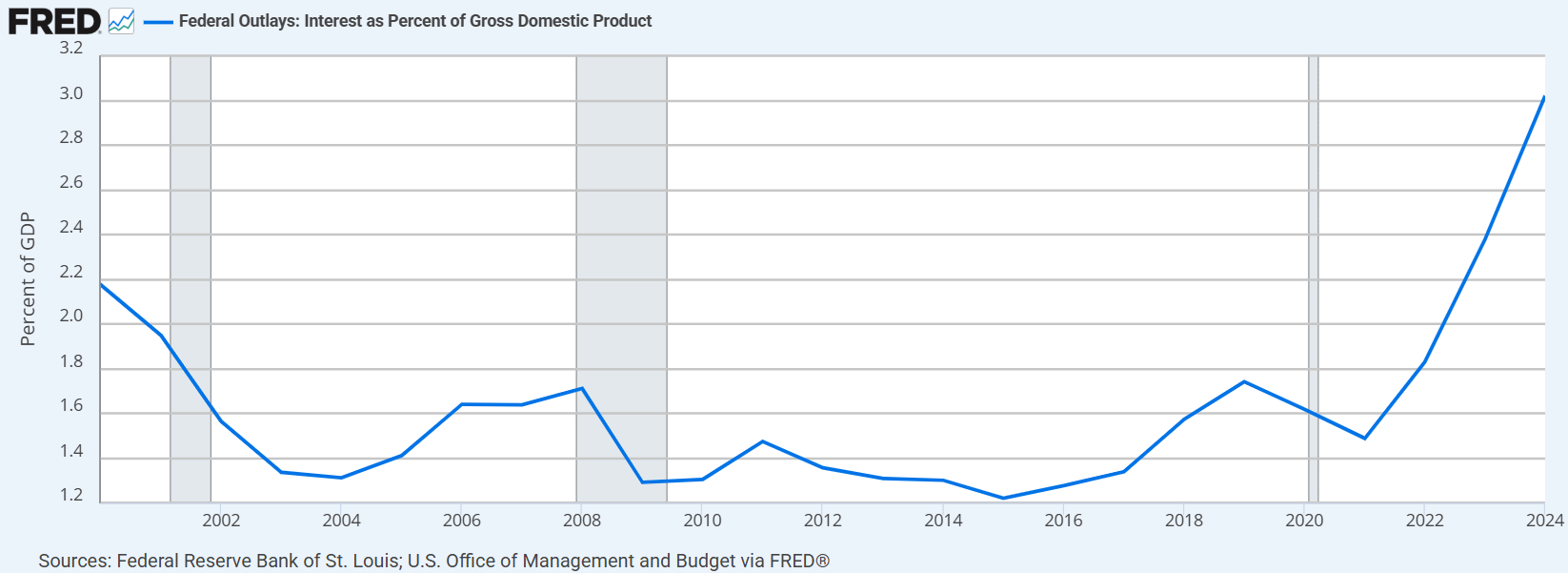
Overall, government debt in advanced economies, which have the capacity to borrow more, has proven mostly sustainable. Since 2000, only one major advanced economy has defaulted. Higher debt-to-GDP ratios raise the risk but don’t cause defaults on their own. As populations age, debt will likely grow to support retirees, but interest rates on that debt may return to low levels and remain low. Even so, the negative impacts of increasing debt on investment and GDP growth — factors which will already face struggles with an aging population — should be considered. Default or forced central bank intervention should not be the bottom line.
If you learned anything from this post or enjoyed it just a little, please like or share to help me grow!
Very simple TL;DR: Increasing government debt doesn’t necessarily mean governments will go bankrupt. The situation for each country is unique and complicated, but the ability to borrow so much basically boils down to countries borrowing at very low interest rates and investors having trust in the country’s bonds. Central banks, who owns the country’s bonds, and low interest rates are important for surviving recessions without going bankrupt, but countries shouldn’t push the boundary of default when debt hurts economic growth.
No posts
Comments
Nothing yet. Say the first thing.
Sign in to join the conversation.