
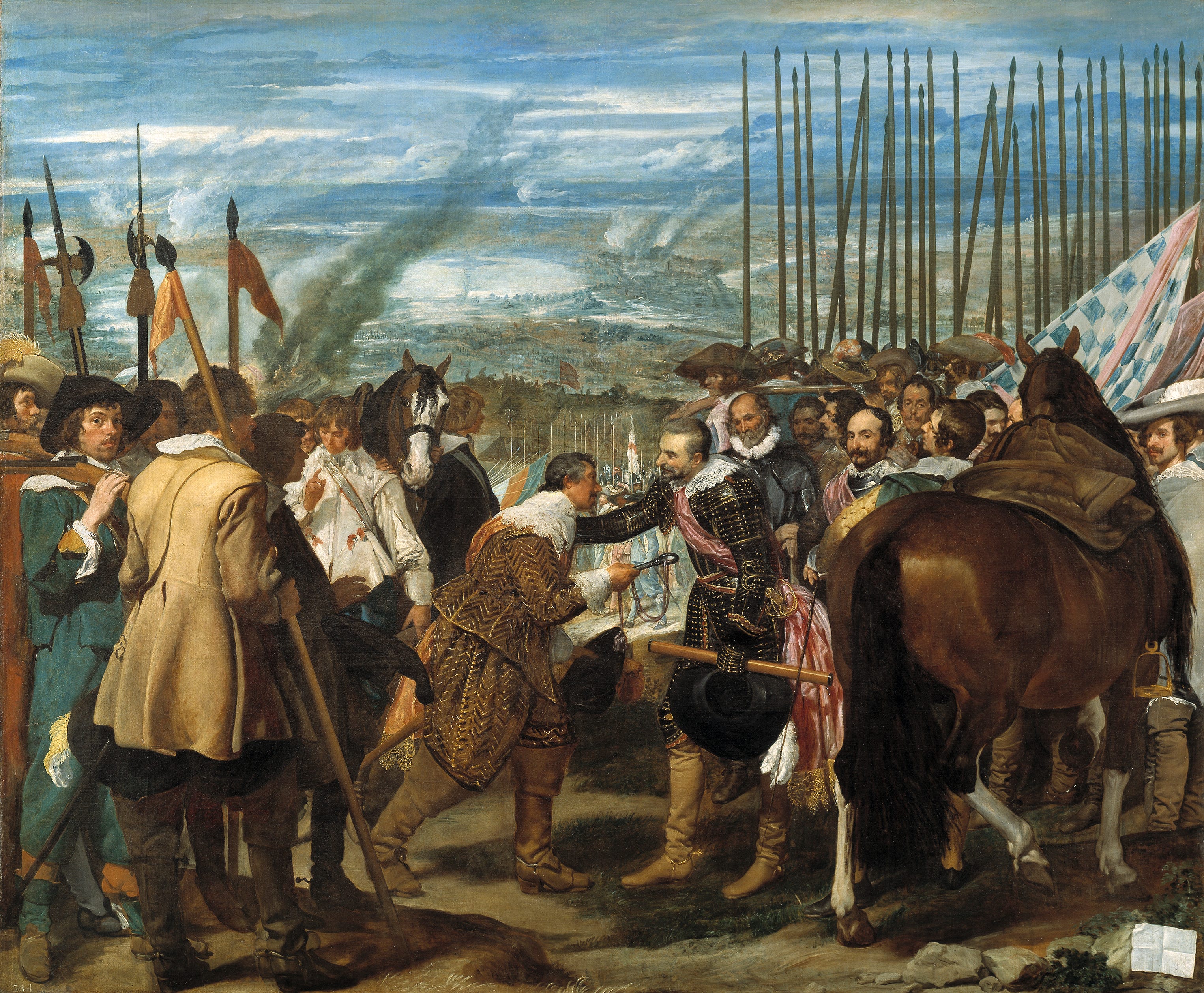
Americans are proud.
We say the Pledge of Allegiance in school from the time we’re young and make everything from nail polish to cowboy boots in red, white and blue. Fighter jet flyovers complement the singing of the national anthem at big football games. And if you drive around suburban America, you’re liable to see an American flag roughly the size of a McMansion flying above a car dealership.
This pride also overflows into every subpart of the United States. Texans, for example, believe that Texas is not only the best state in the country but also the best country in the world. Likewise, Chicagoans will sincerely (and in my opinion, with good reason) tell you that there’s no better summer city than Chicago in the U.S. or the world.
In stark contrast to this pride, the flimsy agreement that may or may not be ending the Iran War feels like a capitulation, like a humiliation. As Karim Sadjadpour wrote for the Atlantic, “the memorandum offers a bundle of American inducements so lopsided that it reads as if Tehran wrote the plan unilaterally.”[1] Similarly, 92.7% of respondents to a Tangle poll[2] said “it is a bad deal for the U.S. and a good deal for Iran.”
But while the deal feels deeply embarrassing, I would argue that it is far better for us to suffer some embarrassment than to continue in wrongdoing.
Let’s start with the details of the new Memorandum of Understanding (MoU), which provides the framework for a more permanent deal to be defined in the next 60 days. In very simple terms, the current agreement…
ends active conflict in Iran and Lebanon
reopens the Strait of Hormuz
lifts sanctions on Iran
unfreezes Iranian assets internationally
commits $300 billion from the U.S. and U.S. partners to rebuild Iran
requires a promise from Iran to not develop nuclear weapons
In the MoU, the U.S. cannot really point to a single negotiated win. Instead, we have given up economic levers that were previously used to put pressure on Iran and promised to invest a massive amount of money[3] in Iran that will almost certainly strengthen the regime.
And while we may have signaled to Iran that we’re willing to back up our threats with military action, we’ve also shown that intervention interrupts the American and world economy to such a degree that we don’t have the political will to sustain the costs necessary to achieve whatever goals we have.
But in the war that this MoU hopefully ends, the U.S. does not have a clearly just cause for fighting. While the Iranian regime was deeply unpopular, and while the desire to help and support the Iranian people remains entirely understandable, we have not articulated a clear motivation for the war that would have proved its justness.
At the same time, many Americans—myself included[4]—thought our enormous military advantage would lead to a relatively easy victory. We had, after all, just successfully captured the president of Venezuela in a shocking, overnight operation.
In this way, the tentative agreement is doubly embarrassing for the American psyche: we both violated the good name we give ourselves and undermined our reputation of strength and power.
Wounded, our pride might gnaw at us today, “should we be so quick to give up? Couldn’t we win a better deal if we pushed harder? Can we really accept such an embarrassing defeat?”
But if we look in Scripture, we see the same question asked in different words: should we do evil so that good may come of it (Rom. 3:8)? Should we remain in sin so that grace may increase (Rom. 6:1)?
As St. Paul answers simply: “Absolutely not” (Rom. 6:2)!
For us Christians, pride is not something we hold onto too tightly since Jesus existed in the form of God and nonetheless emptied himself, taking on the form of a slave (Phi. 2:6-7). And following our God’s example, we cannot be motivated by selfish ambition or national interest but should instead treat one another as more important than ourselves (Phi. 2:3).
Of course, all discipline and the chastisement of our pride seem painful at the time, and it’s natural to feel embarrassed or humiliated by the MoU. But this discipline produces the fruit of peace and righteousness (Heb. 12:11). Therefore, let us set aside our pride and embrace what seems like an embarrassing end to the war so that we might become the peacemakers who are called the children of God (Mat. 5:9).
[1] I found this comment via Derek Thompson’s Plain English podcast episode “The Iran War Is Ending. Everybody Lost.”
[2] According to Tangle, their readers are 40% liberal, 30% conservative and 30% independent or “outside the left-right binary.”
[3] It is worth noting that the much-maligned Iran deal negotiated by the Obama administration included only $1.7 billion for Iran. Sen. Roger Wicker (R-MS), who has generally been an ally for the Trump administration, said the new agreement made the old investment “look like a pittance by comparison.”
[4] I wrongly assumed that any bombing campaign would also include American ground troops invading Iran: excepting the use of nuclear weapons, no country has ever successfully bombed another into submission without corresponding forces on land.
Comments
Nothing yet. Say the first thing.
Sign in to join the conversation.