
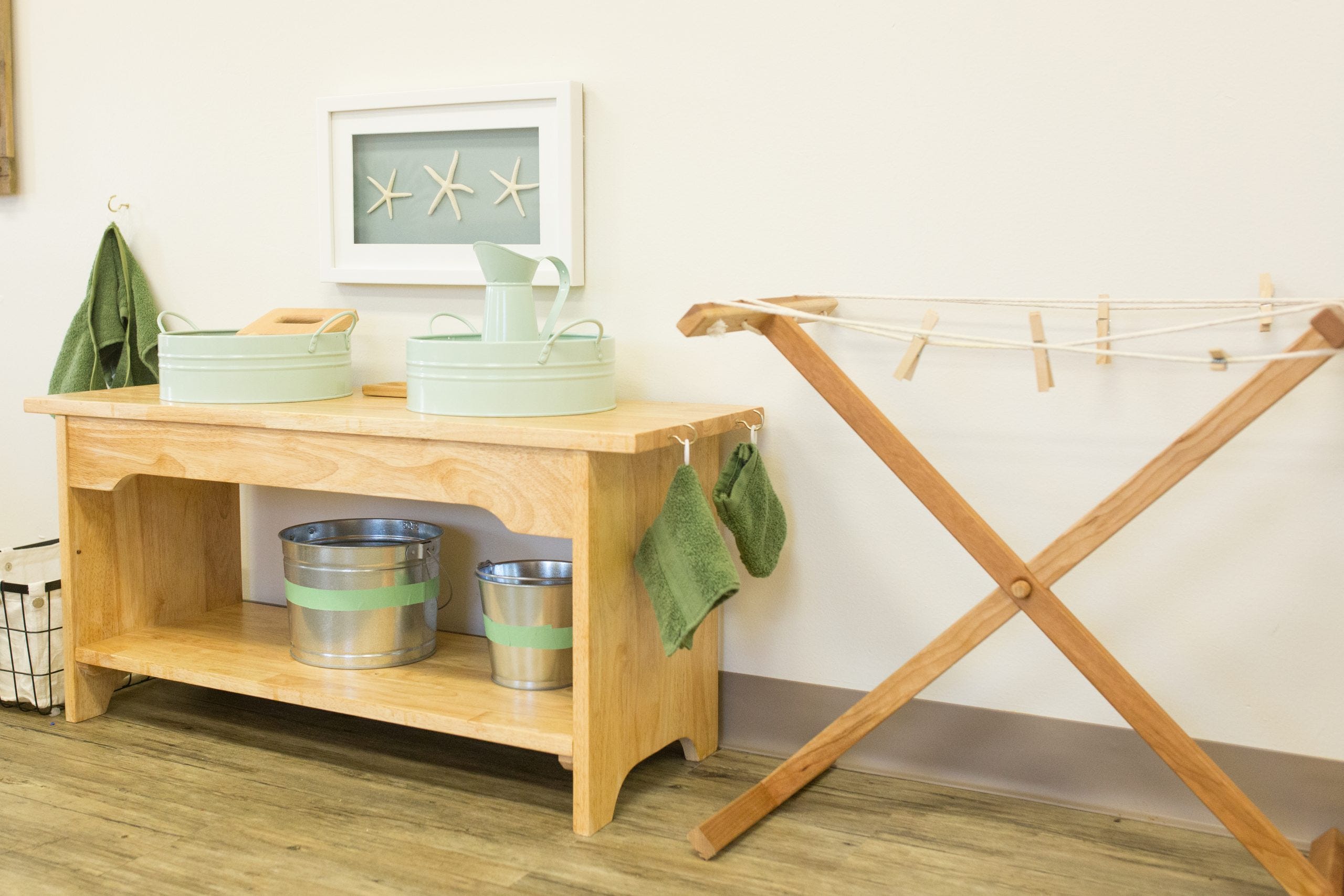
Montessori activities for the summer hit differently than they do during the school year. There’s no routine to protect, no morning rush, no countdown to pickup. Just long days, a kid with energy to burn, and way more time to actually do the things you’ve been pinning and saving and meaning to try.
This is that list. Twenty activities across four areas: practical life, sensorial, independence, and nature and science. For toddlers and preschoolers, with real setup instructions, not just vibes.

Practical life is the foundation of Montessori activities for the summer at home. The idea is simple: children want to do what you do. They want to help, to contribute, to feel useful. Summer is the perfect season to let them.
This one is so simple it feels almost too easy, but watch your kid’s face when they realize they’re actually helping make dinner. There’s something about water, a brush, and a real job that toddlers and preschoolers find deeply satisfying. It also naturally extends into conversation: where did this come from, what does it grow into, what are we making tonight.
Set up a small basin of water on a low table or right on the floor
Add a soft vegetable brush and whatever needs cleaning before dinner
Show them once: dip, scrub in small circles, rinse, set on a clean towel
Hand it over and let them finish the whole bowl without jumping in
Toddlers do best with potatoes and carrots; preschoolers can handle almost anything
Independence at snack time starts here. Once this is set up, you’ll be surprised how rarely they ask you for a drink. It also builds real hand-eye coordination and teaches them to manage a small spill without it being a big deal.
Keep a small child-sized pitcher on a low shelf in the fridge or on the counter
Fill it with water or diluted juice, something that’s fine if it spills
First time: do it together with your hand lightly over theirs to feel the motion
Keep a small folded cloth nearby so they can wipe up spills themselves
After the first week, it’s usually fully independent
Montessori activities during the summer mean more towels, more swimsuits, more of everything landing on the couch. Pull your child into it. This is not a teachable moment you have to engineer; it’s just a thing that needs doing, and they can help do it. That’s the whole point.
Start with washcloths: fold in half, fold again, done
Preschoolers can move to hand towels with a slow demonstration first
Sit beside them and fold one in front of them, then let them try theirs
Don’t redo it afterward, even if it’s a lumpy square
The fold doesn’t matter; the doing does
This becomes one of those things they just do without being asked once it’s established. The template is the key: it removes the guessing and gives them something concrete to match. It also makes meals feel more intentional, which kids pick up on.
Make a simple paper placemat showing exactly where each item goes: plate, fork left, knife and spoon right
Laminate it or slip it under a clear placemat so it stays clean
Hand your child the real items and let them match everything to the template
Even two-year-olds can do this with the guide in front of them
Within a few weeks, most kids stop needing it
Give one plant to your child to own as one of their Montessori activities for the summer. Not help with, not check on with you. Theirs. This kind of specific, sustained responsibility is something young children rise to in a way that surprises most parents.
Choose one plant and tell your child: this one is yours to water
Water it together the first time and show them how much is enough by pointing to how the soil looks when it’s had a good drink
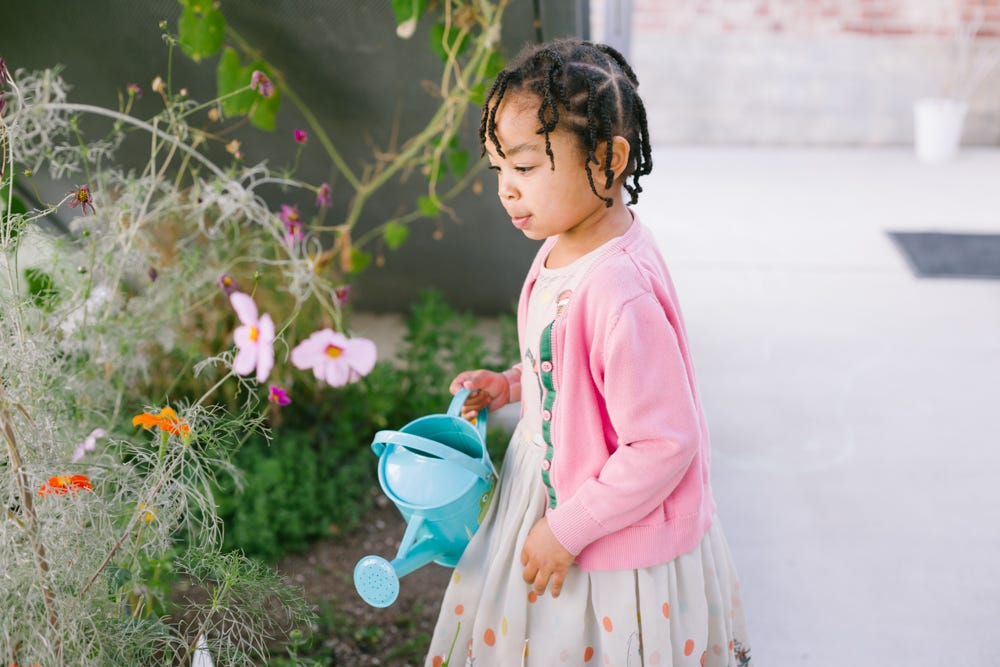
Give them a small watering can they can fill and carry themselves
Set a consistent time, morning once per week works well, so it becomes part of the routine
Check on it together periodically and talk about what you notice
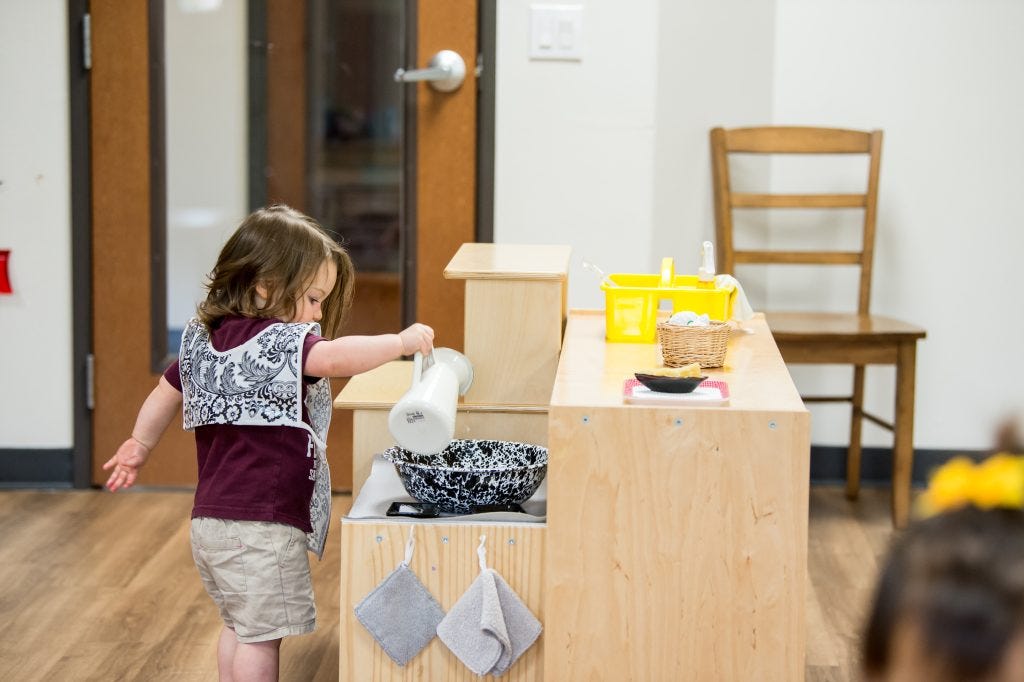
The sensorial work in Montessori activities during the summer is about helping children pay close attention to the world through their senses: weight, texture, temperature, sound, smell. Summer hands you this material for free. You just have to slow down enough to use it.
This is the activity that parents are most hesitant about and kids love most. Once you set it up and let go of the mess, it runs itself. Children spend hours here mixing, measuring, pouring, and creating. The sensory input from mud, actual mud, is hard to replicate with anything else.
Find a corner of the yard, a patch of dirt in a planter, or even a large tray
Add a few old pots, a spoon, a cup, and a small bucket of water to refill as needed
Show them once how to mix water into dirt and stir it
Then genuinely walk away and let them lead
Old clothes, a hose nearby for cleanup, and that’s it
This is one you can do in your own backyard or on a slow walk around the block. The point is to move carefully and pay attention to what’s underneath, which is something kids almost never do. Doing it together makes it feel like an adventure rather than a lesson.
Take your shoes off together before you start
Walk slowly across different surfaces: grass, pavement, gravel, soil, bark
Narrate what you feel as you go: “This is rough.” “Oh, this one is warm.” “Feel how soft this is.”
Collect a few small objects along the way: a pebble, a leaf, a piece of bark
When you get home, sort them into two piles: rough and smooth
This one requires ten minutes of prep the night before and then delivers a solid hour of focused, independent play. The combination of cold, wet, and the challenge of getting things out makes it genuinely captivating for this age group.
Fill a container with water and drop in small objects: plastic animals, coins, flowers, leaves, whatever you have
Freeze it overnight
In the morning, pop it out into a bin or tray
Give your child a spray bottle filled with warm water and a small dropper or pipette
Their job is to free the objects; no further instruction needed
This is a classic material you can make in about five minutes to use amongst your building toolkit of Montessori activities for the summer! The matching version is perfect for toddlers; the ordering version challenges preschoolers in a way that keeps them genuinely engaged.
Collect six small containers with lids
Fill pairs with the same material: rice in two, dried beans in two, small pebbles in two
Seal them well and mix them up
Show your child how to shake and listen, then find the pair that sounds the same
For preschoolers ready for more: add a third material and ask them to line all six up from quietest to loudest
No materials, no prep. Just going outside and paying attention together. This one is underrated because it looks like nothing, but it builds observation skills and language in a way that’s hard to manufacture indoors.
Go outside right after rain or first thing in the morning before everything heats up
Walk slowly and stop to smell things: grass, flowers, soil, bark, herbs if you have them
Name what you notice together and use descriptive words: sharp, sweet, earthy, green
Let your child lead you to things they want to smell
There’s no endpoint; just turn back when it feels done
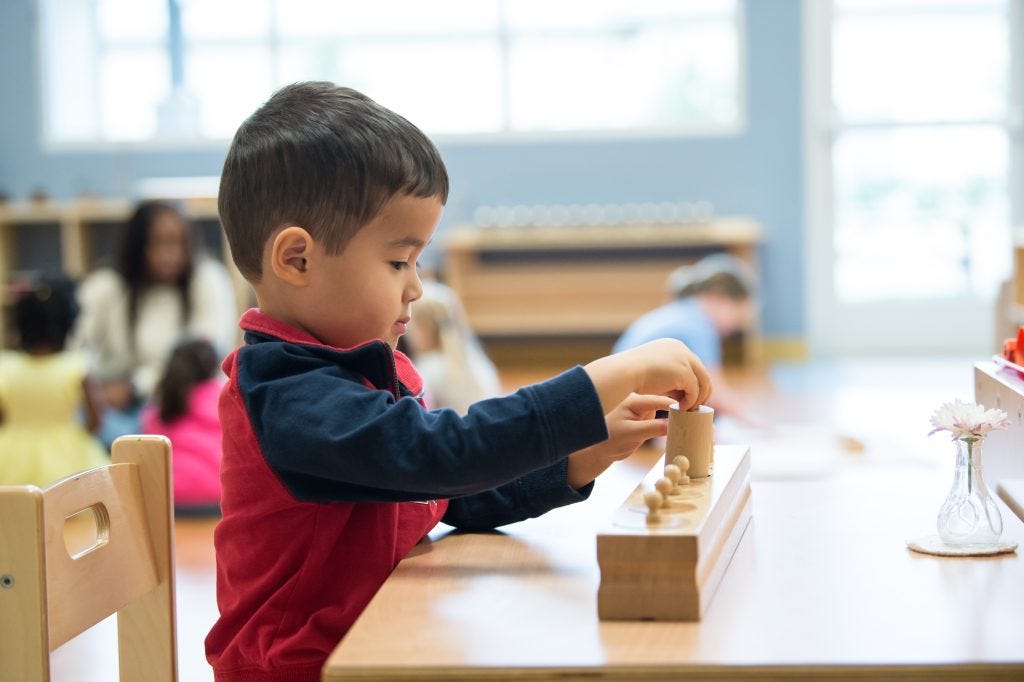
Montessori activities for the summer are actually the easiest time to build independence because the pressure is lower. Nobody has to be anywhere on time. If something takes longer than expected, that’s fine. Use that.
Once this is set up, you will be asked for snacks less. That alone is worth it. More importantly, a child who can feed themselves a real snack without help experiences a kind of quiet confidence that carries into everything else.
Clear one low shelf, drawer, or basket in the kitchen and designate it as theirs
Stock it with things they can prepare without you: crackers, pre-washed and cut fruit, individual portions of nut butter or hummus with a spreader
Show them where it is and say clearly: when you’re hungry for a snack, you can get it yourself
Stay nearby the first few times without intervening
Restock it with them so they know what’s there
Summer clothes are the easiest to start with: elastic waistbands, slip-on sandals, t-shirts with no buttons. This is the season to hand that task over completely.
The night before, put out two outfits that are both fine: let them choose which one in the morning
In the morning, tell them to pick one and get dressed; then leave the room
If they get stuck on a specific step, demonstrate the motion once with your hands and let them try again
Don’t fix the outfit if it doesn’t match perfectly
They chose it, they put it on themselves; that’s the whole lesson
The difference between supervised art and independent art is enormous in Montessori. When you’re there prompting and asking questions and reacting, the experience is partly yours. When you step back, it’s entirely theirs. Summer makes it easy to set this up outside and actually walk away.
Set up a low surface outside with paper and whatever materials you have: crayons, watercolors, chalk on the ground
Make sure they can reach everything without asking for help
Sit nearby with coffee or go inside; don’t sit with them at the activity
If they show you something, respond genuinely and briefly
Resist asking what it is
This is different from a reward chart. There are no stickers, no prizes, no praise system tied to it. It’s just a record of the real things your child contributed to the household that day. Kids take that seriously.
Sit down together and ask your child to choose three jobs they want to own this summer
Write their name at the top and list the three jobs: feeding the dog, bringing in the mail, sorting the recycling, whatever they chose
Post it somewhere they can see it
At the end of each day, they check off what they did
Review it together once a week, not to evaluate but to notice
Even kids who have dropped naps need a reset in the middle of the day, and so do you. This is not punishment and it’s not sleep; it’s protected independent time where they choose what to do in their own space.
Set a consistent time and length: 45 minutes to an hour works for most kids this age
Designate a space: their room or a specific corner with books, puzzles, and building materials
Explain it once: “This is our quiet time every day. You stay in your space and choose what you’d like to do.”
The first few days they will resist; hold the boundary warmly and consistently
After about a week, most kids settle into it and start to look forward to it
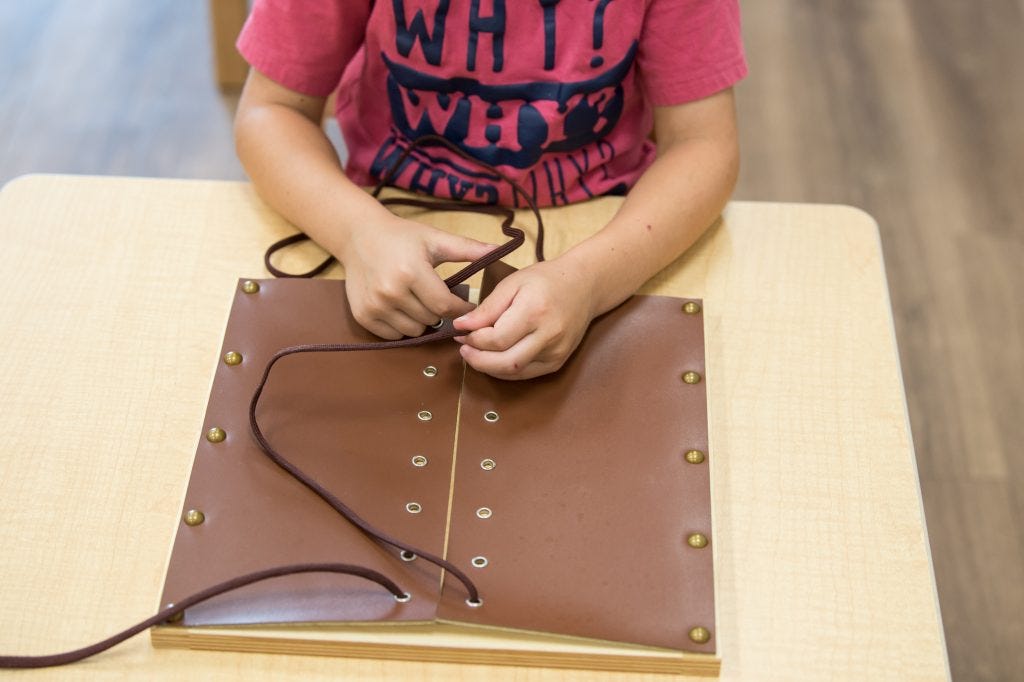
Young children are already scientists. They observe, test things, form theories, and revise them constantly. Your job is to give them something worth paying attention to and then get out of the way.
This one pays off over the whole summer. It starts as a building project and turns into an ongoing observation practice. Checking it together regularly is where the real learning happens.
Gather materials: bark pieces, hollow sticks, pine cones, dried leaves, straw
Pack them tightly into a wooden crate, tin can, or sturdy cardboard box
Place it in a shady corner of the yard at ground level
Check it together every two or three days: lift things carefully and look underneath
Talk about what you find: who moved in, what they might eat, why they picked that spot
Optional: you can purchase this cute bug hotel starter pack by clicking here.
This is one of the simplest science activities you can do and one of the most memorable. Watching something change over the course of a day, and being the one who recorded it, makes a real impression on young kids.
On a sunny morning, place a stick or small object outside on a flat surface
Trace the shadow with chalk and write the time next to it
Come back at noon and do it again in a different color if you have it
Come back before dinner and do it one more time
Ask your child what they think happened and listen to their answer before you explain anything
This teaches patience, observation, and cause and effect in a way that no book or activity kit can replicate. Sunflowers, beans, and basil are all fast enough to hold a young child’s interest.
Get a pot, potting soil, and a packet of fast-growing seeds
Plant together: fill the pot, make a small hole, drop in the seed, cover it, water it gently
Give your child a small notebook to draw what they see each week, no writing required
Water it together every day as part of the morning routine
When something changes, notice it out loud and ask what they think will happen next
This is an activity that costs nothing and teaches more than it looks like it does. It also gives kids a reason to look forward to rainy days, which is worth a lot.
Before a storm or rainy period, set a bowl or wide-mouth jar outside together
After the rain, bring it in and measure what collected using a ruler held against the inside of the jar
Write it down or let them draw it in a notebook
Talk about where rain comes from and where it goes after it soaks into the ground
Do it a few times over the summer and compare what you collected each time
This is less an activity and more a practice you build into the whole summer. A nature table is a dedicated surface where your child keeps what they collect: rocks, feathers, seed pods, shells, interesting sticks. It evolves. It tells a story of the season.
Clear a low shelf, windowsill, or small table and tell your child it’s for their finds
Add a magnifying glass and a small notebook for drawing
After walks, let them choose one or two things to bring back and add
Ask questions about what they collected: where did you find it, what do you think it is, what does it feel like
Don’t tidy it up or curate it; let it be theirs
You don’t have to do all of this. You don’t have to do any of it perfectly or on a schedule or with the right materials. Montessori at home in the summer is really just about noticing what your child is drawn to and giving them more of that, with a little more room to do it themselves.
The days that feel the most unplanned are usually the ones that stick. Give them a watering can and step back. You’ll see.
If your child is older, we’ve put together the full elementary version over on The Montessori Adult. It’s a scaled up guide for ages 6 to 9, with deeper projects, more independence, and a summer planning conversation you can have with your child before any of it starts. Read it here.
No posts
Comments
Nothing yet. Say the first thing.
Sign in to join the conversation.