
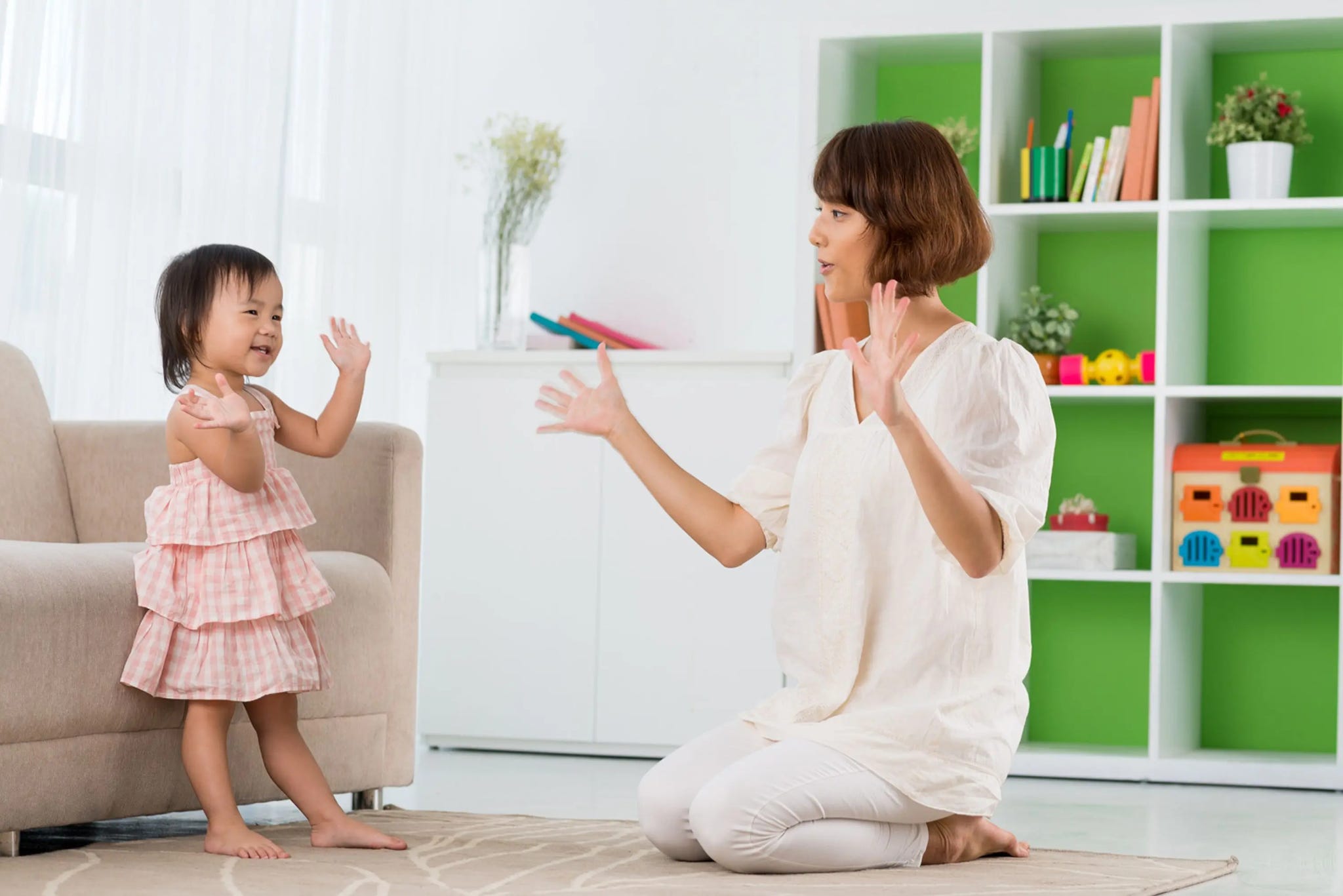
Sometimes, people think Montessori at home has to look a certain way. Picture white IKEA shelves with neatly arranged wooden toys on them, beige walls, a neutral rug.
These are the Montessori home environments we see the most on social media. For parents who are new to Montessori, this visual appeal fuels the misconception that Montessori at home is an aesthetic for those who can only afford artisan wooden toys.
The toy industry can add to this misconception too. We get bombarded with advertisements to buy “Montessori toys,” regardless of whether or not they have any genuine connection to Montessori — which is a scientifically developed method of teaching, not a line of toys. Some people further think that a toy has to be neutral or wooden in order to be Montessori-aligned, when that alone is not an accurate filter.
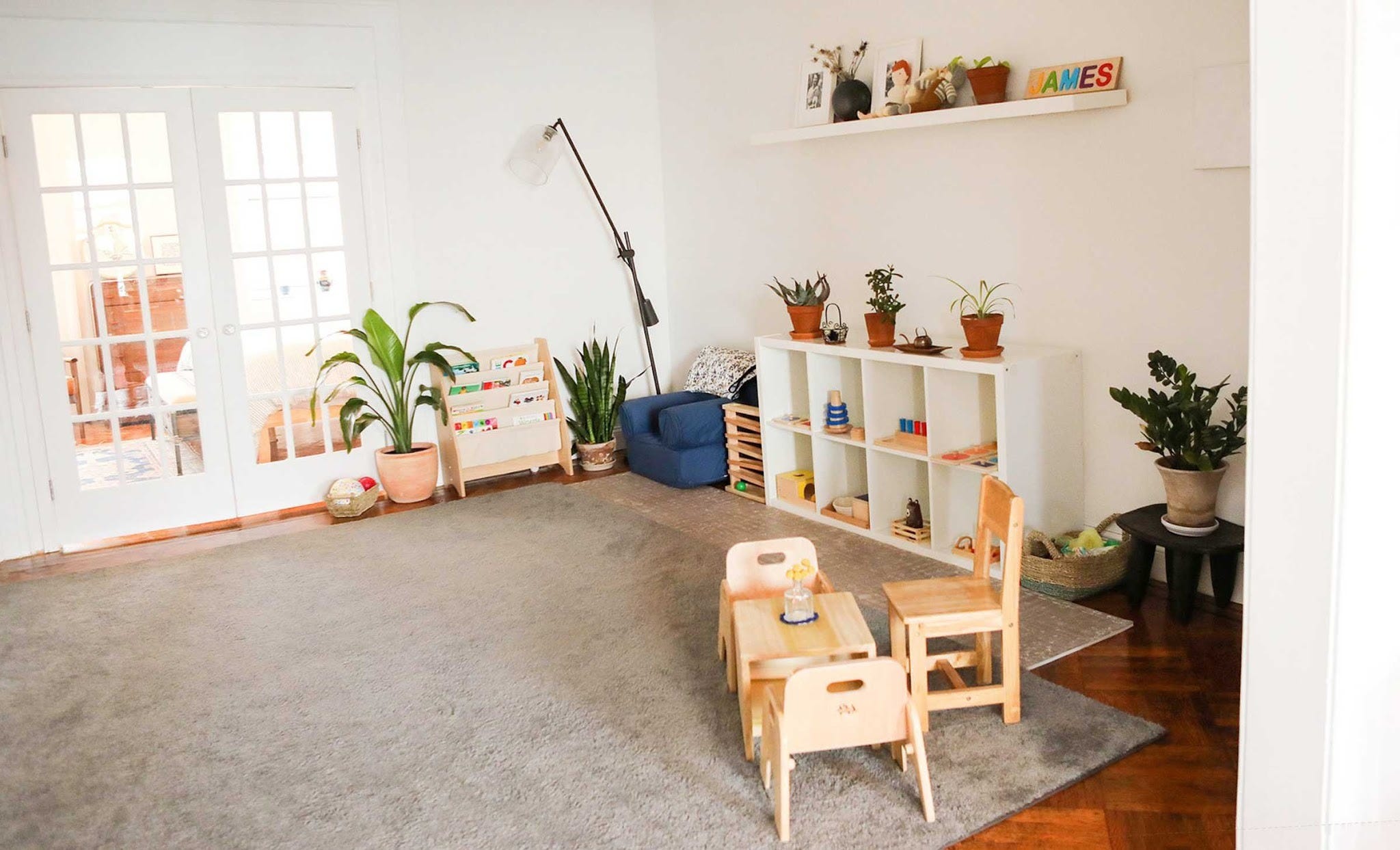
Montessori schools emphasize calm, muted colors and items that reflect real-world, natural beauty. Why? For the same reason that we focus best when our workspace is calm and uncluttered, children learn better in spaces that promote calm and concentration.
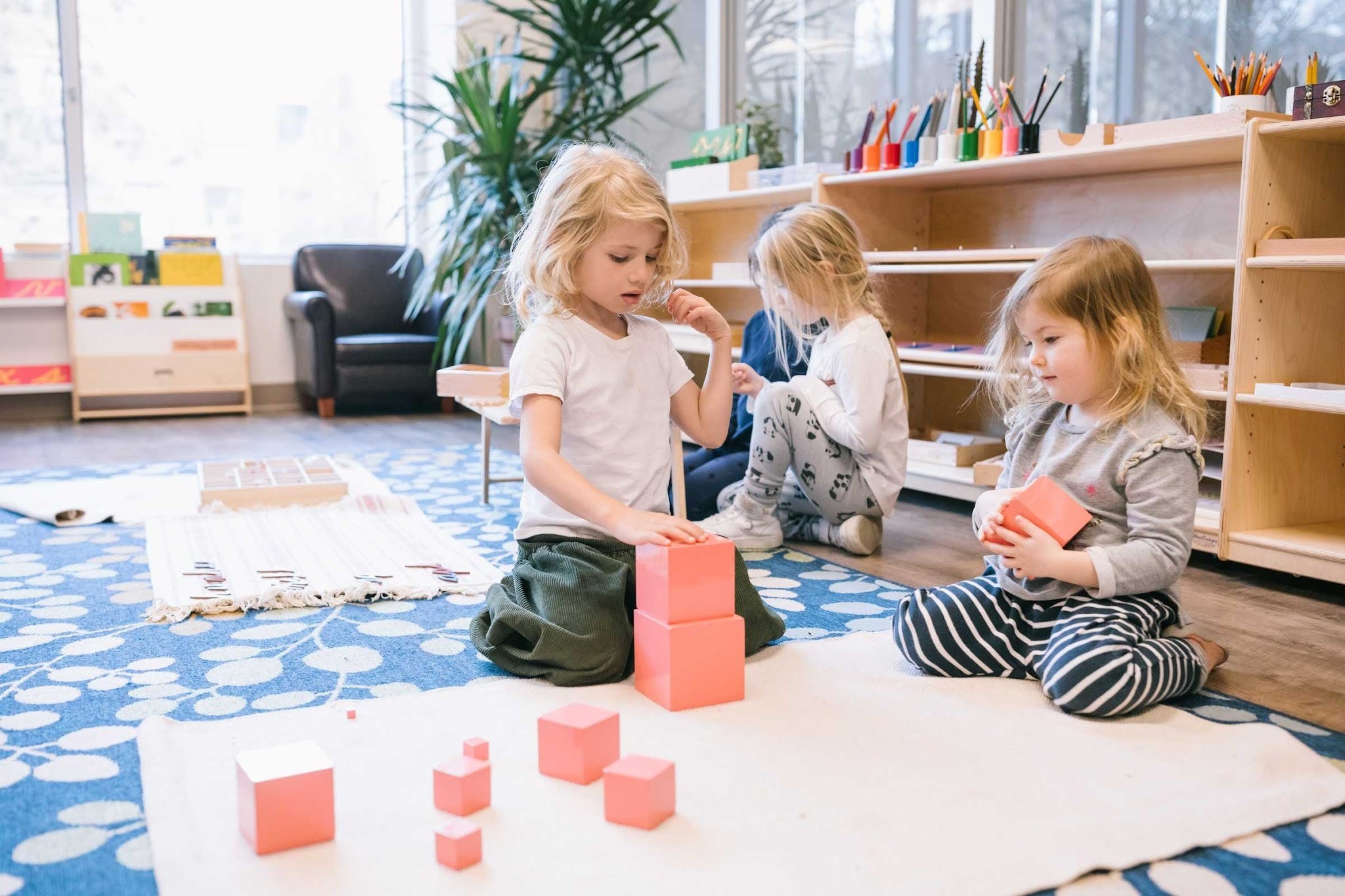
It is also true that colors are intentional in the design of authentic Montessori learning materials. For example, learning materials designed for infants contain high-contrast, black and white imagery because that is precisely what newborns can see at first! The iconic Pink Tower is intentionally uniform in color with the only difference being the size of each cube to aid the child’s ability to visually discriminate between different sized objects.
Home is a different environment than school. For children who attend a Montessori program by day, home is a place to decompress, connect with family, and build upon developing independence. We can add a step stool to invite children to cook with us, bring their bedroom to their level so they can get dressed on their own, and keep their toy collection uncluttered so that they can purposefully connect to and care for their belongings.
Is your stacking tower at home inferior because it has multiple colors and designs? No. Should you return the baby mobile you have just because it’s not black and white? No.
The specificity with colors in Montessori school promotes concentration and serenity because your child goes to school to work. Facilitating your home to be a calm and inclusive space isn’t accomplished by duplicating the classroom. We can support them at home within the framework of what makes our home special and unique.
There is a greater misconception that a child’s world needs to be overstimulating in order to be inviting. It’s not uncommon to see bright primary colors, cartoonish-designs, busy light-up, noisy toys as the presumed “age-appropriate” default for our homes. Unfortunately, this isn’t complementary to how the young child’s absorbent mind works.
While you do not need to duplicate a classroom environment, there are valuable takeaways to consider about Montessori’s prepared environment that can empower you to complement learning as it intersects with living. Young children absorb their surroundings with even greater sensitivity than we do. Too many competing sensory inputs overwhelms them. Young children also appreciate real beauty and real work in full authenticity, and they connect more purposefully when they have unrestricted access to everyday life as it is.
Ever notice a baby who keeps reaching for real household objects instead of toys? Or a preschooler who wants to cook real food once the novelty of a pretend kitchen has worn off? This is why! They are wired to explore the world, not just a play room.
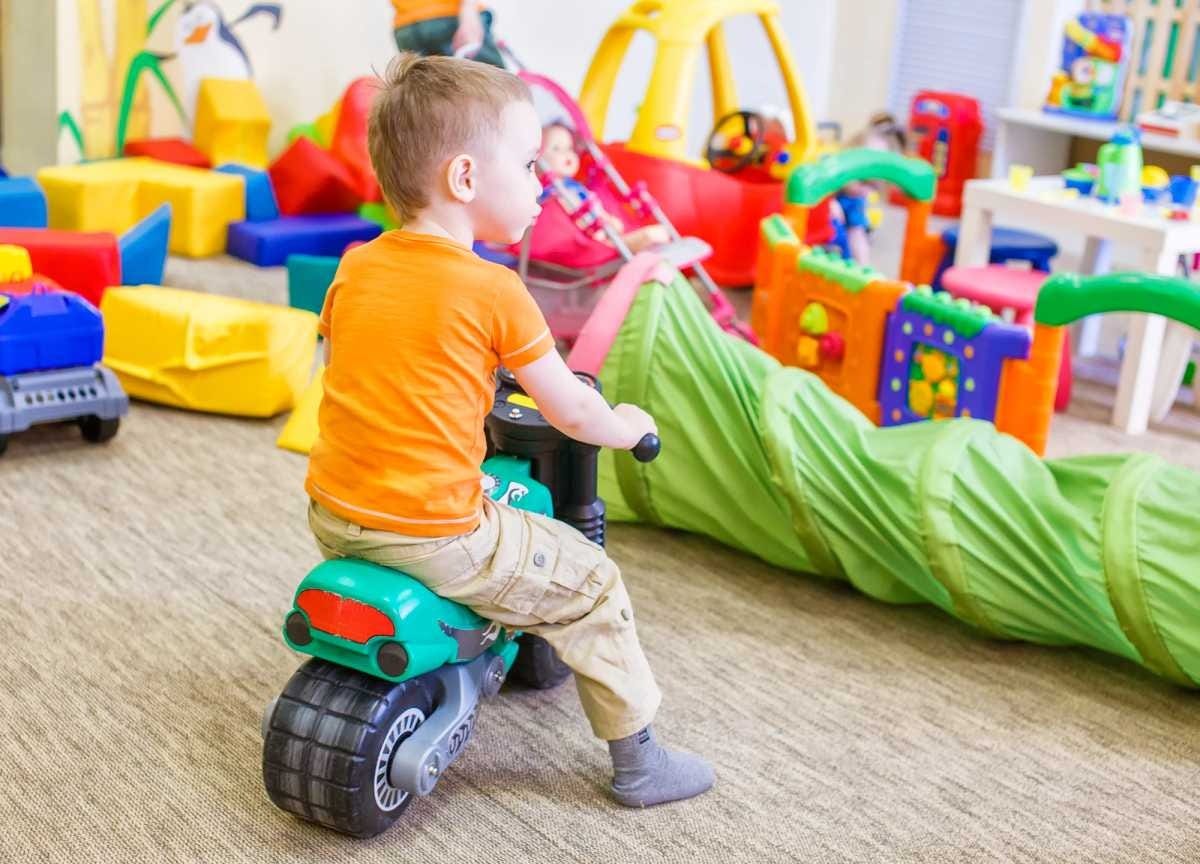
It is more often the case that color is used to overstimulate and distract the child. Our world is beautiful, and we don’t actually need to buy so much extra stuff in order to inspire our children.
Can you offer a colorful, plastic toy, or use a rug with colorful prints and patterns? Of course! Nurturing purposeful engagement at home is possible no matter your budget, style, or toy collection. But, if you catch yourself falling for the mainstream trap of blanketing your child’s space in all things busy and bright, consider how the space makes you feel. If it’s overwhelming for you, it is definitely overwhelming for your child.
No posts
Comments
Nothing yet. Say the first thing.
Sign in to join the conversation.