AI, Productivity, and Rates: Part 2
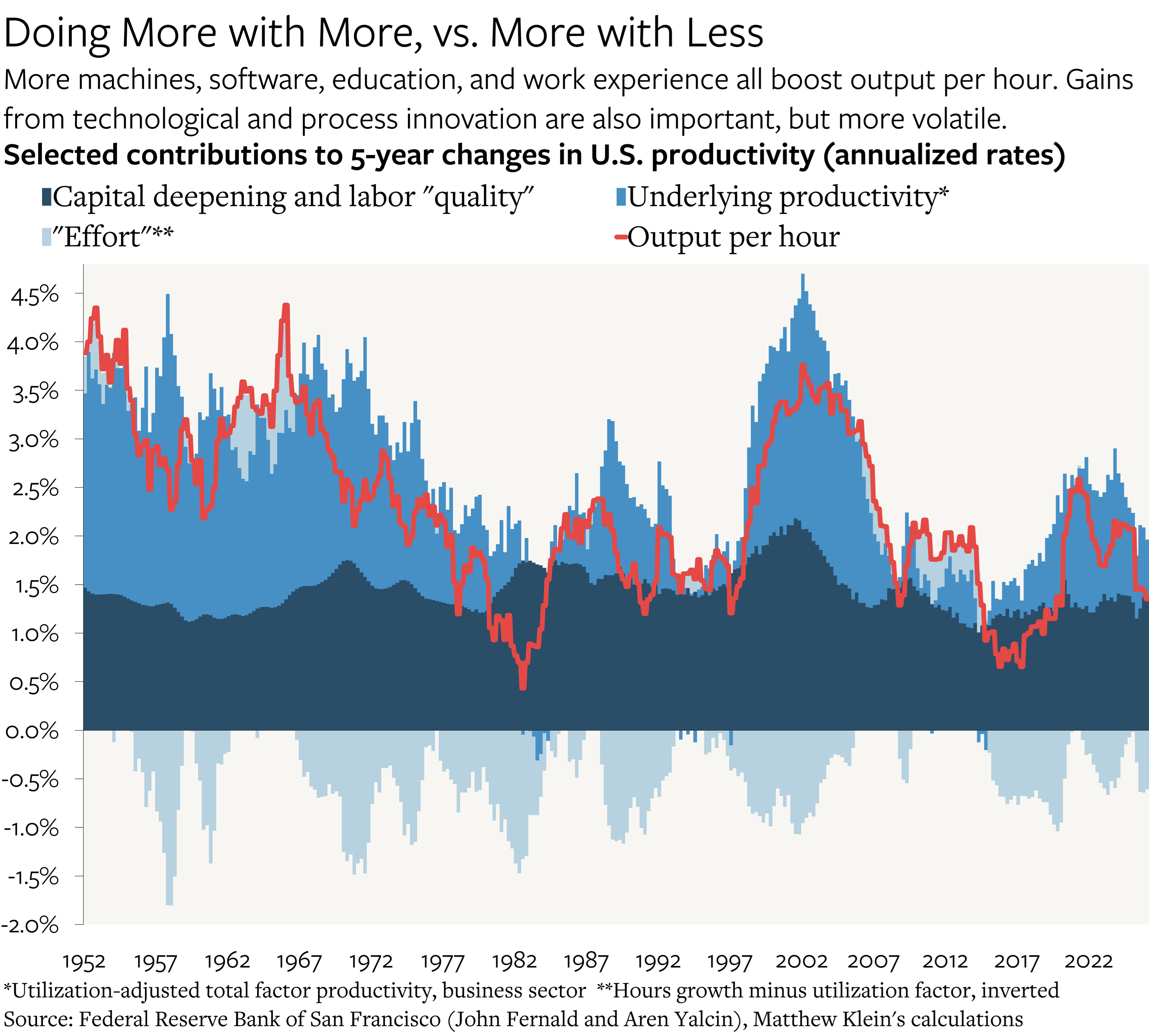
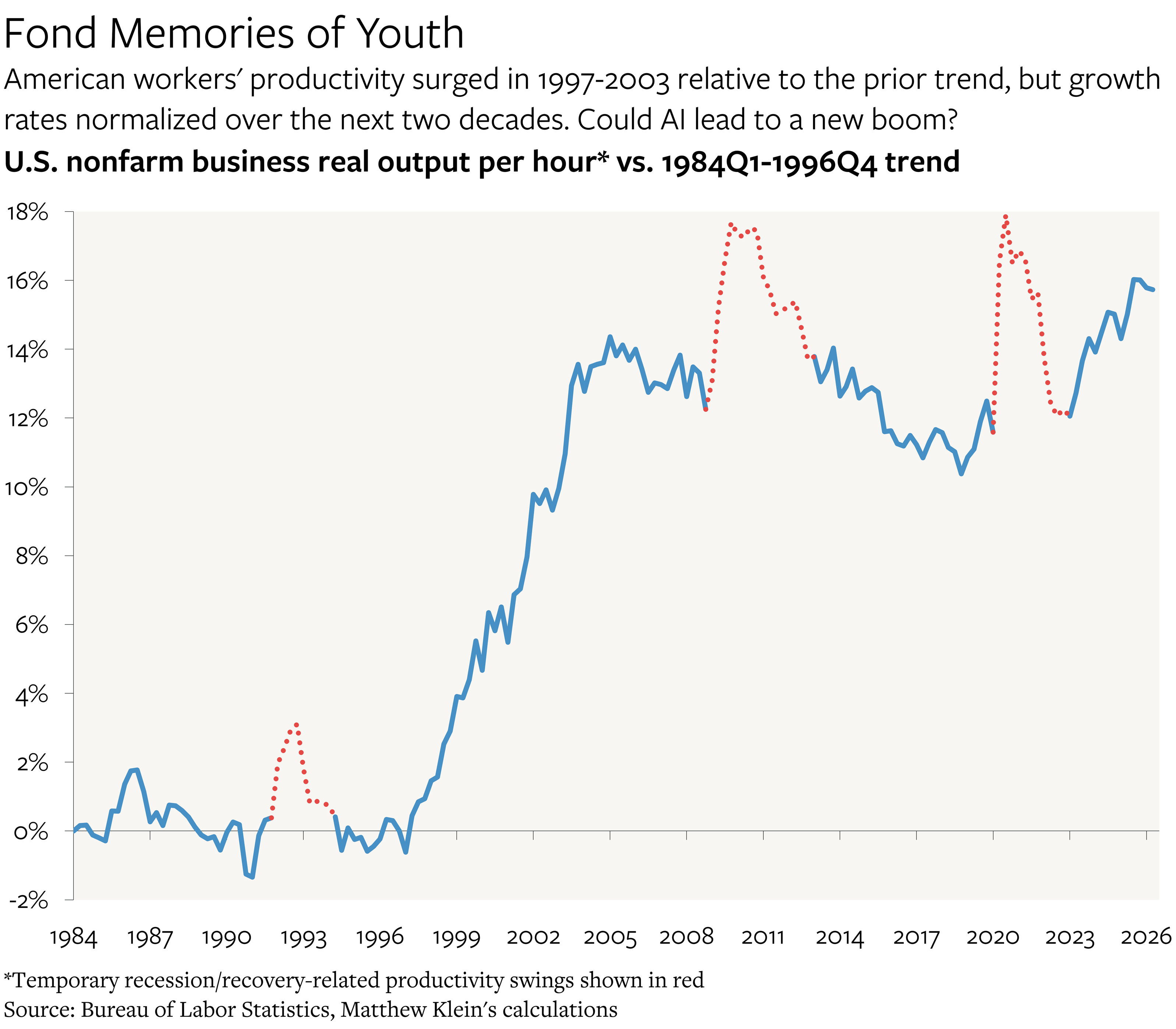
If new technologies are actually able to boost productivity growth over a sustained period, the 1990s experience suggests that real interest rates are currently lower than they would (and should) be.

Making sense of the global economy and financial markets
Live Last read · last published · next check
If new technologies are actually able to boost productivity growth over a sustained period, the 1990s experience suggests that real interest rates are currently lower than they would (and should) be.
Even if AI is disinflationary, the cost of capital might need to rise to balance out the higher prospective returns on new investments. But first: is productivity even accelerating?
Freakish declines in motor vehicle insurance, phone bills, and jewelry are probably not indicative of any change in underlying trends. Plus: more on how the memory shortage is affecting PCE.
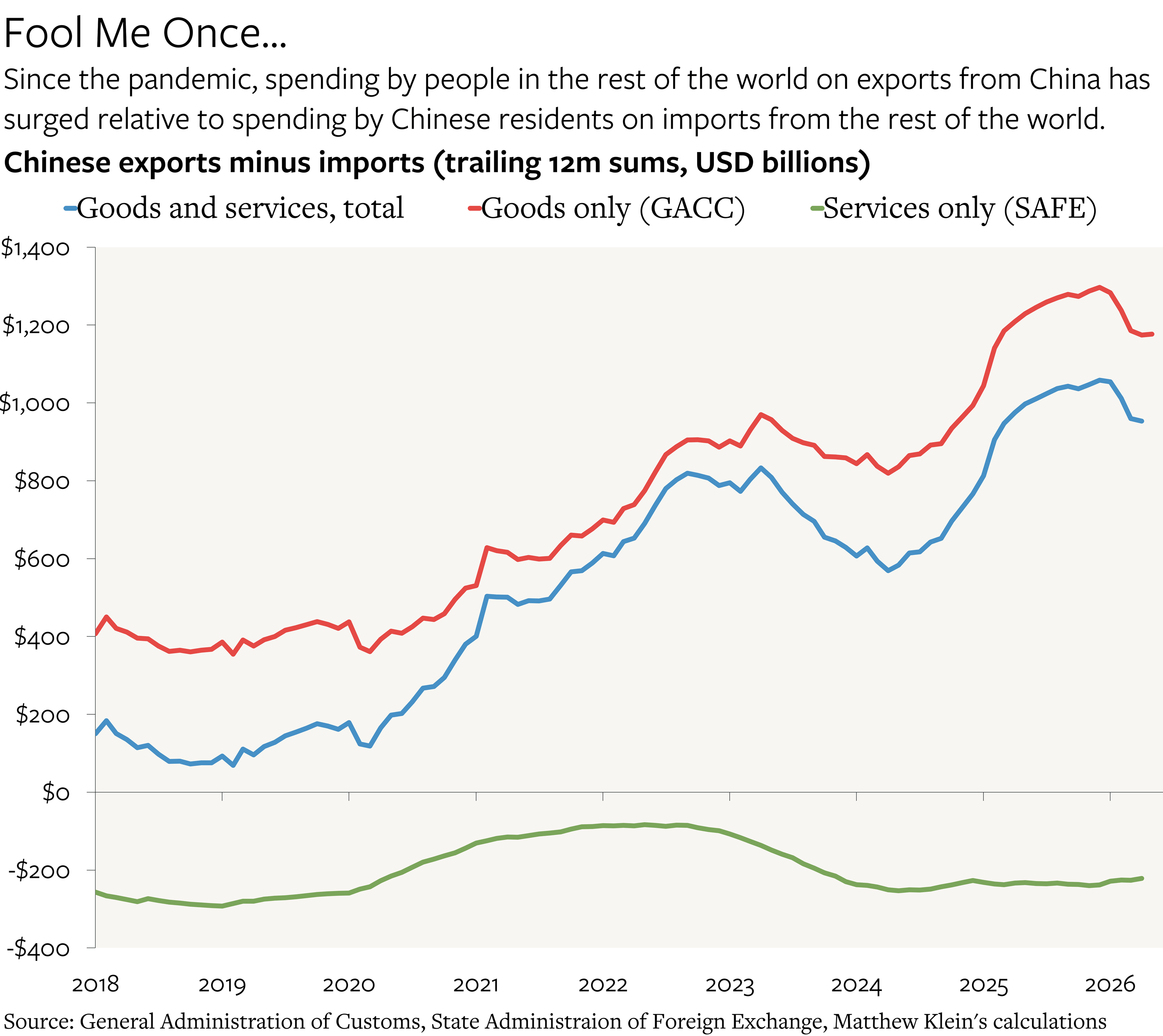
The best way to address the concerns of China's trade partners is to let the Chinese people live better.
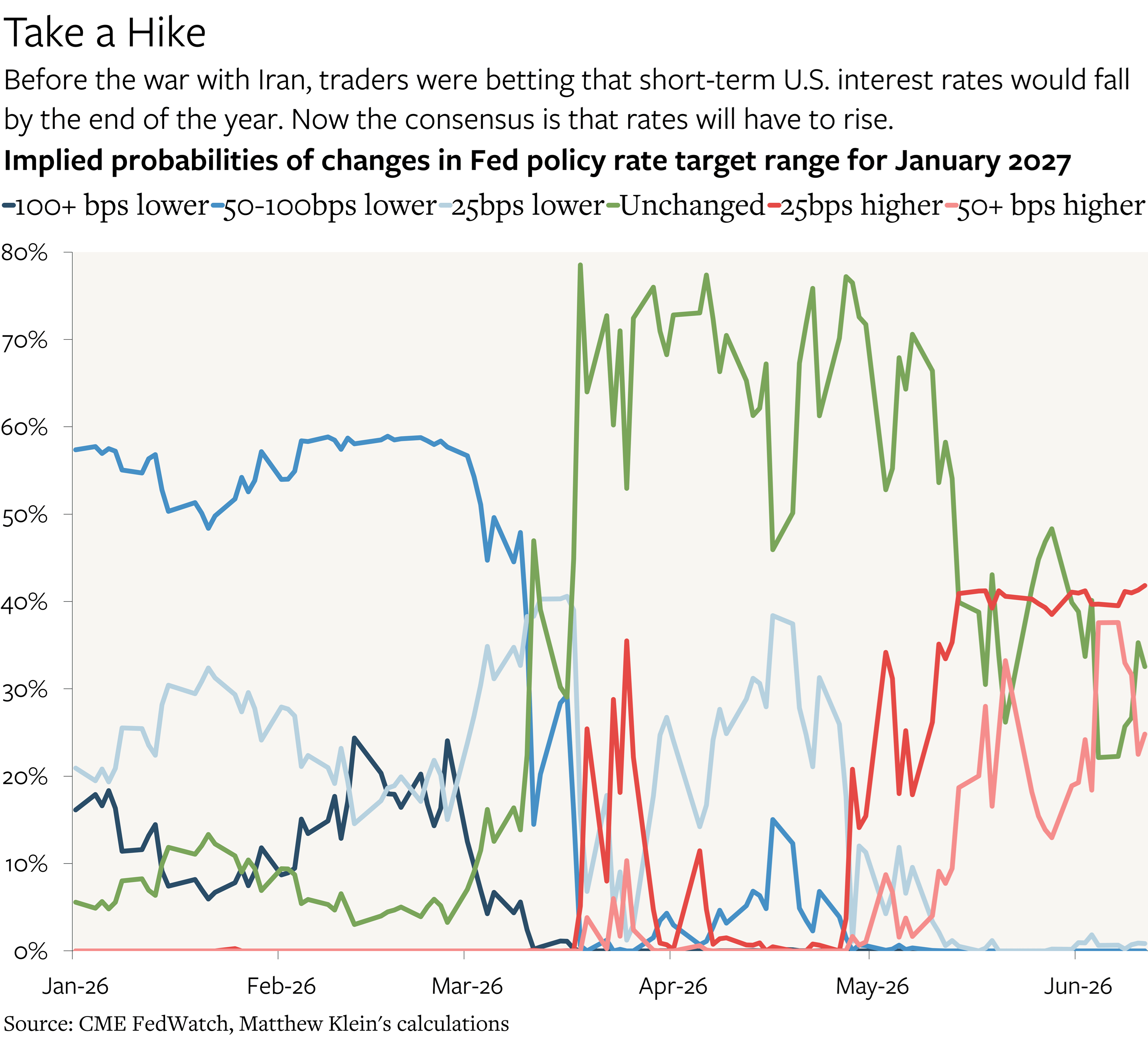
Hormuz may be opening up, but the combination of robust growth and stable-to-accelerating underlying inflation suggests that the previous bias to lowering rates was a mistake.
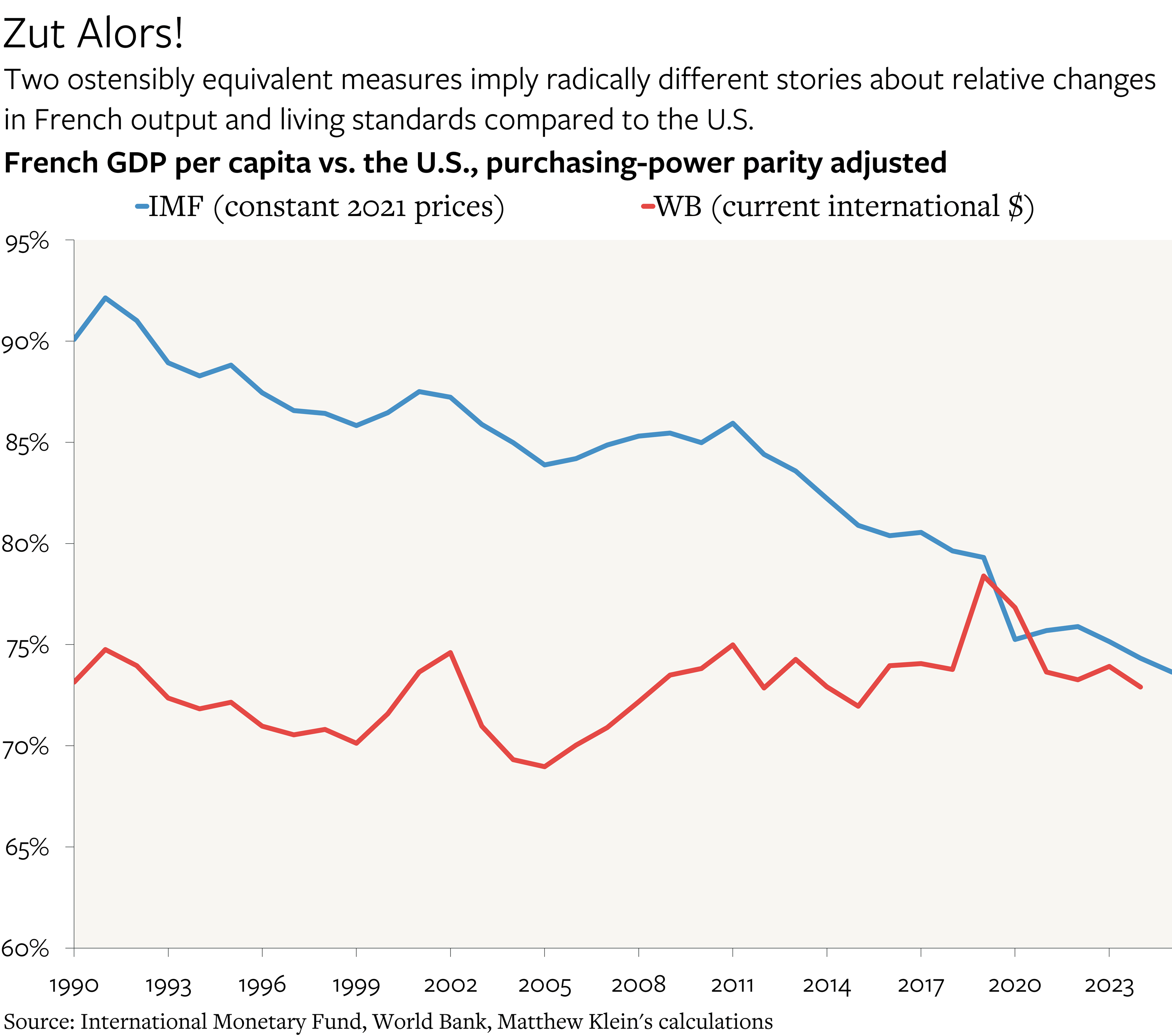
But what that means for relative income levels is much less clear.
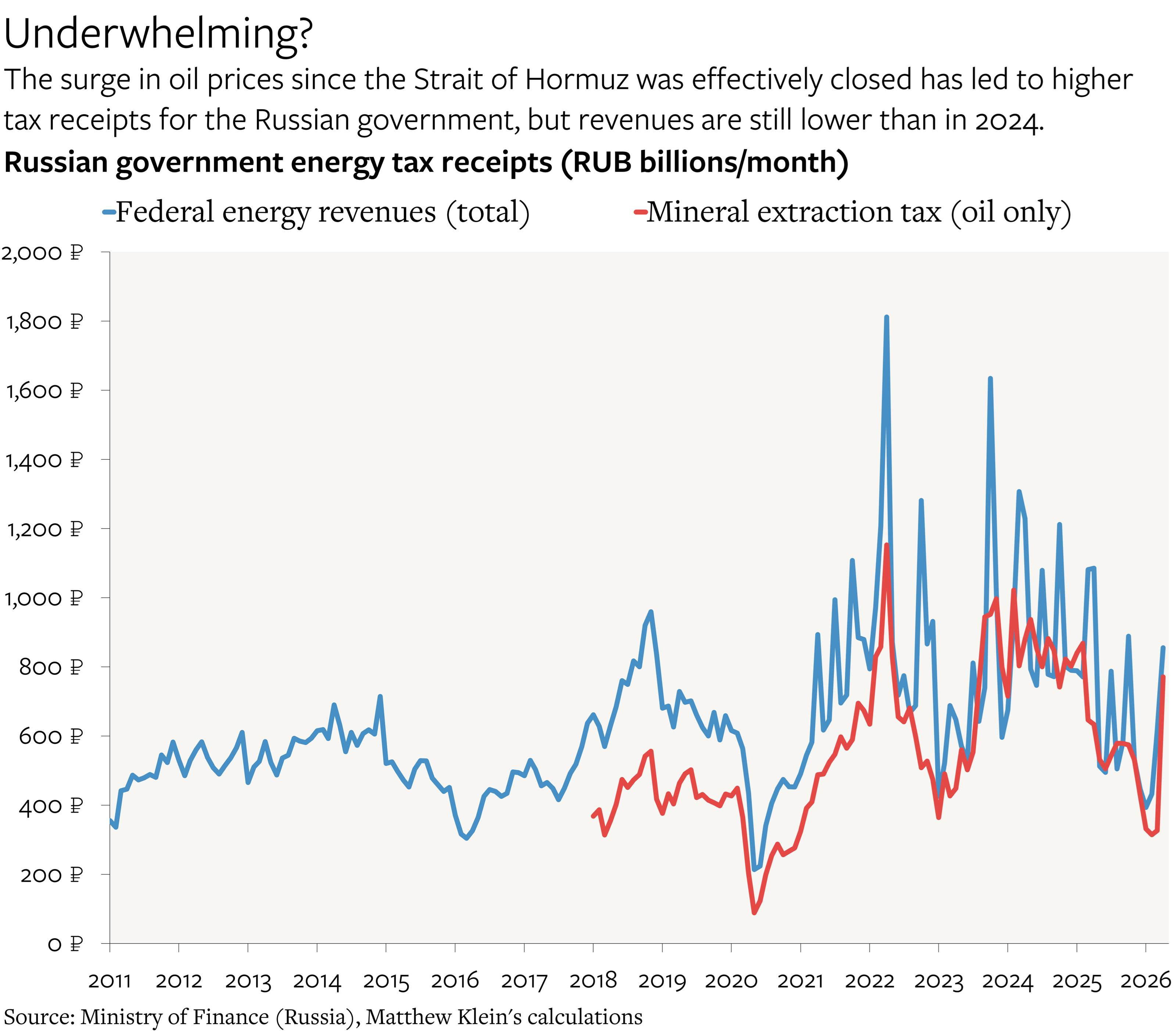
The latest data show that the increase in energy prices since the start of the conflict with Iran has done relatively little to improve the finances of the Russian government or its military industry.
Wage growth is now accelerating slightly, supporting the quickening of "supercore" service price increases. Plus: more on the health care wage slowdown mystery.
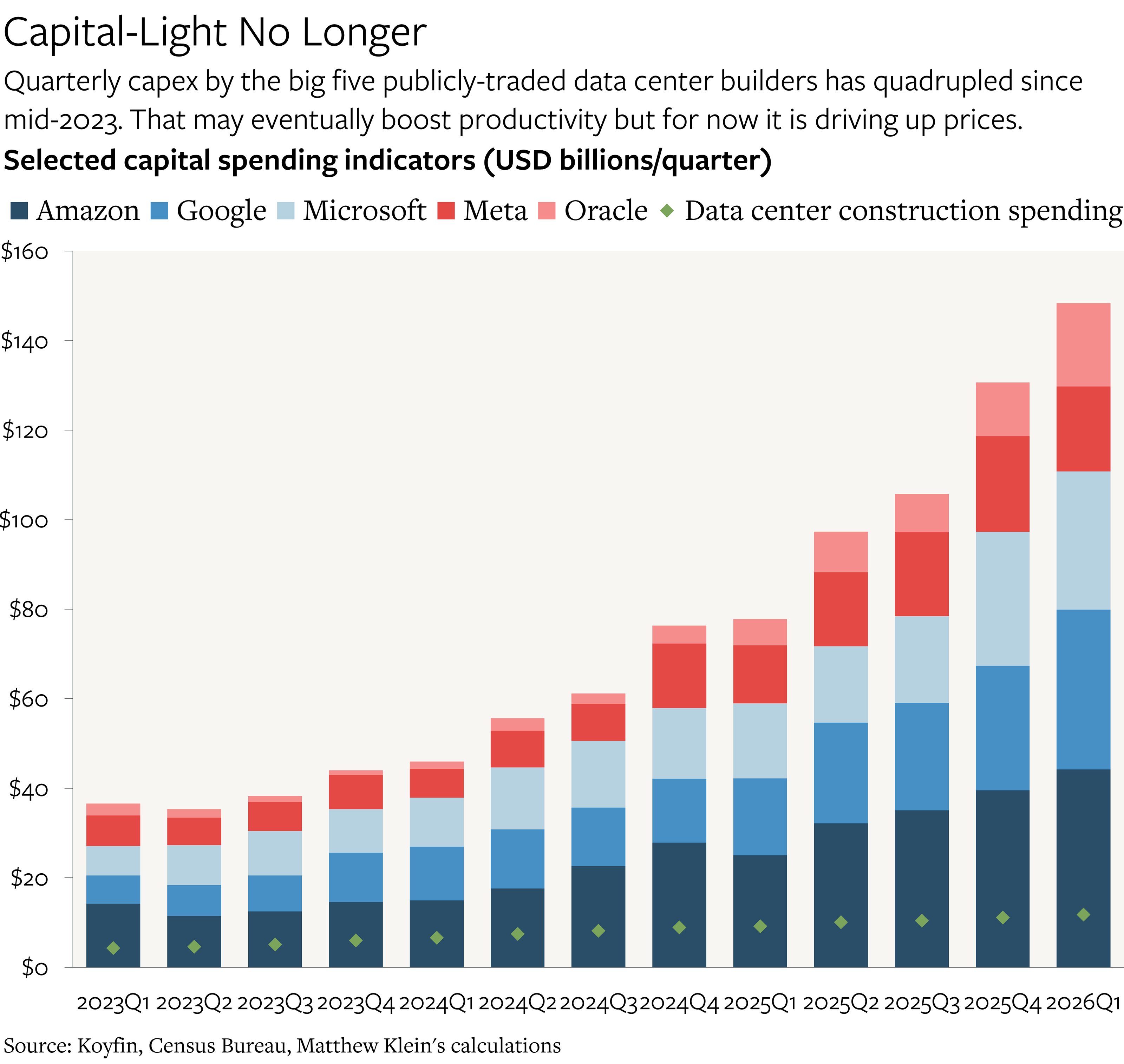
There is much less than meets the eye, although the official numbers may also be undercounting some of what is happening.
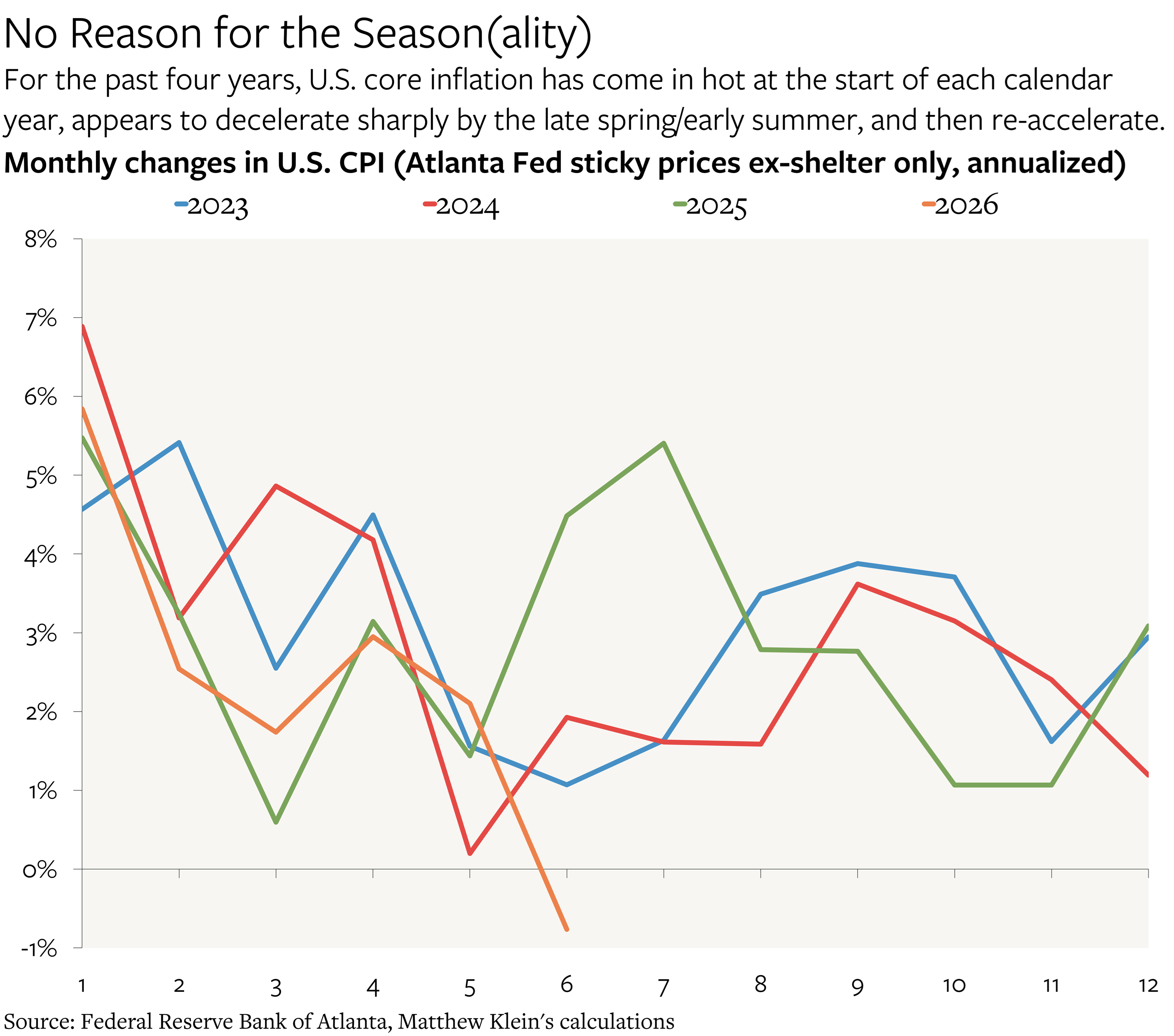
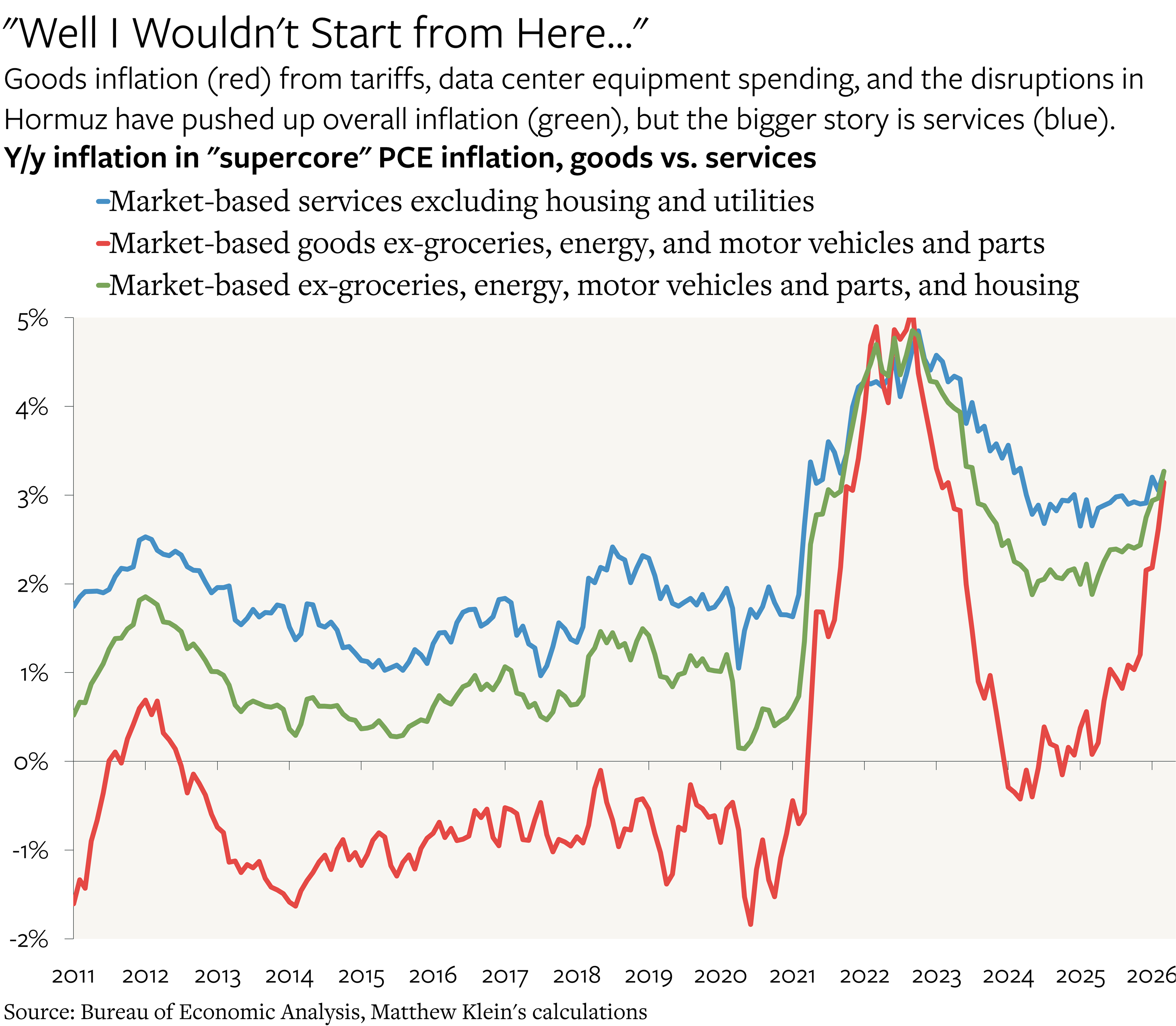
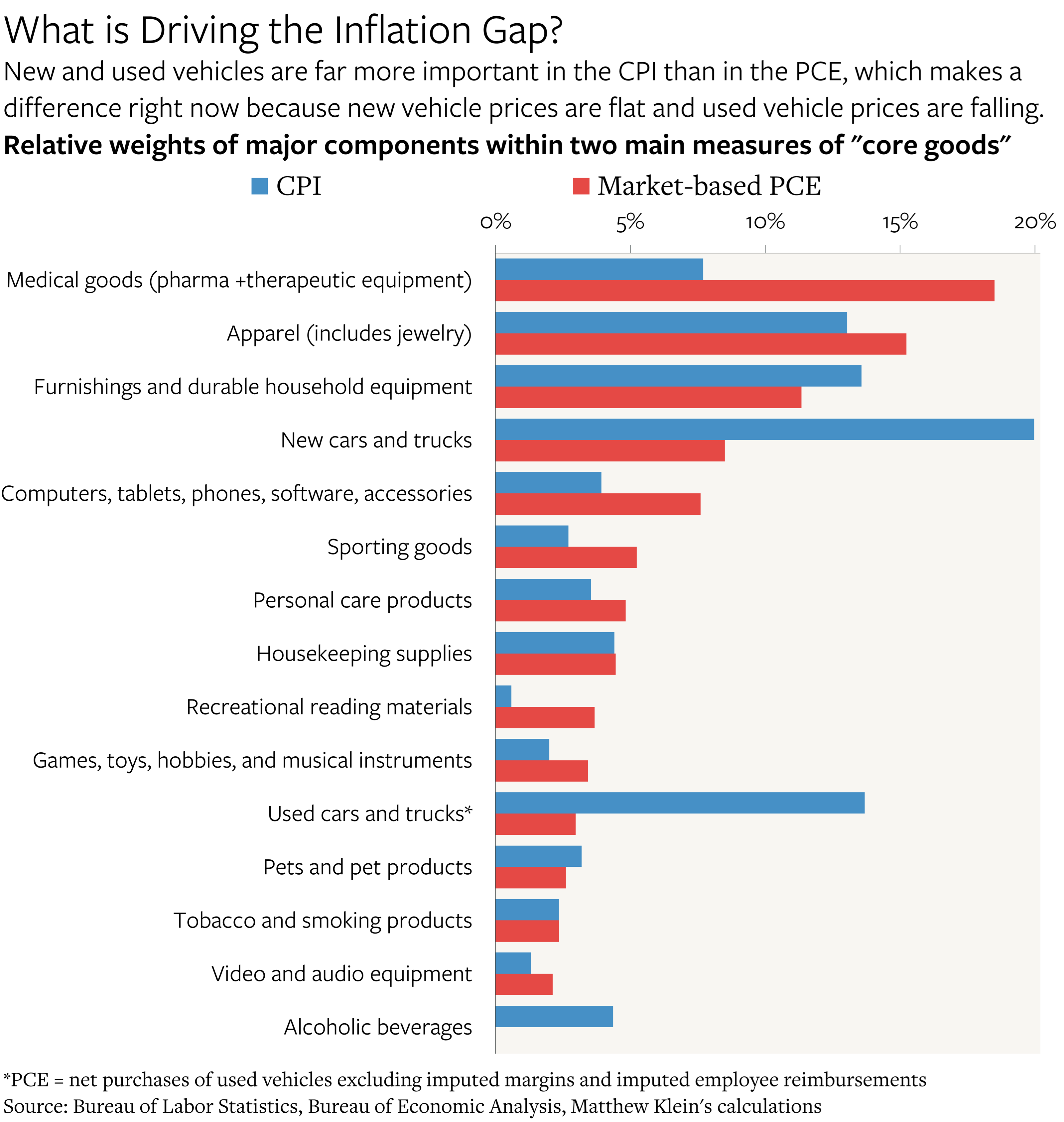
A wide range of underlying measures indicates that prices are rising too fast to be consistent with the Fed's alleged 2% yearly target. Plus: explaining the CPI-PCE gap.