
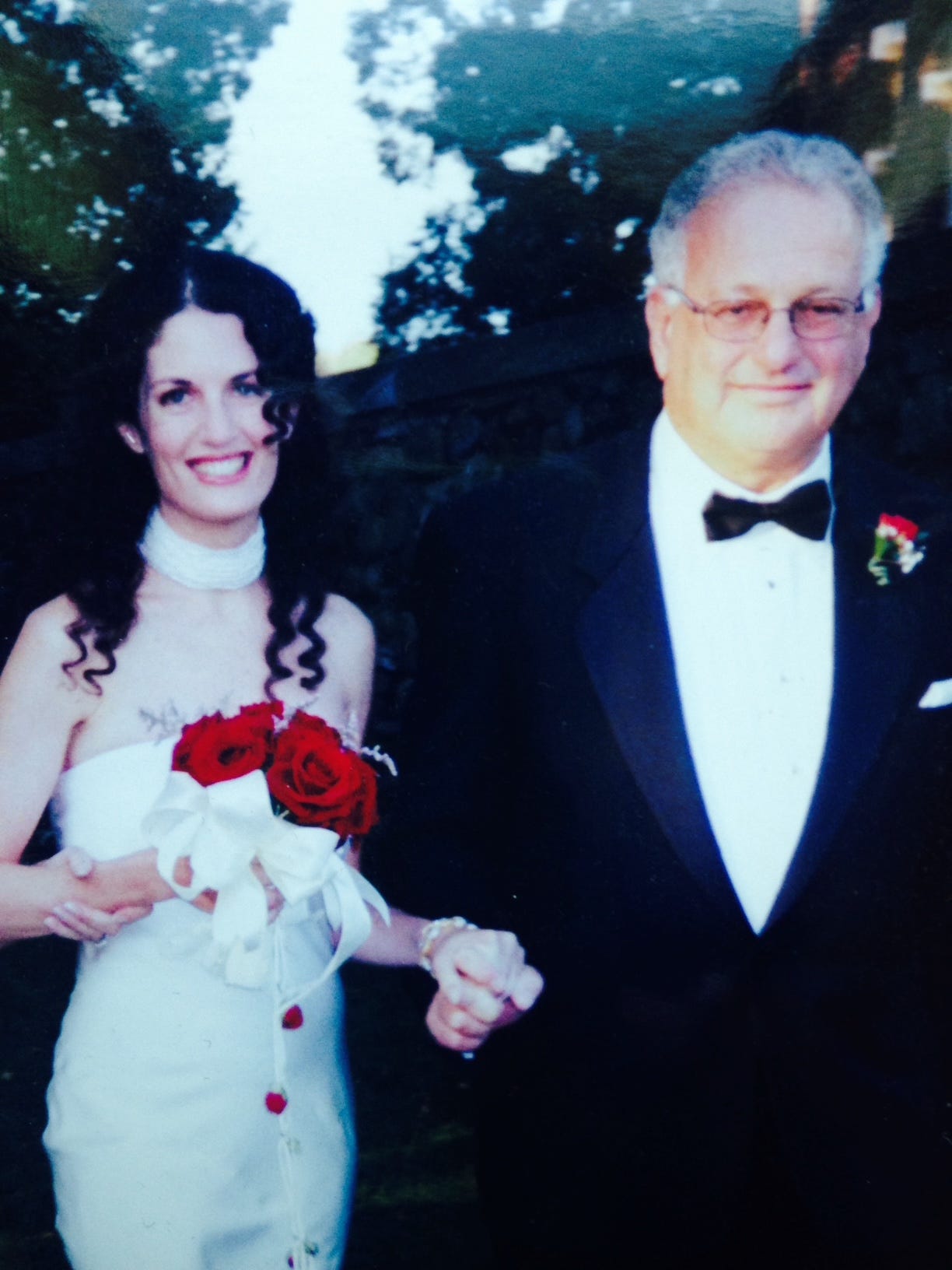
Today marks my father’s yahrtzeit, the two-year anniversary of his death, and like every other one of the 730 days since he passed, I will think about him and the ways he touched us during his jam-packed, exuberant time on Earth. And I will meditate on his parting lesson: that we can hold so much love, and so much grief all at once.
My father used to say “age is just a number.” For him, it meant that he would ride his bike to Central Park to play an hour of singles until he was close to 80, no problem. I took it to mean that we’re not bound by arbitrary measures, a belief that empowered me to go to graduate school at 57. And yet the numbers remind us how far we’ve come on our particular path, that we’ve mourned, pulled ourselves out of bed, put one foot in front of the other, tossed a salad, brushed our teeth, breathed…and now we’re here again, still, to light the yahrtzeit candle.
I wrote the following piece shortly after he died, as Nathanael was finishing his first year in recovery and beginning the work of helping others. I imagined my son turning the other direction in the sacred circle, now offering his hand—which he is still doing today. And somewhere, I’m certain, my father is kvelling.
Here is the post I published close to two years ago:
This weekend, we marked Nathanael’s one year soberversary.
For the first half of this last year, I didn’t dare to let myself think too far ahead, to imagine what this day would look like. To the completion of his tattoo, a Tree of Life sprawling across his left bicep that would eventually be fully detailed as the months accrued, its elegant roots a reflection of his deepening foundation. To the big celebratory dinner we would eat around our dining table or maybe in his favorite restaurant, with homemade icebox cake for dessert. To the fishing trip we would take to Alaska. There was no planning or picturing.
There was hope tempered by worry (and a determination not to jinx things). I worried about cravings, boredom, stress, structure, heartbreak, pain. I worried that everywhere he went when he left the house, his friends and peers were drinking and smoking weed. I worried about relapse knowing full well that it’s part of recovery. I worried about annoying him, about giving him too much free rein, not enough accountability. I worried he would know I was worrying.
And then, I started to breathe—my hope and gratitude overshadowing the fear.
Nathanael did not go to treatment or to meetings or work through the 12 steps over the last 12 months. He just decided one day (at the age of 20) after several years of using followed by months of contemplation and planning and weaning and harm reduction and fits and starts and coughing and therapy that he would not replenish his weed supply, would use no more. He had had enough scares, felt crappy enough days, spent enough money, lost enough time…he was ready, he told me. And that was that.
What’s the story?
One Saturday morning when Nathanael was a little boy, maybe four years old, he decided he wanted to learn how to whistle. He asked me to show him how and after I demonstrated a few times, blowing air out, sucking air in, he went off to practice, lips pursed and so serious. Later the same afternoon he was whistling somewhat recognizable tunes.
Not the teeniest, tiniest bit like getting sober.
But just as he was determined to draw Spider Man with crayons, and shoot a perfect layup, to cast a fishing line way out in the Peconic Bay and make ceviche with his catch, Nathanael has always done whatever he decides he wants to do. I know there’s way more to it, but I can’t say exactly what—beyond what I’ve observed—because he hasn’t shared much yet. And I haven’t asked him, because…annoying.
What I’ve seen is that he exercises every single day without fail. Spends hours at the gym or on the basketball court. He keeps busy—has been in school full-time and working three or four shifts most weeks as a waiter. He has taken a bunch of great trips with his earnings: He went to Bali, Paris, Rome, Florence, and Folly Beach, South Carolina in the last year. He eats healthfully and prodigiously—takes really good care of his body—gets plenty of sleep. And he committed to therapy, met with his wonderful therapist almost every week for the last 18 months. He spends a lot of time with his friends and family.
He promised he would share more about what his process looked like from his perspective in upcoming newsletters.
Celebrations
In mid-May, my dad threw himself a blow-out 86th birthday party. He suffered from pulmonary arterial hypertension (PAH) which had made it harder and harder for him to breathe, but the FDA recently approved a new miracle drug and he was scheduled to get his first dose. In pre-approval studies, the drug increased life expectancy by as much as 14 years. We were celebrating the hope that he would make it to 100!
My father delivered a moving speech at that dinner—to my mom, my brother, sister, and me, our spouses, ten grandchildren, his sister and niece. He shared some of his origin story, describing the evolution of the family business—from his immigrant grandfather Lazar selling lemons out of a sack to the major foodservice distribution company he envisioned and created. He said that all of his wealth was in that room—and that he hoped his own grandchildren would remember him the way he remembered his grandfather. We all dissolved into tears for this man we loved so completely, for the threads he had drawn from his grandfather to his father to himself, and wrapped around all of us; for the values of family and relationships that defined him. It was an unforgettable night for an unforgettable human.
Two weeks later, on the day his first dose of the miracle drug was delivered, my father died. It turned out that his heartfelt toast was a farewell, tying up the enormous gift of his life with a ribbon.
Which is to say, we may not always be at the point of the story we think we are in. Plus, hope is very much worth celebrating. Also, when you zoom out far enough to see the whole, each painful twist and turn, the mis-steps and details can fade away, while the moments of joy and connection are indelible.
When my dad talked about the family business, he didn’t mention the hard years, the second mortgages he took out to stay afloat, the sleepless nights. He painted his life with broad, sunny brushstrokes, a picture that was 100% honest. He reflected the essence, the magnificent truth he could see and feel from his vantage point, looking back.
Letting go of the ending
Sometimes we catastrophize, worrying that a bad day rewrites the entire story, and it’s helpful to take a step back in real time, to recognize that a setback may eventually look like a blip. In my coaching work with parents of adolescents and young adults who struggle with addiction, we often talk about recovery as a zigzag, non-linear. I’m starting to think that we shouldn’t be focused on beginnings and endings at all, but where we are in any given moment. Maybe it’s more fluid where sometimes we are learning and sometimes we are teaching; where sometimes we are screwing up, and sometimes those mistakes turn out to be exactly the thing we needed to become the person we were meant to be. If comedy is tragedy plus time, maybe success is our mistakes plus distance.
Struggle, transformed
At his funeral and in the days that followed, so many of the entrepreneurs my father mentored reached out to me to let me know how he had helped them to realize their dreams—how they would not be in business, own their homes, have money in the bank, be able to send their kids to college if it was not for my father. He was able to impart such wisdom because he faced so many challenges, learned so much, and chose to help others. He may not have been so wise, impacted so many people if things had been easy.
My father’s death is still so raw that it feels wrong to refer to him in the past tense, so painful that my throat closes up when I tell the banker, my neighbor, the UPS guy who asks how I’m doing that my dad died. I’m still processing how this most natural life cycle event feels so surreal. I’m thinking about the way my friends who’ve lost a parent have swooped in with hugs, thoughtful guidance, and obscene amounts of food to get me through the last two weeks. I’m thinking about the parents in my support groups, and how the ones whose kids are on more solid footing will show up for those in need of compassion—and how the roles can change from week to week. I’m thinking about the many ways our struggles morph into something beautiful, something that connects us, around and around.
Back to the soberversary
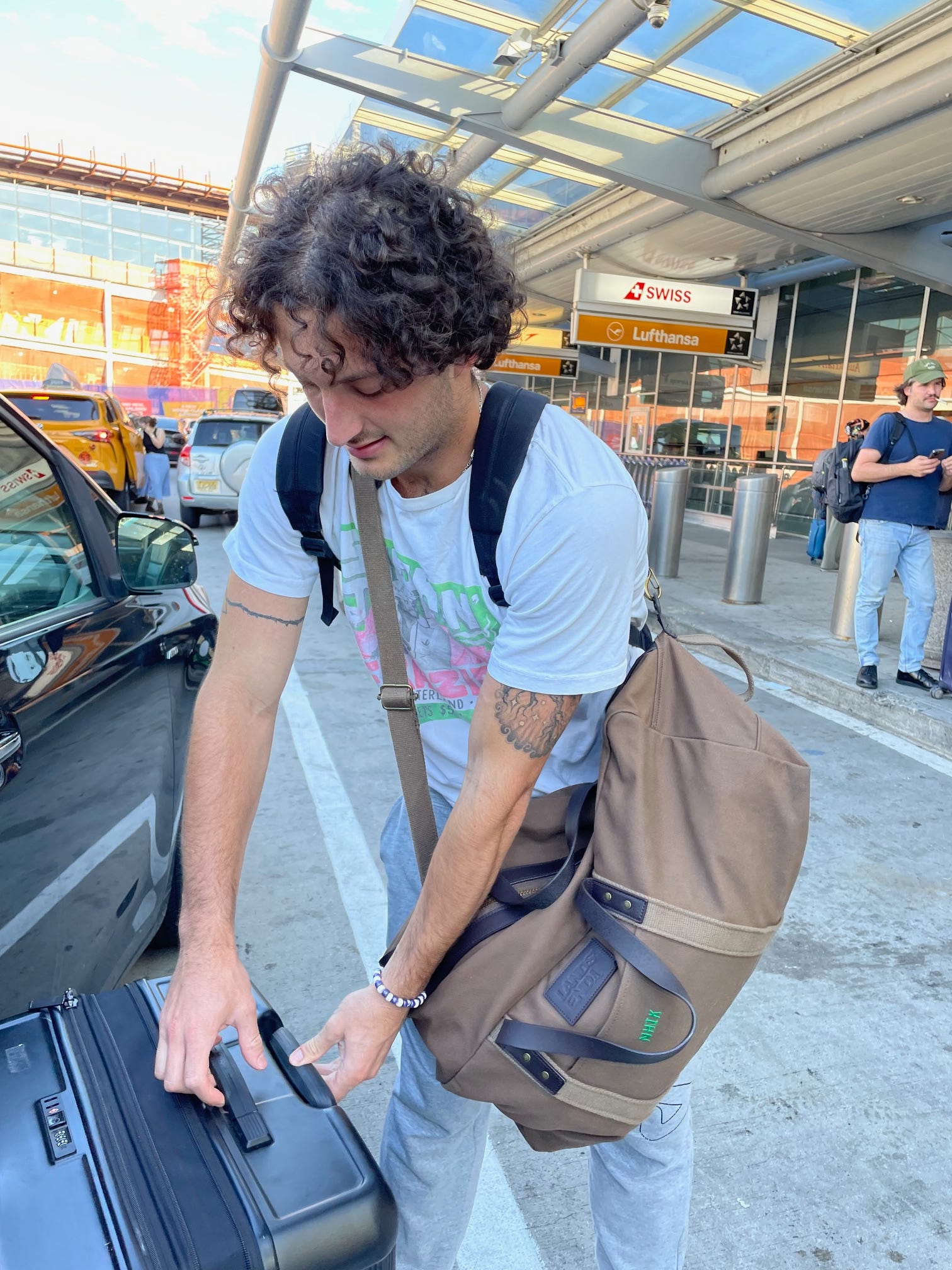
On Nathanael’s 365th day of sobriety, we didn’t do any of the things I’d only occasionally, very recently dared to imagine. Instead, we ate bagels and smoked fish from Russ & Daughters. And then Nathanael boarded a plane to Cyprus where he will spend the summer working in an immersive therapeutic program on a farm, supporting teens who are struggling as he once was. A gratifying full-circle. Not a beginning, not an ending, just where he is now.
Some Background
I’m incredibly proud of my boy. If you’re new to this newsletter, be sure to start here to understand exactly how far we’ve come.
This is an article I wrote about the gratitude practice I developed after my father died.
Take good care,
Julie
recoveryworksny.com
Comments
Nothing yet. Say the first thing.
Sign in to join the conversation.