
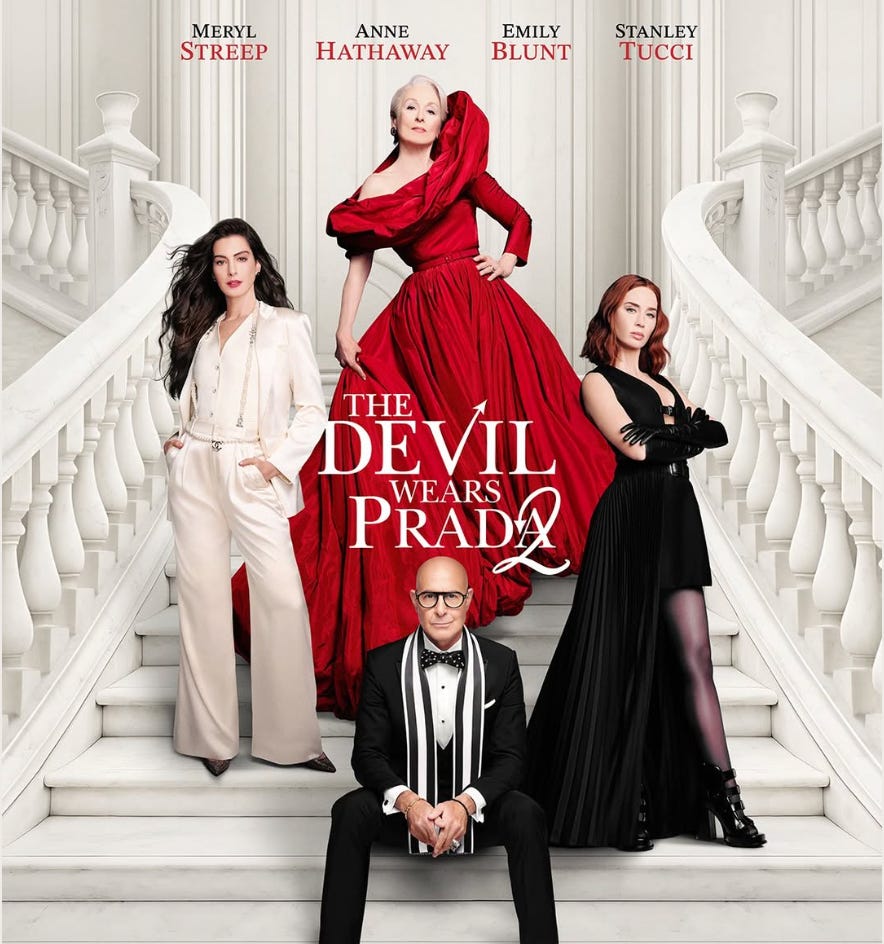
The Devil Wears Prada 2 was released this summer to much acclaim. The sequel proved to be a fun and engaging twist on the original. There is something, however, about this franchise that can tell us much about both the opportunities and challenges today’s women face.
In the first The Devil Wears Prada, Andrea “Andy” Sachs (Anne Hathaway) is a fresh college graduate looking to make her mark on the world. She is hired as “the smart fat girl” (she is a size 6) by Miranda Priestly (Meryl Streep) editor-in-chief of Runway Magazine. Sachs, despite her initial disdain for the superficiality of the fashion industry, gets seduced by the clothes, the glam, and the media flash. Her “conversion” starts when art director Nigel Kipling (Stanley Tucci) takes the fashion-crash-of-a-girl into Runway’s inner sanctum of clothing samples and plies her with handbags, shoes, jackets, and a few items that might fit her oversized frame (sample size is 4). Sachs is transformed exteriorly, but something also shifts interiorly. The film features a montage of Andy’s fresh new outfits as she slips into the haut couture lifestyle.
Yet, the film’s plot revolves not around Andy’s effort to fit into these new clothes, but around her effort to fit into her new role as Priestly’s assistant while also trying to maintain her own core principles. The turning point comes when Priestly reveals to Andy that she has become just like Priestly—shallow and neglectful of her closest relationships. It is the wake-up call Andy needs, and the film ends after she tosses her work phone into a fountain in Paris and returns to being her former self. Andy lets go of the flash and glam and reclaims the essentials of who it is that she wants to be. This plot, where the main character comes to some realization that she can’t stomach whatever soul-selling charade is on offer, is hardly new.
Despite the familiarity of the plot, Western women have been seduced in much the same way as Andy Sachs. The world of glamour, influence, fashion, trends and titles has directed women’s attention to a myriad of attractions. Part of The Devil Wears Prada charm is the fashion fairy Nigel. Most women would love to have a Nigel in their lives – someone who offers solid career advice and provides the best wardrobe money can buy… for free. Feeding this deep desire women have to be glamorous and influential was the start of Andy’s downfall. She traded the essentials of her life in for the non-essentials.
Comments
Nothing yet. Say the first thing.
Sign in to join the conversation.