
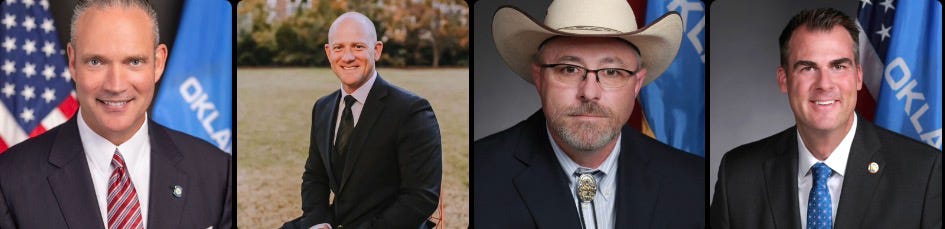
The 2026 Republican primary elections in Oklahoma delivered several surprising results and offered a glimpse into what may be a shifting political climate across the state.
Perhaps the most striking outcome came in the Republican governor’s race, where candidate Jake Merrick demonstrated that campaign spending is not always the deciding factor in modern politics. Merrick, who relied exclusively on individual donations and reportedly accepted no lobbyist or special-interest money, spent approximately $79,000 on his campaign. His opponent, former Oklahoma House Speaker Charles McCall, reportedly spent more than $7 million.
Despite the enormous fundraising disparity, Merrick outperformed McCall by more than 10,000 votes in the June 16 Republican primary. The result raises an important question: Are Oklahoma voters becoming less influenced by expensive campaign operations and more interested in grassroots-driven candidates?
Another noteworthy development was the apparent decline in the influence of Governor Kevin Stitt’s endorsements during his final year in office.
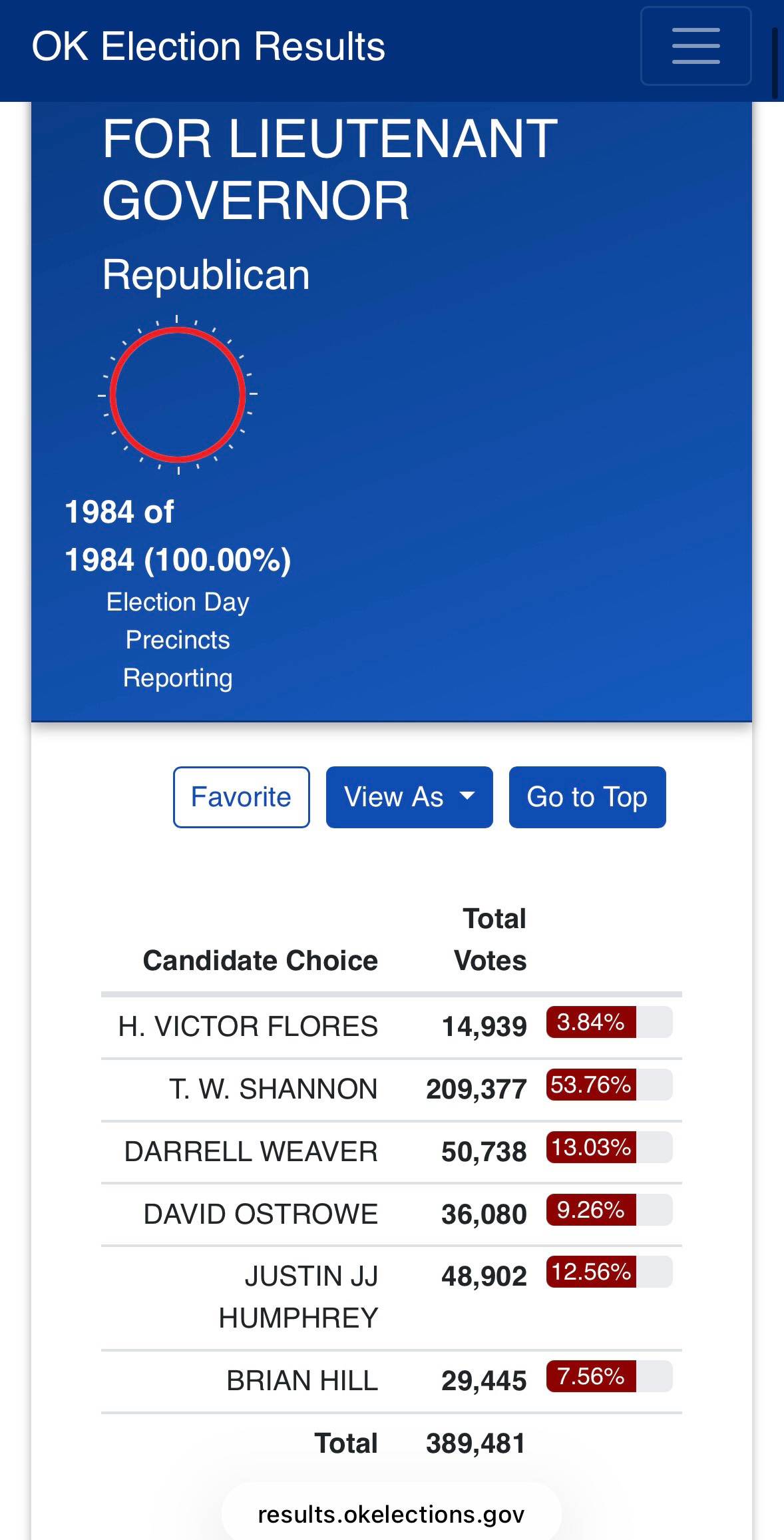
In the Republican primary for lieutenant governor, Stitt endorsed military veteran David Ostrowe late in the campaign. Ostrowe ultimately finished fourth, receiving 36,080 votes. State Representative Justin Humphrey, widely viewed by many conservatives as a grassroots candidate, finished ahead of Ostrowe with 48,902 votes—a margin of 12,822 votes.
Some political observers attribute Stitt’s declining influence to several factors, including his public disagreements with President Donald Trump and concerns among constituents regarding communication from state leadership. Several lawmakers have reported that letters sent to the governor’s office on behalf of constituents went unanswered. Similar concerns have also been raised regarding communication with Attorney General Gentner Drummond’s office.
These complaints have fueled concerns among some legislators that Oklahomans feel increasingly disconnected from state government. Given that each Oklahoma House member represents roughly 41,000 residents and each state senator represents approximately 83,000 residents, effective communication between elected officials and constituents remains a critical component of representative government.
Voter turnout may also have been influenced by State Question 832, which proposed raising Oklahoma’s minimum wage from $7.25 per hour to $15 per hour. Although the measure ultimately failed, its presence on the ballot may have contributed to increased voter participation. Preliminary comparisons suggest Republican primary turnout increased by approximately 96,000 votes compared to the 2022 election cycle.
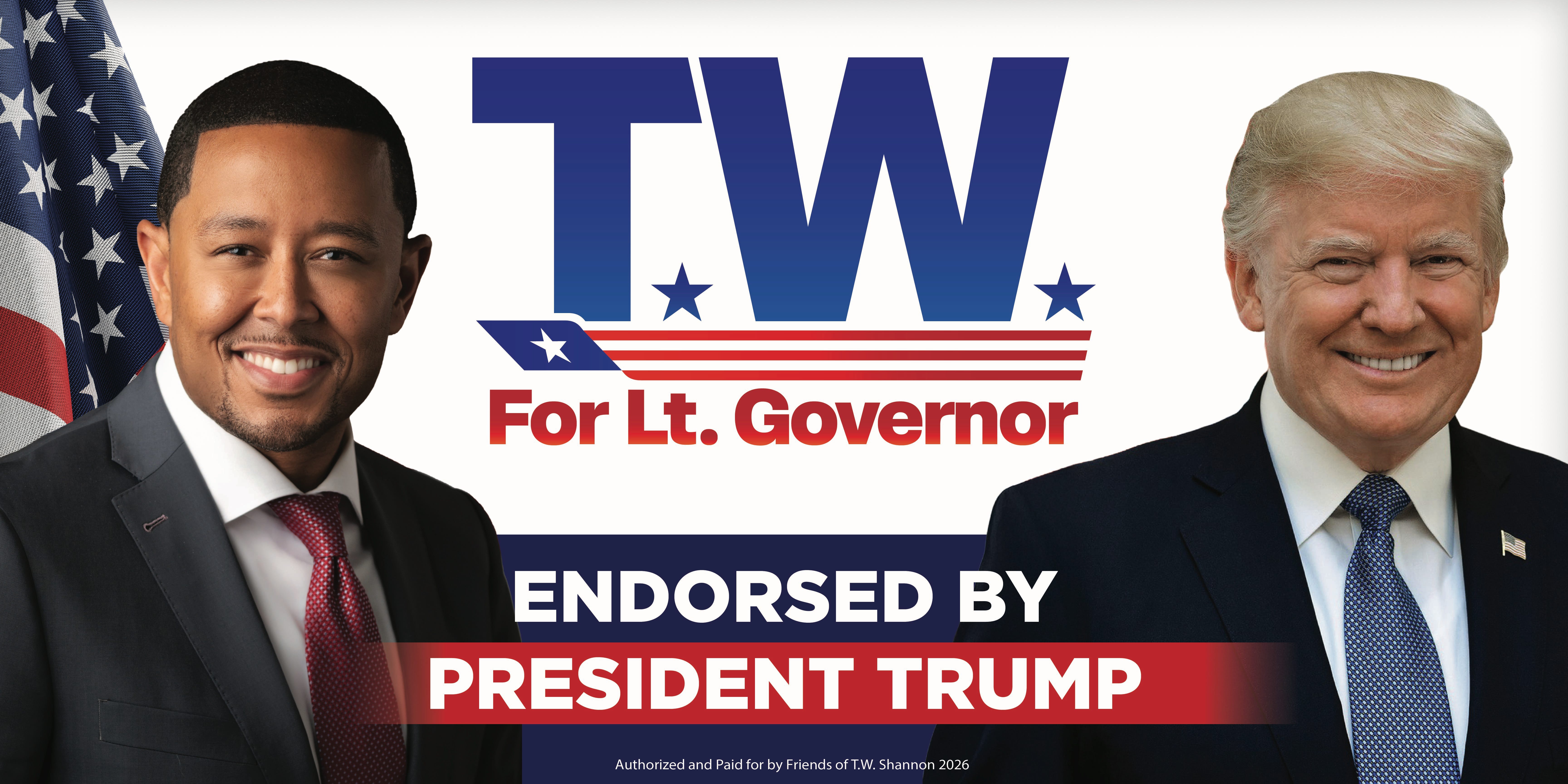
While Governor Stitt’s endorsements appeared less influential, President Trump’s endorsements continued to carry significant weight among Oklahoma Republicans.
Trump-backed candidate T.W. Shannon dominated the lieutenant governor’s race, receiving 209,377 votes and securing 53.76 percent of the vote. Shannon’s performance allowed him to avoid a runoff election altogether and claim an outright victory on primary night.
In Oklahoma’s open U.S. congressional race in Oklahoma’s 1st District, President Trump’s endorsement initially appeared to boost Jackson Lahmeyer’s momentum and help carry him into a competitive position by energizing a strong base of Republican primary voters. However, as the race developed, Trump ultimately shifted his endorsement to State Representative Mark Tedford after Lahmeyer dropped out of the race, which strengthened Tedford’s standing with broader Republican support heading into the final stages.
The governor’s race, however, produced a more mixed result for Trump’s influence. Trump-endorsed candidate Mike Mazzei advanced to a runoff alongside Attorney General Gentner Drummond. Neither candidate secured the 50 percent threshold required to avoid a runoff, although Drummond finished slightly ahead, receiving 1,141 more votes than Mazzei.
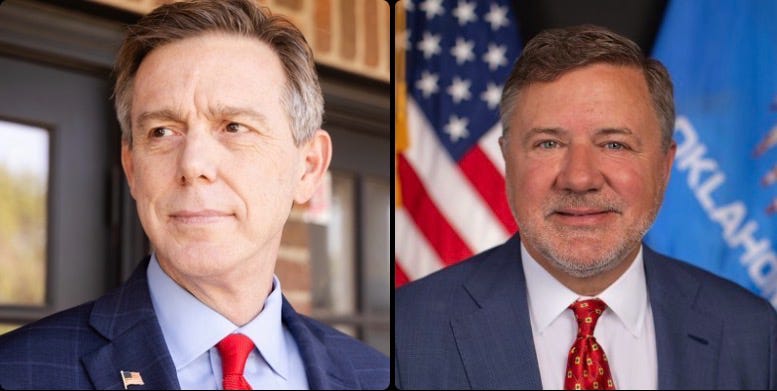
Taken together, these results suggest several emerging trends within Oklahoma politics.
Candidates across the state reported lower levels of voter engagement during door-to-door campaigning and in-person events compared to previous election cycles. Based on these reports, many voters appear exhausted after years of intense political conflict, particularly following the highly charged 2024 presidential election.
There is growing evidence that voters are increasingly focused on practical concerns rather than cultural and ideological battles that dominated recent election cycles. During campaign conversations, many voters reportedly expressed greater concern about rising fuel prices, increasing homeowners insurance costs, property taxes, and overall affordability than issues such as identity politics or other national political controversies.
This does not necessarily indicate that Republican voters no longer care about those issues. Rather, some political observers believe voters assume Republican majorities at both the state and federal levels will continue addressing those concerns. As a result, many voters now appear to be demanding greater attention to economic issues that directly impact their daily lives.
Political fatigue, leadership transitions among term-limited officeholders, declining public engagement, and growing frustration with government responsiveness may all be contributing to Oklahoma’s evolving political environment.
For some observers, these developments raise broader questions about civic participation and representative government. The concern is not merely which candidates win elections, but whether citizens remain actively engaged in the political process itself.
America’s Founding Fathers understood the importance of civic responsibility. Benjamin Franklin’s famous response following the Constitutional Convention remains relevant today. When asked what form of government had been created, Franklin reportedly replied, “A republic, if you can keep it.”
That warning continues to resonate.
If voter participation and civic engagement continue to decline, can representative government remain healthy and responsive? Or will bureaucratic institutions increasingly fill the vacuum left by disengaged citizens?
Recent years have subjected Americans to extraordinary political and social turbulence. From a global pandemic to unprecedented assassination attempts on Trump and the tragic assassination of conservative political figure Charlie Kirk, as well as intense national division, many citizens are understandably weary. Some appear ready to disengage from politics altogether in hopes of finding a return to normalcy.
Yet disengagement carries its own risks.
For Christians, civic participation should be viewed as more than partisan competition. It should be understood as stewardship—a responsibility to participate thoughtfully in the public square and advocate for principles that benefit their communities and actively move to build the kingdom of God here on earth.
Healthy self-government requires active citizens.
Oklahoma’s 2026 Republican primary may ultimately be remembered not simply for its election results, but for what those results revealed about voter priorities, political influence, and the growing challenge of maintaining public engagement in a representative republic.
The message emerging from this election cycle is straightforward: voters are paying attention to their wallets, questioning traditional political power structures, and showing signs of fatigue after years of political upheaval. What happens next may depend largely on whether citizens remain engaged—or choose to tune out.
As Oklahoma moves toward the general election and upcoming runoff contests, one question remains:
Will voters stay involved, or will they fall asleep at the wheel?
The next election will be the republican primary runoff on Tuesday, August 25th
This is an editorial article based on a combination of opinions, research, and personal experiences.
Like & Follow The Oklahoma Lion Media On Facebook and Twitter / X
No posts
Comments
Nothing yet. Say the first thing.
Sign in to join the conversation.