
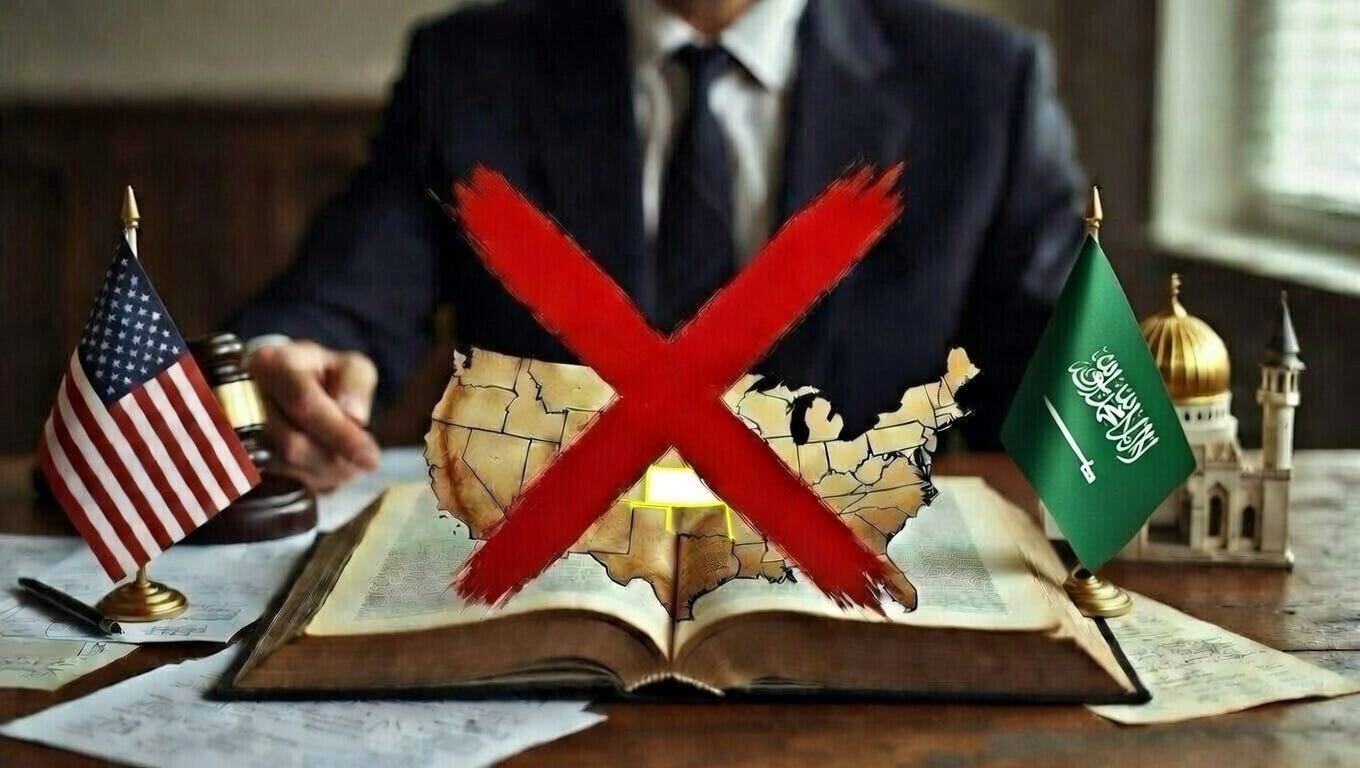
Support continues to build behind Oklahoma House Joint Resolution 1040 (2026) (Woolley & Bullard), a measure designed to ensure that Oklahoma courts apply only U.S. and Oklahoma law—and never allow foreign religious legal systems, including Sharia law, to be invoked as a defense or justification for criminal or abusive conduct.
This week, an additional 11 Oklahoma State Representatives signed on as co-authors, bringing the total number of legislative signers to 45.
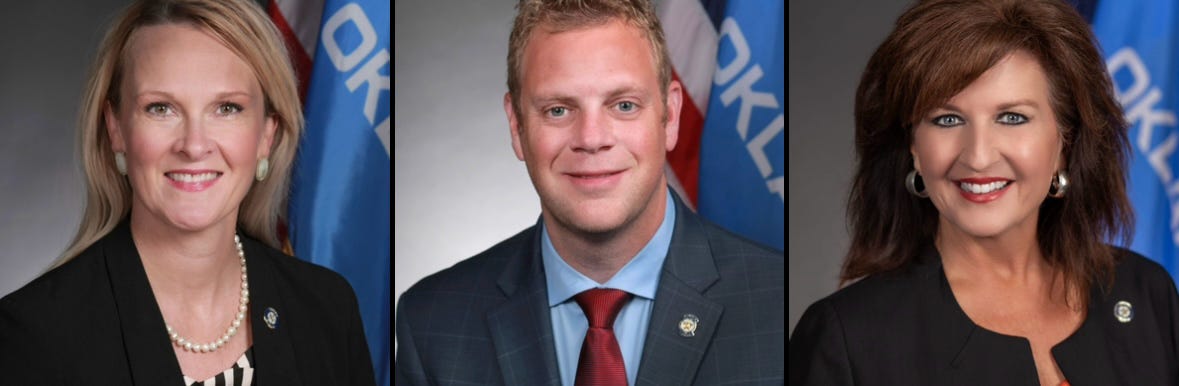
The newly added co-authors are:
Their support reflects a growing consensus that foreign religious legal systems must never be used to undermine constitutional rights, excuse violence, or erode equal justice under the law.
Opponents of measures like HJR 1040 often dismiss concerns about Sharia law in U.S. courts as hypothetical. History proves otherwise.
In a widely cited case from New Jersey, a Muslim woman identified as S.D. sought a restraining order against her husband, M.J.R., after alleging repeated sexual assault within their marriage.
She testified that her husband forced sex upon her while she cried and resisted, telling her:
“This is according to our religion. You are my wife. I can do anything to you.”
The court acknowledged that the sexual acts occurred. Nevertheless, in June 2009, a Hudson County Superior Court judge denied the restraining order, reasoning that the husband’s belief—based on his interpretation of Sharia law—that his actions were permissible meant he lacked the required criminal intent.
The result was that no civil protection was granted, effectively allowing a religious or cultural defense to override a woman’s fundamental legal protections.
While the ruling was later overturned on appeal, the case exposed a dangerous reality: Sharia-based arguments were allowed to influence an American courtroom, even temporarily, at the expense of constitutional rights and equal justice—particularly for women.
This case highlights why preventative action is necessary:
Religious or cultural defenses can weaken equal application of the law
Vulnerable individuals—especially women and children—face heightened risk
Courts are placed in the improper position of weighing foreign legal doctrines against American law
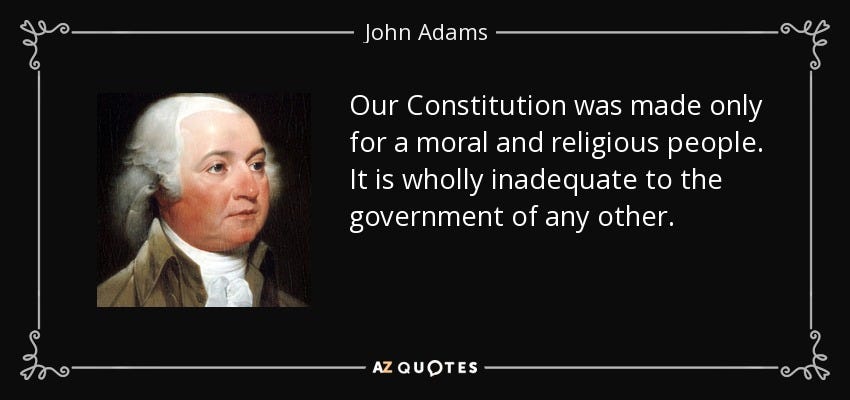
The United States legal system is not designed to accommodate parallel legal frameworks. There must be one standard of justice, grounded in the Constitution and in the moral and civic foundations of our nation.
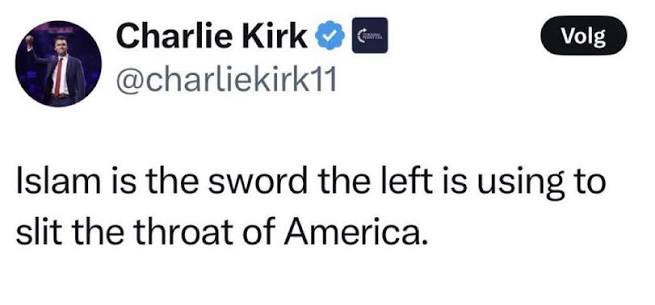
It is important to understand: it will not be Islam growing on its own that allows it to dominate the West and America. Rather, it will be the passive and dismissive attitude of Christians toward protecting their values and legal principles that allows foreign legal influence, like Sharia, to gain traction if we are not careful.
America is a nation founded on Christian principles, and those principles—respect for life, justice, and the inherent dignity of every individual—should be reflected in our government and judicial system. While our laws protect freedom of religion, the courts must never allow foreign or non-Christian legal doctrines to excuse criminal conduct or override constitutional rights. HJR 1040 ensures that Oklahoma’s courts honor the moral and legal foundations upon which our nation was built.
HJR 1040 ensures that:
Oklahoma courts apply only U.S. and Oklahoma law
No foreign or “repugnant” law may override constitutional rights
Criminal or abusive conduct cannot be excused under religious or cultural defenses
Equal justice under the law is preserved for every person
This resolution does not prohibit religious belief or practice. It draws a clear boundary between personal faith and public legal authority.
Importantly, HJR 1040 (2026) is a starting point.
This measure is intended to get Oklahoma’s foot in the door on addressing a complex and serious issue that other states and courts have already confronted. Ensuring clarity in the courtroom is the necessary foundation before further action can responsibly be taken.
Lawmakers supporting HJR 1040 have made clear that future legislation is expected to address additional concerns—particularly the flow of funding into and out of radical Islamic organizations that have established footholds within Oklahoma.
Such efforts would focus on:
Transparency and accountability in financial transactions
Preventing foreign ideological influence from undermining public safety
Ensuring charitable or nonprofit structures are not exploited to advance extremist agendas
These concerns are not about faith, race, or peaceful religious practice. They are about protecting the rule of law, safeguarding constitutional order, and ensuring Oklahoma is not exploited by radical influences incompatible with American values.
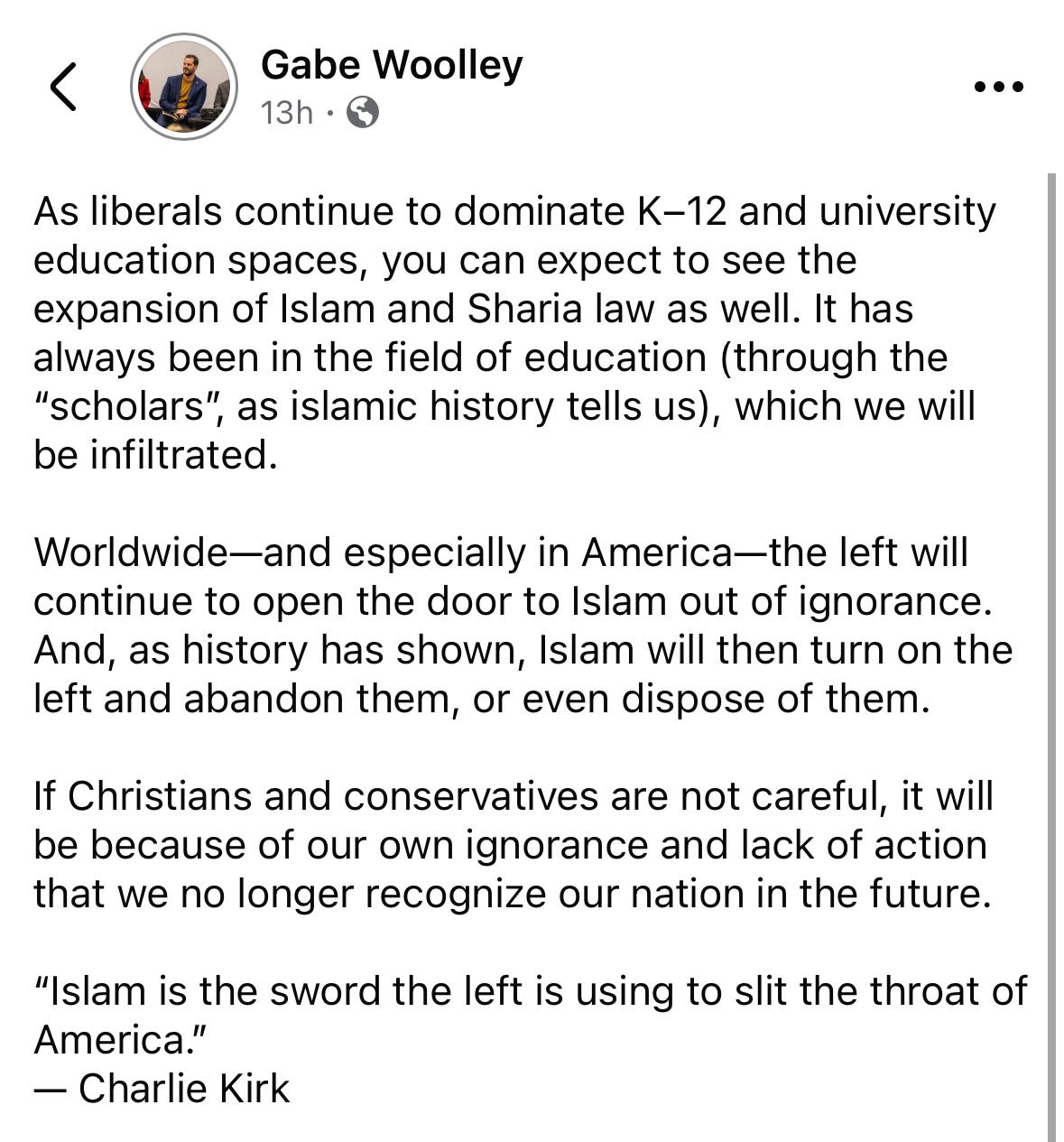
Additionally, Oklahoma State Representative Woolley noted on Facebook yesterday that America’s liberal education system plays a significant role in facilitating the growth of Islam in our states if left unaddressed. This statement may suggest that this concern points to potential future actions aimed at confronting and mitigating this influence:
Oklahoma isn’t the only state confronting this issue in 2026. Arizona lawmakers have already introduced legislation, Senate Bill 1018, which would specifically define Sharia law as a prohibited form of foreign law in courtrooms and clarify that only U.S. and Arizona law may be applied, effectively preempting Sharia and similar systems in judicial proceedings. (azleg.gov)
This action in a state widely regarded as politically competitive underscores how concern about foreign legal influence is crossing traditional partisan lines and gaining traction beyond deep-red states.
Arizona legislators have also moved forward with concurrent resolutions urging the U.S. government to designate the Muslim Brotherhood as a foreign terrorist organization, signaling broader interest in addressing foreign ideological influence at multiple levels of governance. (legiscan.com)
At the federal level, the issue has gained additional attention. In late 2025, U.S. Representatives Keith Self (TX‑03) and Chip Roy (TX‑21) launched the Sharia Free America Caucus in the House of Representatives, aimed at countering what its founders describe as the rise of Sharia influence in the United States and defending constitutional and Western legal values. (keithself.house.gov)
This caucus supports a suite of federal proposals, including the Preserving a Sharia‑Free America Act, federal legislation introduced in the 119th Congress that would amend the Immigration and Nationality Act to prohibit entry of foreign nationals who adhere to Sharia law. (legiscan.com)
The growth of this caucus in Congress reflects increasing national legislative interest in complementing state-level clarity efforts like HJR 1040 with broader federal policy discussions.
While HJR 1040 in Oklahoma focuses on preventative judicial safeguards, other states have already taken both legislative and executive actions in this space.
In Texas, Republican leadership has moved beyond preventative measures to directly target organizations and influence tied to Sharia:
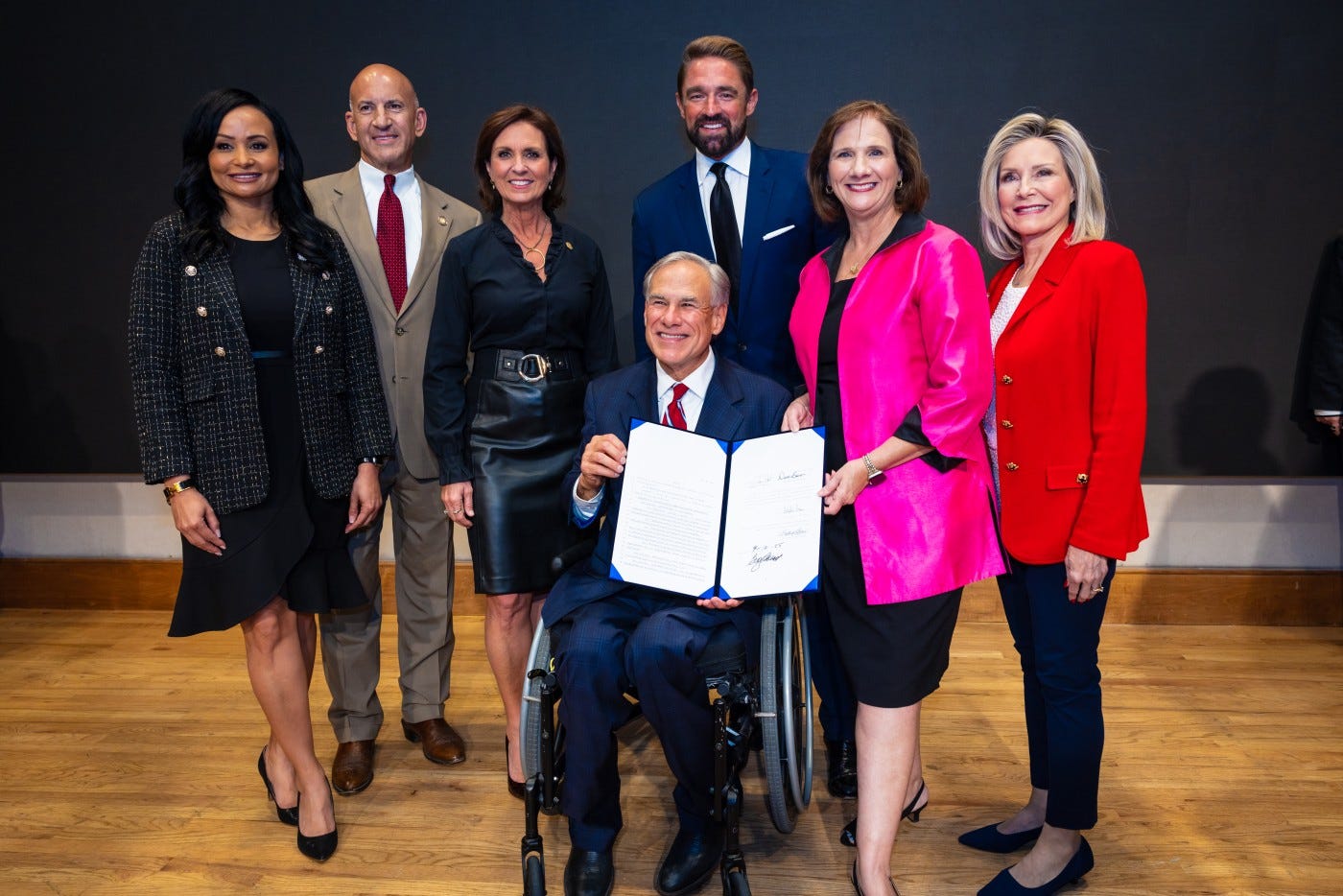
State-Level Terrorist Designations — Governor Greg Abbott designated the Muslim Brotherhood and the Council on American‑Islamic Relations (CAIR) as foreign terrorist organizations under state law, allowing legal action and land‑use restrictions.
Criminal Investigations — The Texas Department of Public Safety was directed to investigate unlawful activities tied to those organizations.
Impact on Public Programs — Texas officials excluded certain Islamic schools from state voucher programs and discouraged partnerships with groups linked to CAIR.
Legal Challenges — These designations have resulted in federal civil rights lawsuits asserting violations of free speech and equal protection.
By contrast, Oklahoma’s HJR 1040 takes a measured, preventative approach, seeking to:
Prevent foreign religious law from being applied in courts
Affirm the primacy of U.S. and Oklahoma law
Lay the groundwork for future legislation addressing funding transparency, extremist influence, and nonprofit oversight
This approach allows Oklahoma to protect constitutional rights while responsibly addressing foreign influence threats, without prematurely targeting specific organizations.
Some Oklahomans have criticized a ban on Sharia law as a ‘do-nothing’ bill. However, given the examples from U.S. courts and the fact that HJR 1040 is intended as a starting point rather than an all-encompassing solution, it is evident that further action may be necessary. Specifically, there may need to be a clear constitutional definition of what legal practices are prohibited in taxpayer-funded courtrooms. If HJR 1040 passes the legislature this year, this clarification could ultimately be placed before the people of Oklahoma as a vote to enshrine it in the state constitution.
With 45 legislative signers and growing momentum, HJR 1040 sends a clear message:
In Oklahoma, no one is above the law, and no one is denied its protection—regardless of culture, religion, or background.
America’s legal system must reflect its Christian heritage, uphold constitutional rights, and ensure that equal justice under the law remains non‑negotiable for every citizen.
If Christians remain passive or dismissive about protecting their values and legal principles, foreign influences like Sharia law could gain more ground—not because of Islam itself, but because of inaction on our part.
Oklahoma House Joint Resolution 1040 remains in the House Rules Committee and is awaiting approval for a hearing from Chairman Rep. Mike Osburn. With one week of the legislative session already completed, the committee has four weeks remaining to schedule a hearing. The Rules Committee typically allows a longer window than other House committees—up to five weeks—so HJR 1040 still has ample opportunity to be considered.

This is an editorial article based on a combination of opinions, research, and personal experiences.
Like & Follow The Oklahoma Lion Media On Facebook and Twitter / X
Comments
Nothing yet. Say the first thing.
Sign in to join the conversation.