
A couple of weeks ago, my good friend Giacomo called me when I was driving back from daycare. The kind of friend you’ve known since you were teenagers, with whom you can say anything without context. He has two children: a daughter who is ten, and a boy around the same age as my twins, 3.5.
We were talking about bad nights, as parents do, and at some point he said: “We sleep badly too, but honestly the problem isn’t the little one. The problem is the big one.”
His daughter had been sleeping in her room since she was five. Consistently, no drama. And now she was back in their bed and couldn’t manage on her own. She had made him promise not to tell anyone, which means she knew it may be perceived as something someone her age is not supposed to do. (I am keeping that promise. Sort of: you will not read her name here).
We talked through the obvious things: a shift at school, the tension of basketball competitions, the little brother developing his personality and taking up more space in the house.
And then I said: “But have you sat in her room? Have you tried to understand if there is something in there that isn’t working anymore for her? Maybe she doesn’t feel at home in it the way she used to.”
He told me he had not thought about it that way.

Every parent knows the phase pattern.
You think you have made it through: the nighttime visits stop, the kids sleep through one, two, three nights in a row. And then something changes and they are back. Christmas, a cold, the first week of school, a nightmare.
In Italian we say mai cantar vittoria, which means something like: don’t celebrate too early. You are never fully done with this. At some point they will come back to your bed because something has stopped feeling safe.
A few months ago we went through a particularly bad stretch. All three of them were waking up multiple times a night and coming into our room. Our bed does not fit five people, so it became this loop: take them back, settle them, come back, start again. I was exhausted.
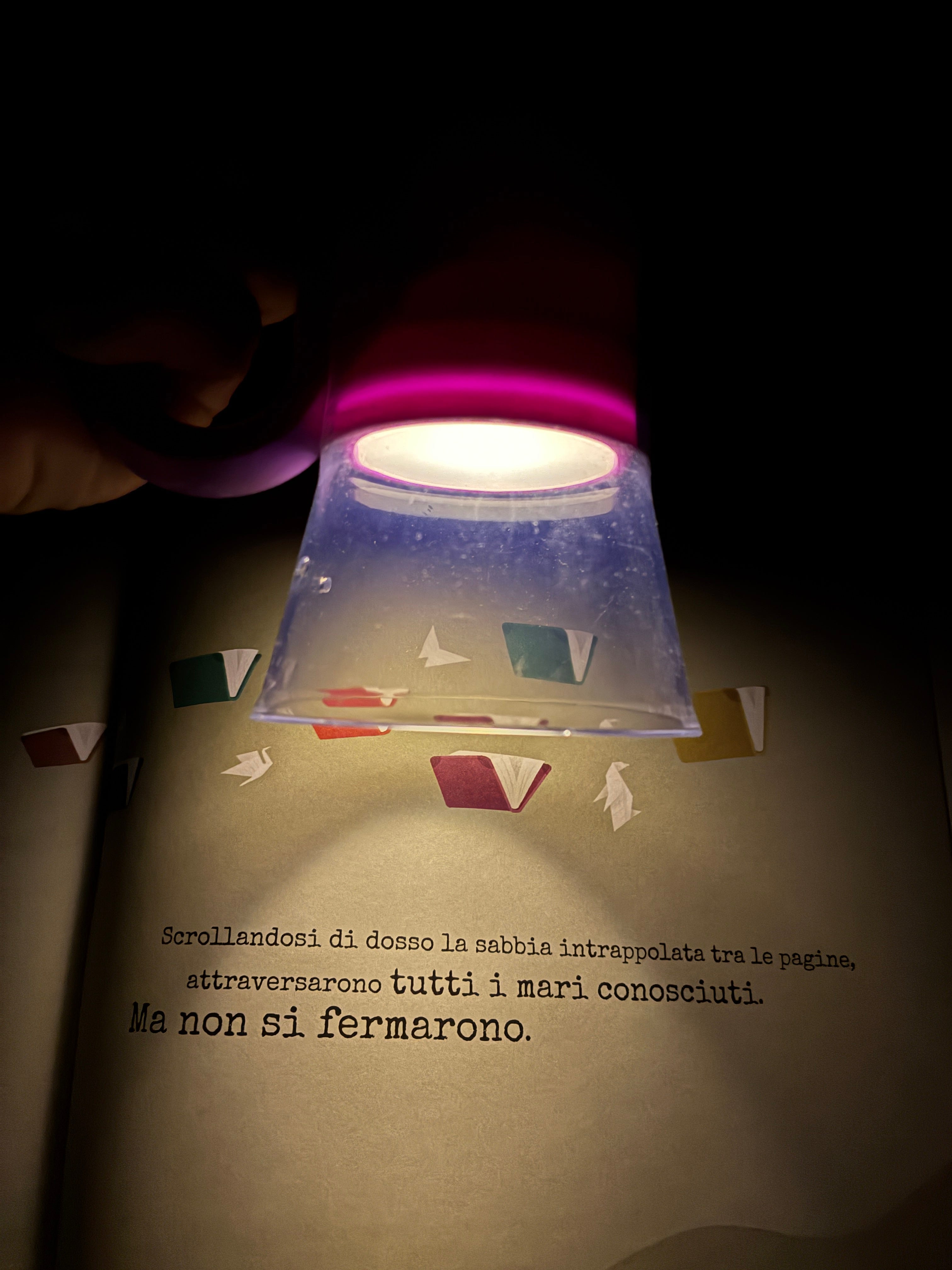
I always read a novel to them to put them to sleep. I turn all the lights off and read with a small torch. The light is very low, just enough to see the page.
One night I forgot to turn it off. And then the magic happened: they stopped coming to our room.
I have no certainty about why. Probably they recognized their space in the middle of the night and felt okay. Maybe the room felt less dark, less empty, less whatever it was that made them want to leave it at two in the morning.
I started leaving it on deliberately. They kept sleeping.
The fix wasn’t a routine. It was a condition in the space that changed, accidentally, and then it worked.
When I spoke to Giacomo, I had a few concrete things I asked him to look at. I’ll get to those. But first, a little of what I found when I went to look for the reason, because if you don’t understand why this happens, the tips feel random.
If you just want the practical part, skip ahead.

This is not an article about sleep regression, and it is not my area of expertise. I am not good at optimizing my children’s sleep. Most of what I know about it comes from observation, intuition, trial and error, and, most of the times, luck. What I am trying to talk about here is the room.
Last week I came across an article by Claire Franklin about letting children be involved in designing their bedrooms, and I found myself thinking about Giacomo, and about the suggestions I had made him. She makes a strong case for involving children in design as a process, worth reading alongside this one. The situation I want to talk about is different: not a room being designed, but one that already exists and has stopped working.
I did a bit of reading to understand why, and I’ll link the sources at the bottom for anyone who wants to go deeper. The short version is this:
The bedroom is the primary space through which children build their sense of self, not just somewhere to sleep, but the place where their identity takes physical form.
When the room no longer reflects who they are, the relationship with the space breaks down.
Research also shows that more than 73% of children between 4 and 12 cope with nighttime fears, but only 34% of their parents know. A third of children say nothing at all. The problem is not rare at all, but it is definitely invisible.
A ten-year-old who has the cognitive tools to manage her fears still needs the room itself to meet her halfway: the right light, the right sense of enclosure, the right feeling that this space is actually hers.
A room that worked perfectly at five may simply not work anymore at ten. Children grow faster than rooms do.

I read a lot about the relationship between spaces and behavior, and I think about this as an architect and as a mother. What follows is what I told Giacomo, and what I would want if I were ten and the room had stopped feeling safe.
Where you place a bed, and how it relates to the door and the walls, affects how protected you feel. There is something instinctive about wanting your back covered: head towards a wall, not exposed in the middle of the room. Many traditions, from environmental psychology to Feng Shui, converge on this same configuration: she should be able to see the door from where she lies, with something solid behind her and not directly in the line of movement when someone enters. If the room doesn't allow for all three, even one or two make a difference.
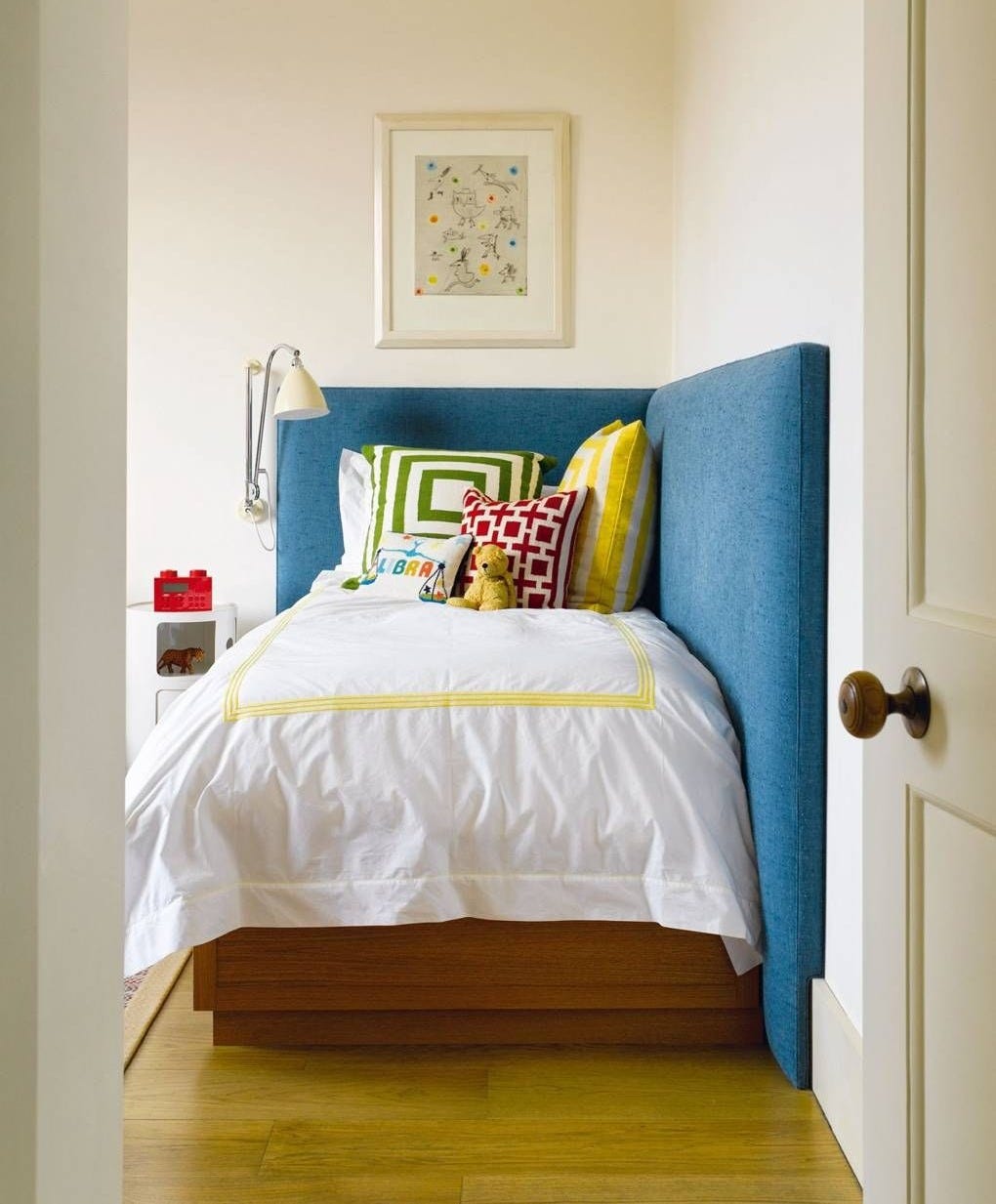
Go shopping together. Let her pick the color and the texture. This seems something small, but it can actually make a big difference. Different fabrics make you feel different things: jersey is warm and soft, like sleeping inside a sweatshirt; cotton is crisp and cool; linen has weight. Bring her to the shop and let her touch things and let her choose. Ownership matters more than getting the perfect color palette. The goal is a bed she wants to get into.
At ten she almost certainly reads before sleeping. A small nightstand or a shelf she can reach from the bed, with the books she is actually in the middle of, tells her that this space is organized around who she is now instead of what looked good when the room was set up.
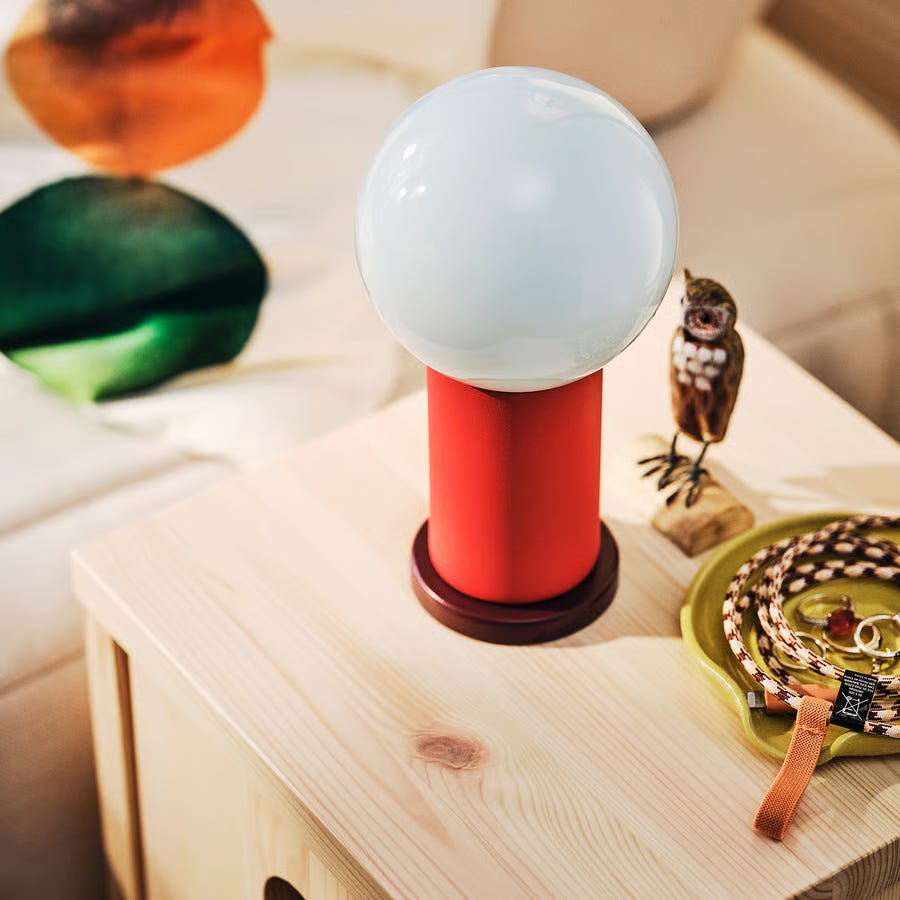
The dimmable rechargeable lamps that are everywhere now are useful here as there is no need for a socket, you can place them anywhere you want, and almost always adjust the intensity. Warm amber light at low levels does not interfere with melatonin. It is not a coincidence that my torch worked. Light at night, at the right temperature and brightness, helps a child read the room as safe rather than empty. Blue or white light wakes the brain up. Warm and dim gives it permission to settle.
If she would enjoy a more contained sleeping space: a canopy bed, or a curtain that closes off a niche, creates a sense of physical protection that an open room cannot offer. Children often want to feel held by the architecture, not exposed to it.
This is also why they build forts and drag duvets to the floor. I wrote more about it here:
This is more the mother talking than the architect. When children are small, parents are often advised to give them a transitional object such as a toy, a doll, something familiar, to help them feel safe alone. It does not stop being useful just because they are older.
Maybe for a ten-year-old it is not a stuffed animal anymore, but it might be. Or it might be something she can see with the dim light if she wakes at two in the morning: a photograph of the family in a moment she remembers as happy, on the nightstand. A trip, a summer. A reminder that she is not alone in there.
If the shelves are still full of books from when she was six, toys she no longer touches, things that belong to a version of her she has moved past. The room is still speaking to who she used to be. Clearing them out, making room for what she actually uses now, is a design move. It is also a message: we see who you are now.
I told Giacomo: go sit in that room and look at it properly, the way you would look at any space that has stopped working. Then ask her what she would want to change.
We often assume that when a child starts coming back into our bed, the solution is behavioural: a new routine, a firmer boundary, better sleep habits.
Sometimes the room is simply telling you that it has fallen behind the child who lives in it.

Thanks for reading Off Camera! This post is public so feel free to share it.

Sources:
Kate Bacon, “Children’s use and control of bedroom space”, Springer, 2018
Muris et al., “Children’s nighttime fears”, Behaviour Research and Therapy, 2001 — via Parenting Science


Three kids in 20 months taught me this: homes need to evolve with us.
I’m Francesca, Italian architect. I practiced for over a decade and ran a small floral art atelier for a while. Then my first boy was born, and less than two years later, the twins arrived.
With three small children, shaping space became both more urgent and more chaotic. I keep adjusting, moving things, reassigning rooms, rethinking storage. Homes have to keep up with life.
Here, I write for parents who are fighting their homes every day, pouring everything I know about spaces, routines, and the beautiful mess of family life into every post.
If any of this resonated, subscribe so you don’t miss the next one. And if you know someone whose home is working against them instead of with them, share it with them.
💬 If something in your home isn’t working and you want to talk it through, send me a DM and I’d be happy to help.
No posts
Comments
Nothing yet. Say the first thing.
Sign in to join the conversation.