
With the benefits of eating fermented foods becoming more well-known, producers of everything from sourdough bread to kimchi are working to take a share of a forecasted £9.8 billion UK economy.
Fermented foods are said to be good for health because they are a source of beneficial bacteria (probiotics), which can improve gut health, boost the immune system and enhance nutrient absorption. This process also makes some nutrients more available to your body and can break down compounds that may cause digestive issues.

Having bottled fermented hot chilli sauce for four years now, County Durham’s Balefire is no newcomer to the trend.
“When we kicked this adventure off four years ago from a tiny kitchen, we never thought we’d be making over 1,000 bottles every week from our fabulous unit in our hometown,” said founder Peter Batten. “Our mission has always been about flavour, accessibility for all and looking after our environment. We want to create sauces that elevate cooking and spark conversation whilst keeping sustainability at the heart of what we do.”
Recent research has estimated that, given the right support, innovative ways of producing everyday foods using fermentation could add £9.8 billion to the UK economy.
Fermentation has been a cornerstone of food production for millennia, but companies and researchers are now using innovative approaches to this age-old method to make foods with the distinctive flavours and textures of animal products. It can produce everyday foods and ingredients incredibly efficiently, helping to reduce climate emissions and global deforestation, and upcycling food waste like bread crusts into nutritious food.
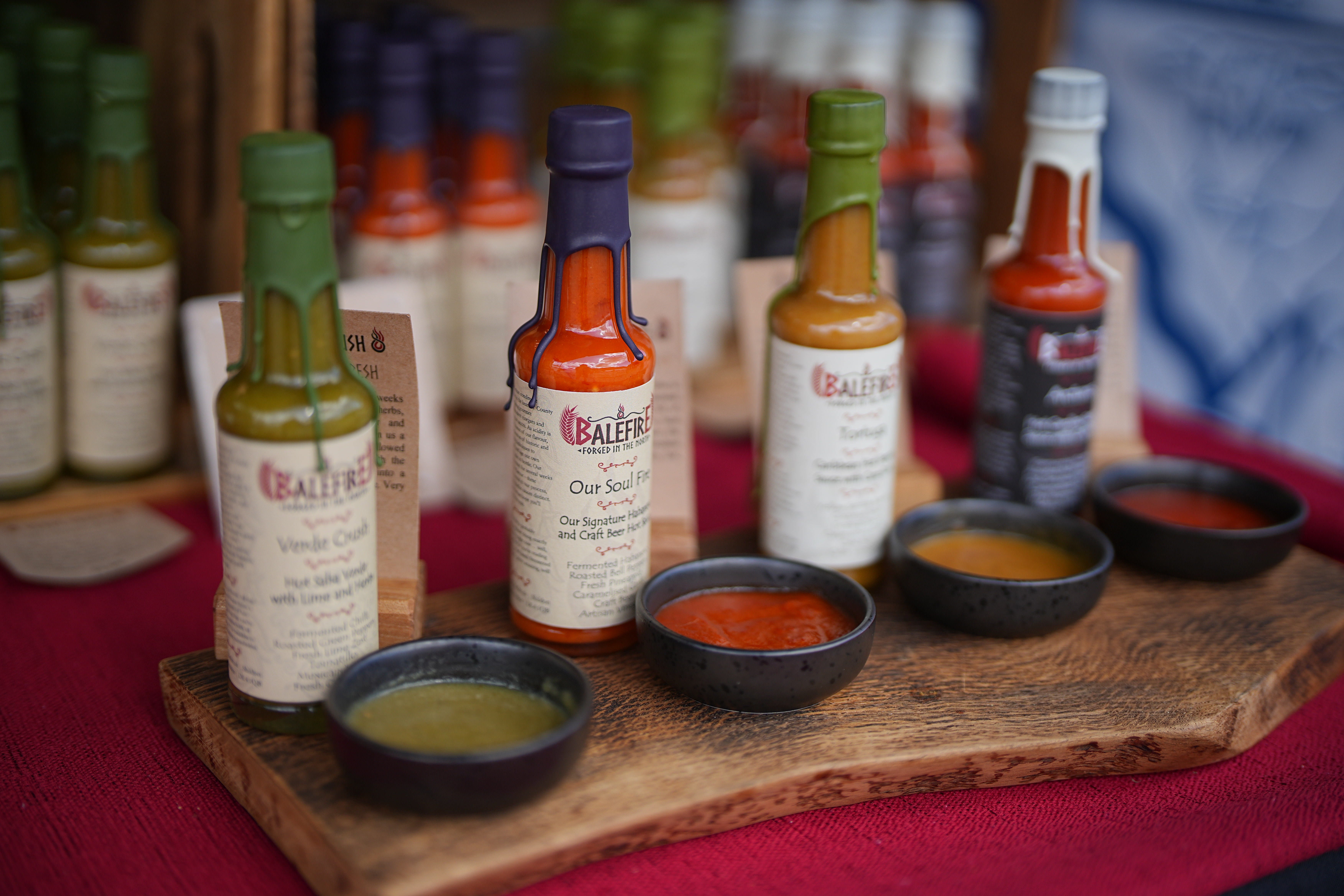
The Balefire hot sauces are just the start for the fermented food company which has just celebrated filling it’s 100,000th bottle - that’s 16,000 litres of sauce. The brothers, Peter and Jim, craft each condiment by hand, using chillies they ferment on site and their own small-batch craft beer as a base.
“I’ve always said it’s not hot sauce businesses, it’s a fermentation business. So we focus on fermentation to create flavours and fermentation is fantastic thing. We’ve just done a massive batch of sauerkraut. I make kimchi as well. We haven’t looked at producing that commercially yet, selling on top of the kind of fermented hot sauce that we’ve got currently, that’ll be the next step.”
The business is also taking its environmental responsibilities seriously - the first company vehicle purchased was an Electric Van, there’s no plastic shrink wrap in the packaging and they run a ‘zero-waste’ kitchen.
“We wanted to create something that was going to be around for a while so part of our core ethos was sustainability,” said Peter. “We focus on anything we can do to kind of reduce plastic, reduce waste, make things greener. We run a zero waste kitchen. Essentially, that means we buy in exactly what we need for our products, and we don’t have to throw anything away. We also reuse some of the waste products as well.”
And the name?
Peter tells me that balefire is a old Anglo Saxon word for sacrificial bonfire and, as home town Shildon was an Anglo Saxon settlement, they wanted something which identified with the North East.
Balefire is available online, at multiple farm shops, delis and at Durham’s Saturday market.
Don’t want to subscribe but still keen to show your support? Please like this post or throw a coin/note into the tip jar below. 🙏 Thanks! 🙏
Comments
Nothing yet. Say the first thing.
Sign in to join the conversation.