
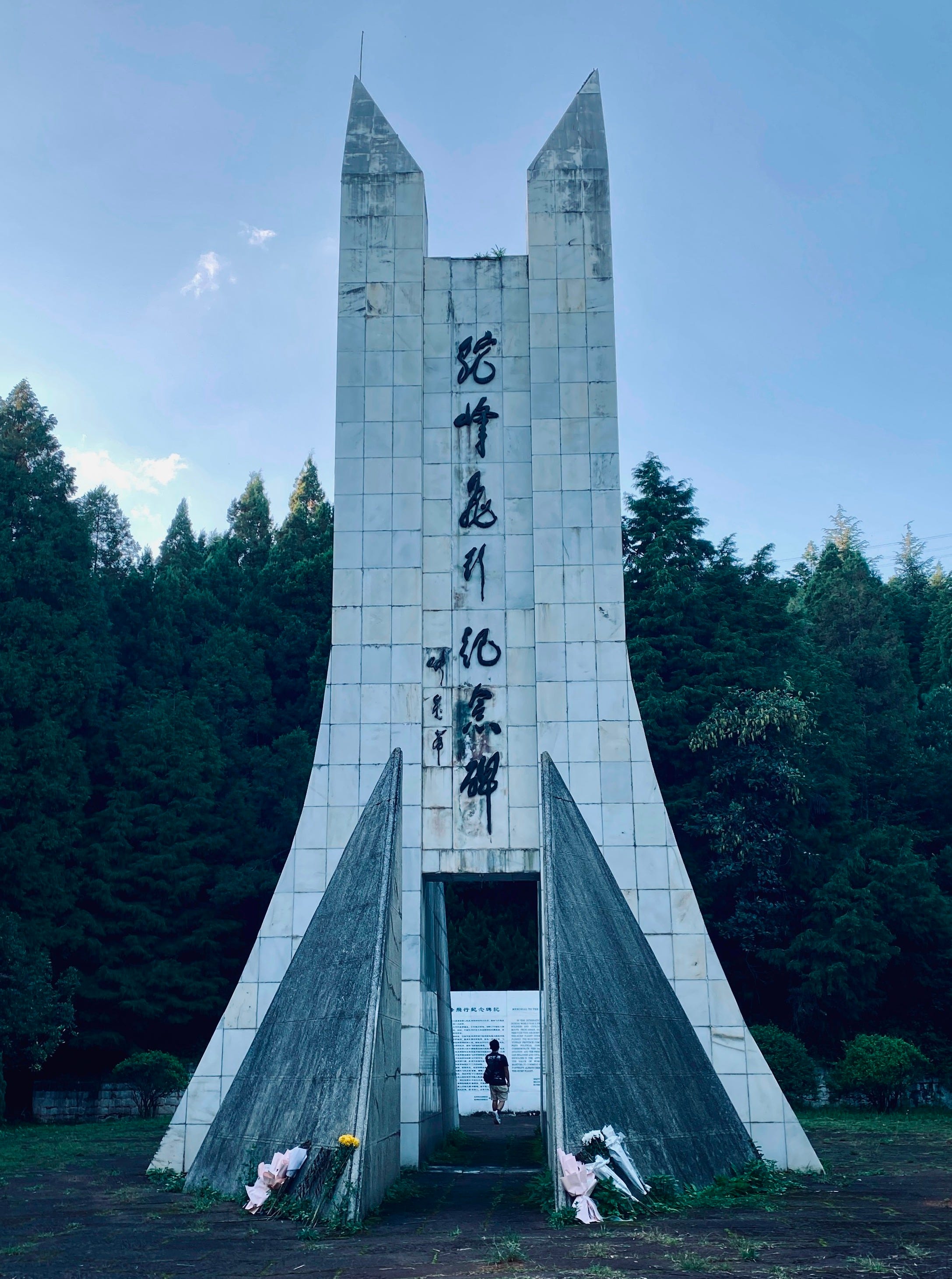
I don’t consider myself a mountain of the dead, but people come here with their boxes of ashes. Sad, mournful faces, with nowhere else to go. You can tell them apart from the hikers by the tired lines on their faces and the holes in their hearts. They all wear the wrong attire too: dress shirts, white pants, dress shoes with no grip, slipping like fish, the ladies with high heels, their flats sink against the mud, and the boys move awkwardly in their stifling collared shirts and buttoned sleeves.
That sunny day, a group of twelve were coming up the mountain, like most do, with loudness and excitement at the base, then grew quieter as they caught their breath climbing up. I recognised one of them, the tall American—he’d been here exactly a month ago, got a knowing look in his eyes, like he knew the secrets of the mountain. As if. It was I who knew his secret. He came with a different group then, much smaller, on such a rainy and slippery day. The wet leaves on the slope had fun with them.
Then there’s the leader. I could tell, she was the one who got everyone here. So many of them asked her questions: why are we here? Why did you choose this place? How did you find it? And in the first twenty minutes: how long do we have left? She answered every single question, followed by empathetic smiles and nods, validating their shock and sweats at the initial elevation. She had walked with great attention like she was reading the mountain, and I knew it then that unlike everyone else, it wasn’t just a hike for her.
A curious bunch, this one, with six Chinese and six foreigners. Chinese, North Americans, British, all speaking in a chimera of languages—English in Chinese tone and Chinese in English tone. The New Yorker spoke Chinese, and his Chinese friend replied in English, on and on they talked in the language of their counterpart. Bah, Chinese or English, it doesn’t matter to me. It’s not hard to understand the patterns of sounds that humans make—mere child’s play. The harder thing is to understand what they don’t say, the untold things they carry. That’s why I was curious about her; she was carrying something like heaviness.
At first glance she looked Chinese, but she was the most foreign of them all, hated it when people asked where she was from. She belonged to too many places, thus belonged to nowhere. And when people asked, she was reminded of this pain, of not belonging, so she lashed out inside, while frowning and biting her lips on the outside, and nobody understood why she had to come up with a complicated answer to such a simple question.
Forty-five minutes into the hike, they reached an opening, a spot with a great view of the city in the distance. The tall American had been watching the map on his phone a lot, something was afoot. He then whispered a warning to his friend, the leader: Somewhere around here. This is where we stopped last time.
She slowed down, and paused, lifted her face and looked around—not to him, but to me, as if listening for a whisper in the wind, searching for a memory that never was. Then she stopped everybody in their track; she stopped me in my track.
Then it came to me, the scattering of the ashes—of the old American whose micro bits now are mixed in my soil and air. They had breathed it in too, not just his, but thousands and tens of thousands others’; had stepped on their graves. That’s what all the earth is anyway, a giant graveyard. Humans just don’t realise it.
The small group had wanted to bring the ashes to the monument at the end of the trail, but someone had bad knees, so they had to turn deep into the trees early on, looking for the forever home kind of spot, secluded enough, with a nice view. The view got to be nice, that’s one thing they all agree on. You do have to like where you end up. The best feng shui is high hill at the back, water view at the front. The mountain and the water combination doesn’t get old, has been around for millennia in this part of the world depicted in millions of paintings.
She couldn’t be here when they scattered the ashes. The tall friend was her proxy, did the ritual she couldn’t do. So this wasn’t a return, I should’ve known that. I would’ve remembered her. This was her first visit to the mountain, for her dead friend. It was a pilgrimage, though most of the group didn’t know it.
The tall friend who knew—he was here that day, weeping on the inside, because he was the first who found him, so thereafter had been carrying the weight of the responsibility to see it to the end. Spoke to me like I could understand. (I could.) Said they’d wanted to bring him to the Flying Tigers monument—the symbol of Chinese American friendship, that’s what his friend believed in. But they couldn’t make it that far. I’m sorry, he said. We tried. Said his friend loved China, wanted to live and die here. Secretly he wondered whether he’d die here too, having left the life in the States to build a new life in this foreign world. The language had been impossible for him, but he tried anyway. Just like his friend, the old American.
She told her group then—about her friend, whose ashes were scattered here exactly a month ago, why today, why she’d chosen this mountain, all with a tiny pang of guilt, as if she’d tricked the eleven people into following her personal pilgrimage. She asked for thirty seconds of silence in memory of him. They all bowed down their heads in respect. A few of them only heard about this man then and there, and didn’t fully understand what had happened, but everybody understood that grief was choking, and needed a room to breathe. They let her breathe.
She smiled and nodded to everyone, so full of gratefulness the road ahead seemed a lot more doable now, the destination more reachable. When they continued walking, someone took out pomegranates from her backpack. So big were the fruits that they kept breaking the chunks of red jewels apart, passing them around from person to person, until everyone got some, and seconds. Like Jesus and his fish, they seemed to multiply and never ended. Everyone was sucking on the red juicy beads, their fingers tainted sticky red like children, and they were baffled at the magic of the pomegranates. They tasted better here eaten in the mountain, shared; even I know that. I chuckled at their childlike awe. Maybe there’s magic in this mountain after all. Pomegranates or grief—whatever works.
There was a Chinese Canadian woman called Linda, who was roped in by her two friends, not fully knowing what she was in for. She thought the first resting point was the end; she was so happy. Poor Linda didn’t know it would take them four hours to the end. The leader didn’t know it either; she’d told everyone it’d take about ninety minutes. She didn’t mind the not-knowing—just because the path was unclear didn’t mean she was lost; but this was a hard concept to accept for some of the Chinese.
In particular was one man—the Anxious One—with his heavy shoes and heavy steps, who was deeply uncomfortable about getting lost. Every time they bumped into a stranger, he would go and ask them. Where’s this Flying Tigers monument? Are we far? Are we on the right path? The third or the fourth time he did it, the leader snapped like you could hear the sound of the brittle patience snapping in two.
Ross, stop asking people! We know where we are! Do you see? We can literally see the signs, and the sign has an arrow in that direction. What else do you need?
The British guy with the curly hair too mumbled in disapproval. He used to live in a small town in Wales—a town so small he needed to walk across the forest for forty-five minutes to reach the nearest supermarket. No, he was not afraid of getting lost. Sometimes that’s what he wanted, to get lost, and find his own way back. Why do you care if you get lost? You’ll find your way eventually.
I’ve seen so many Chinese like Ross. It seems the cost of being wrong in this society is so severe, you cannot afford to make a mistake, getting caught saying the wrong answer, a bit like getting lost. Here answers are black and white, either correct or incorrect, like they’re still stuck in the class of life. It’s safer if someone tells you which way is correct, so you don’t make your own mistake. While the foreigners are conditioned to believe, their mistakes are their own to make—nobody has any business to take this enjoyment out of their hands.
Then there was this Chinese woman with walking sticks who translated everything—she’s bossy, I liked her. At that resting point, where they spent a lot of time chatting about nothing, she was telling a story about her tour guiding experience at the Old Tea Mountain, in which the hotel owner they were staying at told them: the door was attached to the key. Not that their room key was hung at the door, but the door was at the key. The only thing they needed to do was to find the key, and the door would be attached to it. Get it? Their peals of laughter echoed through the quiet mountain. Even I had a little giggle.
At an intersection, they met a lonely motorbike. Everyone rushed and crowded around it, as if it was an inanimate celebrity. Why is this here? They were making up stories with cackles and curiosity. They made me wonder too. What’s the motorbike doing there? It wasn’t even old; it must’ve run perfectly fine. There was no paved road leading to the motorbike, so it had climbed through dirt roads. It sat like a sign at the intersection of three paths. Left or right? They discussed and chose left. Lucky it happened to be the right one.
If they thought the beginning was rough, the middle gave them a new surprise. A lot of the trails in China are very manicured: paved road, clear track, often dotted by food sellers along the trail. Nowhere is truly wild; every path has been downtrodden. The middle was a bit special, steep up and down like roller coasters made of dirt and hills.
Half the group ran ahead, like riding a toboggan in the snow. They ran down across the dirt and the rocks, catching themselves at every step while screaming and bursting with laugh at the silliness of each other. Linda was way at the back. I’ve seen a lot of Lindas too. The stakes of taking the wrong steps get too high as they grow older. So they’re living too cautiously, and forget how to climb down an unpaved road. One precarious step at a time she went, looking very small in the distance like a shaky, careful ant.
The bossy translator climbed back up with her walking sticks, while the tall American and the Anxious One were arguing whether they better stayed or went back to pick her up too. The leader decided for them; it’s better not to send too many people to the rescue. Lest it fails, there would be less people to rescue altogether.
‘Long time no see,’ the curly hair said with his British witticism when they regrouped.
The trail was dotted by some red ribbons hanging from the trees. Linda was reminded of the red ribbons seen at the temples and she wondered aloud whether they were marks that people had died there. Showed just how much she thought of my trail! The Chinese assured her they were trail markings for some event a while back. Perfectly harmless and had nothing to do with death. Well, at least these ones don’t. I’m not always about death, you know.
At one point they studied one of the signs that showed the entirety of the trail, which goes for 30 kilometres with an altitude of 2294m, and wondered which part they were in and which part they had walked through. Someone pointed out that because the trail was so long and the map so small, it was as if they hadn’t moved at all on the map, to everyone’s disappointment.
After a four-hour hiking that was supposed to be ninety minutes, the group was brimming with excitement in the last kilometre. Every sign that indicated the Hump Flying Monument—驼峰飞行纪念碑 they found along the way was a checkpoint to be cheered for. I cheered for them too. They all made it. Nobody fell, nobody quit. What a miracle.
Exhilaration ensued as they neared the last couple of hundreds meters; people seemed to really sense the energy. A few of them started racing each other, running up the hill. Towards the wrong direction... No, where are you going! A couple of them refused to run, but couldn’t help jogging at the back, trailing and laughing at the ridiculousness of the front runners, who luckily realised their mistake soon, and turned back.
The tall American was slow at the back, wondered whether there had been a bet going. Surely there was a bet; nobody would suddenly just race each other with no reason. He wouldn’t. In all the commotion, they were able to find the white stairs up; the plaque at the foot confirmed that it was the right place. So people stupidly ran again, up the stairs, puffing and giggling, while he followed in steady steps.
Finally there it was: the monument to the Flying Tigers, standing tall like a piece of white shard pointing to the sky. It says: Memorial to the Over-the-Hump Flight during World War II from 1942 to 1945; for the American pilots who flew over the Himalayas, from Assam, India to Kunming, China—fighting shoulder to shoulder in the anti-fascist battle; to cherish the value of world peace; to the Sino-American friendship.
He couldn’t help but pause for a couple of minutes in front of the monument and just took the moments in. Here in the corner of Kunming, was the commemoration for the alliance between the Americans and the Chinese from the days gone by, still standing, amidst the passing decades. Especially poignant in the lens of the shaky recent relationship between the two countries. Once upon a time we were friends. Why humans need war and a common enemy to work together would always baffle me.
At the back of the monument: two giant tablets, the left side written in Chinese and the right side in English, describing the history of the Flying Tigers. The Chinese went to read the English side and the foreigners went to read the Chinese side. Though the English side was too short, and things were obviously omitted in translation. I’m always impressed by how succinct Chinese is as a language; and especially so in writing. It takes twice to thrice as long to describe the same thing in English—it’s such a wordy language.
The New Yorker was particularly interested to go through the Chinese version, one character at a time. He had a stick in his hand, like a teacher pointing at the blackboard to a bunch of students, while some foreigners were working things out alongside him. It took them so long however, that after the Chinese finished debating about how rubbish the English translation was, they all crowded around the Chinese tablet, and helped each other to understand. A class room in the open.
She thought she was carrying the group here, but it was them who carried her.
The leader stood a bit at the back with a lump in her throat. She had completed her mission, finished the pilgrimage. A month ago she couldn’t come here; the first group couldn’t carry him here; the mountain had other plans in mind. And now here she was, with a mishmash of friends who’d trusted her to the end. She’d been foreign all her life, and belonging was not a feeling she recognised well, so when it came she couldn’t explain why she felt like crying. She thought she was carrying the group here, but it was them who carried her. Or perhaps they carried each other, all twelve of them.
When the sun was almost down, they were finally ready to go back. Before that, photo session in front of the monument like the last school trip of the summer, and for a brief moment it was as if they had their childlike innocence snapped and frozen in time. Let it be a reminder that friendship, companionship, and relationship go beyond nationalities and country borders. Beyond languages. If only the world were as simple as today. If only humans were as simple. But sometimes they do. I have great fondness for them, their endless tenacity to be alive, and the absolute determination to take care of each other, however late, however brief their time is here.
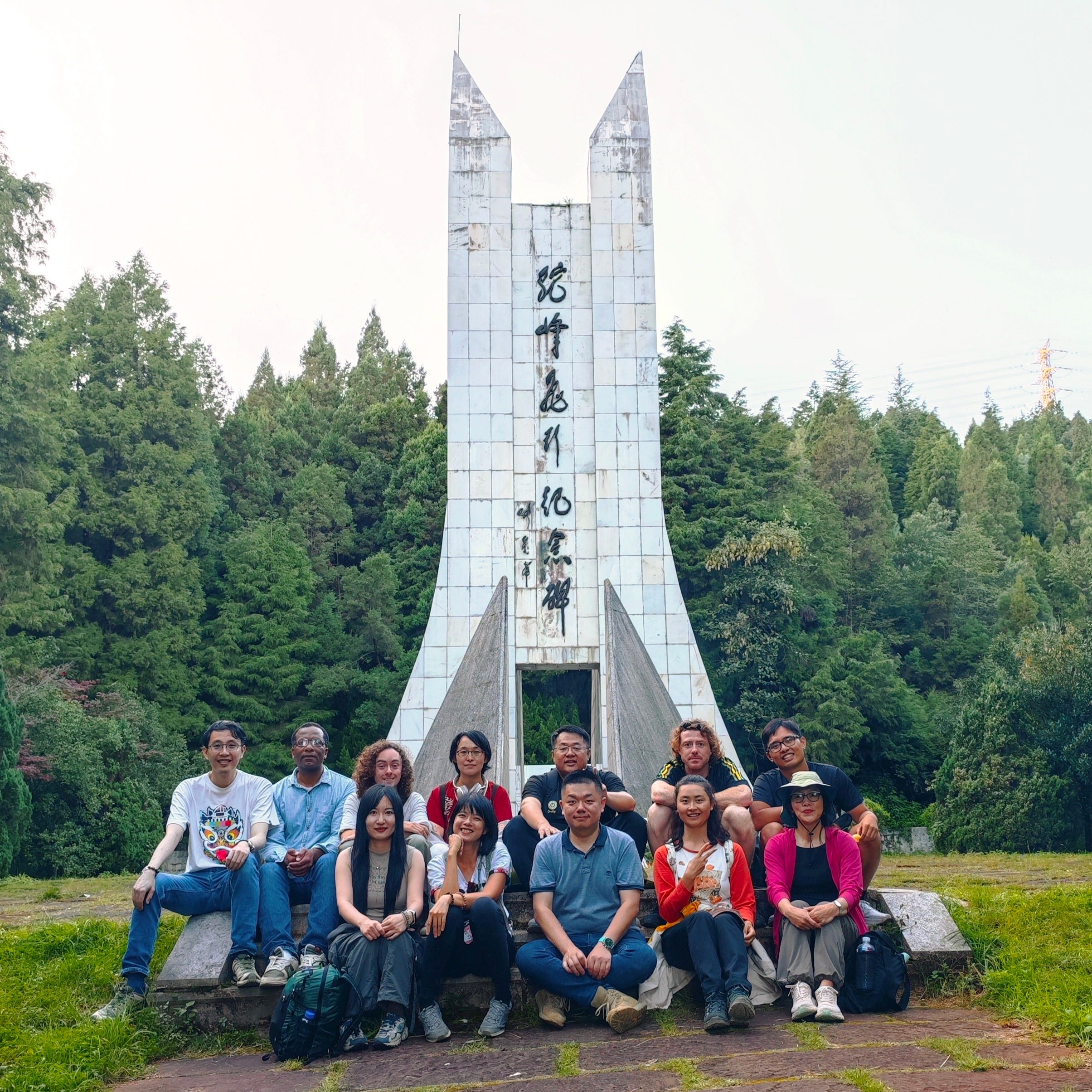
The group started the descent, chattering about the hotpot dinner. The tall friend was the last one who stayed—this other American who loved China, looking back to the monument and waved his little goodbye, the hand tugged low at his waist—most people missed it. She saw it, because she looked back as well, right behind him. Together they had carried the invisible ashes to where it was meant to be. The dead American would’ve liked that. He’s the kind of ashes that appreciate effort.
And for her, I understand now. She didn’t come here to find her friend. She came to leave him. To stop carrying him alone, now that she knew where he rested. I’ll come back next year, she said without a sound. To the mountain storing the secret and the ashes.
Don’t worry, I’ll be here, as I have been for millennia, watching the dead and the living, and all the precious things they do in between. They’re sweet, the humans. Sometimes they can be very very sweet.
The Flying Mountain is part of the Between Worlds series. Each piece can be read independently, but if you’re so inclined to read the full series, they are:
Comments
Nothing yet. Say the first thing.
Sign in to join the conversation.