
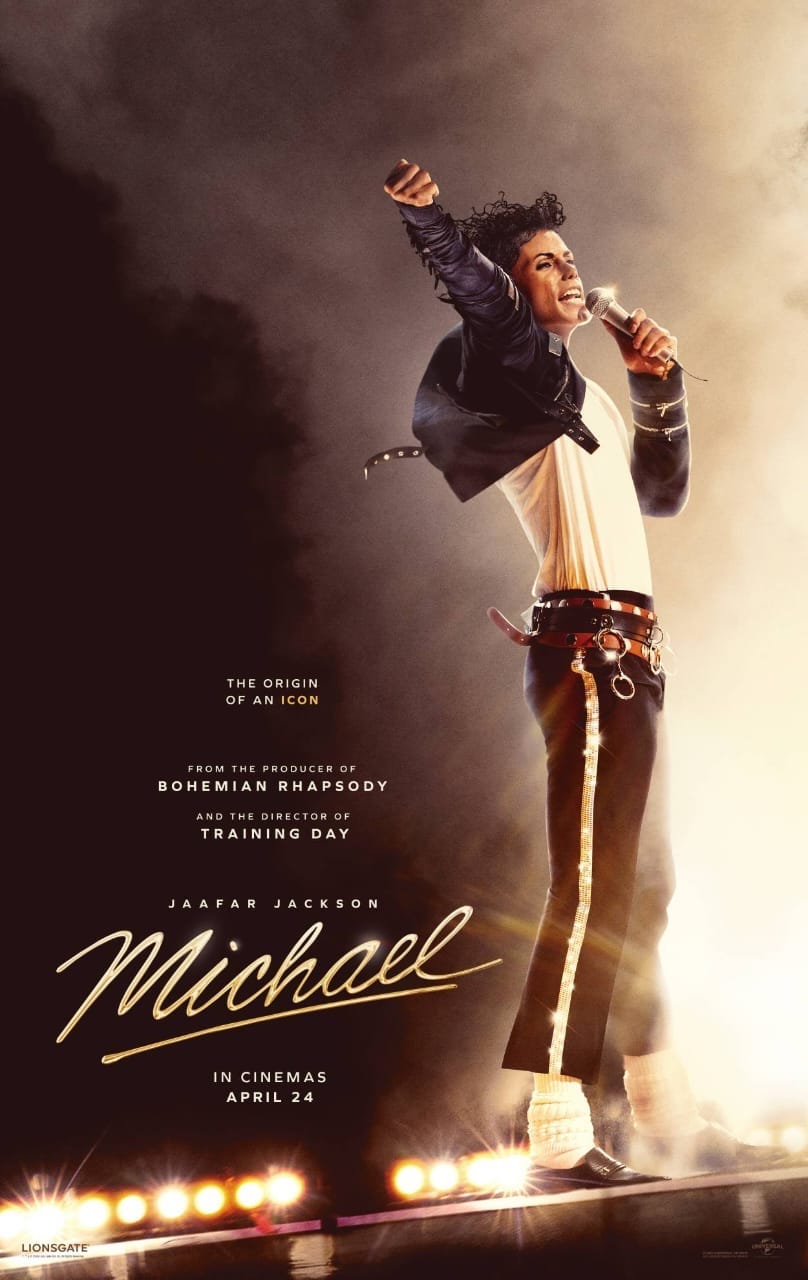
The movie Micheal made waves of speculations way before it hit the screens . Will it be truthful to the man and legend? Will it attract the projections love up to expectations?
I wanted to examine it from a different perspective - The Nollywood perspective.
Michael Jackson’s greatness can only be compared with the greatest Nigerian musician ever, Fela Kuti.
Of course, there are more differences between them than similarities .
But, if you look closely at big influential artists, something starts to stand out.
They don’t just make music.
They end up in relationship with power, government, law, media, public systems.
Take Fela Kuti.
Fela didn’t sit beside the government. He collided with it.
His music wasn’t subtle. He called out leaders directly, without filters or metaphor. But it wasn’t just the music his entire life became political. His home was raided. He was arrested. Beaten. Watched. And still, he went back on stage and said everything again, louder.
With Fela, the government wasn’t background noise. It was part of the story.
So I thought, which American artist did that? Yep, Bob Dylan.
However, Dylan’s relationship with power is different.
He wasn’t confronted in the same physical way. But he still disturbed systems just internally. Through language. Through ambiguity. Through lyrics that made people question things they couldn’t easily explain.
The system couldn’t really “stop” Dylan in the same way, because there was nothing concrete to shut down only ideas spreading everywhere at once.
Then there’s Michael Jackson.
And his case is more complicated.
Michael wasn’t political in the Fela sense. He wasn’t directly confronting governments. But he ended up inside a different kind of system pressure "media, legal scrutiny, global attention, and constant public interpretation".
By the time albums like Thriller and Bad made him the biggest star in the world, he wasn’t just an entertainer anymore.
He became public property in a way very few people ever experience.
Everything about him was interpreted, his appearance, his silence, his relationships, even his stillness. Over time, that attention became its own system of pressure: media, law, speculation, defense, and controversy all layered together.
So even if he wasn’t “fighting the government” like Fela, he was still trapped inside structures of authority just a different kind of them.
That’s what made me want to look at Michael more closely.
Because it had the chance to go deeper into that complexity.
Instead, it stayed very safe.
It touches the surface of everything we already know about Michael Jackson, the performances, the fame, the myth, but rarely pushes into the uncomfortable parts where the real weight of his life exists.
There were moments I expected more: more context, more emotional depth, more willingness to sit in the contradictions that defined him.
Even the controversial or heavily discussed parts of his story are handled carefully, almost cautiously. And while I understand why, it makes the film feel restrained.
Like it’s protecting the image more than exploring the person.
Visually, the film is strong.
The performances are recreated with detail. The choreography is precise. The staging is impressive. At times, it really does feel like you’re watching history being reconstructed carefully frame by frame.
But after a while, it starts to feel repetitive.
Less like a story unfolding, and more like a collection of highlights arranged in sequence.
It looks like a biopic, but it doesn’t always feel like one.
Jaafar Jackson delivers a committed performance. Physically, he gets very close, the movement, the posture, the energy. There are moments where the resemblance is almost striking.
But the script doesn’t give him enough emotional space to go further than imitation.
Without real inner conflict on the page, the performance naturally stays on the surface, not because of the actor, but because of what he’s given.
The biggest issue, though, is how carefully the film avoids discomfort.
It rarely steps into the complicated or unresolved parts of Jackson’s life. Instead, it stays within familiar territory, the icon, the performer, the legend.
And that choice shapes everything.
Because I didn’t go in expecting answers. I didn’t need a definitive version of his life.
But I did expect to feel something new. To see a version of him I hadn’t already absorbed through years of documentaries, headlines, and public debate.
Instead, I left with something familiar, just polished into a cleaner, more controlled version.
It’s not a bad film. Not at all.
It’s visually strong. It’s well made. It’s watchable.
But it’s also not a risky one.
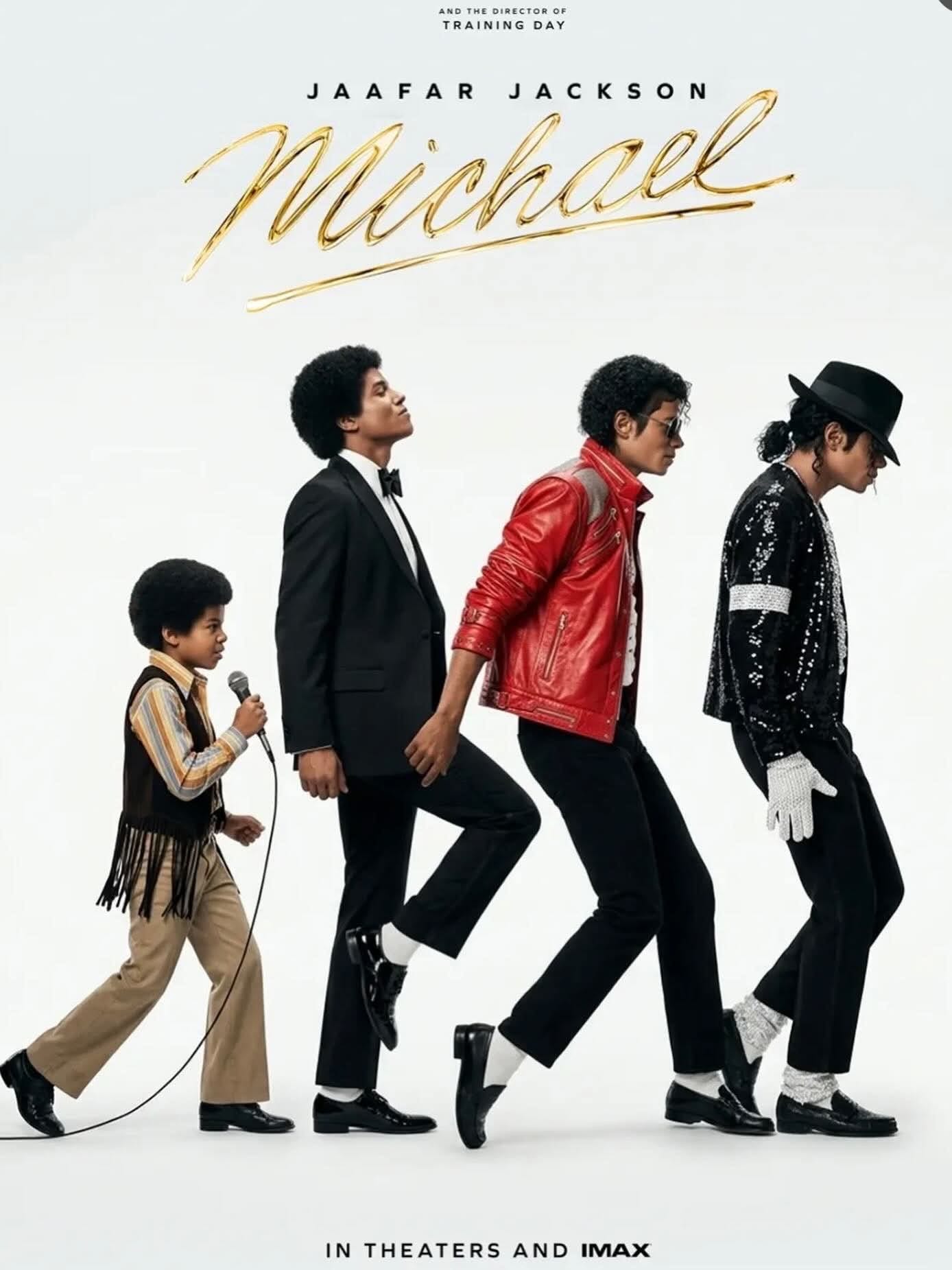
And for someone as complex, influential, and heavily interpreted as Michael Jackson, that feels like a real missed opportunity, it could have done much more.
What do you think? What would you have liked to see in Micheal? How deep would you want it to go?
No posts
Comments
Nothing yet. Say the first thing.
Sign in to join the conversation.