
welcome to your weekly virtual-pick-me-up, the nexialist
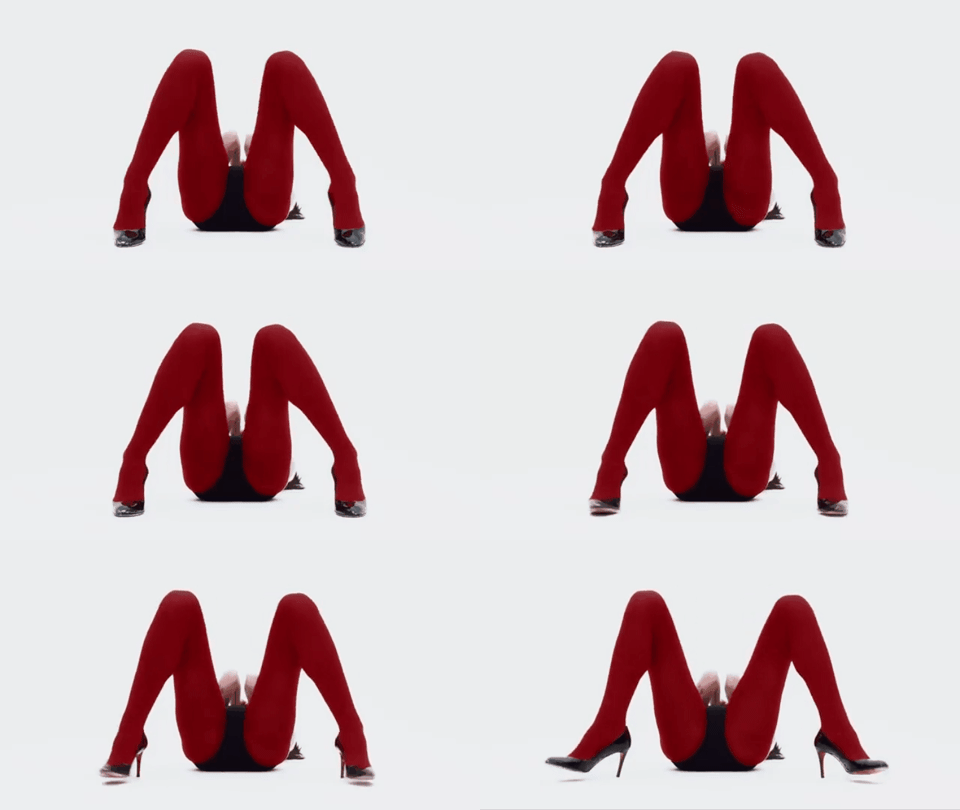
hey, you! i hope this message finds you well. this week, i really don’t know what to say to start the newsletter so i’ll just leave you to it. enjoy! 🫀✨
⏮️ time-machine: best brainsparks this week over the past years:
mandela effect, chatgpt psychosis, self-imprisonment, water-based intelligence, biocomputing, period stem cells(tn#238), the thinking machine, how sci-fi has changed, addictive intelligence, sxsw patterns (tn#186), brazil’s barbie, afrodhit, kelela’s raven, pretentious pronunciation, the cult of ugly aesthetics, let us be ugly & dumb, pupil diversity (tn#134), nuragic civilization. brasilia: urbanism utopia?. the dystopia of são paulo (tn#83), how normal am i? | techworry. Affordable Romance | Heavy Baile (tn#33)
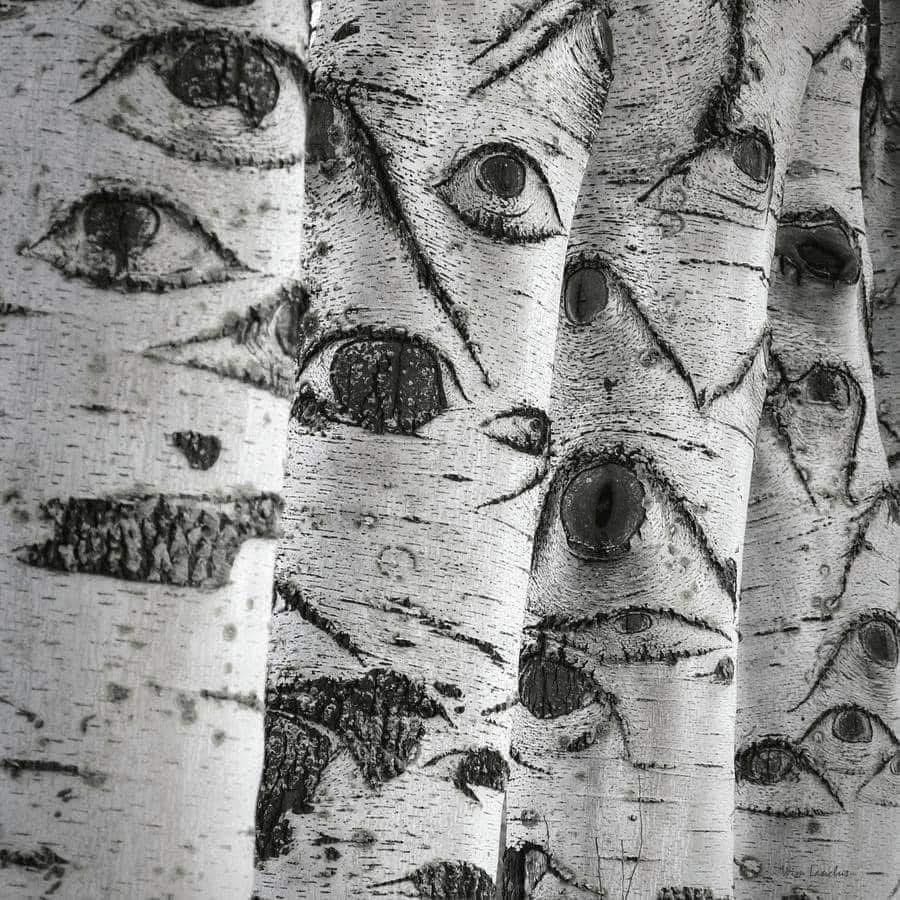
the first time i saw one of those aspen trees was in amsterdam, and i was so taken by it. there’s one specific tree when i bike through westerpark that stares at me and i stare back. then more recently i biked through a tree-lined lane that had these trees on both sides and it gave me so many feelings. some eyes look attentive, others a bit sad, but most of them are looking up at the sky maybe waiting for something or rolling their eyes at humanity. in the age of surveillance capitalism, these forest eyes reminded me nature is also watching us.
brainsparks: dendrochronology (tn#200), arboreal codes (tn#196), sumaúma(tn#122), ask nature (tn#86), shinrin-yoku (tn#137), surveillance pricing (tn#287), protesting under surveillance (tn#232), surveillance as love language (tn#209), panopticon aesthetics (tn#218), third eye(lid) (tn#26), eye floaters (tn#26), seeing without eyes (tn#207), fracking eyeballs (tn#15)
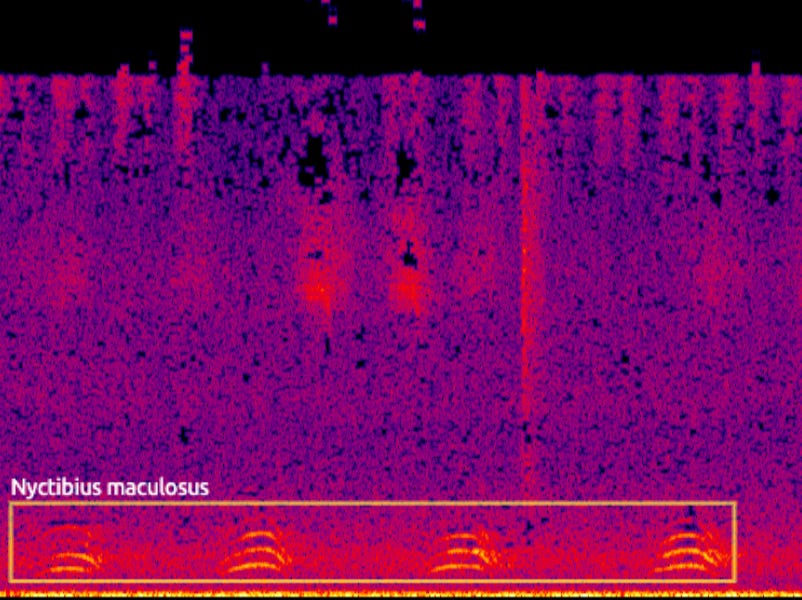
thank you, giacomo, for sharing this: xeno-canto is a crowdsourced database of more than 1 million recordings of wildlife sounds around the world. it was actually quite soothing to explore the different sounds and it reminded me of my nature illiteracy.
xeno-canto is a website dedicated to sharing wildlife sounds from all over the world. Whether you are a research scientist, a birder, or simply curious about a sound that you heard out your kitchen window, we invite you to listen, download, and explore the wildlife sound recordings in the collection.
But xeno-canto is more than just a collection of recordings. It is also a collaborative project. We invite you to share your own recordings, help identify mystery recordings, or share your expertise in the forums. Welcome!
brainsparks: animals and ai (tn#150), decoding birdsong (tn#196), lessons in birdwatching (tn#194), do you speak whale? (tn#20), non-human perceptions + umwelt (tn#86), scientist (tn#169), fish doorbell (tn#219)
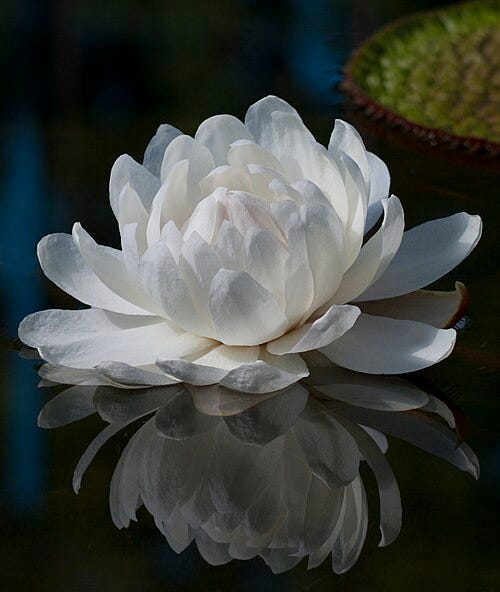
panc (pronounced in brazil the same as punk, which is quite badass) is a concept my mom introduced me to a few years ago, which means ‘plantas alimentícias não convencionais (panc) (lit. ‘non-conventional food plants’). i thought it was a worldwide-known movement, but recently it resurfaced on my feed, and it’s actually a brazilian concept (as is the concept of ultraprocessed food). basically, it’s a reminder that there are also other wild plants we can eat.
Plantas alimentícias não convencionais (PANC) (lit. ‘non-conventional food plants’), is an academic and popular education agroforestry botany movement, specially in Brazil and Latin America, of open research and social marketing for uncommon edible plants, mainly those that self-breed without harvesting efforts in empty lots and roads that have nutritional properties.
Due to the advances in modern agriculture and changes in cuisine, several plants that were historically cultivated are no longer utilized, and may be pejoratively referred to as weeds.
These, usually native species, are often resistant to pests, need little wild gardening care,[2] and can be grown in unconventional places, such as small closed rooms, roadsides, or vacant lots with very few resources.
valdely kinupp is the guy who coined the term, and you can even be part of his group to help identify more pancs around brazil, since they’re so site-specific.
brainsparks: nutricide (tn#170), seedless fruit: futureless tech (tn#198), plant memory (tn#273), moon tree (tn#264)

“When early humans first painted cave walls, they began to find out who they really were: our minds emerged from our images.” what a beautiful journey full of artistic and philosophical references. what is art? what is beauty? are beauty and truth the same? what is the difference between ‘the truth of accountants’ and ecstatic truth, according to filmmaker werner herzog? something shifted in me while reading this.
Two kinds of truth, two kinds of beauty. It follows that there must also be two kinds of art – similarly different and yet, somehow, complementary. The first is what I call artifice: art conceived so as to confirm, reinforce and extend the empire of facts in which we ordinarily live. Artifice corresponds to the first kinds of beauty and truth: the beauty of geometers; the truth of accountants. It may elevate or degrade, uplift or depress, edify or delude, but it transforms nothing. It leaves everything as it found it, because it proceeds from the assumption that the way we normally think of the world is enough for us to know how it really is. Examples come readily to mind: propaganda, pornography and advertising; sentimental, moralistic or didactic art; the countless works that merely reflect the ambient opinion of their time. That society needs artifice, and even benefits from some of it, I do not doubt. My only insistence is that it is not quite art. It does not do what art alone can do.
brainsparks: artificial (tn#123), marx ft. nietzche: how art can save us (tn#44), art predicts (tn#1), art, science, future studies (tn#46), ontological design (tn#3), linear opposites or closely related? (tn#126), why make art? (tn#264), the pleasure of patterns in art (tn#247)
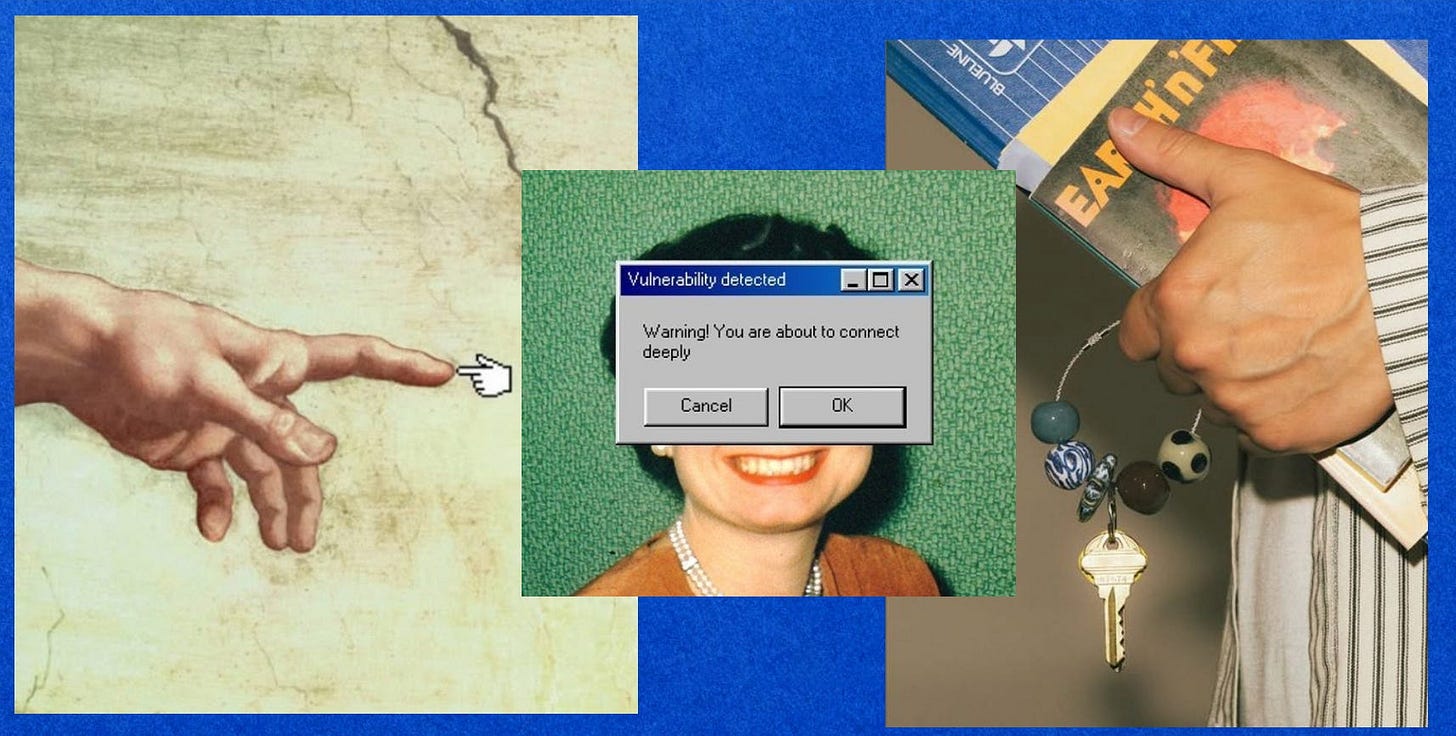
Charlotte Rubesa was also affected by rebecca solnit’s what tech takes from us (tn#266) and she builds on that. the new creative discipline is about “the reshaping of attention and how reclaiming it becomes a creative act.” she shares her initiatives to reclaim attention which are simple, yet difficult, and quite inspiring: put boundaries with your tech, balance between consumption and creation, and getting comfortable with boredom.
brainsparks: agentic sages (tn#225), a frictionless life is boring as f*ck” (tn#163), curated coping mechanism (tn#224), artificial intimacy (tn#168), the comfortable life is killing you (tn#224), independence x autonomy (tn#67), neural media (tn#217), crossing the chasm (tn#107), godgpt (tn#232), schizo-fication of the online world (tn#217)

by coincidence i also had this lined up to read and it fits perfectly here. Mapu walks us through how she uses sublime, which seems like an amazing way to create your digital garden (tn#227). it’s in a journal style, quite intimate, and it also made me envy her discipline to document. i haven’t finished reading it as of now, but i wanted to share it with you.
we often assume the act of creation is the final stage of the creative process, yet, i argue that it’s often expression what we’re referring to when we say this. i also find it interesting how creation can be actively constructed through expression, and how creation does not always require expression for it to “count”.
the creative act should not ever be measured by output, because once we do this, we’re assigning more value to productivity than to the person producing-therefore pushing for expression void of anything worth expressing.
attention → collection → cultivation → creation → EXPRESSION/CATHARSIS
brainsparks: how to have a pov (tn#261), futures garden (tn#107), cozy tech (tn#202), second brain (tn#132), reworking, referencing, releasing (tn#125), releasing > posting (tn#210)
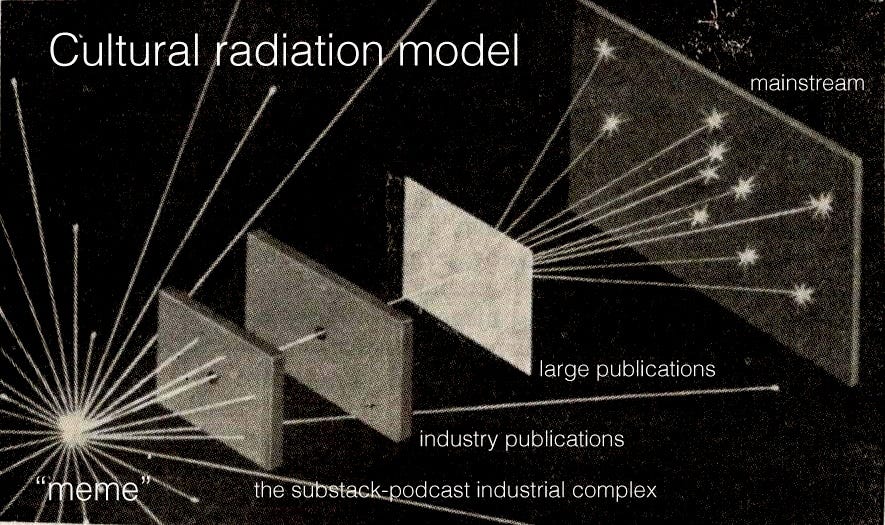
Ruby Justice Thelot’s mind is amazing and here’s another proof of that. his radiation model of cultural propagation is such an interesting lens through which we can understand cultural artifacts/memes/trends. loved the concept of “cultural half-life.”
I’ve started to think of “cultural artifacts” and “memes” as particles in a chaotic pressure chamber of social forces. I want to introduce the concept of the meme as “radioactive cultural product” – radioactive because of two properties: radiation and half-life.
In the context of cultural products, “cultural radiation” can be understood as the extent to which a particular meme, trend, or product disseminates or “radiates” out into various social and cultural spheres. Specifically, how it traverses, digitally local circles (niche podcasts and indie publications), to the larger industry or trade publications, all the way to large publications, and ending in the mainstream.
brainsparks: meme manifesto (tn#177), rebranding trends research (tn#193), trends are bullsh*t. long live the trends (tn#190), namecore (tn#71), hoardiculture (tn#191), meta trending trends '24 (tn#158), 2024 trend reports (tn#151)
rebecca black is releasing her album in september, “age of the exhibitionist” and i’m here for it. this song has been stuck in my head, it’s chic, it’s fun and i'm humming it maybe a bit too much.
brainsparks: speakerphone (tn#282)
🫀✨thank you for reading The Nexialist. This post is public, so feel free to share these brainsparks 🧠✨
I truly believe innovation comes from bringing improbable areas together, and that’s why I called this project The Nexialist. Some sectors are known to be self-referencing and hermetic. Sometimes, teams are on autopilot mode, focused on the daily grind, which hinders innovation. As a Nexialist, I like to burst these bubbles, bringing references from different areas, and maintaining teams inspired and connected to the Zeitgeist.
I offer inspiration sessions called Brainsparks, creative desk research (Zeitgeist Boost), Plug’n’Play deals for workshops and sprints, and other bespoke formats. If you want to know more about this, send me an e-mail with your challenge(s) and we can figure something out together. Check out my website and some work I’ve done below:
Comments
Nothing yet. Say the first thing.
Sign in to join the conversation.