
Odds and Ends:
Last week, the paid list got my postcard from Dublin, which describes some of the ways that Dublin is different — or not so much — from the U.S.
I’m also back to including job listings from my LinkedIn feed at the bottom of my emails. Sorry, I stopped doing this since I couldn’t tell if people valued them or not, but I have gotten feedback that people want them back. I’ll have 5-10 job listings in each post from now on.
And just a reminder: we’ve chosen Living, Together by Samantha Paige Rosen for the next Book Club. The book features 21 writers and organizers on chosen family, hacking adulthood, and other lessons communal living can teach us about the future of housing in America. Our Book Club chat — September 14 at 6pm -- will include Rosen and Gillian Morris of the Substack, Supernuclear. I’m hoping that fellow Substack writer Nancy Reddy who is working on a book about home will also join us — and that you all will chime in! It should be a great conversation! Buy the book or get it from your library, and get ready to join us.
In addition, I’ll be joining fellow Philly writers — Rosen, Rachel Pastan of the forthcoming book, We’re So Lucky to Live Here, and Elizabeth Greenspan — for a Design Philadelphia event on October 2 at 4:30pm. If you’re in Philly, RSVP for this conversation about our books that reconsider the family home!
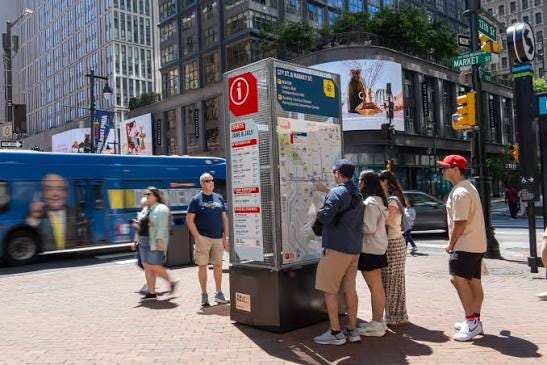
As Philadelphia prepared to host a run of major 2026 events — the 250th, the World Cup, the MLB All-Star Game — it got to work on public space beautification and wayfinding. Sidewalks were repaired, flowers were planted, new signage went in. The city wanted to look its best, and as someone who’s taken a daily walk down our most photogenic boulevard, the Benjamin Franklin Parkway, for years, I can attest it looked better than ever this summer.
But looking good also meant contending with a different scourge: empty, ugly retail. Between Philadelphia’s historic district and City Hall sits Market East — a bleak stretch in an otherwise vibrant city.
To address the problem, the City granted $1.85 million to a partnership including the design firm ISA, Center City District, the Fashion District and a joint venture between Harris Blitzer Sports and Entertainment (HBSE) and Comcast to revitalize a handful of sorry-looking storefronts on Market Street. Called Meantime on Market, the effort has shown the power of fresh design and thoughtful curation to turn retail into something more than just commerce.


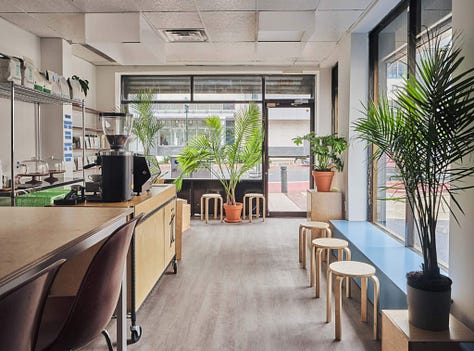
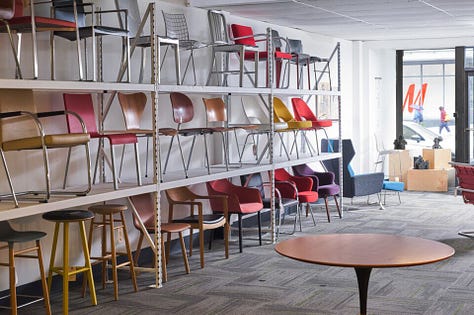
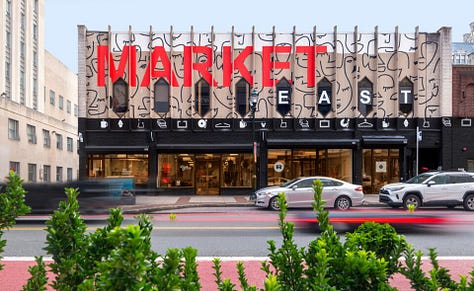
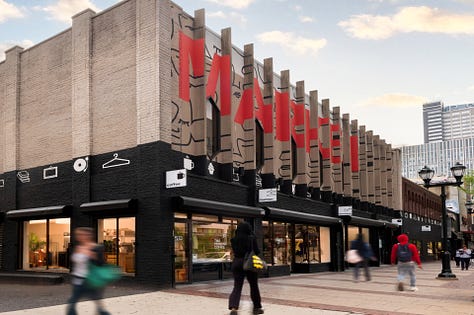
Meantime is the nonprofit brainchild of architect Brian Phillips, someone I talk to regularly about cities and their amazing attributes — as well as their challenges. For several years prior to the Market Street project, Meantime has been activating vacant storefronts and hosting pop-ups in different locations around the city.
While I’ve written before about San Francisco’s Vacant to Vibrant program and Pittsburgh’s public art in storefronts, one of the most valuable aspects of Meantime’s approach to vacant retail is its design savvy. So many vacant storefronts have design challenges that are keeping tenants out— but precisely because of their condition, they struggle to find tenants willing to sign a long lease worthy of the landlord spending $100k on a fit out. Meantime’s judicious deployment of paint and typography, semi-custom furniture and fixtures, has helped quickly turn worn-out spaces into workable ones.
On Market Street, Meantime is inviting in the kinds of retail you’d normally find on a well-maintained neighborhood corridor into the flotsam-and-jetsam feeling of Market East. A coffee shop and a water ice shop, a vintage clothing store and furniture store, a music-listening lounge and a civic engagement space —they all feel like they’re expertly plotted on an earnest, high-low culture matrix that gives passersby the sense that this strip is cared for, interesting, worth slowing down into.
It’s great to hear that Meantime on Market is being extended past the summer into the winter.
A news release touted Meantime’s successes — added revenue, more foot traffic — beyond the simple sense that the street looks better. Those economic vitality metrics matter — as does the yet-to-be-quantified impact on the surrounding property values. But beneath even that economic case is a measure that won’t show up on any spreadsheet at all: the value of connecting people to the ideas and talents of their fellow residents, the texture and flavors that are unique to their community, the simple pleasure of walking down that side of the street.
These aspects expose why every city should invest in retail — not solely for the economic case, but because retail is a kind of public space, and therefore a public good. We should start treating it that way.
Comments
Nothing yet. Say the first thing.
Sign in to join the conversation.