
I’ve made it back from Japan, just barely. The temptation to move there indefinitely was intense. It’s not just that Air Canada almost made the choice on my behalf by snarling my return journey so badly with reroutes and delays that it would have been easier to apply for citizenship. It’s also that citizenship in Japan, the most civilized country left on earth, still means something. Meanwhile I return to America on the cusp of its birthday, the 250th anniversary of the most extraordinary event in the modern world, and find a country rather listlessly uninterested in its own invaluable heritage. Even so, I remained stubbornly proud to enter that “U.S. Passports only line” at the end of my trip. Let me try to say why.
A little while ago on Klavans on the Culture we reviewed Exit 8, a movie based on a video game about getting trapped in the infinite loop of a haunted Tokyo subway station. It has turned out to be the first in a summer-long series of “liminal space” stories, reviving cult classics from the early 2000s about prisons whose eldritch dimensions embody our collective fixation with the cultural detritus of the ’80s and ’90s. The most successful entry into the genre so far is Kane Parsons’s shockingly popular Backrooms, a claustrophobic interrogation of nostalgia and immobility. But Exit 8 got at something that Backrooms didn’t, which is the sterility of a perfectly efficient society like the one 21st-century Japan sometimes teeters on the brink of becoming.
People say that traveling opens your mind—and they always mean to other customs. But sometimes I feel like visiting foreign countries makes me less charitable toward the American way of life—more impatient with its frantic inconsistencies and hectic mess. Why can’t we be like Hungary, I wonder, or Japan, where things are neat and orderly? High-trust civilizations where the streets are safe after 9pm and the trains run on time? We rocketed between Kyoto and Tokyo, a distance of 225 miles, in 2 hours. At hub stations, a team of impeccably uniformed attendants bowed to the passengers as they scoured the immaculate interior of the train. Wouldn’t it be nice—it’s impossible not to ask—if we lived in a society like this?
Part of the answer, I think, is contained in Exit 8. The movie’s signature feat is to infuse the repetitive drill of its source material with metaphorical significance. “Going to work on the packed train, doing the same thing day after day,” goes the key line. “Now that sounds like hell.” The repetitive loop of the main character’s caged pacing is made to stand in for the clipped and airless routine he’s already going through as a fledgling salaryman who recoils from the risk of family commitments. As the screenwriters are clearly aware, the things that might interfere with the exacting order of a well-run social system are exactly the things that feed life into the future of a society: improvisation, rebellion, and above all, children.
This is by no means a criticism of Japan per se, a country whose language I have spent six years laboring to learn and whose achievements, both before and after its traumatic collision with the modern West, are staggering. Instead I think Japan, whose birth rates recently hit record lows, dramatically embodies the questions and problems that all nations are facing today. The things that make it a paradise for adults—the zippiness of its transit systems, the exacting formality of its business transactions, the pristine serenity of its public places—might also make it forbidding to children. It might be that the better you get at running a civilization, the harder you make it to build one.
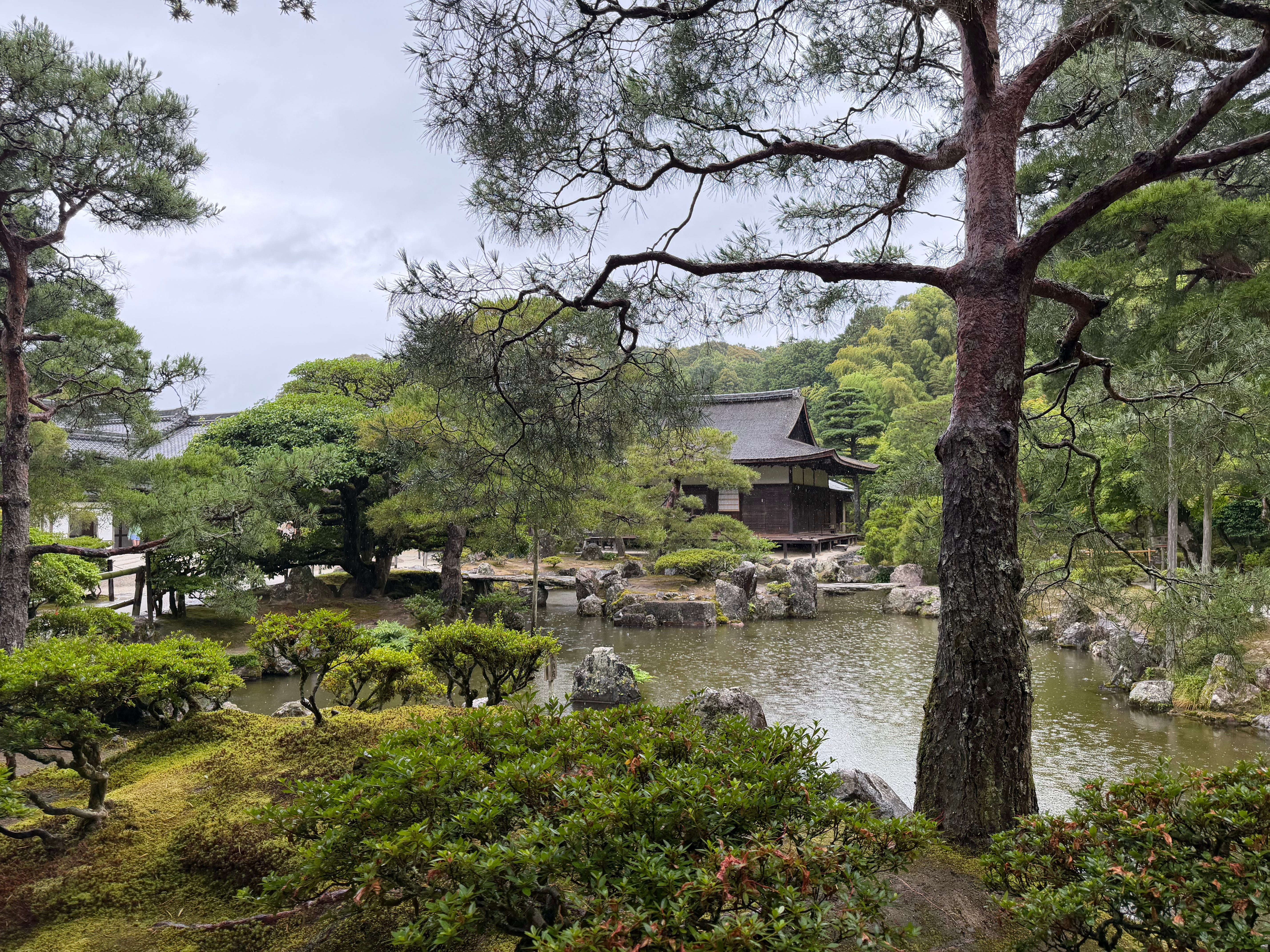
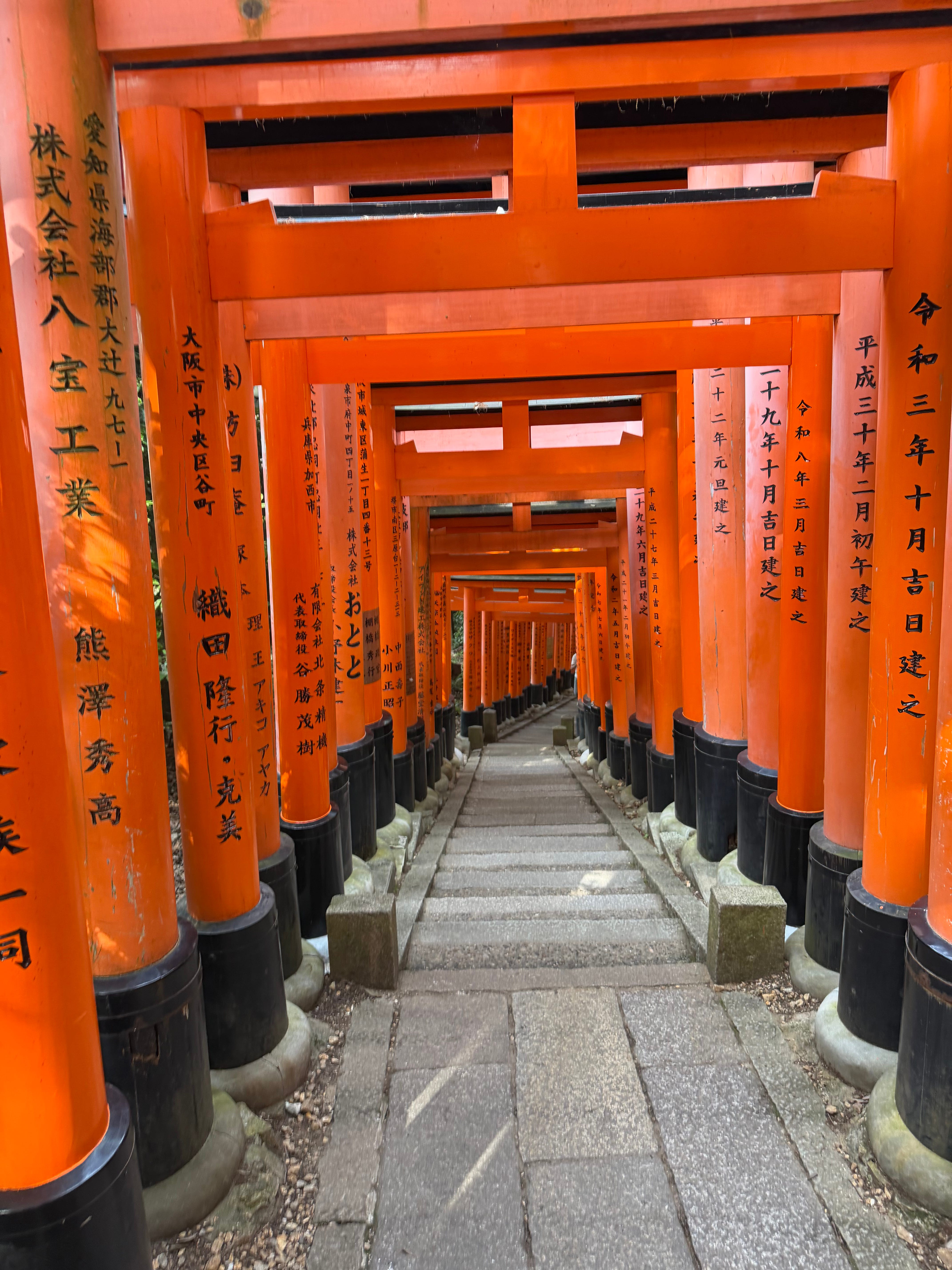
Aristotle observed that the kinds of citizens a political system tends to produce aren’t necessarily the kinds of citizens needed to sustain that same system. This suggests to me that what we think of as the problems of “modernity” might just be intensified versions of the tensions that have always made communal human life hard to get right. Even Japan’s ancestral monuments are divided between the pacific silence of Zen Buddhist temples and the bursting profusion of Shinto shrines. In the temples, clean and quiet lines of neat sand bring the grind of existence almost to a standstill. In the shrines, an overwhelming explosion of imagery and cluttered structure assaults the eye with an insistence on the old Greek truth that “all things are full of gods.”
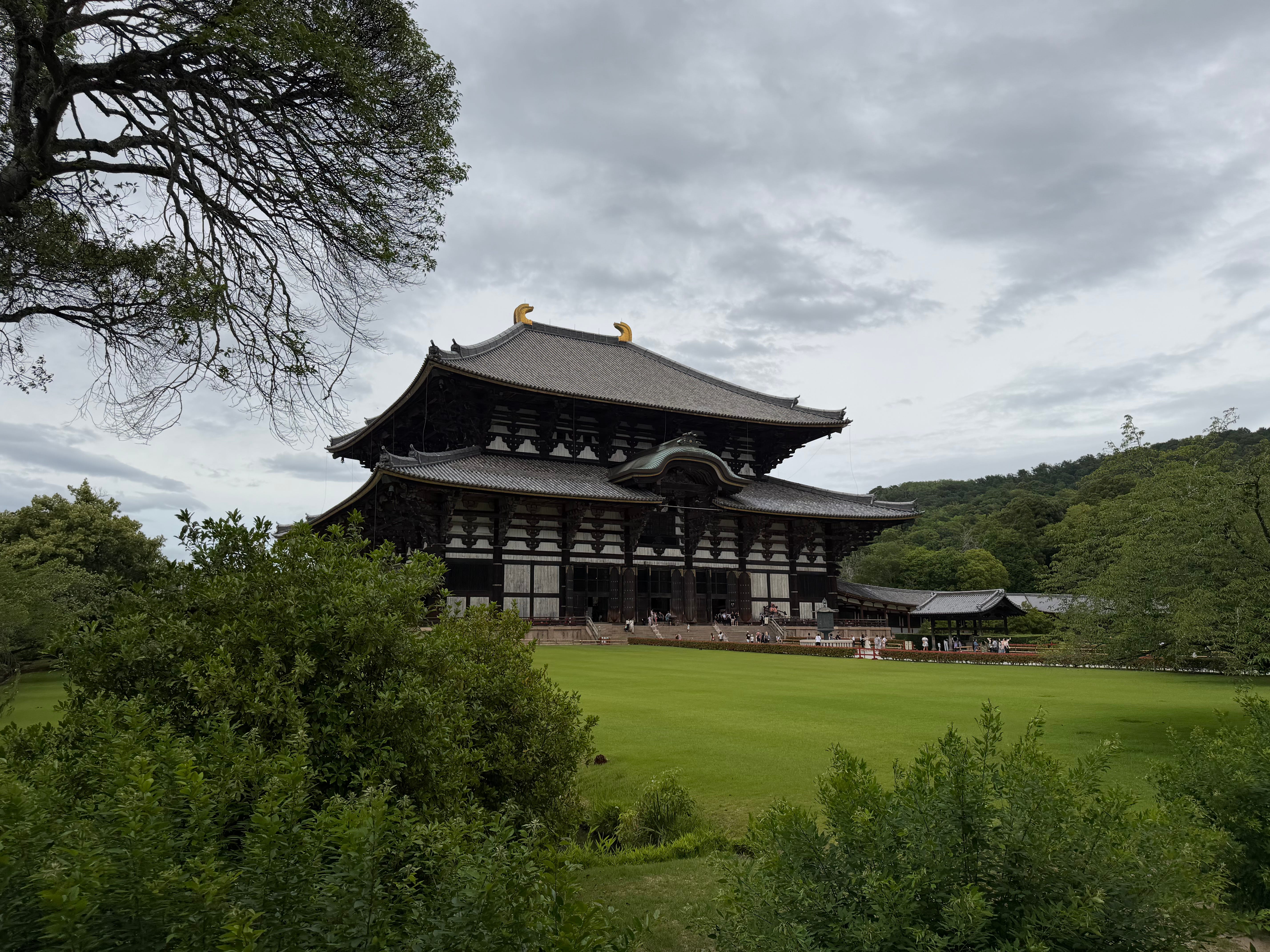
The shrines testify to a superabundance of life in things; they are the distant ancestors of those crazed streets where neon shop signs cluster in droves and anime figurines pile up in row on row of underlit shelving. The temples are a blessed escape into pure stasis; they are the ancestor of the capsule hotel. Simplicity and exactitude are in a difficult dance here with fecundity and life. Maybe those two forces are at odds everywhere, and necessary always.
If that’s true, then it leads me to see the boisterous challenges of American life in a different way. We can’t live the way the Japanese do, or the Hungarians, because we are trying to do something still more exceptional. We are trying to sustain a culture that is at once orderly and vital, maintaining law while also throwing our arms open to the hurly burly of flesh and blood. Our racial pandemonium, our immigrant angst, and our scrappy politics are all signs of life as well as madness. Life and madness might actually be the same thing, or at least inseparable for us: Our tradition includes revolution. We are playing life on hard mode. That’s by design.
Anyway, I love Japan and I hope it never changes. I find almost every bit of it almost impossibly beautiful and noble. But I also think we Americans could stand to cut ourselves a break. The problems that make us hesitant to wave our big old flag around this Independence Day might actually be aftereffects of the best things about us. Certainly the Japanese would never prevent us from pedaling down on our monster trucks and slamming back a couple celebratory beers; they seem to love our wild intensity more than we do. Ours is probably the most chaotic developed nation in the world; for the same reason, it is probably still the last best hope of earth. It was a great trip. But I’m glad I got back in time for July. I hope we can still make it one to remember.
No posts
Comments
Nothing yet. Say the first thing.
Sign in to join the conversation.