
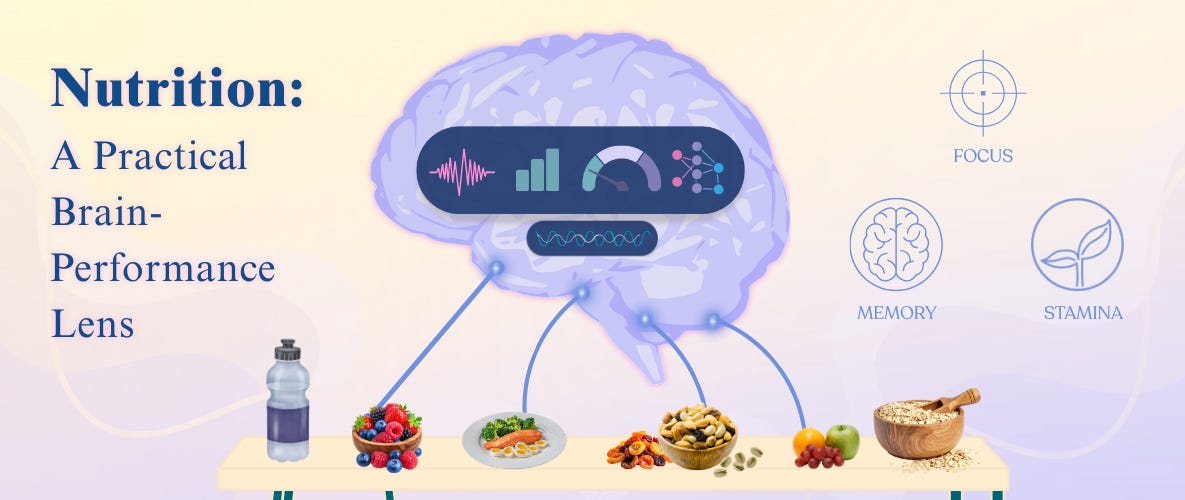
While nutrition is often discussed in terms of diets and healthy choices to be made and kept over long periods of time, students also deal with its more immediate effects during a normal school day — more than they think. Food, hydration, caffeine, sleep, and possible nutrient lapses can all shape how the brain feels and functions.
The most useful way to think about this is brain state. If you are under-fueled, dehydrated, short on sleep, over-caffeinated, or missing certain nutrients, focusing and remembering information becomes more difficult. Research on adolescents does connect diet with learning and school performance, but the strongest and overall takeaway is that nutrition supports the brain’s everyday needs in a steady, realistic manner.
This post explores nutrition viewed through a brain-health lens that fits student life: what affects focus, energy, and mental clarity during a real school day. It also connects with the earlier Brain Health Basics posts on Sleep, Stress, and Movement, because all three shape appetite, energy, caffeine use, and how the body handles fuel.
Nutrition can be seen as something that helps the brain stay steady throughout the day. It cannot suddenly make someone “smarter,” but it can affect how clearly they think and how well they work through normal school tasks. For students, the real benefits appear in everyday skills such as focus, working memory, self-control, and mental stamina. Working memory is the ability to keep information in mind while using it, such as remembering steps in a math problem or following what a teacher is explaining.
When the brain is under-fueled, dehydrated, or impacted by excess caffeine, thinking and focusing are more difficult. Most students can feel the difference when trying to work after eating enough versus trying to push through on an empty stomach. Nutrition helps create better conditions for thinking, especially during long days filled with classes, homework, and activities.
Breakfast may not sound like the most exciting nutrition topic (and I’m sure some of you skip it altogether), but it truly does matter for students. Studies suggest that children and teenagers often do better on some morning thinking tasks after eating breakfast compared with going through the morning on an empty stomach. Again, the largest differences usually appear in focus, memory, and self-control, which are all things students need during class.
This does not mean everyone needs a huge breakfast. The main idea is that starting the day with no fuel can make school feel more difficult, especially when one has exams, long classes, or busy mornings. Some studies also found that breakfast helped students be accurate and respond more steadily later in the morning.
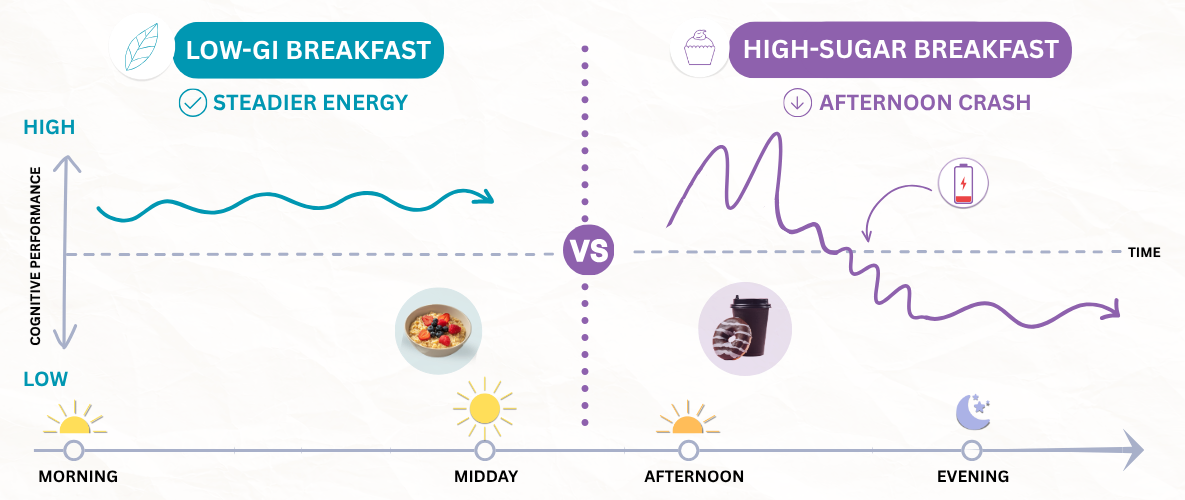
The type of breakfast may matter too, but the research is less clear there. Some studies suggest that lower Glycemic Index (GI) foods may help attention last longer, while other reviews do not find one clear “best” breakfast. Thus, the most realistic takeaway is simple: having some steady fuel is usually better than trying to run on nothing.
For students, nutrition is one way to help the brain feel more steady, focused, and ready for the morning.
Two things that are easy to overlook are water and caffeine timing. Hydration seems basic, but it can still affect how the brain feels during the day. Some studies connect hydration with mood, memory, and thinking, although the effects are not the same for every task. In school-day research, drinking water in the morning has been linked with better performance on some memory tasks. Simply put, when one is not well hydrated, focusing can feel more difficult, even if it seems like you are just unmotivated.
Caffeine is also about timing. It can make someone feel more alert for a while because it blocks adenosine, a chemical that helps the body feel sleepy. The problem is that caffeine can also affect sleep later in the day too. Studies in adolescents connect caffeine timing with later bedtimes, less deep sleep, and more sleep problems.
For students, water and caffeine may be small things, but they can still affect how steady the brain feels during a school day. For more on caffeine and sleep timing, see the post on sleep.
Stress and sleep both shape how food choices feel during the day. When students are stressed, eating patterns can change, although it looks different for everyone. Some people may reach for sweeter or higher-calorie foods, while others may lose their appetite or forget to eat entirely. Either way, stress can negatively impact eating habits.
Sleep also plays a role. Studies in adolescents suggest that shorter sleep is linked with less healthy eating patterns. Experimental research also shows that when teens get less sleep, certain foods — especially sweets and desserts — can seem more appealing the next day. This does not remove personal choice, but rather shows that food decisions are often influenced by how the body itself is already feeling.
That is why nutrition connects closely with sleep and stress. What we eat can shape the day, and the day can shape how we eat.
A few nutrients are useful to mention, as long as they are kept in perspective. Iron is one of the clearest examples, especially when someone is actually low in it. Iron helps support brain systems involved in attention and learning, and research connects iron levels with cognitive and school-related outcomes in adolescents. This is something that should be checked properly, since guessing or taking supplements randomly can cause health problems.
Omega-3 fatty acids also play a role in brain biology, although the research in teenagers is mixed. Some studies show small benefits for memory or working memory, while others do not find clear effects across all thinking skills.
Plant variety is helpful to think about as a bigger pattern. Fruits, vegetables, whole grains, and other plant foods can support overall health and steadier brain function over time. The goal is enough variety to support the body and brain consistently.
Nutrition is one piece of how the brain handles a real day. It affects the conditions the brain is working with: enough fuel, steady hydration, caffeine timing that protects sleep, and fewer avoidable crashes during long stretches of focus. A perfect diet is unrealistic for many people, especially with busy schedules, limited time, and different levels of access. A more useful starting point is simple: eat something when you know your day will be demanding, drink enough water throughout the day, and think of caffeine as something that can negatively affect sleep later. These small choices you make can help your brain feel steadier when school, stress, and long days are already piling up and using up energy.
Comments
Nothing yet. Say the first thing.
Sign in to join the conversation.