
When I started looking for a new job, my goal was to find one that was less destructive to my emotional wellbeing and my nervous system than the previous one (at least towards the end). Some combination of burnout and chronic trauma had convinced me that there were no jobs left in modern American healthcare that were actually enjoyable. However, the uncertainty of the world around me and dwindling savings left me feeling that I needed some regular income and health benefits, so off to the Indeed and LinkedIn apps I went.
I am happy to report that I was wrong. I’ve been working for about a month now. I found a job that I don’t dread. I bought myself some new scrubs, so I don’t feel panicky when I put them on. The location change seems to have helped as well. I’d go so far as to say I’m enjoying this new job. That has left me wondering what makes this so different? And why did I resist it for so long?
I am working in a couple of local urgent cares, and a few things have felt really good in this new work environment. The patients I work with generally have realistic expectations when I tell them what we can and cannot do in urgent care. When I tell them they have influenza and that there are a variety of things they can do to make it suck less, but probably none that will make it not suck, they understand. And though I certainly did not expect patients in the ER to pay any attention to my shoes, the patients in urgent care do and they love my weird green shoes.
My shifts are mostly 6 hours long, with the occasional 9 hour shift. In the ER, I worked 12 hour shifts. In urgent care, sometimes I start to think, “Gosh, I’m getting tired, I’d like to be done.” I look at the clock and there’s only 45 minutes left in my shift. I think to myself, “I can do this,” instead of feeling defeated that I’m not even halfway done. Additionally, I made the decision to only work half time, so I’m working 2-3 shifts per week.
Perhaps most important for how my brain works now, there are almost no interruptions! I start seeing a patient and I just keep going until…I am done seeing the patient. No phone calls, no getting pulled into the room of a sicker patient. You just work. On one thing. At a time. I had worked in places with high-frequency interruptions for nearly 20 years. I had no idea how much brain power and relational power it was consuming. It is blowing my mind.
So why did I resist working in urgent care for so long? I thought I would primarily be working with the entitled worried well, a group of patients I really didn’t enjoy working with in the ER. However, the patients I have worked with in urgent care have been incredibly diverse, a wide variety of languages, cultures, races, ethnicities, religions, and socioeconomic statuses.
I also thought the limited types of cases we see in urgent care would become monotonous. It’s only been a month, but so far, I haven’t found that to be the case. Even with 3 out of 4 patients having influenza in the first couple weeks. At this stage of my career, tending to people and building relationships (albeit short ones) with people provides more fulfillment than the intellectual challenge of the detective work to make a tough diagnosis or the hands-on work of crisis management.
In urgent care, I get to tend to people and witness their suffering without the resentment of, “Ugh, why are they here? This isn’t an emergency.” because this is the appropriate place to go for this type of problem.
I suspect that part of the resentment and part of the barrier to working in urgent care was burnout. During the pandemic, I would say only half joking, “I’m basically Linda Evangelista, I don’t get out of bed for less than $10,000.” That wasn’t true for my actual shifts, but was true when I considered the possibility of picking up more shifts. I also think that stress and trauma limit our ability to consider alternative possibilities. I felt trapped. Rationally, I know I wasn’t, but all I could do was keep putting one foot in front of the other. For YEARS, I didn’t decrease the number of hours I worked because I was convinced that my health benefits would be too expensive to make it worth it.
When I took this urgent care job, I found out the difference in the cost of health insurance when you work 0.8 FTE (the lowest amount of hours where you can full-time benefits) and 0.5 FTE (half-time, the lowest amount of hours where you can get any benefits) was less than $200 per pay period. That’s not nothing, but I felt a bit ridiculous when I realized that I had been blowing up my emotional well-being for five years over $5000 per year without even investigating the possibility, which probably would have involved a couple emails and reading a handout at most.
Working in urgent care was similar. I very easily could have picked up a couple shifts to see if I liked it, but it just didn’t seem possible. It took about 1.5 years off work before I could accurately look at the possibilities without feeling trapped, but still taking into account that my physical and emotional needs are different than they were in the past, specifically different than they were before the pandemic.
The last, and possibly most substantial barrier was my ego. Though it’s meant to be a bit tongue in cheek, the fact that Noah Wyle doesn’t make shows about urgent care reflects a part of my ego that I’m not proud of, the part that enjoys that people are impressed that you are an ER doctor, that you’ve seen “everything”, and know how to handle it. Urgent Care seemed somehow less impressive, in part because many urgent cares are staffed with moonlighters, so no one really considered it an area worthy of developing a specific expertise (I think this is changing).
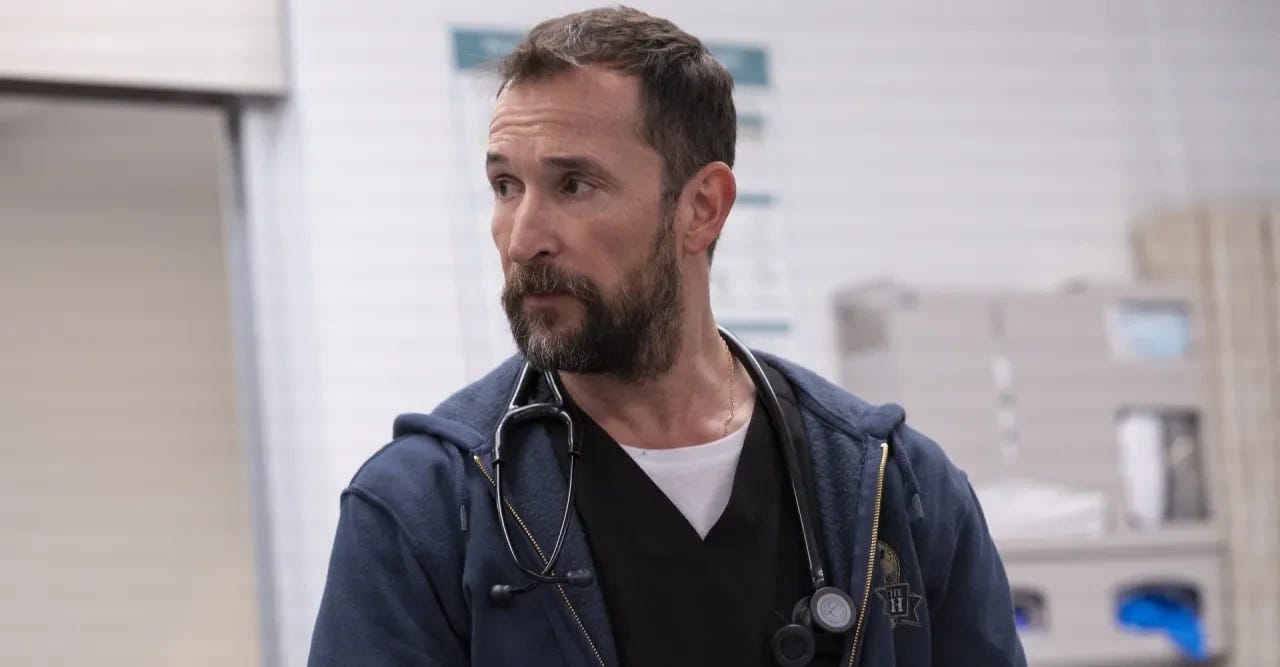
After the last few years, I don’t cling as tightly to defining who I am as “doctor” or specifically “emergency physician”. I never thought of myself as someone who over-identified with being a doctor. I’ve always had other relationships and activities that were at least as important to me. I didn’t think that I thought I was better than other people because I was a doctor, though I’m less sure about that now. But using my career to enhance my grandiosity by validating my self-worth and “fixing” people came at a cost. When someone thought I was a bad doctor, I received that not only as being considered a bad doctor (which would be bad enough), but as a bad person.
I took this job in urgent care because I am a person who needs money and health insurance. Some people, particularly within the halls of medicine, may think this is bad, that medicine must be a “calling”, but it feels healthier to me. I can still be compassionate and excellent at my job and not be defined by it.
The fact that I feel so much better in this environment makes me wonder what parts of this work environment could translate to areas of medicine where they take care of sicker patients or where they take care of patients over the long-term. I am concerned that if urgent care has the most appealing working conditions that it will become increasingly difficult to get ongoing management of chronic conditions or care for severe medical problems, either because of people changing jobs or because doctors in those fields become more burned out and less compassionate.
In order to have doctors work fewer shifts and/or shorter shifts we would need to train more doctors or shift some care doctors provide to other professions. But being more strategic about interruptions wouldn’t cost much, it would be more of a change of habits. Communicating clearly about which facilities are best equipped to address which issues will help patients have reasonable expectations and avoid the frustration of waiting for hours only to be told, we can’t do that here. Assuming best intent and complimenting someone’s shoes makes a world of difference when you’re feeling well enough to do so. I am genuinely happy to report that my cynicism was unwarranted. I hope that in the future I will investigate alternative possibilities sooner. Now, I wonder what it would take to spread these more fulfilling conditions to the people who need them most.
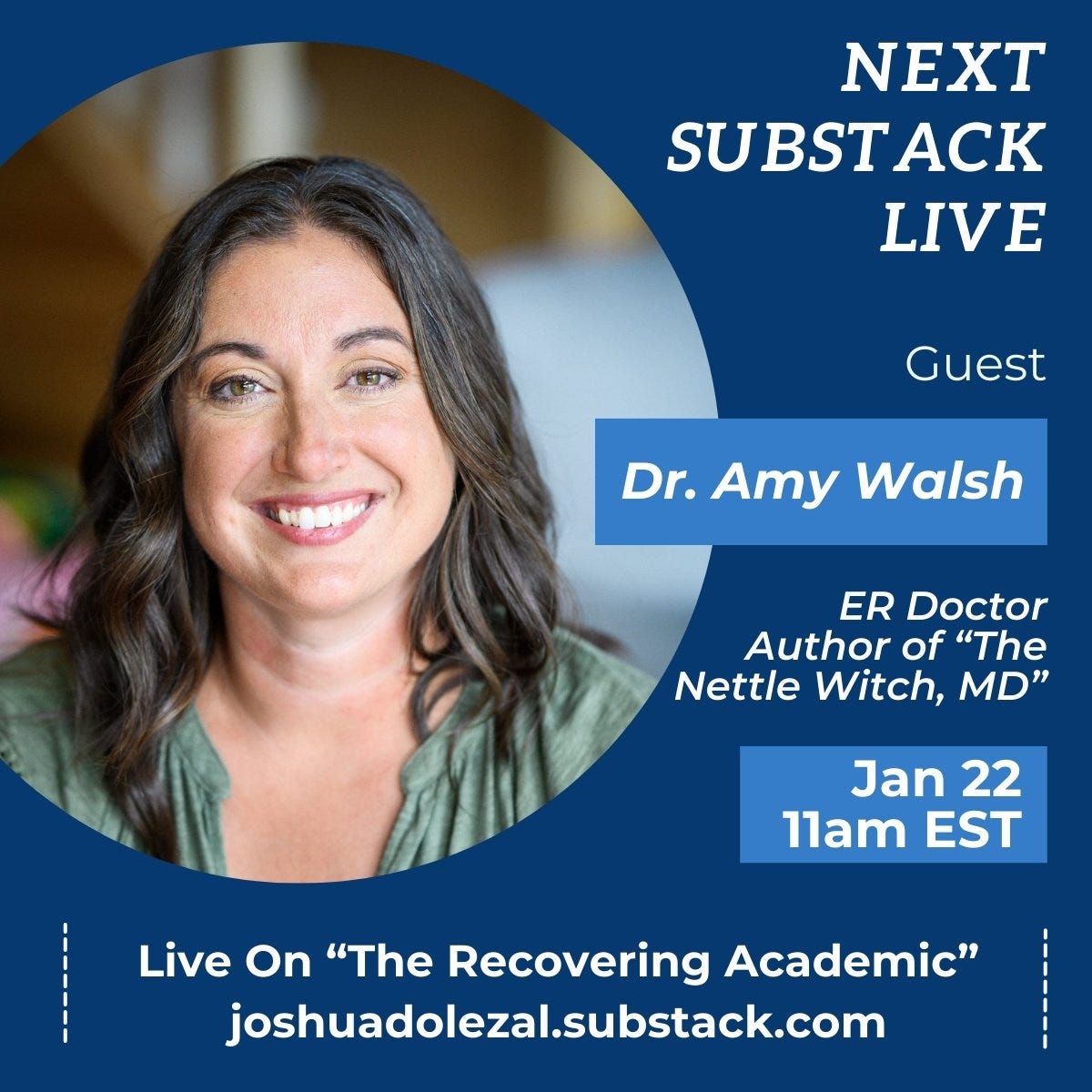
I’m excited to let you know that Joshua Doležal from The Recovering Academic and I will be discussing medicine, storytelling, AI, and a dash of herbalism via Substack Live on January 22 at 11 am ET/8 am PT. The link to join us is forthcoming. Hope to see you there!
No posts
Comments
Nothing yet. Say the first thing.
Sign in to join the conversation.