
Whenever there is a mass protest against a government somewhere in the world, one of the first questions from skeptics will be whether it’s genuine or a “color revolution”.
Vladimir Putin tried to square that circle at Valdai the other day, responding to a question about the ongoing protests in Serbia by saying it is a color revolution, yes, but that some of the youth involved are misguided patriots who could and should be reasoned with.
In other words, Putin drew a perfect offramp for both the government and the “Red Hand blockadeers” — and unsurprisingly, neither side took it, preferring instead to either denounce him or selectively hear what he actually said.
But what, exactly, is a “color revolution?”
In the words of one Guardian reporter, who wrote approvingly about the 2004 “Orange Revolution” coup in Kiev, it’s a “template for winning other people’s elections” developed by the Americans, a “slick” operation of “engineering democracy through the ballot box and civil disobedience.”
Basically, a way to manipulate and amplify legitimate grievances into a coup d’etat.
Its first implementation was 25 years ago today, in Serbia. After the general election, activists trained by US-backed “NGOs” claimed it had been stolen and manipulated a mob to storm the parliament, torch the ballots, and force the president to cede power to them. This was aided by tons of US cash, as well as strategies and tactics outlined in a manual written by the late scholar Gene Sharp.
This was later repeated in Georgia, Ukraine and many other places. The 2011 “Arab Spring” was all about color revolutions. In a world where such a thing has become normalized, it’s nearly impossible to tell if a mass protest is a spontaneous, grassroots event or an astroturfed regime-change operation. To the creators of color revolutions, this is a feature, not a bug.
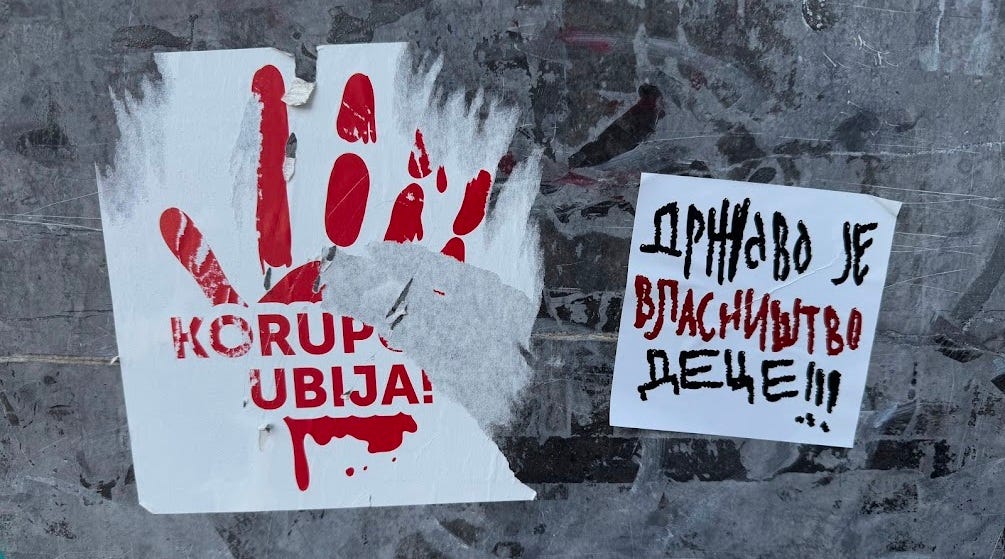
The key element of every color revolution is narrative management, through which the activists usurp the initial protests and direct them towards their own ends. Look for a visual marketing campaign, such as the stenciled fists of Otpor in Serbia (used elsewhere since), or the 2004 orange scarves and banners in Ukraine. The sudden omnipresence of white-red-white flags — used briefly in 1918 and again under Nazi occupation — during the 2020 protests in Belarus fit this pattern as well.
For that matter, what happened in the US in 2020 was a color revolution of sorts. It’s just that the street infantry of Black Lives Matter and Antifa served as cover for the “fortification” of elections behind the scenes, and the set-up that was January 6.
The biggest appeal of democracy is its straightforward nature. Citizens (and hopefully ONLY citizens) vote on an issue or for a candidate, and agree to abide by the rules whether they win or lose. But what happens when that vote is manipulated, and the rulebook gets thrown out the window?
This is what makes color revolutions not just wrong, but evil. They literally destroy democracy, by corroding the very rules it is founded on. When they succeed, the result is an unstable, often corrupt, but always quisling government. When they fail, things can escalate into kinetic warfare along the lines of Libya, Syria or Ukraine.
Even when they fail peacefully, like the 2006 “jeans revolution” in Belarus, they poison a country’s politics so thoroughly, that the government starts seeing any street demonstrations going forward as foreign-sponsored coup attempts; especially when foreign powers openly express support for them.
Thanks for reading! This post is public so feel free to share it.
Comments
Nothing yet. Say the first thing.
Sign in to join the conversation.