
Dear readers,
Happy Sunday and welcome back to another newsletter!
This newsletter will be quite brief as Mario and I are in Maine for a little vacation! If you were wanting to visit the shop soon, fear not – our team of amazing booksellers is keeping everything at The Nature of Reading running for the next week (we’ll have our same hours, just closing at 5pm instead of 6pm on weekdays). Do stop by to see them – you’ll catch Jo, Alison, Sarah, or my mom at various points this week.
Hopefully I can get some more fun bird photos to share as I did last summer. I’ll certainly try my best, though my photography skills are rusty! I am really looking forward to disconnecting a bit this week and spending time exploring midcoast Maine, visiting our favorite Coastal Maine Botanical Gardens, reading, writing, and reflecting on a busy year.
You’ll hear from me next at the end of August with news of our September events. I hope you too are enjoying these late summer days, and I hope you’ll visit the shop and keep our booksellers company in my absence!
All best wishes,
Hailey

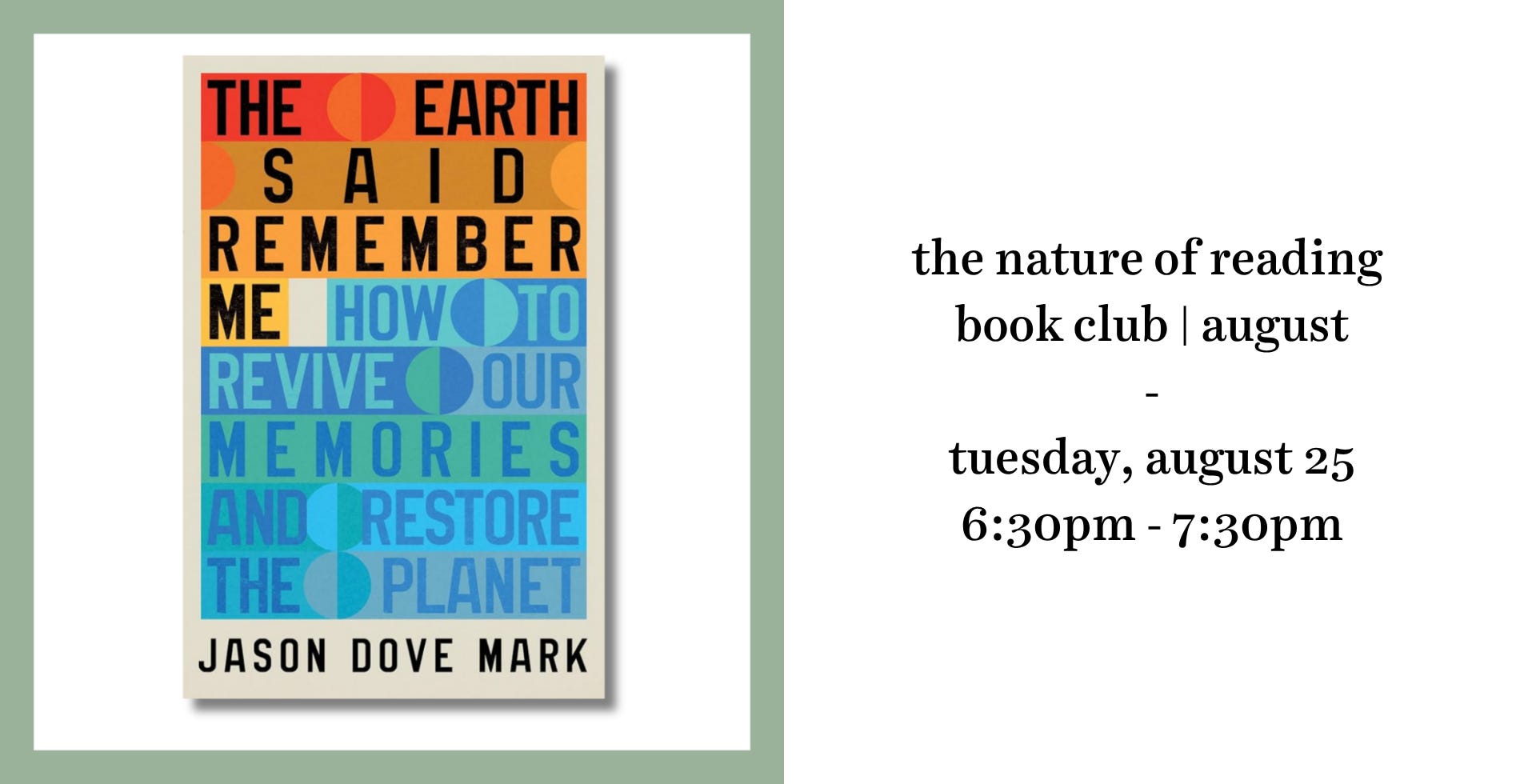
At The Nature of Reading Book Club, this month we’re be reading The Earth Said Remember Me: How to Revive our Memories and Restore the Planet by Jason Dove Mark. The book focuses on shifting baseline syndrome, which in regard to the nature means “the gradual shifting of the accepted norm when it comes to the condition of natural places.” In this way, we often fail to realize the extent of what we’ve lost. Jason Dove Mark seeks to remedy this ecological amnesia through four action steps: Go Outside, Bear Witness, Make a Record, Pass it On. Learn more about shifting baseline syndrome and using our imagination to remember a richer ecological past and construct a better future for our planet by joining us at book club this month.
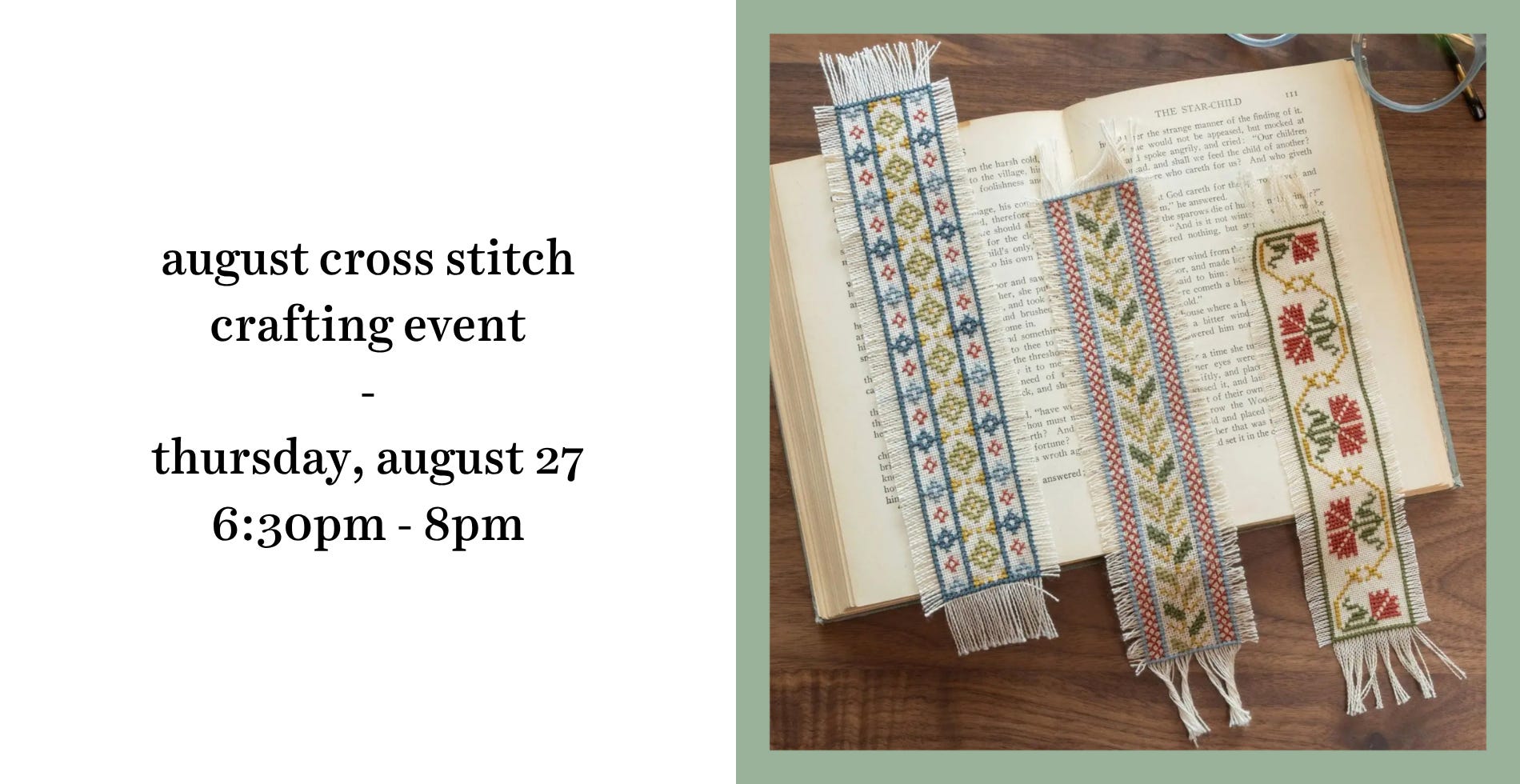
I’ve always loved folk art styles, and when I saw these bookmarks from Avlea Folk Embroidery I knew I’d love to make them for a crafting event. They feel so cozy to me, with their rich color palette and warm fabric backgrounds, and I know they’ll make a perfect stitching project for the end of August as we transition from summer into fall. Whether you’ve cross stitched before or are a complete beginner, I’m happy to help all levels of crafters get started on these sweet cross-stitch bookmarks as we sip soothing cups of herbal tea. Grab a friend and join us for this wholesome evening of crafting, tea, and great company.
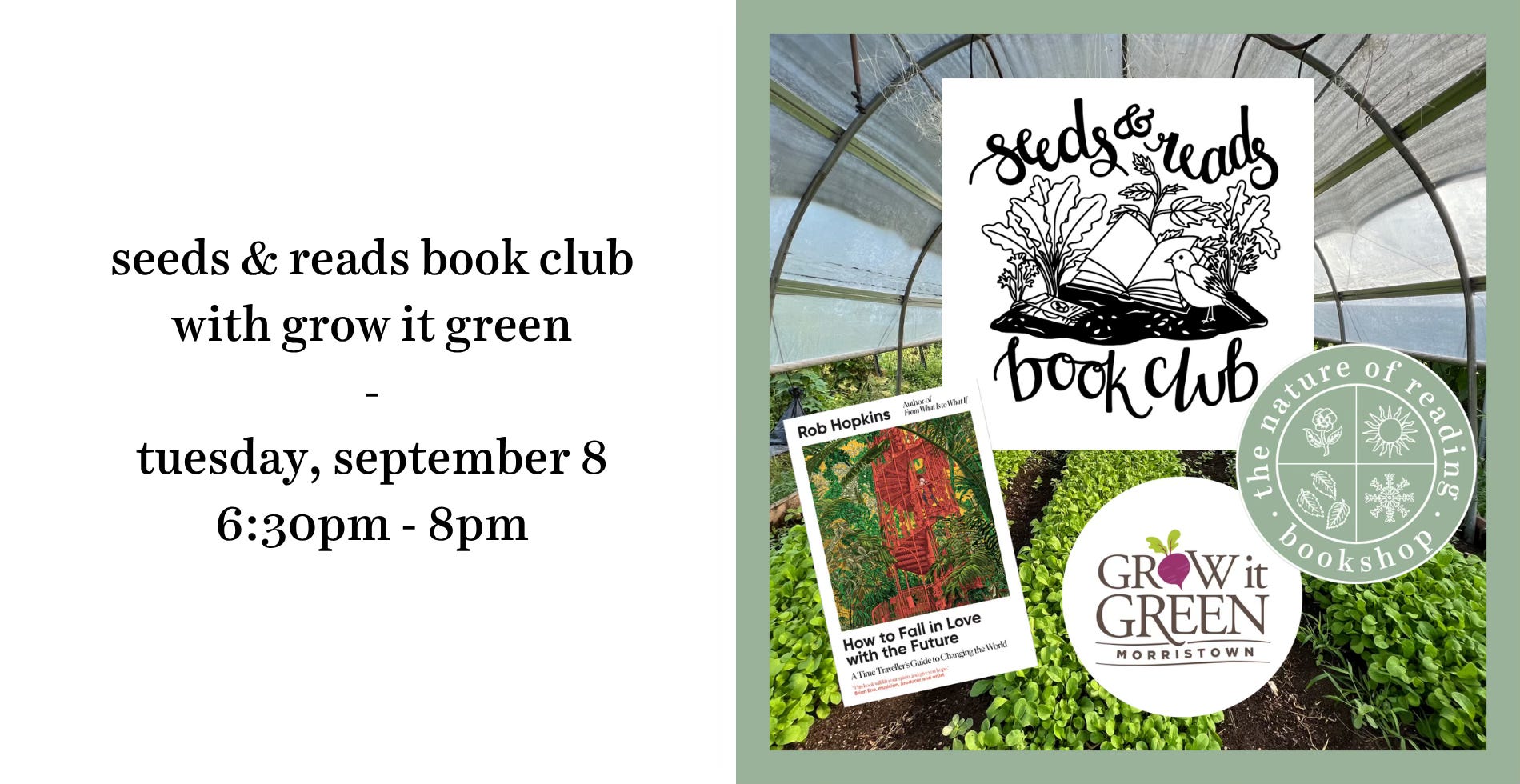
For our next meeting for Seeds & Reads Book Club, which we run with one of our most favorite local groups, Grow it Green Morristown, we’ll be reading How to Fall in Love with the Future by Rob Hopkins. This hopeful book will fill you with climate optimism and the desire to build a better future for our planet and all its inhabitants. Looking through examples of transformative movements in human history and diving into case studies of solarpunk happenings today, Rob Hopkins helps us imagine a future without the weight of climate doomism. The book club is free and open to all — just click here to sign up so we know how many chairs to set out. We hope you can join us to read and discuss this amazing book!

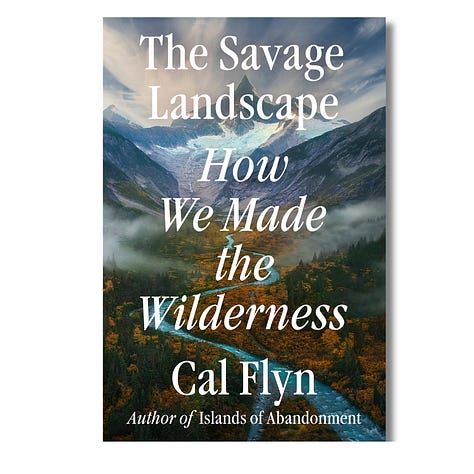
Wilderness is a powerful, ancient concept, lying at the intersection of landscape, philosophy, and ecology. And for thousands of years, people have sought out uncontrolled, unknown, or uncharted nature in search of religious epiphany, self-actualization, and an escape from modern life. More recently these “pristine” places have been seen as the subject of a last effort to repair a planet imperiled by humans. But as award-winning writer Cal Flyn traverses the most forbidding, untamed and inhospitable wild lands—the supposedly uninhabited wilds of the world—she finds that such truly untouched lands don't exist: Nearly every wilderness has been or is actively inhabited by humans. The Savage Landscape takes us into these breathtaking wilds—deep into dark forests, to the tops of mountains, and into the hearts of deserts—asking provocative questions about the nature of wilderness, its preservation, and its meaning.
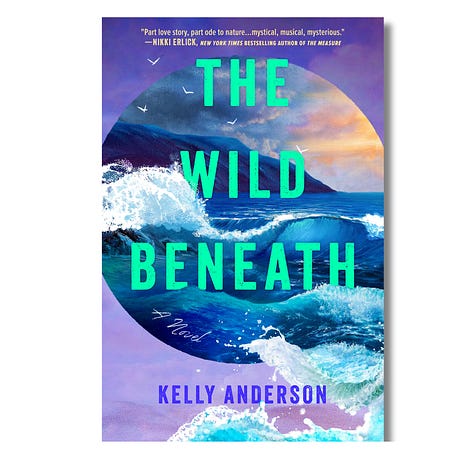
Annie MacLeod always knew she was different, growing up on a sailboat in the Pacific Northwest, navigating by stars and swimming with sea creatures alongside her parents and best friend Evan. After tsunami shatters her world, Annie is stranded on land, where she rescues a wordless man named Walker, who emits a hum only she can hear. Even as she is pulled toward Walker, Evan—the steadfast love who has always been there—remains on dry land, offering the stability she may have to leave behind. But then, Walker vanishes, along with the answers she needs about who she really is. Six years later, Annie has left the sea and buried the past—until Walker returns, pulling her back toward the ocean and the life she abandoned. The truth under the water is more ancient than she ever could have known, and Annie must confront a choice that will test her heart and determine her future.
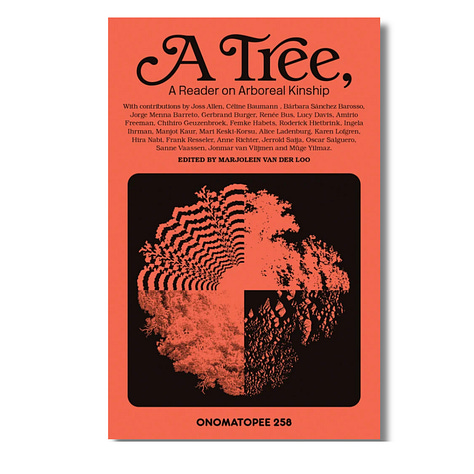
A Tree: A Reader on Arboreal Kinship showcases research and works in which artists explore the relationship between people and trees and ways we can relate more closely to their time span. A Tree is about vegetal agency, plant knowledge and the interaction between plants and people. The aim of this reader is to nurture and encourage dialogues and to share inspiration on exercising arboreal kinship by taking the time to think about trees differently.

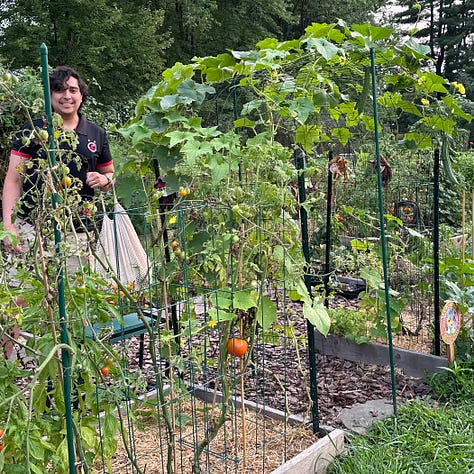
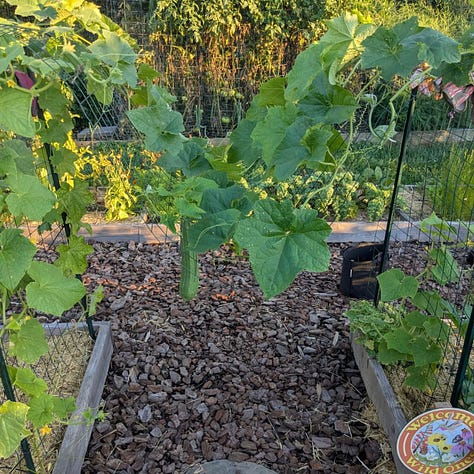
The newsletter this week is a real collaborative effort! I asked Mario if he wanted to say a few words for the notes from the community garden section this week.
Hi! I am Mario – from the middle picture above!
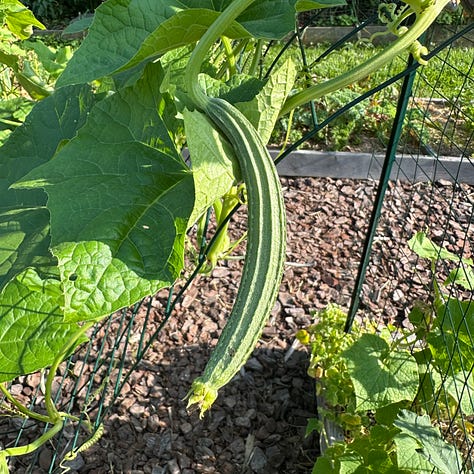
I love our community garden plot. I have spent many hours making sure all of our plants are well pruned, weeded, and watered. I love all the plants the same, but I need to say, one of the most exciting things we’ve been growing this year is luffa plants!
If—just as I did—you thought loofahs were some sort of sea produce, then at least you know you are not alone. When Hailey said that she wanted to try to grow loofahs this year, I couldn’t believe that they weren’t some sort of ocean sponge rather than a squash. But of course (as always) she proved me wrong!
So now, we are growing two really beautiful luffa plants, with more luffas appearing on the vines every week. The first luffa that grew was so heavy that it caved in our trellis archway and it almost hit the ground! Luckily, we were able to use a couple of long support sticks to hold it up.
It’s been so fun to see the leaves cover our trellis archway, and to have the luffas hit our heads every time we walk under the archway and into the center of our garden.
We will be sure to show you the final product once their growing season ends and they fully dry out, ready to be turned into bath loofahs or dish sponges. And if we’re lucky enough to have many large luffas grow, you may even get to see some loofah sponges in the shop one day!

We were lucky enough to have our bookseller Jo here for another summer before she starts her senior year! In honor of her return to Smith at the end of the month, I asked her to pick three books she’s most looking forward to reading this fall. We’ll miss you Jo but we know you’ll have an amazing fall semester!
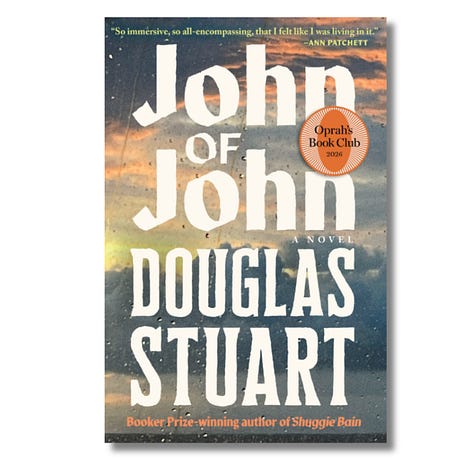
If you’ve spoken to my dad recently, you’ll know he hasn’t stopped talking about the week we spent road tripping through Scotland together. On that trip, we got to spend a few days on the Isle of Skye and it was nothing short of magical. While John of John is largely set on the Isle of Harris, rather than Skye, I’m hoping this story on the islands of Scotland will remind me of that trip. I also loved Douglas Stuart’s past two novels, so I have no doubt I’ll enjoy this one. Plus, it’s up for the Booker this year and I always like to sample a few of their choices.
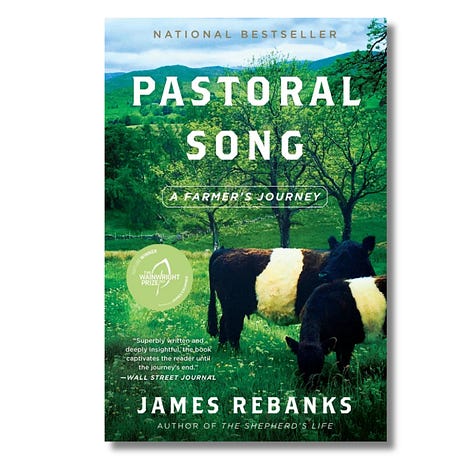
When we read The Place of Tides for book club last August, I fell in love with Rebanks’ writing. In fact, that was my favorite book we’ve read for book club so far! In The Place of Tides, Rebanks frequently references his time as a farmer, so when I saw he had a book about it, I knew I had to read it. Pastoral Song follows James Rebanks as he inherits his English family farm and set out to restore the land there. I love the vivid and beautiful way Rebanks describes landscapes and rural life, so I’m excited to see him do it again.
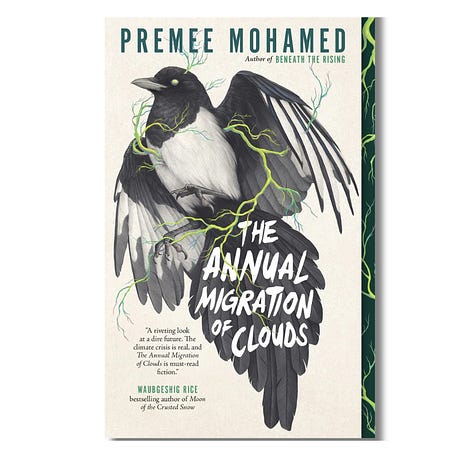
Technically, I already read Premee Mohamed’s The Annual Migration of Clouds in the Spring, but I get to revisit it this Fall because it’s one of the books I’m writing my senior thesis on! My quick pitch for this book is always that it’s like The Last of Us but with a sentient fungus the host (or human) cohabitates with. But it’s also so much more than that. Mohamed’s novel looks at what it means to build community in the wake of collapse and the way that care dynamics change and evolve after and within disaster. This story is also just the first in a trilogy, so I can’t wait to read the next two books as well.
No posts
Comments
Nothing yet. Say the first thing.
Sign in to join the conversation.