
On a foggy January morning in Vermont there's no snow. It’s 40 degrees. It’s been like this for days. In some spots the sap is running in the maple trees.
Fifty years ago we would have at least two weeks in January of the clearest, crispest blue skies with 20 below zero temperatures during the bright, sunny days and lots of snow on the ground. You didn’t need a thermometer—when you stepped outside your snot would harden up in your nostrils, freezing to your little hairs. The trees would creak. The air felt spectacularly clean and fresh.
Following those frigid days, spring, summer and fall were completely tick free. It would never have even crossed our minds in those days to think about or check for ticks. My babies could roll around in the grass and I could work in the garden for hours with no ticks on them or me. They. Just. Weren’t. Here.
Now? We are overrun. We have not just one, but two kinds of ticks—larger, somewhat lethargic dog ticks and the dreaded teeny tiny deer ticks, often transmitters of Lyme infections.
April used to be the rainy season. My husband would say April was the time to go away because in the rest of the world it was spring, but we had rain and mud season. Now we have warm dry Aprils. It’s hard on our water stores and on the maple syrup producers.
But we adapt. We have to. I go out in the spring now decked out looking like I am going on an expedition. I wear either overall waders, or a white bee suit so I can see the ticks more easily. Last year I was suited up in my bee suit with my rubber boots duct-taped to my pants, my long leather gloves and hat, covering almost every inch of me. In spite of it all, there was a tick on my forehead—my friends and I just howled. The ticks figure it out.
We adapt and change as we have done for millennia. Sometimes it’s slower adaptions, sometimes faster, but now we are in a period of time when our ability to adapt needs to speed up and we need to alter not just our behavior, but our minds and approaches to our rapidly changing world. But, our resiliency is challenged because of all we have wrought. In the United States, we are way sicker than we were 50 years ago.
The numbers bear that out. According to the CDC, in the United States, more than 40% of school-aged children and adolescents have at least one chronic health condition. Adults struggle with myriad chronic diseases including diabetes, auto-immune illnesses, asthma, allergies, cancers and debilitating fatigue and mental health problems.
A doctor and teacher of mine who I worked and studied with for many years used to say 25 years ago that cancer was rarely an emergency, but now it is almost always an emergency. Of my mother’s friends, no one died of cancer, but five of my neighbors have cancer now and in the past few years I have four other friends who died from it.
We are exchanging, integrating, navigating and negotiating constantly within the shell of our bodies, and between our bodies and the external world. We can't even imagine how much we interact with the microbes, viruses, bacteria, and more, plus the onslaught of toxins, every moment. And many of those things are part of who we are. As the human genome and biome projects illustrate, we are made up of around 30 trillion human cells plus another approximately 39 trillion microbial cells including bacteria, viruses and fungi that comprise our microbiome.
Adaptability, resiliency and the ability to bring in new information, basically downloading upgrades constantly, in terms of what's new information for our bodies and the environment, is essential for us to live. It reminds me of the Dr. Seuss book, Horton Hears a Who, where there are worlds upon worlds. We have our bodies with 70 trillion cells and then the soil—just one teaspoon (!) of topsoil contains around 1 billion individual microscopic cells and around 10,000 different species—a mind blowing thought, like looking out at the night sky and imagining the infinity of the universe. It's all an infinity of different universes that are coalescing in every moment of our lives, in our bodies and all around us.
Which brings us to how we humans, particularly Western humans, choose to think of the body and what is good and bad. What is sickness, what is health, what is wellness? What is vitality, what is life, what is death? What is quality of life?
How wonderful it would be for us to use new metrics for gauging wellbeing, way beyond just the absence of illness or dis-ease. Those are low bars. Too low. And set a dangerous precedent and paradigm for how we approach our magnificent, abundant universe.
How about metrics for determining resiliency, adaptability and vitality? These would include fundamental things: quality of sleep, quality of food, quality of air and water, overall quality of life, quality of happiness, of community, of joy, of connection. Quality of light, sound, color, fiber, energy, passion and creativity. The Blue Zones project has made a wonderful start in this direction and has shown the measurable positive effects of these factors on vitality and resiliency.
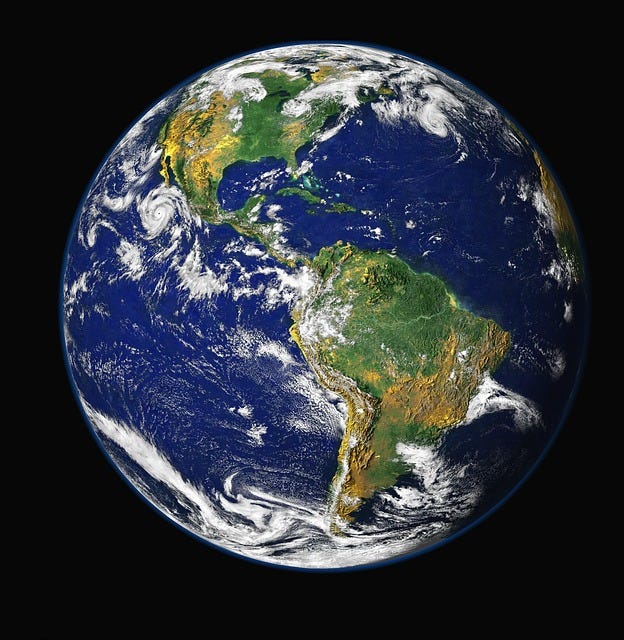
The new metrics would also include resiliency, adaptability and vitality of our world, because in the end, if the planet isn’t thriving, neither can we.
Imagine that world—where thriving and vitality are the metrics for life and the planet.
Imagine.
Comments
Nothing yet. Say the first thing.
Sign in to join the conversation.