

This deceptively simple question, posed by legendary automotive marketer Joel Ewanick, cuts straight to the heart of naming at scale. Over a career spanning work with Porsche, Hyundai, Chevrolet, and Yamaha, Joel didn’t just name products—he used naming as a strategic tool to rewrite entire brand narratives and create billion-dollar market segments.
Joel understood something that separates exceptional naming from the ordinary: naming at scale isn’t about finding “good names.” It’s about patiently building a collection of interrelated names that support the goals of the business.
I first met Joel back in 2010 when The Naming Group was still headquartered in New York. A mutual friend, Peter DeLorenzo, introduced us which led to Joel bringing us in to tackle naming across Chevrolet. During this partnership, working alongside some of the most talented brand marketers in the industry, is when I really cut my teeth on naming at scale. We weren’t just naming products as they launched, we were architecting an entire brand universe that locked together with carefully engineered words.
That experience, exemplifying the exception and not the rule across business, cemented something that had been developing in my mind: there was a clear need for a more sophisticated approach to naming beyond the typical project-by-project method that most big brands were employing at the time.
When I started writing about this more holistic approach to naming, the initial response was… tepid. But by 2013, forward-thinking companies began to take notice. McLaren reached out. Reebok called. These weren’t companies looking for quick fixes—they were true early adopters who were ready to move beyond approaching naming as an afterthought. They wanted to weave naming meaningfully into their brands at both the architectural and operational level.
Fast forward to today, and Joel and I remain friends. He has a bear emoji next to his name on LinkedIn, champions alternative fuels as Chairman/Founder of First Element Fuel (for which The Naming Group named True Zero, California’s first network of hydrogen fueling stations), grows native plants in his yard, and was on a treadmill for half of our recent conversation. This is my kind of people.
When we caught up recently, I didn’t want to spend time talking about our work together at Chevy. I wanted to dig into the Joels’ key learning moments regarding naming at scale across his whole career. When did he see it’s power? How did he harness it?
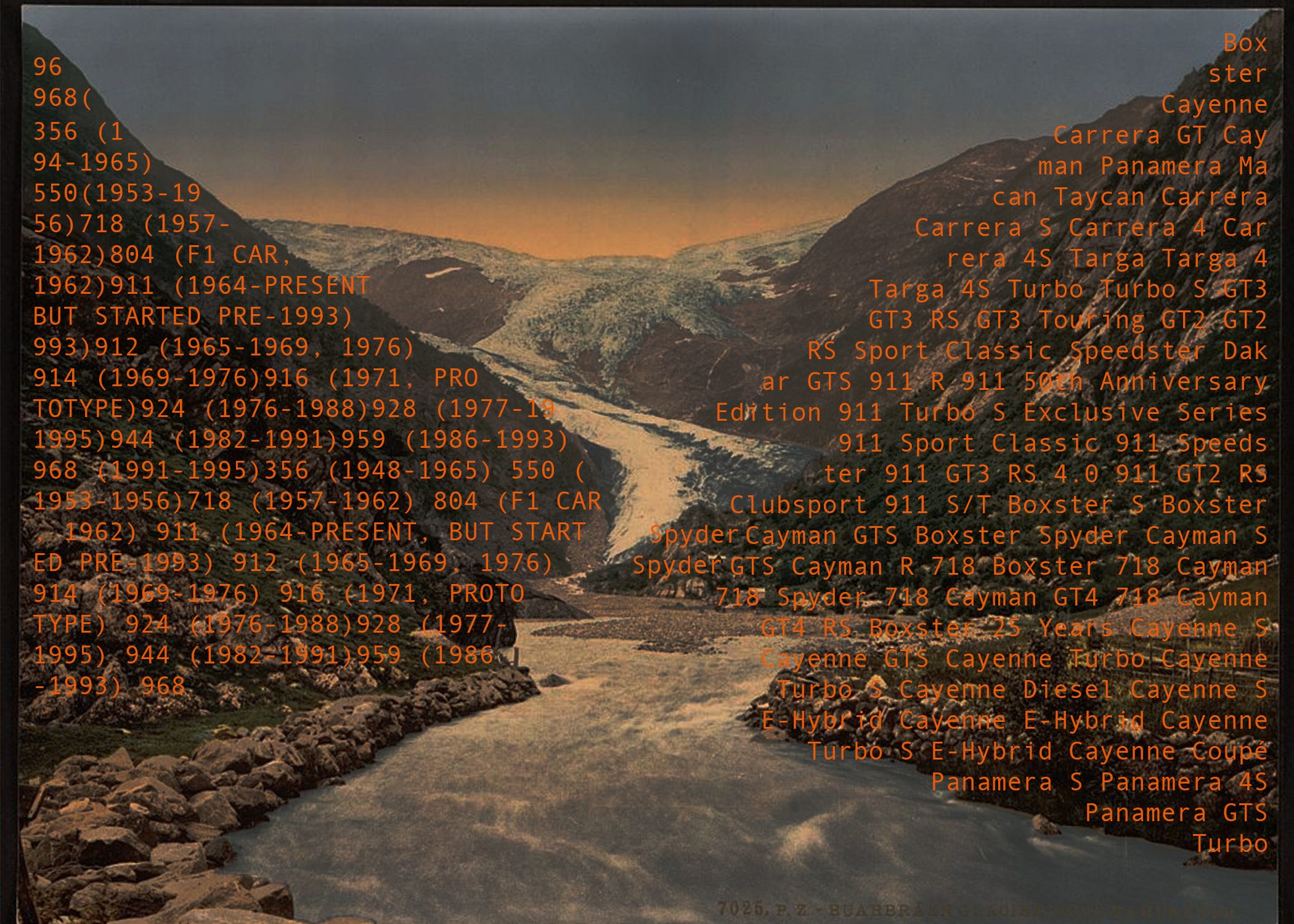
The first place Joel took me to was Porsche Cars North America in 1993. The company is essentially bankrupt. Annual production had dropped to around 14,000 cars, down from more than 50,000 in the 1980s. Cars were largely hand-built, leading to inefficiency and high costs. The core lineup—the 911, 928, and 968—was seen as dated, with limited appeal to new buyers. The Porsche family had to inject their own capital just to keep operations running.
Their stark realization emerged: If Porsche is just 911, it’s going to die.
The reason why we still see new Porsches on the road today is partly thanks to core manufacturing and production changes led by Wendelin Wiedeking coming in as CEO that year, but also thanks to crucial brand decisions made by Joel and his colleagues.
The point of crisis is where most companies would make hasty decisions. Porsche faced a critical brand choice: double down on their heritage or expand beyond their established territory. There was huge risk here. Any expansion risked diluting the very essence that made Porsche Porsche.
Enter the Boxster—or as it was originally intended to be called, the 986.
As he humbly explained, in Joel’s initial position as marketing manager, he was expected to protect the brand at all costs, and when it came to naming the message he got was don’t rock the boat. As a name, Boxster was surely rocking the boat. At first Joel was in the camp of maintaining the alphanumeric system to maintain the brand’s heritage and drive brand equity back to Porsche name (alphanumerics don’t cognitively compete for attention the same way non-alphanumeric names do). “I didn’t want to sell a Boxster to someone who actually could afford a 911. That wouldn’t help us. If it’s the same customer cannibalizing ourselves, I want to sell Porsche.”
But other leadership at Porsche had a different perspective. Alphanumeric naming was seen as potentially “too mechanical, no personality” by some. So much so that leadership decided to go to market with the Boxster (the first truly non-alphanumeric name for the brand) as a concept car name. Three years as a concept car led to the market becoming attached to the name, and the Boxster officially came to market in 1996.
Perhaps this is one of the greatest outcomes of a brand in distress: leadership is ready to take some big swings. And this big swing in naming actually ended up leading Porsche in the right direction towards the success it enjoys today. The Boxster name (1996) was the first name in a long line of non-alphanumeric names built to appeal to an entirely new market segment: Cayenne (2002), Cayman (2005), Panamera (2009), Macan (2014), Taycan (2019). These names were not meant to appeal to the people who were buying the 911 or the 968.
This naming approach created perfect market segmentation that ultimately saved the brand. Porsche transformed from a single-product sports car company into the diversified luxury brand portfolio we know today.
In essence, older, wealthier performance car enthusiasts remained safe in their little alpha numeric nests with their 911s, and snazzy stay-at-home Dads got to drive their kids to school in Cayennes. Both under the halo of the Porsche name, but in different swimlanes.

It was this formative experience that helped show Joel the value of using naming to directionalize a brand. He saw firsthand—and later brought to Chevy and other heavy-hitters—that names must support where the brand is heading, not just where it stands today. It’s about long-term brand building versus short-term product launches. It’s about understanding the compound effect of naming decisions over decades, with each decision building upon the previous ones to create coherent brand narratives that competitors can’t easily replicate.
Truly great naming strategies require this kind of patience. Not the kind that waits for focus group approval or market research validation, but the kind that builds enduring value over years, even decades, while competitors chase short-term wins.
Joel has the characteristics needed to use naming as a brand’s secret weapon: the ability to champion long-term brand vision alongside the accomplishment of short-term goals and metrics, and remarkable patience in executing that vision. As he explains his philosophy: “You can’t look at it in isolation, one model at that time. These kind of naming things—they last forever. Branding lasts forever. So for me it was always: I want to sell the brand. I want to build the brand up.”
This approach—viewing naming decisions through the lens of decades rather than quarters—separates leaders who build legacy brands from those who merely manage product launches. It exists in varying levels within the best brand marketers, but is nonnegotiable at the C-level. That’s why naming at scale requires executive input.
Ewanick’s story, his career even, demonstrates that naming at enterprise scale isn’t about finding appealing names—it’s about using names as strategic tools to build brand equity, enable market expansion, and tell coherent brand stories across diverse product portfolios.
No posts
Comments
Nothing yet. Say the first thing.
Sign in to join the conversation.