

Writing is hard work. A clear sentence is no accident. Very few sentences come out right the first time, or even the third time. Remember this in the moments of despair. If you find that writing is hard, its because it is hard. - William Zinsser
Let me begin with this: I love to write. I have found myself writing things for many years. To myself and in my journals. I never really had a routine for writing. If I thought something or a feeling came to mind, I would write it down and for the most part, I still do. I think that what I have found hardest for me is that when it comes to intentionally writing about certain topics, I often find myself sometimes with either too little to say (my mind will go blank) or I have too much to say.
But often times, I find myself thinking a lot about various things. An idea will come to me, and immediately my mind begins collecting other ideas around it. I will randomly remember something that happened five years ago. Then I think of a book I once read, or a film or television show that somehow connects to that idea. That’s when I know my brain is working. A sentence will emerge that I do not want to forget so I’ll scramble to write it down or record myself saying it before it disappears.
Before long, I’m recalling conversations, paintings, psychological concepts, historical figures, or interesting observations I’ve made while driving home. And by the time I sit down to write, I haven’t produced a single paragraph, but somehow I’ve constructed an entire universe around one idea. Now the issue is I have to get this idea and all of these thoughts down on paper and it needs to all make sense.
For the longest time, I believed that becoming a better writer meant being able to instantly transform my thoughts into more polished prose. I no longer see it that way and this new understanding has been further validated from expert writers. Now that I have taken the time to read actual books on writing, it has given me a deeper understanding of the craft and, more importantly, greater confidence in my own ability to write.
Whenever I need a little motivation or help getting started, I open a chapter of Writing Down the Bones by Natalie Goldberg and spend a few minutes reading before I write. I also recently purchased On Writing Well by William Zinsser, and he has offered valuable insights as well. What both writers have helped me realize is that good writing is not the result of doing everything at once. Instead, it emerges from a deliberate process that gives each part of writing its own time and attention.
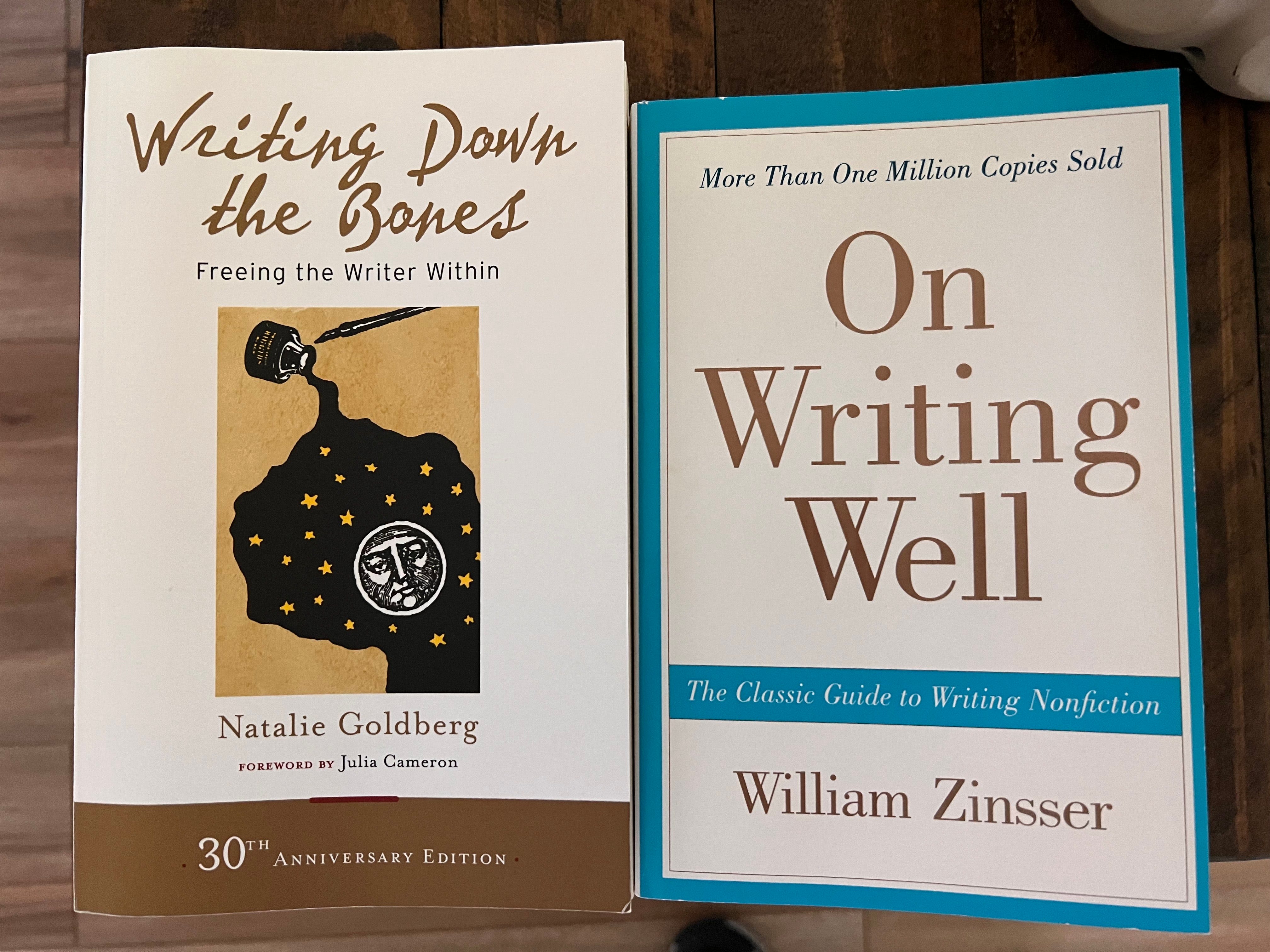
I think becoming a better writer has required me to develop a process for separating the different stages of thought. I do not ask myself to discover, organize, research, analyze, write beautifully, and edit simultaneously. I let each stage have its own purpose.
I have had a few comments asking for tips or recommendations for becoming a better writer and so these are the personal steps I have developed for myself.
I personally never begin with the introduction unless I have a great first sentence that I can start from. Usually for me, that is never the case. In the past, whenever I tried to start with the introduction, I would find myself staring at the first few sentences and my mind would go blank with what I wanted to say. Even if I managed to get past that part, I would still become stumped on where I would like to go next. So now I begin with fragments instead.
Let yourself begin there too. Begin with whatever is already alive in your mind. What are you thinking about? What bothers you about the subject? What have you experienced that makes you care about it? What contradiction have you noticed? What do you suspect is true but cannot yet explain? What sentence keeps returning to you?
Do not demand intelligence from the idea too early. Do not expect the first thought to sound like the final draft. There will be time refinement later. Right now, your responsibility is simply to capture the idea before you overwhelm yourself by trying to perform.
I have learned that there is a difference between having a thought and knowing what you think about it. Brainstorming is where I begin figuring out the difference. You put fragments onto the page and begin following them. One thought leads to a memory. The memory leads to a question. The question exposes a contradiction. As the process unfolds, something will begin to take shape that you could not see when everything was still crowded inside your head.
Allow the idea to change as you follow it. Sometimes the essay you imagined survives intact. Sometimes you discover that the subject you began with was only the doorway into something far more interesting.
Do not become too loyal to your first idea. Your first idea only needs to get you moving. Sometimes the real essay is the one you discover along the way.

I like to think of Dumbledore’s pensieve where he extracts and stores his memories so that they can later be examined from an objective-third person perspective. That is what you will do when you remove your thoughts from your mind. And this to me may be one of the most important parts of my writing process because I have learned that I cannot organize an idea while I am still trying to hold all of it inside my head.
Offload everything. It doesn’t matter where you store the information. But if you can, type the fragments into your notes. Record a voice note while the thought is still fresh. Fill several pages of your journal without worrying about whether any of it is useful. Talk through the idea as though someone is sitting across from you and has asked, What are you really trying to say? Maybe it even helps to talk it out. Some of the best essays were written after I had previously discussed them with my fiancé.
I do all of these things because thoughts become easier to understand once they exist somewhere outside of me. Inside your mind, everything can feel equally important but in the same breath, memories can interrupt arguments. Emotions have a habit of disguising themselves as conclusions. One interesting thought leads to five others before you have finished examining the first.
Put your thoughts where you can see it.
There is clarity in seeing your own mind laid out before you. Once the thoughts are outside of you, you can sort through them. You can recognize, This is the real point. You can also admit, This has absolutely nothing to do with what I am trying to say. Both discoveries will move the writing forward.
One thing that I would suggest before you begin writing seriously is to decide what kind of conversation you want to have with the reader. Over time, I have learned that simply knowing the topic is not always enough. I also need to understand what I am trying to accomplish with it. Here are some the of the questions I ask myself:
Am I trying to persuade?
Am I observing something?
Am I teaching?
Am I criticizing?
Am I confessing?
Am I trying to understand something alongside the reader?
The answers to these questions will shape the way you write. A persuasive essay needs an argument strong enough to move someone from one position to another. A personal essay may need you to be more vulnerable. An observational piece can leave room for uncertainty. A critical essay may begin with a contradiction that asks the reader to reconsider something they may have always accepted as true.
I return to one question more than any other:
What do I want the reader to leave believing, questioning, or feeling that they did not when they arrived?
It helps to know what you want to leave behind in them. You do not need to know every sentence yet, but you should have some idea of what you want the reader to understand differently by the end. Once you understand that, the writing begins to find its direction.
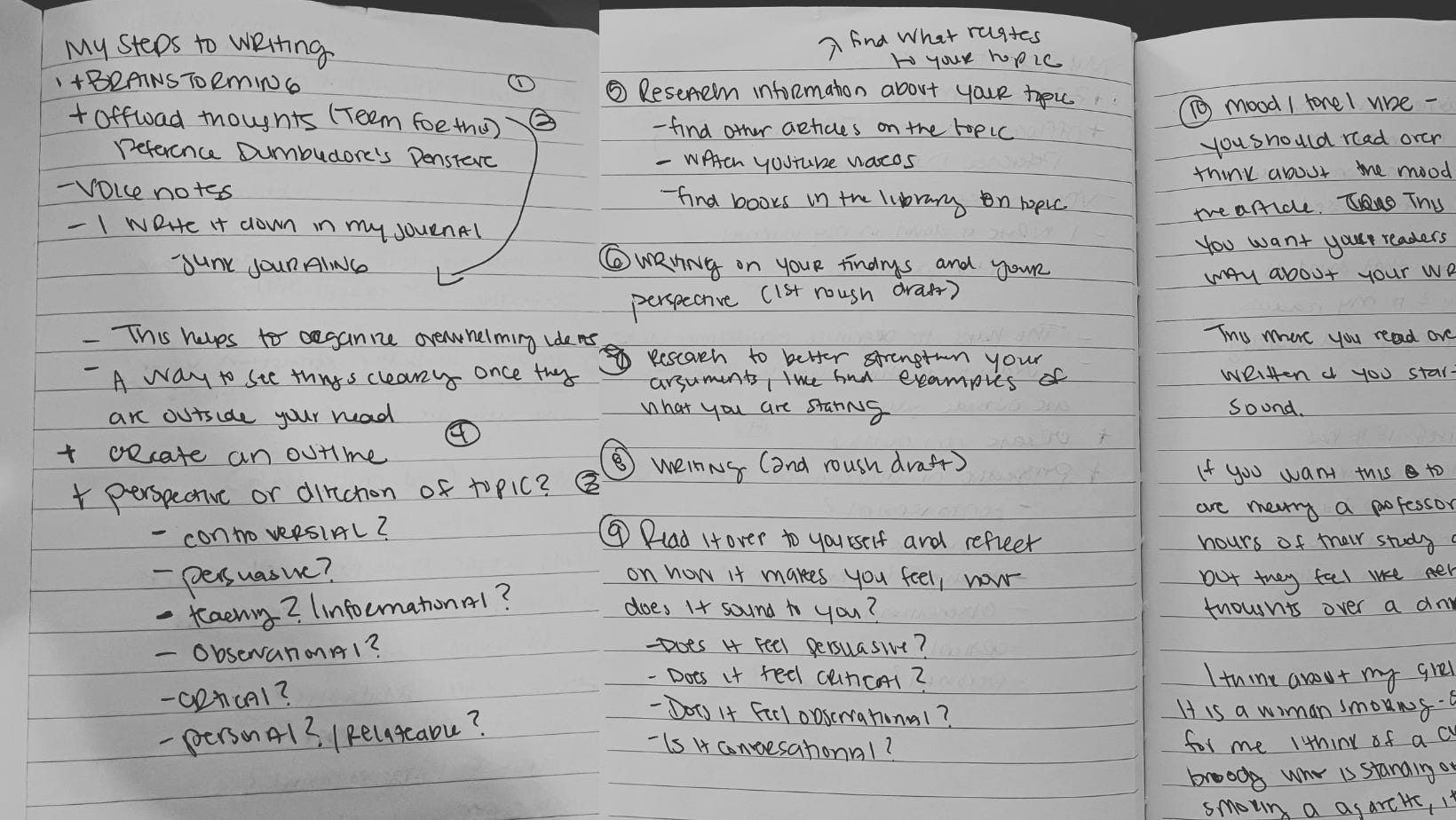
Only after you have emptied your thoughts should you begin organizing them. I outline almost everything I write, but I never treat an outline as a set of commandments. I like to think of it as a map. It gives you direction without deciding everything you are allowed to discover along the way.
Have a rough sense of where you want to begin, what ideas you want to explore, and where you think you might end. Your destination may change once you begin writing. Let it. The purpose of an outline is not to imprison the idea. It is to keep you from wandering so far off that you forget what you came to say.
When a subject feels overwhelming, make it smaller. Turn the larger idea into questions you can actually answer. Instead of telling yourself, Write an essay about human potential, ask:
Why are people afraid of discovering what they are capable of?
What does unrealized potential feel like?
What experiences have taught me this?
What psychological or philosophical ideas help explain it?
What happens when someone spends years avoiding the life they secretly want?
What can a person actually do about it?
This is how I make intimidating ideas manageable. I stop trying to write the entire essay at once. Start with answering one question, then proceed on to answer another and another.
Before long, you will look up and realize the answers have begun building the essay or story for you.
Once you understand the direction of your piece, begin looking beyond yourself. Your experience may be where the essay starts, but it does not always have to be where your thinking ends.
Find and read essays about the topic you are writing on. Look for philosophers and psychologists who have wrestled with these same questions. Search for historical examples, research papers, other books, interviews, documentaries, lectures, and conversations that approach your subject from an angle you had not considered.
I think part of becoming a better writer is realizing that very few of the questions we ask began with us. Someone, somewhere, has probably wondered about some version of what you are trying to understand. Find them. See what they discovered. Let their ideas challenge, refine or strengthen your own.
But do not research simply to decorate your writing with impressive names and references. Research should extend your thinking, not replace it.
Look especially for the ideas that complicate what you already believe. I have found that the most valuable source is not always the one that confirms my argument. Sometimes it is the one that makes me stop and realize I had not considered that.
Let research deepen the question before you use it to strengthen the answer.
Know when to stop researching and return to your own mind. Research can easily become another form of procrastination because there will always be another book to read, another article or Substack to save, another YouTube video to watch, another philosopher to discover, and another theory that promises to explain the subject more completely.
Eventually, you have to ask yourself: What do I think about all of this?
After researching, I like to step away from the sources and write down my own reactions. Where do I agree? Where do I disagree? What surprised me? What changed my mind? What still feels incomplete? How does what I learned connect to something I have experienced, witnessed, or already suspected to be true?
Do not allow the research to become the essay. Let it strengthen your thinking without replacing your voice.
Your reader can find the study. They can buy the book. They can search for the philosopher and read the original argument themselves. What they cannot find anywhere else is the particular way those ideas collided with your experiences, observations, questions, and understanding of the world.
That is where the essay becomes distinctly yours. That is the beauty of writing.
Use other people’s ideas to help you think more deeply, but always return to the question only you can answer:
What do I have to say about what I have learned?
Once you understand your own position more clearly, return to the research. This time, however, do not search widely. Search with purpose.
By now, you should be able to see the weaker places in your essay. Perhaps you have made a claim that feels true but needs evidence. Perhaps it helps to have a historical example that shows the idea operating beyond your own experience. Maybe there is an obvious counterargument you have not addressed, or a psychological concept that could explain something you have only been able to describe. Even literary references are helpful.
Go looking specifically for what the essay is missing.
I think of these as two very different stages of research. The first round helps you discover. You are wandering, following your curiosity, and allowing other thinkers to expand what you believe is possible to say about the subject.
The second round helps you build support or evidence for your essay. I often tell my students that strong writing should not rely solely on their own ideas, but should also draw on evidence and insights from other sources. At this stage, you are looking for evidence, context, examples, and perspectives that can support or challenge what you have decided to say.
Learn the difference between the two. Research should not become an endless collection of information. Eventually, you have to stop asking, What else can I learn about this? and start asking, What does this particular essay still need? and How does this information help me tell that story?
Finally, this is the part you have been waiting for: Write. And while you are writing, give yourself permission to be bad at it. Your first draft does not have to be pretty.
I have had to learn this because perfectionism can make it difficult to put anything on the page. You begin believing that the first sentence must be perfect, the argument must immediately make sense, and every paragraph should sound as polished as the writers you admire. After a while, you become so afraid of writing something imperfect that you write nothing at all. You do not want that.
The first draft should not carry the responsibility of the final draft.
Write the awkward sentence. Let the transition be clumsy. Repeat yourself. Write the paragraph that is far too long. Follow an idea even when you are not entirely sure where it is taking you. You can return later and decide what deserves to stay.
Remember that an unwritten sentence cannot be improved. You cannot revise an empty page.
I try to remind myself that the first draft is not evidence of how good or bad I am as a writer. It is simply raw material. Its job is to give me something I can shape.
The beautiful writing comes later. For now, let the draft be imperfect.
It only has to exist.
Now is the time to start reading your own writing back to yourself. This is one I really take to heart because sometimes I will read the same piece a thousand times before I finally understand what is bothering me about it. Ask yourself whether what you have written actually makes sense to you. Do not assume that because you wrote it, you communicated it clearly. Read slowly. Listen to yourself.
Does this sound like me?
Does it feel persuasive?
Does it feel artificial?
Does it sound overly sentimental?
Am I trying too hard to sound profound?
Is it conversational enough?
Would I actually say this?
Read it aloud whenever you can. The ear catches what the eye has learned to forgive. You may discover that a sentence looks great on the page but sounds unnatural coming out of your mouth. Pay attention to that discomfort. It is often telling you something. If it doesn’t sound right when you read it, there’s a chance it won’t sound right to the reader either.
This is also where you begin to hear the rhythm of your writing. Some sentences should stretch, giving the reader room to wander through the thought. Others should be brief.
Certain ideas need space. Others need to land.
Listen for both. Good writing is not only something you understand when you read it. It is something you can almost hear.
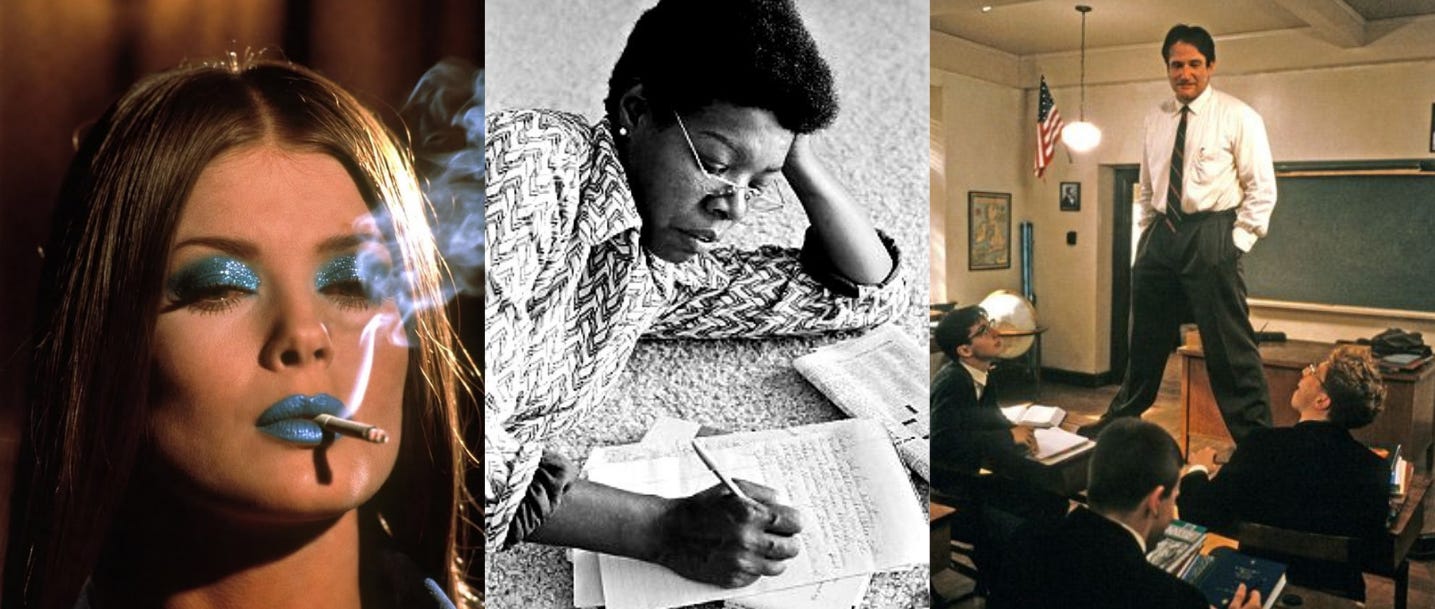
This is one of my favorite parts of the writing process, and it was something I had already begun doing instinctively before I encountered a chapter in Natalie Goldberg’s Writing Down the Bones called “Blue Lipstick and a Cigarette Hanging Out Your Mouth.” Goldberg describes using something unusual, even something as simple as a prop, to shift yourself out of your ordinary state of mind. The point is not really the cigarette, the clothes, or the setting. It is to give yourself permission to step outside of your usual perspective and see the world from another angle.
I realized that I do something similar with the mood of my writing. I love creating a mood!
Once I understand what an essay is trying to say, I ask what I want it to feel like. Create a scene in your imagination that embodies the voice you are trying to find. You do not have to write the scene into the essay. You are using it to temporarily place yourself inside a different state of mind.
If I want an essay to feel contemplative and intellectual, I might imagine myself as a professor sitting alone in a lecture hall after everyone has gone home, still turning over a question someone raised hours earlier. How would she think? How slowly would she speak? What would she notice?
If I want something intimate and confessional, I might imagine a woman sitting alone on her balcony late at night, a cigarette between her fingers, a glass of wine in her hand, telling someone the truth about her life without worrying about how she will be perceived.
These characters are not necessarily the narrator of my essay. They are emotional references that help me enter the atmosphere I want the writing to inhabit.
Try it yourself. Change the room in your imagination. Give yourself a character. Put on the metaphorical blue lipstick. And ask yourself:
Who would I become if I wanted to write this differently?
Sometimes finding your voice is not about forcing better sentences. Sometimes you need to temporarily step outside of your normal way of seeing so you can return to the page from another angle.
Sometimes your draft already contains everything it needs. The problem is that the ideas are sitting in the wrong places.
This is where you have to become less precious about what you have written. Move things around. Delete what no longer belongs. Combine sections that are saying the same thing. Break apart paragraphs that are trying to carry too much. Do not assume that because an idea arrived first, it deserves to appear first.
I do this constantly. A sentence or paragraph I may have originally placed near the conclusion suddenly makes more sense at the beginning. A personal story I was convinced would make the perfect introduction becomes far more powerful once the reader understands why the story matters.
Learn to think about writing as sequence.
A beautiful sentence means very little if the reader has not been prepared to receive it. One thought should naturally naturally lead to the next. A question creates curiosity. An observation complicates it. A story makes it tangible. Research deepens it. Reflection gives it meaning. Each section should make what follows feel more necessary.
Ask yourself, What does the reader need to understand before this paragraph can have its greatest effect?
Then build accordingly.
Good writing is not simply a collection of beautiful sentences. It is the careful arrangement of ideas so that meaning accumulates as the reader moves through them.
By the time they reach your conclusion, you want the final thought to feel both revealing and inevitable, as though everything you have written has been leading them there.
You are writing for yourself. Don’t try to visualize the great mass audience. There is no such audience —each reader is a different person…You are writing to primarily to please yourself and if you go about it with enjoyment you will also entertain the readers who are worth reading for. - William Zinsser
At the end, learn to become your own audience. By this point, you know every sentence, every argument, and every intention behind the piece, which can make it difficult to see the writing for what it actually is. Your reader does not know what you meant to communicate. They only have what you placed on the page.
This is when I try to create some distance between myself and the writing. I read it as though I have stumbled across it somewhere and know nothing about the person who wrote it.
Ask yourself:
If I encountered this somewhere online, would I keep reading?
Would I believe this person?
Would I feel lectured?
Would I feel understood?
Would I learn something?
Would I underline anything?
Would I send a passage to someone I know?
And perhaps most importantly:
Would I remember anything from this tomorrow?
Be willing to admit when the answer is no. I have learned that an essay can be grammatically finished without being emotionally finished. Every sentence can technically work while the piece itself leaves nothing behind. When that happens, return to it. Move sections. Cut what overexplains. Strengthen what matters. Ask whether you have simply told the reader what you think or written it in a way that allows them to arrive at the realization with you.
But remember that you are also part of your audience.
There is a danger in thinking so much about what other people will underline, share/restack, praise, or remember that you begin editing yourself out of your own work. I think about the reader, but I also have to ask myself whether I am satisfied with what I have written. Does it say what I wanted it to say? Does it sound like me? Would I still be proud of this piece if it received less attention than I hoped?
At the end of the day, what you write is ultimately yours to decide. Advice can guide you. Readers can respond to you. Editors can challenge you. But none of them can tell you exactly what your writing should become.
Learn to recognize the moment when you can read something back to yourself and think, Yes. This is what I wanted to say.
Then let it go.
I eventually have to stop polishing, and so do you. There will always be another sentence you could change, another word you could replace, another paragraph you could reconsider. At some point, satisfaction has to become more important than perfection.
Publish it.
A piece of writing cannot belong to anyone else until you are willing to release it from yourself.
I have learned to trust the mess before the meaning. My writing process is rarely efficient. I circle ideas, journal, research, move paragraphs around, and delete sentences I once loved. But perhaps that is the point. You do not always write because you know exactly what you think. Sometimes you write to discover what you think. Your brainstorm reveals the question. Research exposes what you do not know. The outline gives your thoughts structure. The rough draft reveals the argument. Revision brings you closer to what you actually meant. I no longer expect my first sentence to be brilliant, and neither should you. Give yourself permission to begin with fragments, questions, memories, and unfinished thoughts. Somewhere inside all that disorder is often the thing you have been trying to say all along. Writing is simply how you go looking for it.
With love,
The Muse and the Melody
If you care about becoming a better writer and a more deliberate thinker, stay awhile. I write about the craft of writing, the interior life, philosophy, human behavior, and the ideas that help us understand ourselves more clearly.
If this piece resonated with you, if it stayed with you a little longer than expected, you can support my work by buying me a coffee ☕🤍
Every bit of support helps me continue writing, creating, and building this space thoughtfully and consistently.
Thank you for being here, truly.
No posts
Comments
Nothing yet. Say the first thing.
Sign in to join the conversation.