
“We all do better when we all do better.” - Senator Paul Wellstone
**The audio recording of this Morton Train is available to paid subscribers here.**
For twenty years, Elizabeth Wilson split her time between a one-bedroom apartment in New York City and a two-bedroom condo in Branford, Connecticut. She’d purchased the Manhattan place in 1977 while performing in Three Penny Opera at Lincoln Center. She’d purchased the condo in 1988 while performing in Ah, Wilderness! at Yale Rep, before it moved to Broadway. Both were modest, middle-class homes that suited her sensibilities.
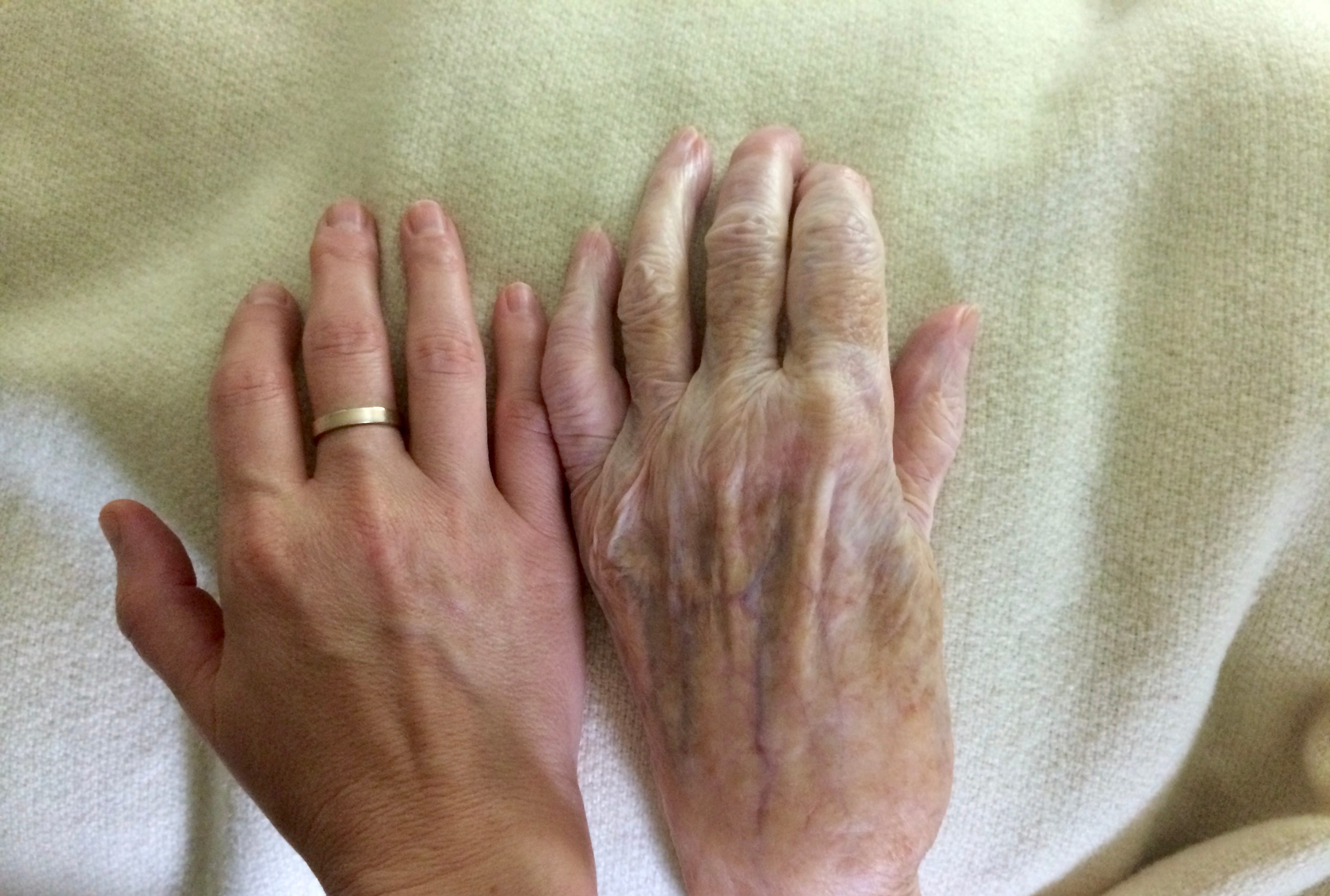
By early 2008, as she neared age 87, “Mama Liz” (as I called her) found it difficult to stay in the city without assistance. She had resigned herself to living full-time in the Connecticut condo, having already welcomed her sister there to do the same.
So with the place on East 57th Street being essentially uninhabited, and with me in the midst of losing my Brooklyn roommate situation, we decided that I would sublet. This arrangement worked wonderfully for both of us. I’d have affordable rent in East Midtown and she’d have a paying tenant who’d provide live-in support whenever she wanted to spend time in her beloved NYC.
We got into a good routine. I did my various part-time jobs, got acting work occasionally, and went about my city life. And then, once or twice a month, Mama Liz would stay for a long weekend: I’d move to the couch so she could have the bedroom, I’d run errands for her, I’d escort her to a dinner or a play or a friend’s home, I’d do whatever I could to make her time in the city easy and enjoyable. It made her “feel a part of everything again,” is how she phrased it.
But then we hit a snag. A letter arrived from the coop board scolding us for not getting their permission for me to sublet. I was to fill out an extensive application and pass a board interview or be forced to vacate the premises.
I complied with their request and even went a little overboard. Rather than the three required letters of recommendation, I provided several. Mama Liz herself sent in a long hand-written note explaining that this was no ordinary sublet, that I was like a daughter to her, and that my living there meant she could stay in her own home too sometimes.
In the 30+ years since Liz’d purchased the small apartment for a mere $35,000, the residents in that neighborhood and in the building itself had shifted from middle-class to affluent. I was not affluent myself so there were entire sections of the sublet application that I left blank. I could not provide, for example, a list of assets or details of a stock portfolio. But I did have a high credit score and a longstanding part-time job as an accounts manager for a small business. Surely the application made it clear that I was a responsible human being?
The interview was in a board member’s fancy, dimly-lit apartment. My stomach dropped when not one of them greeted me with a smile. I recognized immediately that I had entered an unfriendly environment and was being viewed as a suspicious interloper in a building that had already become my home.
Expressionless, the board members flipped through my application and asked me probing questions. I reiterated that Liz and I were chosen family, that the only way she could, at her age, comfortably stay in her apartment was if I was there too. I also apologized for neither of us knowing about their strict sublet regulations.
When they got to the financial portion of the application, when those affluent strangers silently glanced over my scrappy bank balances and the descriptions of my various odd jobs and unimpressive acting career, I felt immense shame. It was humiliating to be under their judgment and at their mercy.
They did, ultimately, accept the application, deeming me worthy of living in the apartment but, after a few years went by, I was ordered to vacate once and for all. Apparently I’d reached their non-family-member sublet term limit.
Mama Liz was devastated. My forced departure signified the loss of her home base in New York, a city where she’d been a resident since the early 1940s, a city that had been at the center of her life and career. Regretfully, she decided it’d be best to empty and sell her beloved home. Given that I was her acting Power of Attorney by that time, all of those duties fell on my shoulders.
So I, the scrappy interloper, single-handedly orchestrated the sale of a Manhattan coop apartment in which I could not legally reside.
***
Looking back on that experience, what stands out to me is the immense shame I felt at that meeting. It remains a visceral memory for me all these years later and I’m trying to understand it, trying to get to the heart of it.
Having grown up in a materialistic, capitalist, neoliberal society, I had definitely internalized the belief that one’s value is intrinsically tied to one’s income, that one’s worth is intrinsically tied to one’s wealth. So obviously the shame had a lot to do with money. Also, having my unfulfilled acting career inherently compared to Elizabeth Wilson’s celebrated acting career in that probing interview was a part of the shame as well.
But perhaps the most crushing was the shame I felt for not measuring up, for not making it on my own by my early 30s in the way I’d set out to. I felt shame that, despite my enormous efforts and unquestionable competency, I was struggling within dysfunctional systems not of my making - the cost-of-living economy, the NYC rental market, the entertainment industry, etc. I felt shame that I needed Mama Liz. I felt protective of her shame of needing me.
And I was angry that we needed permission from strangers to care for one another.
***
The world has changed a great deal in the 18 years since Elizabeth Wilson and I made our mutually beneficial sublet agreement. She died in May of 2015, before there was a pandemic or a fascist regime or the existential crisis of AI. She died before this era of great upheaval and great awakening.
I wonder if one of the gifts of our current time is that we are, as a collective, unlearning the shame of struggle. Whether at town halls or on social media or in private conversations, we are more openly sharing our common - and connected - struggles of economic insecurity, career displacement, chronic overwhelm, housing instability, and social isolation (to name but a few).
Our shame falls away when we recognize that we are not alone in these struggles, that they are caused by broken, unjust systems and not by flaws in our character.
Our power, then, is in the collective awareness that these struggles are not inevitable, that a better world is possible.
By unlearning the shame of struggle, we bolster our solidarity. Not just for the tearing down of old systems but for the building up of new ones.
***
I know what would be touching to Mama Liz about life in 2026: We are looking after one another in new ways. We are consciously seeking out and cultivating community. We are beginning to see that each of us is beautifully wired for interdependence.
No posts
Comments
Nothing yet. Say the first thing.
Sign in to join the conversation.