

I know, I know… This has been a constant debate amongst the masses and I think there are a lot of us who have finally figured it out. But first let me share a little first person experience between LPVO’s, Red Dot/Magnifier Combos, and just Red Dots.
Last month at Jay’s Minuteman Field Challenge we had a shooting stage where the guys had to shoot targets at various distances with their chosen rifle platform. Optics ranged from Red Dots, Red Dots w/Magnifiers, and then to LPVO’s and MPVO’s. Everyone had first hits at 50 yards. At 100 yards there was a miss or two from the guys with just a Red Dot while everyone else was 100%. But past 100 yards is really where the cracks started to appear. Guys with Red Dots dropped below 50% on their hits. Guys with an added magnifier performed better but weren’t getting 1st shot hits. But what shined were the guys with LPVO’s and MPVO’s where they scored 100% hits on everything past 200 yards.
So this lead to some questions on optic choices and usage. Myself and several others have been hashing this out and we all came to the same conclusion, for the average guy with a single, go-to setup, who is relying on this rifle for every use, an LPVO makes for a perfect optic choice.
Now I can only use myself as the use case scenario here but lets lay out the parameters for qualifying this decision. I have chased different rifle setups, just as most of you have, only to acquire bins of different optics that don’t get used anymore. But with time spent in the field I have discovered what I prefer in an optics setup.
The bulk of my use is 300 yards on in. As I have gotten older my eyes have welcomed extra magnification out in the field. So the plain and simple of it all,
Now, go back to the beginning of this article and reread the part about guys with different optic setups and their success at hitting targets at various distances. I want to be able to better see my target before engaging it. Yes, we can all see a dude at 50 and 100 yards and tell if he is a threat or not, but at 200 yards that gets a bit harder, and at 300 you don’t know if that guy is reaching for a pistol or playing with himself, even worse, if you can only see his head (that is a dudes head leaning out from that tree, right?). So being able to see better, matters.
So the pros for me include:
Magnification for better PID (obviously)
Versatility for various distances (1x for inside of structures or deep forest and up to 6x, 8x, and 10x in more open terrain)
Etched reticle even if battery fails (if using as a red dot). If using a red dot and the battery dies or there is an electrical failure, you no longer have a viable optic for aiming. Sure you can use your back up irons or use the window of your red dot as a giant ghost ring, but that is not optimal.
Longer eye relief than fixed magnification optics
Wide selection of reticle style in the market to choose from. Chevron, BDC, Mil-dot, and so on and so forth. You can search (and find) just about any design to suit your shooting preferences.
Doubles as a magnified optic when in an OP, so it eliminates the need for a monocular/binocular
Thermal and NV clip-on friendly
Cons for the LPVO:
Weight… Yes, the #1 complaint you read about is weight. But I will say that it is almost equal to the weight of a red dot/magnifier combo, so it kind of becomes a non issue.
Bulk. Yup, magnified optics take up space and add bulk due to their size.
Not really NV passive aiming unless utilizing a piggybacked dot
At the end of the day, I want my main grab-n-go rifle setup for success no matter where we may find ourselves. An LPVO allows me to do that. It just ticks all the right boxes for me!
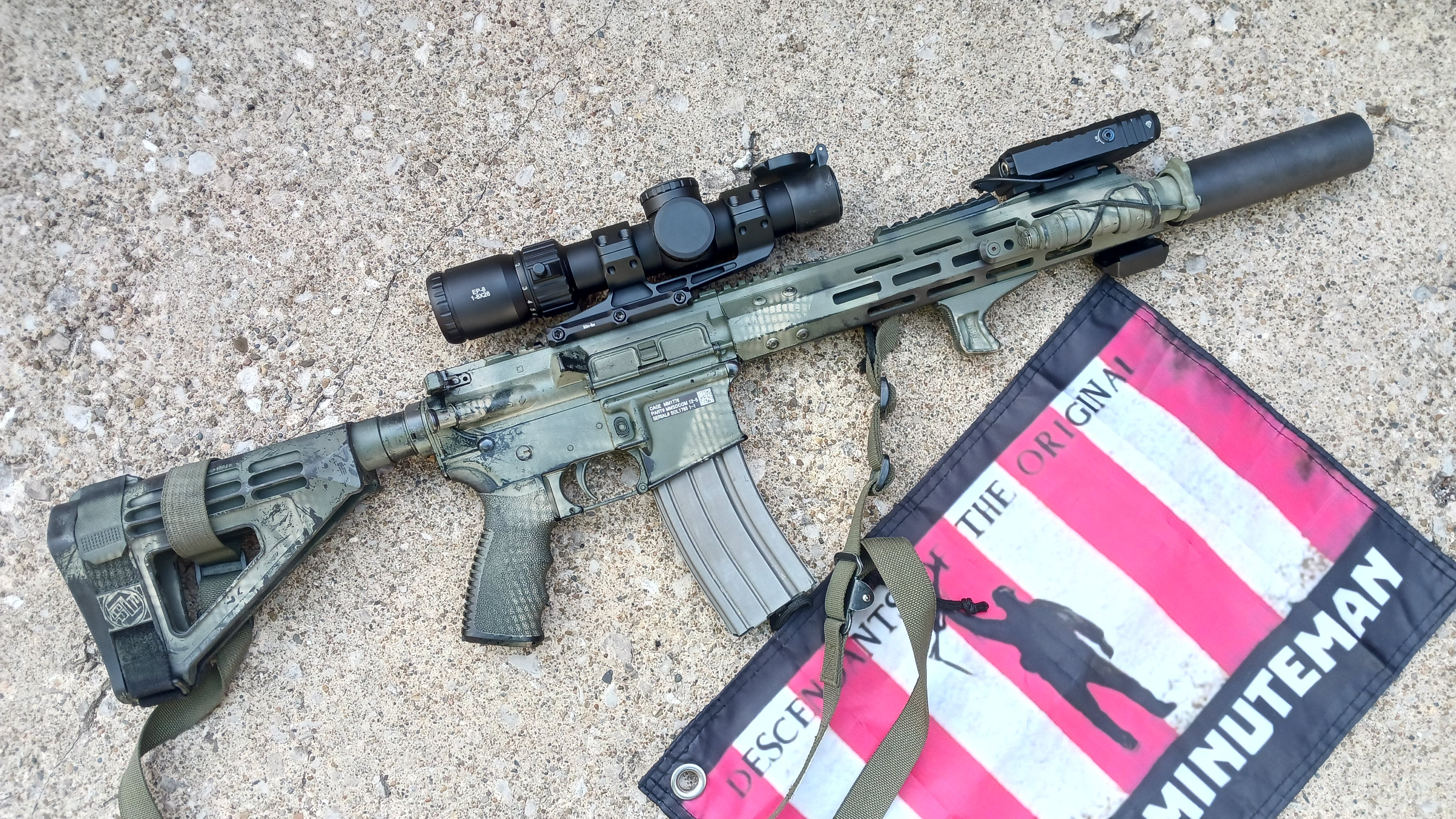
You do you boo, but for me an LPVO gets it done and does it well!
Here our go-to rifle is wearing the all new Arken Optics EP-8 1-8×28 FFP LPVO with KLGRID Reticle.
Stay tune for a follow-up video from the field in the coming weeks…
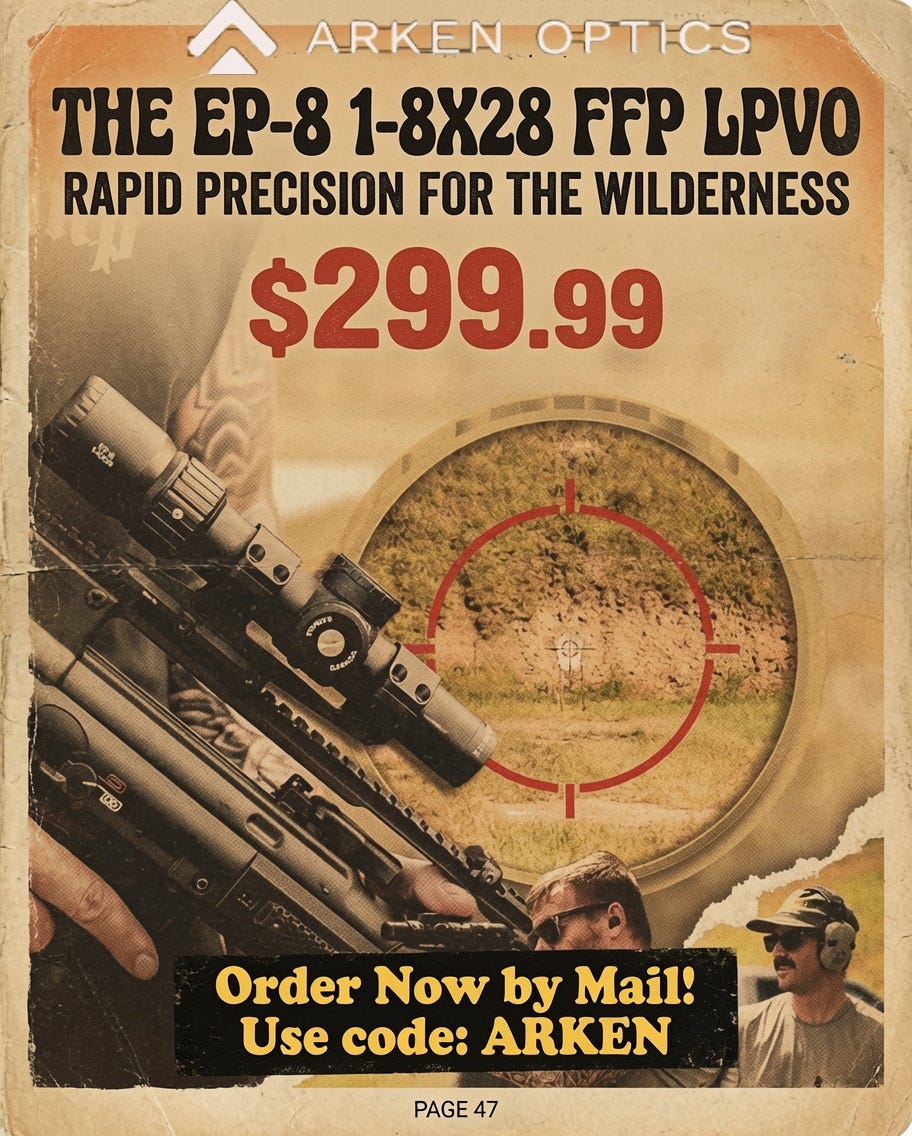
Check out the all new Arken Optics EP-8 1-8×28 FFP LPVO with KLGRID Reticle.
Comments
Nothing yet. Say the first thing.
Sign in to join the conversation.