
I love history, especially the period of the American Revolutionary War. It was truly a remarkable time in our history. One of the many parts of it I have found interesting is the history of the Minuteman movement and out of this the historical perspectives of the different flags used. So what follows is just a brief history lesson on the most notable of those flags leading up to the American Revolutionary War and beyond.
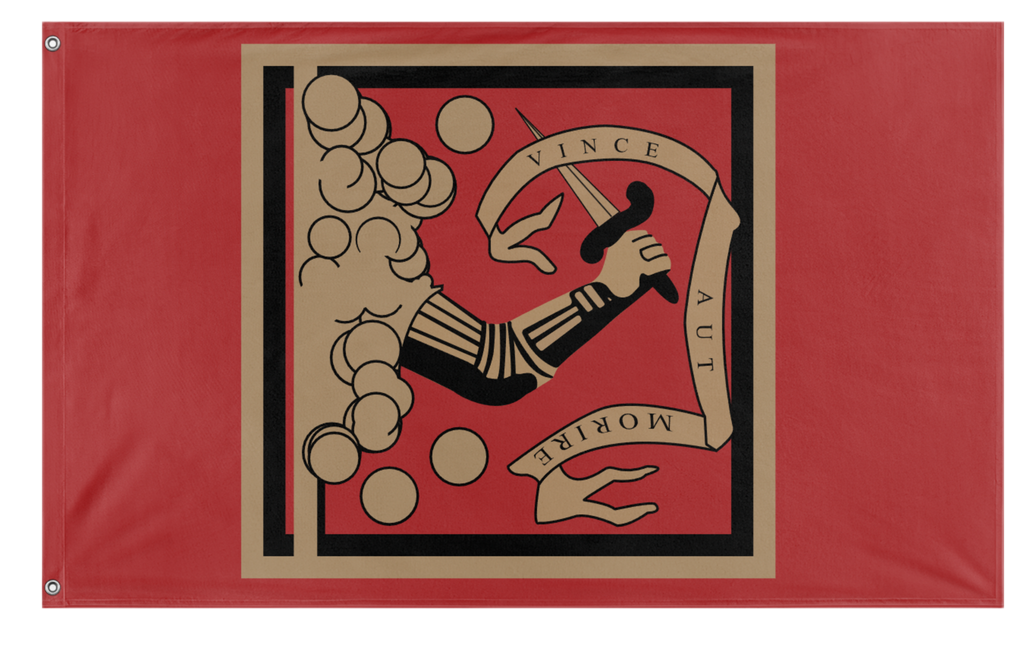
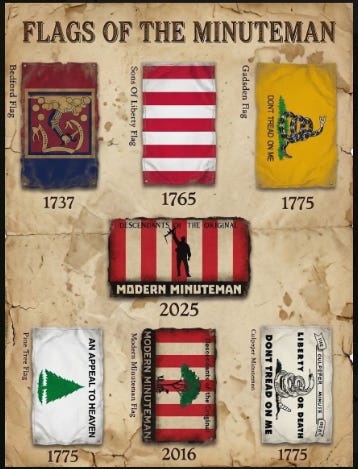
The Bedford Flag is notably the oldest surviving and complete flag in the US. It is most commonly associated with the Minutemen of Bedford, Massachussetts and the battles of Lexington and Concord.
It’s origin isn’t 100% known but we can trace back to at least 1720 and 1737 where it is mentioned in family writings of Minuteman Nathanial Page that a Page family member may have carried the flag for a local Militia in 1720. History puts the Bedford Flag at the Battle of Concord and it being the only Militia flag present.
Unit flags carried special functions often used as rallying points on the battlefields during the 1800’s and 1900’s and the Bedford Flag is a fine example of one such flag.
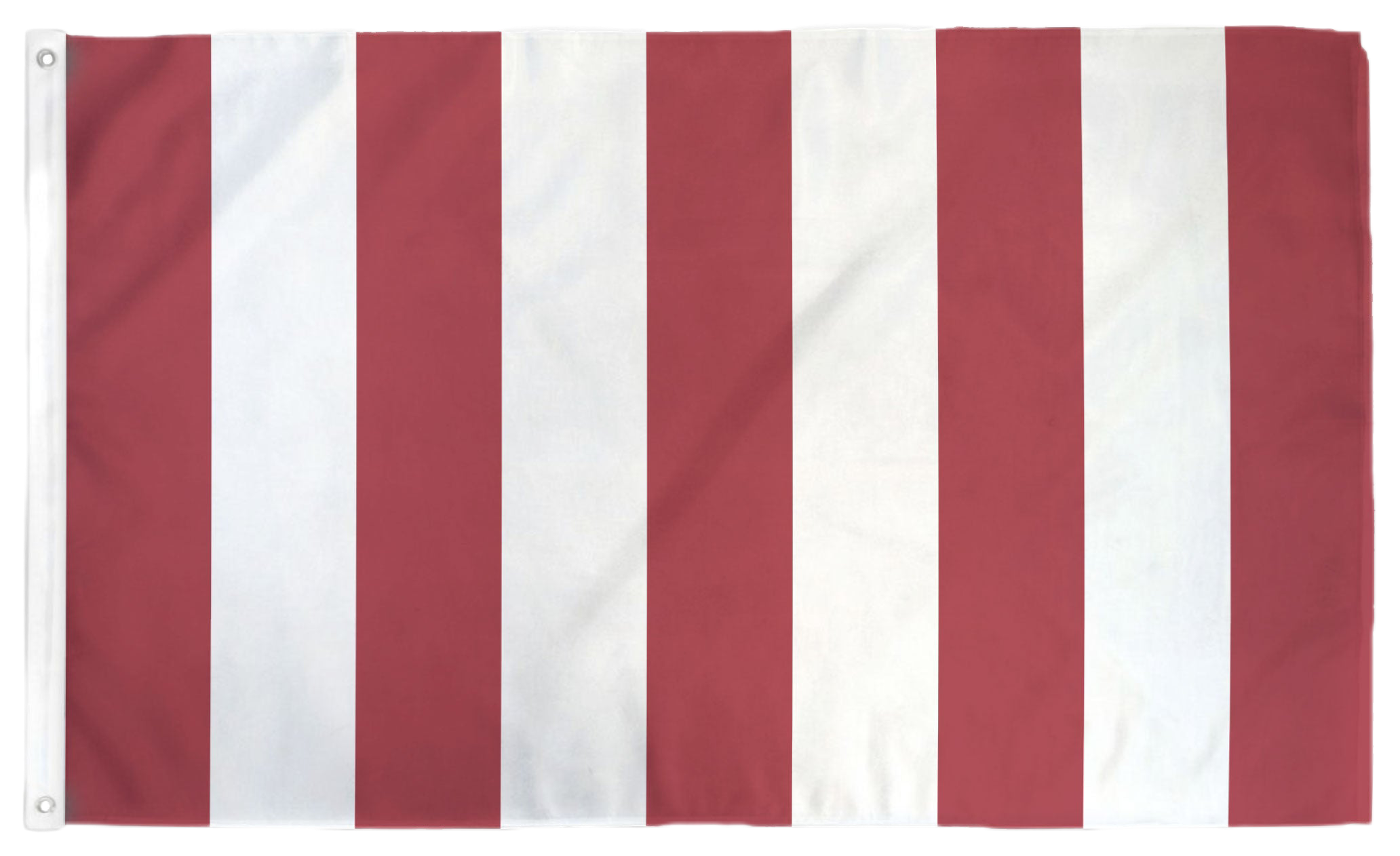
The Sons Of Liberty Flag, also known as The Rebellious Stripes, was used as a symbol of the Sons Of Liberty and of resistance against British taxation during the American Revolutionary War. It was the first American flag to utilize red and white stripes.
Featuring 9 vertical stripes that represented the colonies that attended the Stamp Act Congress (Massachusetts, Rhode Island, Connecticut, New York, New Jersey, Pennsylvania, Delaware, Maryland, and South Carolina). Resistance to these taxes led to the creation of the Loyal Nine which then became what we know today as the Sons Of Liberty.
The original Sons Of Liberty flag was used to signal meetings around common gathering areas such as the infamous Liberty Tree. When the Liberty Tree was cut down by loyalists, the Sons Of Liberty then erected a flag pole that the Rebellious Stripes would fly from.
In 1775 the flag was updated to include 13 stripes and they were then oriented from vertical to horizontal. This later became the basis for the first Stars and Stripes flag of the United States in 1777.
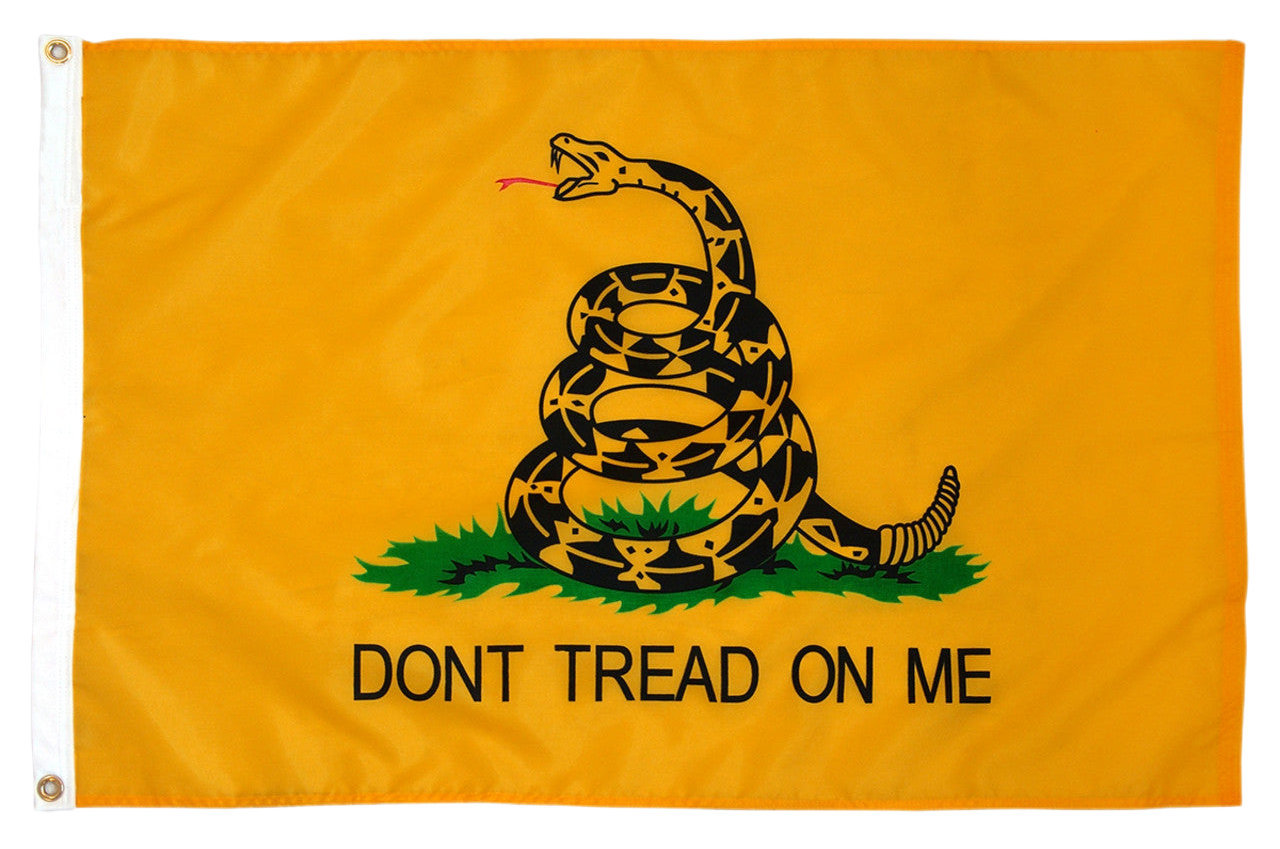
Named after Christopher Gadsden, a South Carolinian delegate to the Continental Congress, brigadier general in the Continental Army, who designed the flag in 1775 during the Revolutionary War. The Commander-in-Chief of the Continental Navy used it as his personal flag and the Continental Marines also flew the Gadsden Flag in the early part of the war.
The coiled rattlesnake ready to strike was a favorite symbol of Benjamin Franklin years earlier in 1754 symbolizing the American spirit and its valuation for vigilance, assertiveness, individualism, unity, and liberty. It was used as a symbol of unity in the 13 Colonies and used with the phrase “Join Or Die” in a famous 1754 woodcut by Franklin. Gadsden hoped the Gadsden Flag would serve as a reminder of the American Revolutions ideals.
In 1778 the rattlesnake symbol was first officially adopted by the Continental Congress when it approved the design for the seal of the War Office. At the top center of the seal is a rattlesnake holding a banner that says, "This we'll defend". This design of the War Office seal was carried forward ,with some minor modifications, into the subsequent designs as well as the Department of the Army's seal, emblem and flag. Some variation of a rattlesnake symbol has been in constant official use by the US Army for almost 250 years.
Between 1860 and 1862, the meaning of the Gadsden flag was disputed between pro- (later, the Confederacy) and anti-slavery (later, the Union) sides, where the Union ended up abandoning the flag “because Confederates had irreparably tainted it” and the Confederate Army making it into their unofficial flag.
The Union side would counter the Gadsden flag with images of snakes being stomped, stabbed, and eaten by eagles; in response, the Confederacy would abandon it for the Southern Cross battle flag. In 1862, Abraham Lincoln was given a 34 star American flag with the inscription: “The heel of the old flagstaff shall bruise the rattle-snake’s head,” in gold. This is probably deserving of its own future article.
Today, the Gadsden Flag has come full circle and is being used, once again, as a symbol of unity by those against a tyrannical government.
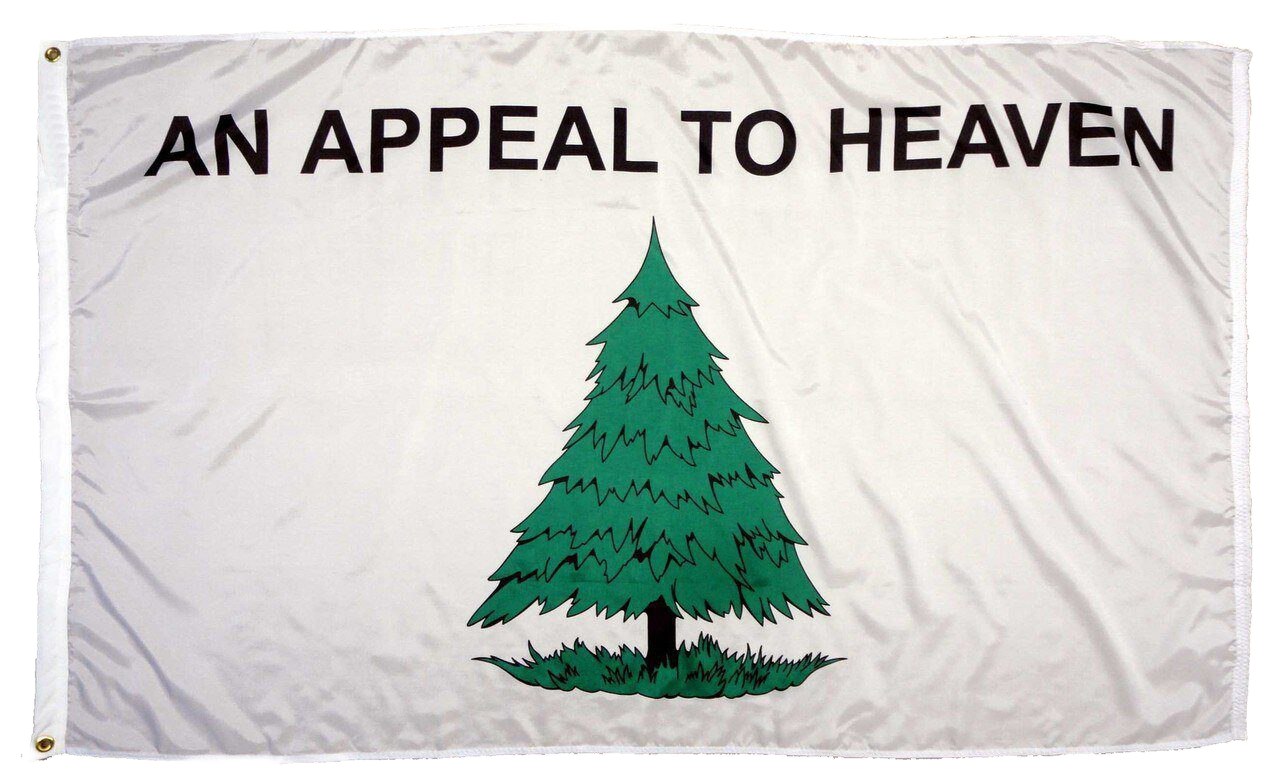
The phrase "Appeal to Heaven" is a particular expression of the right of revolution used by English philosopher John Locke in his Second Treatise on Government. The work was published in 1690 and rejected the theory of the divine right of kings. Locke's works on the topic of the philosophy of government were well-known and frequently quoted by Colonial leaders during the 1760–1776 period prior to American independence.
An early version of the flag consisted of a red flag with the cross of St. George in the canton with a green pine tree in the first quarter, was used in New England as early as 1704, and was reportedly flown at Bunker Hill in 1775. It also appeared having a "white field with the motto 'An Appeal to Heaven' above the pine tree".
It’s first official use was in 1775 where George Washington’s secretary suggested a "flag with a white ground and a tree in the middle, the motto AN APPEAL TO HEAVEN" be used for the ships Washington commissioned. The Pine Tree Flag was flown on 6 schooners, beginning in October 1775, to intercept British ships entering Boston Harbor.
The Pine Tree Flag has been described as one of the most important flags in the Colonies during 1775–1776, and the central image of the pine tree stood for wealth and power, in part because the tall trees were so important to the Royal Navy, as masts for warships.
The flag was also a popular regional New England flag and was used to rally and muster troops during the American Revolution (much like the Bedford Flag) before Congress adopted the Stars and Stripes.
Today the flag has regained popularity (similar to the Gadsden Flag) as a sign of rebellion, a return to small/limited government, and a renewed focus on following the word of God.
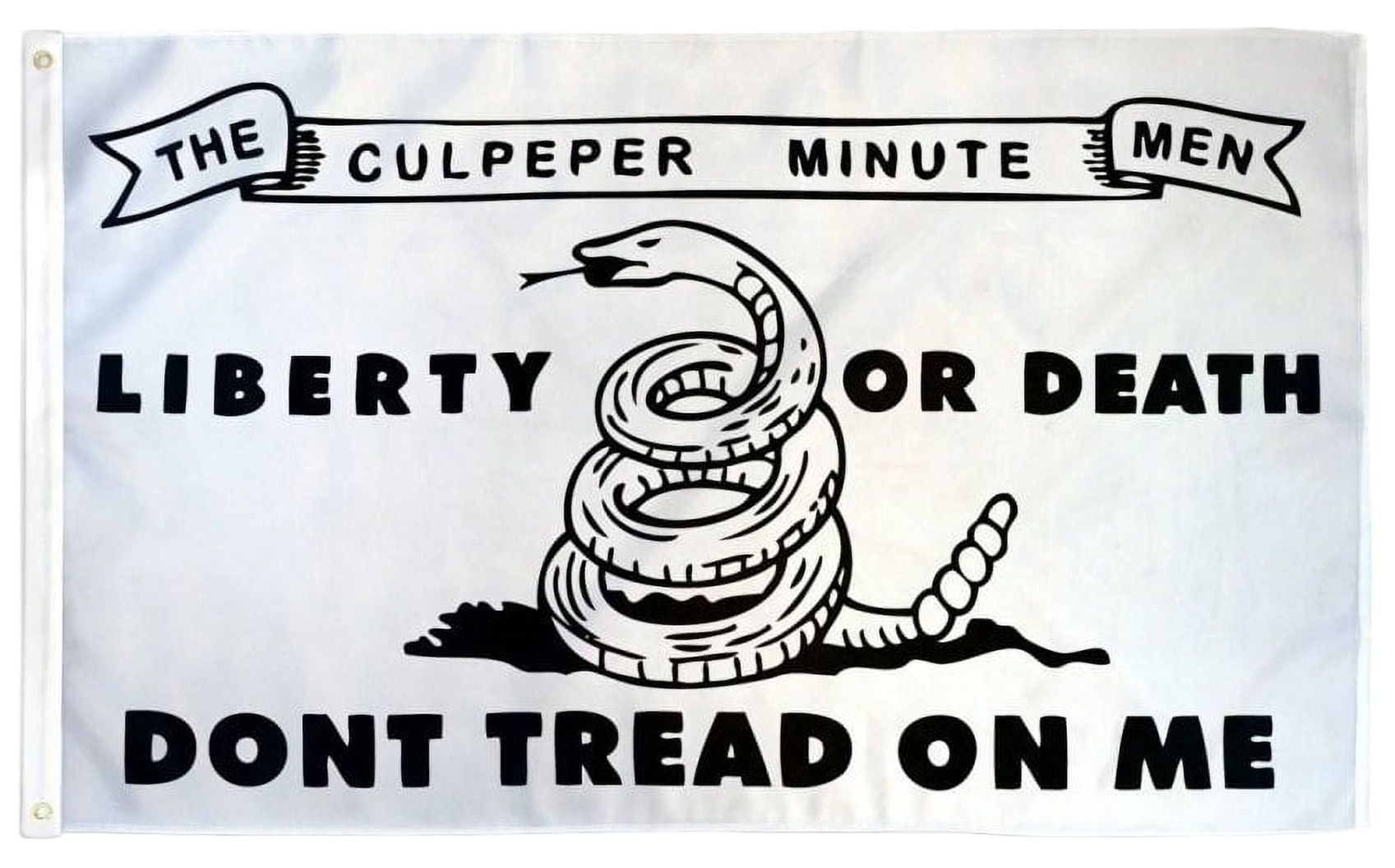
The Culpeper Minutemen were organized on July 17, 1775 in the district created by the Third Virginia Convention consisting of the counties of Orange, Fauquier and of course Culpeper. Recruitment began in September 1775 with four companies of 50 men from Fauquier and Culpeper counties each and two companies of 50 men from Orange County.
They fought for the colonial side in the first year of the American Revolution and are remembered for their company flag: a white banner depicting a rattlesnake, featuring the phrases "Liberty or Death" and "Don't Tread on Me". At the time, Culpeper was considered frontier territory. In October 1775, the Minutemen were sent to Hampton in response to British ships attempting to land. The riflemen were able to effectively shoot the men manning the ships cannons, and the fleet eventually sailed away.
The Culpeper Minutemen next participated in the Battle of Great Bridge in December of 1775 where the battle was a complete American victory. There were accounts of the battle that suggested the British were unnerved by the reputation of the frontiersmen. This reputation would continue to follow all Minutemen during the Revolutionary War.
In 1860, the Culpeper Minutemen were called to action again, carrying the same rattlesnake flag. Their unit became part of Company B, of the 13th Virginia Infantry and served in the Confederate Army for the duration of the American Civil War. They were called again during the Spanish-American War and yet again during WWI. Some say that the Culpeper Minutemen continue to train today.
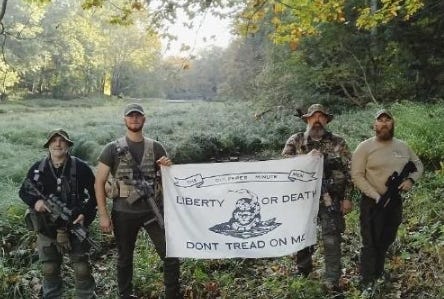
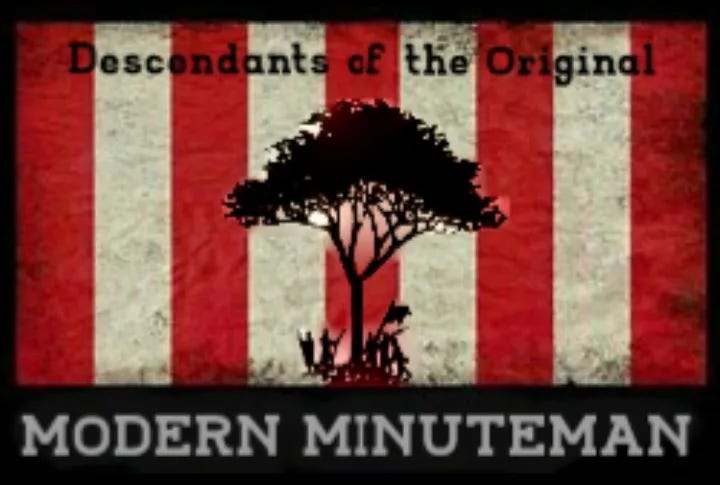
In 2016 the Minuteman movement seemed to pop back up again within the preparedness community and a call, similar to that of the original “Minute Companies” in the 1700’s (for a history of the original “Minute Companies” check out my book CM-8, The Modern Minuteman with The Professional Citizen Project), was being heard throughout the community. This wasn’t a forming of militias or small army’s, but rather a focus on readiness to protect our families and communities against whatever might come.
So we started to see all the aforementioned flags being used again and it was decided a modern version was needed…
After several iterations we settled on the above flag that paid homage to the original by utilizing the rebel stripes with the Liberty Tree on it with citizens gathered around it answering the call.
— Edward, Prince of Wales, in Henry VI, Part 3, Act II, Scene II
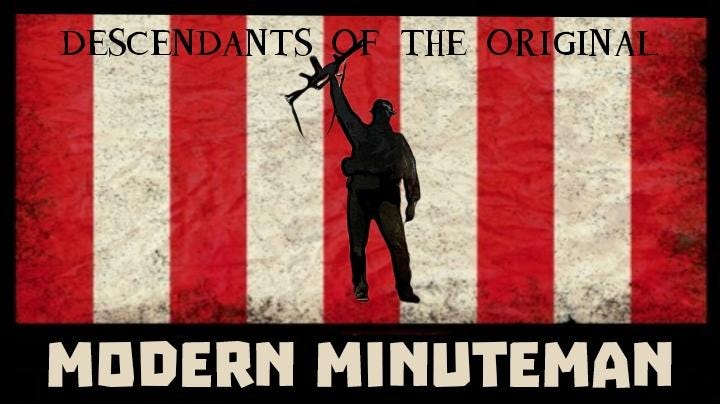
Fast forward to 2025 and we’re still rocking our rebel stripes!
Comments
Nothing yet. Say the first thing.
Sign in to join the conversation.