
There are many great books on Roman history, but only a handful of them let you experience Rome and its great heroes from within. Rome is worth understanding on its own terms, and modern academia too often filters that history through the politics of the present.
So I decided to put together a list of 10 books that give the closest, most direct view of the Roman way of life.
Some of these sources, especially the older ones, carry the bias of their authors’ political ties and positions. But that bias doesn’t disqualify them. It’s part of what makes them useful. They are the oldest surviving witnesses to Rome, and no modern account can replace what they saw firsthand.
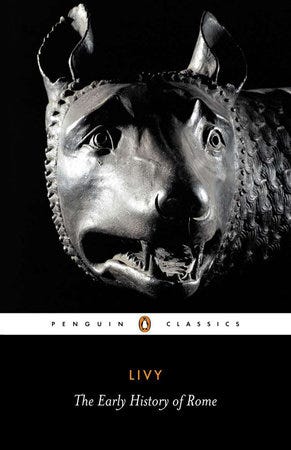
Livy’s monumental work, written in the late 1st century BC and early 1st century AD, narrates Rome’s story from its legendary founding in 753 BC through the early Empire up to 9 BC.
Written under Augustus, it is patriotic and has to push a clear set of value to it’s Roman readers. Livy celebrates the virtues of early Romans, their discipline, piety, and self-sacrifice, while mourning the moral decline of his own age. For the earliest centuries the account blends legend, folklore, and older annals into vivid, dramatic storytelling.
By the Middle and Late Republic, especially the Punic Wars and the fight with Hannibal, it becomes far more reliable and just as gripping. You meet the famous and renowned heroes like Cincinnatus, Camillus, and Scipio Africanus in action, and you absorb the values, institutions, and psychology of a people who believed their success came from character. It remains one of the best works to feel what it meant to be Roman and start your Roman journey.
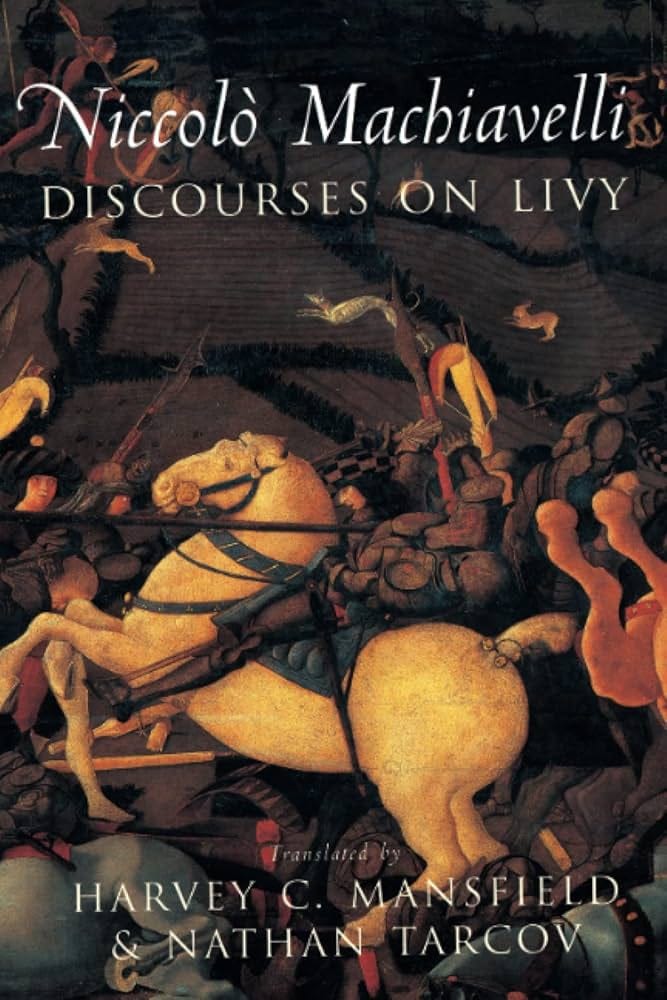
Written in the early 16th century, this is not a history of Rome but more a political analysis of Livy’s account of the early Republic. Machiavelli dissects how Rome was founded, how it kept its liberty, how it expanded, and how it eventually declined.
He examines the roles of conflict, religion, citizen armies, leadership, and institutional design, drawing directly on Livy to extract practical lessons for republics: the value of internal discord when it is channeled correctly, the necessity of virtuous citizens, and the interplay between fortune and virtù.
This Renaissance work shows how deeply Roman history shaped modern political thought, and it remains one of the sharpest guides to the institutions of the Republic and the human dynamics behind them.
Machiavelli’s analysis serves as a great additional piece to Livy’s works, and provide practical aspects for every Republic to survive.
Plutarch, a Greek philosopher and priest who lived from around 46 AD to sometime after 119 AD, paired famous Greeks with famous Romans, Alexander with Caesar, Demosthenes with Cicero, Theseus with Romulus, and compared their characters. His aim was not strict history but moral biography.
Plutarch wanted to show how character shapes destiny, and he does it through anecdotes, private moments, and ethical choices rather than battles or laws alone. The result is an intimate gallery of ancient leaders. You see their virtues, their flaws, their ambitions, and their daily conduct.
Plutarch gives an unmatched sense of what elite Roman and Greek life, leadership, and values looked like, seen through the eyes of a thoughtful observer living under the Empire.
Till this day “Parallel Lives” remain the greatest biography collection of ancient Greek and Roman world, contrasting characters from each civilization. I strongly believe that biographies can serve as cheat codes for anyone’s life, and Plutarch gives us that.
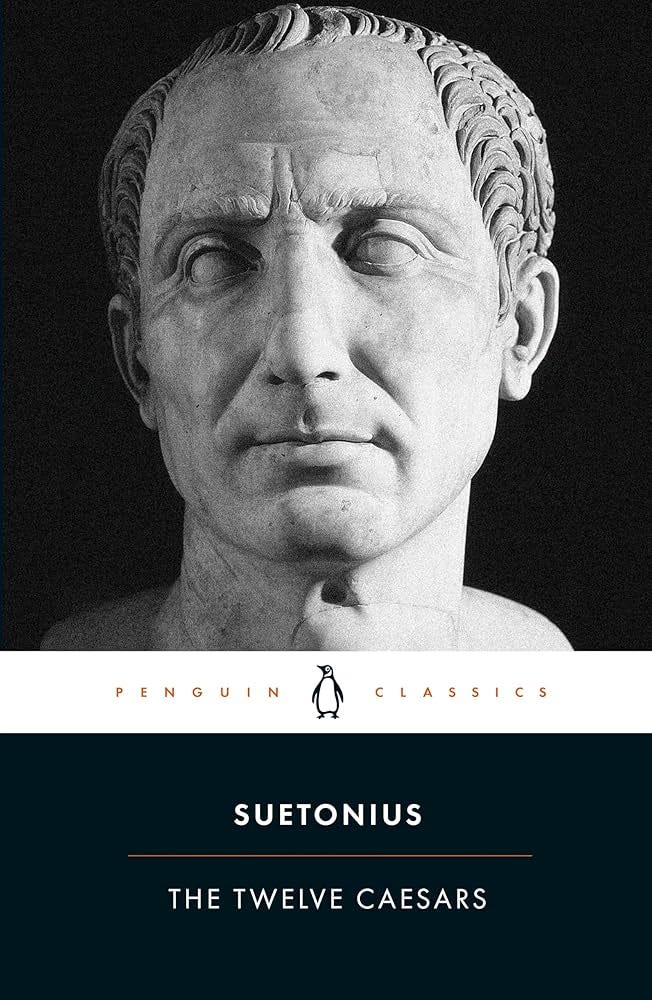
Suetonius, a scholar and imperial secretary active from around 69 AD to sometime after 122 AD, wrote short, vivid biographies of every ruler from Julius Caesar through Domitian. It included Caesar and first 11 emperors. Each life follows the same structure: ancestry, early career, reign, personal habits, physical appearance, omens, and death.
Suetonius draws on archives, letters, gossip, and official records, and the result is colorful. Full of scandals and behind-the-scenes detail from the imperial court. Not every anecdote holds up to scrutiny, but the book offers one of the closest inside views we have of how emperors lived, governed, and were seen by the people around them. It is essential for understanding the personalities and culture of the early Empire.
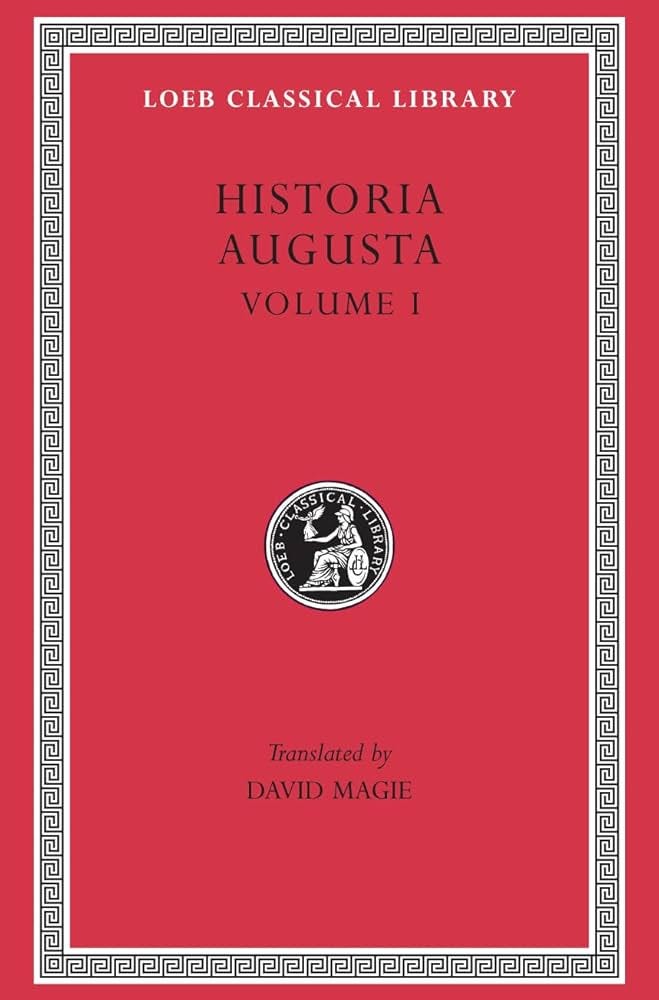
This anonymous collection of imperial biographies follows the same structure as Suetonius’ “Twelve Caesars”. It was compiled sometime in the late 4th or early 5th century, covers the emperors from Hadrian to Carinus, along with a long list of usurpers.
It is the main surviving narrative source for much of the 3rd century, a chaotic and poorly documented stretch of Roman history. It is also one of the most unreliable ancient texts, full of fabrications, invented documents, anachronisms, and a clear bias toward the senatorial class. Many of the “minor” lives are largely fiction. Read critically, though, it still preserves valuable, if distorted, details about the 3rd-century crisis, imperial administration, and the mindset of the late Roman elite.
Historia Augusta remains the main source for great emperor’s like Aurelian. It earns its place on this list precisely because better sources from that period barely exist.
Reminder: Our publication is readers-supported. This article is free but if you’d like to support our work and get access to more articles consider becoming a paid subscriber. You will get:
2 new and deep articles each week based on ancient sources
Access to our Roman battle series, where we have broken down 9 important Roman battles that teach us strategy
Full archive of content
Eternal gratitude
Become a part of fastest growing Roman publication on this platform. For only $50 a year. $4 a month. 13 cents per day.
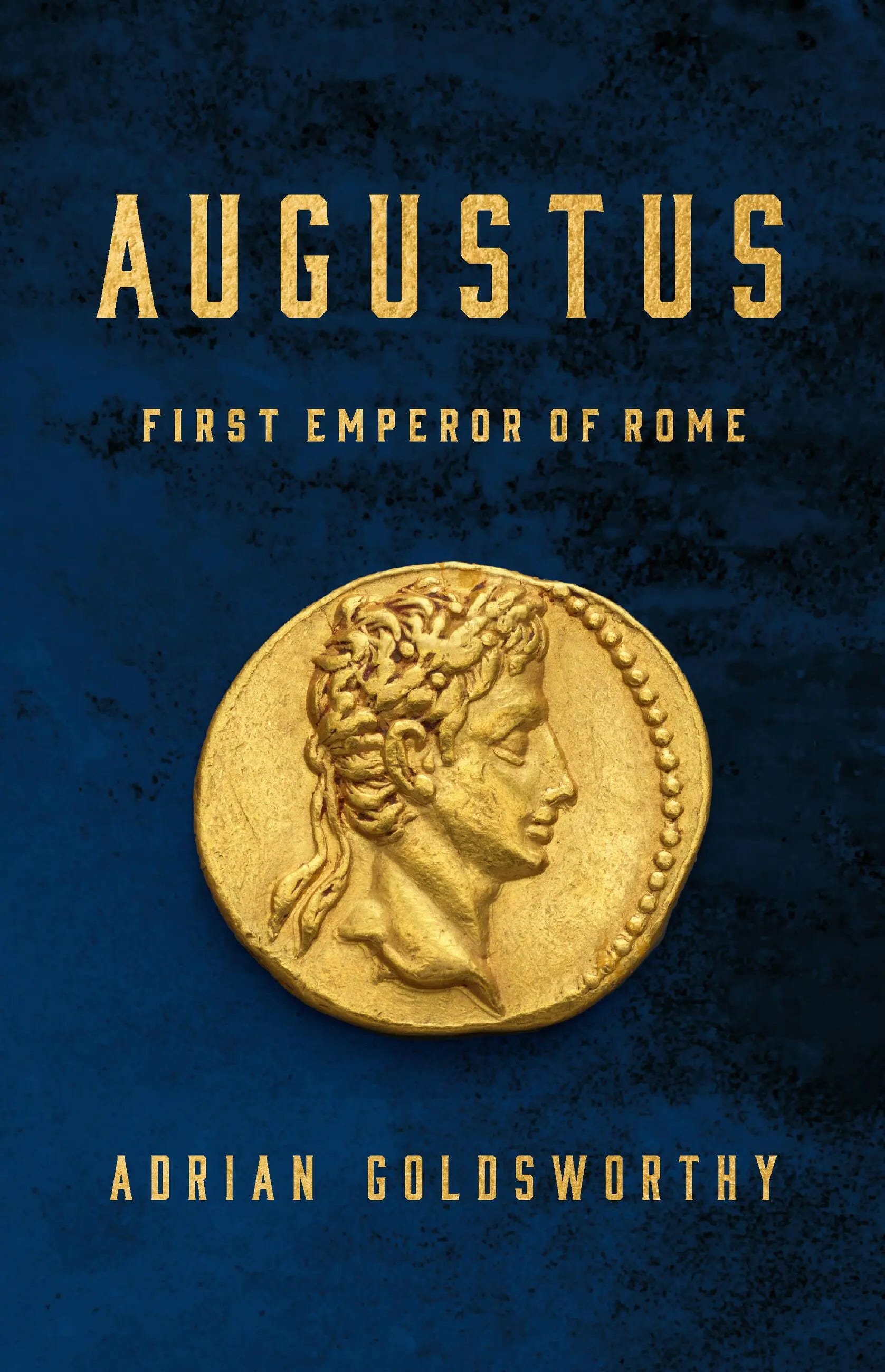
This 2014 biography is one of the finest single-volume lives of Rome’s first emperor. Goldsworthy traces Octavian from his teenage entry into the brutal civil wars that followed Caesar’s assassination through his long, transformative reign from 27 BC to 14 AD.
He presents a pragmatic, calculating, and highly effective politician, a man who ended the civil wars, built the Principate as a monarchy dressed in republican clothing, reorganized the army and provinces, and presided over a long stretch of stability and cultural growth. Well researched and balanced, the book is especially good at showing both the ruthless power politics and the careful image. Showing the greatness and tactics used by the first Roman Emperor.
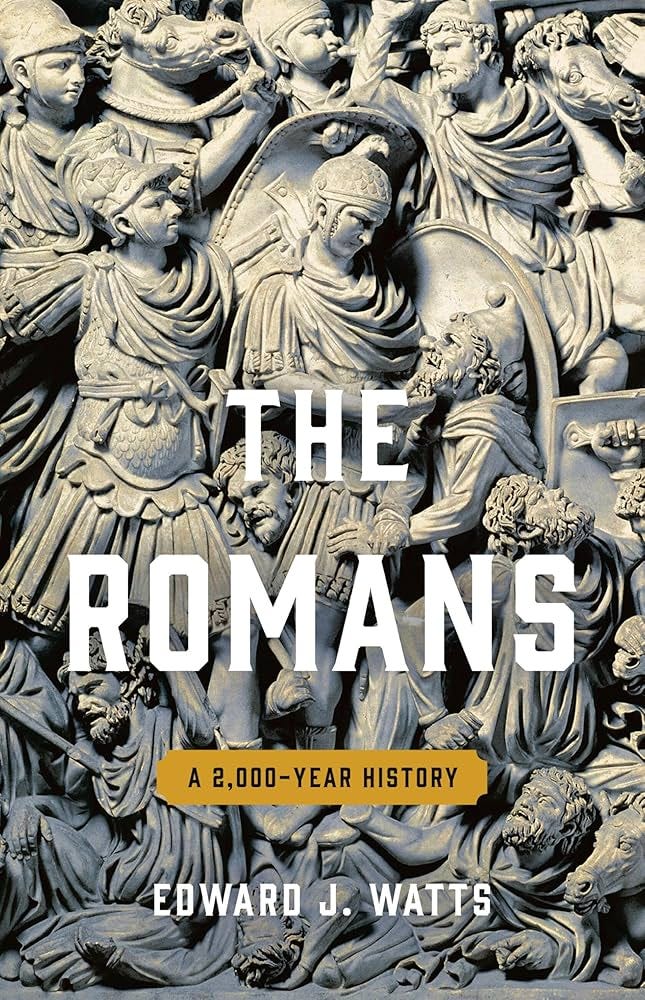
It is a book I now began reading. What I love about it, is that it provides a full story of Roman Republic since beginning to it’s fall in Middle Ages. In my opinion it remains the best introductory book to entire history of Rome.
Published in 2025, this book follows the Roman story from the legendary founding through the Republic, the Empire, and into the Byzantine period, ending with the Fourth Crusade’s sack of Constantinople in 1204. Watts treats the Eastern Romans, the Byzantines, as a genuine continuation of Roman identity and institutions rather than a separate civilization wearing Rome’s name.
Book covers the Punic Wars, the fall of the Republic, the rise of Christianity, the barbarian invasions, and the long survival of Roman institutions in the East. It is an engaging, sweeping account that connects two thousand years of history in a single readable volume.
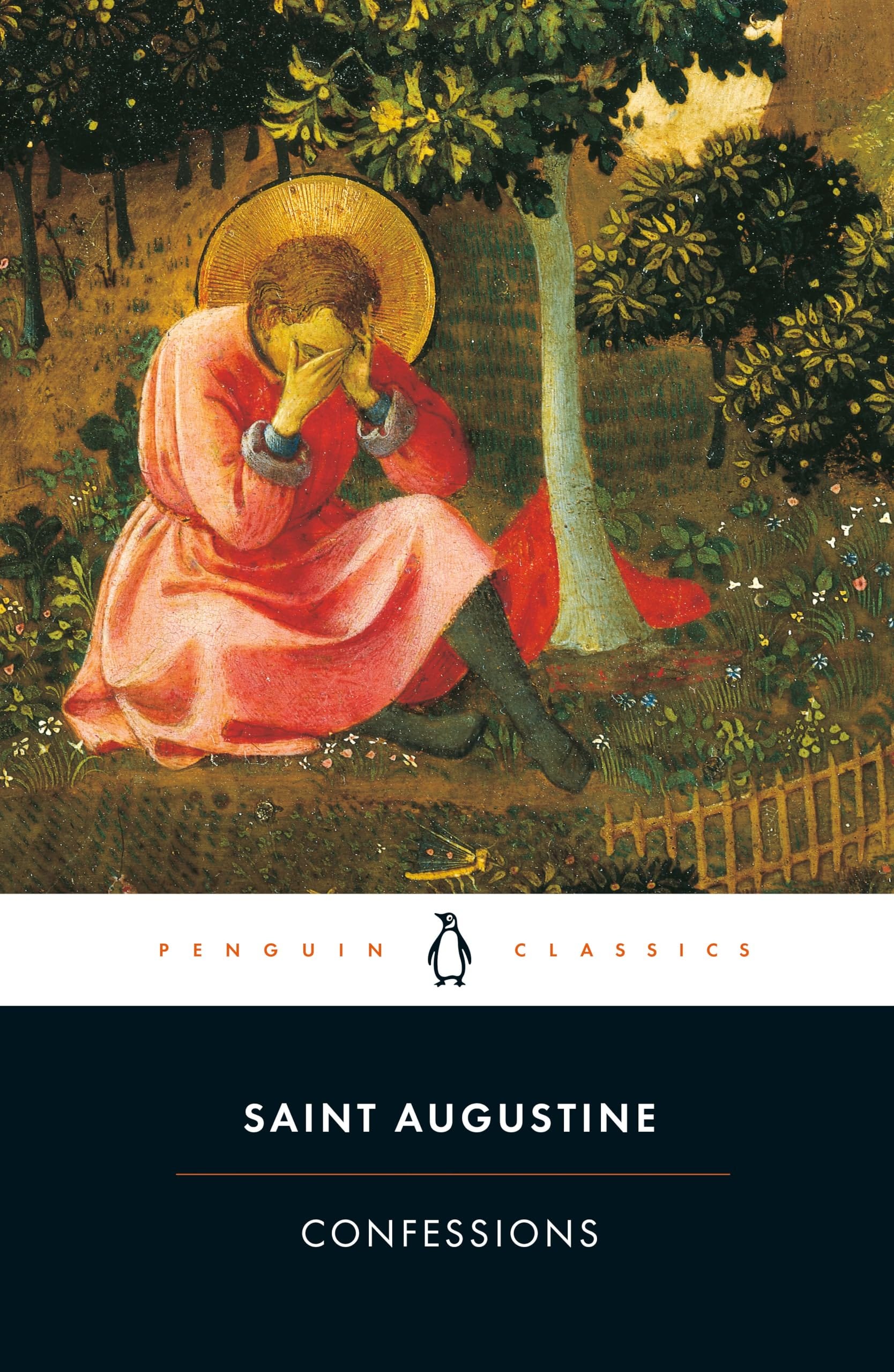
Written around 397 to 400 AD, this is an influential autobiographies ever written. Augustine recounts his childhood in Roman North Africa, his education in rhetoric, his youthful ambitions and sins, his philosophical wanderings through Manichaeism and Neoplatonism, and his dramatic conversion to Christianity in Milan.
It offers a personal window into late Roman intellectual life, education, urban culture, family life, and the deep religious and cultural shifts of the 4th and 5th centuries.
Augustine also covers many topics regarding morality and fall of Roman civilization, especially the sack of Rome by the Vandals in 410 AD. Through Augustine’s eyes, you experience the Roman world at the exact moment Christianity was becoming dominant.
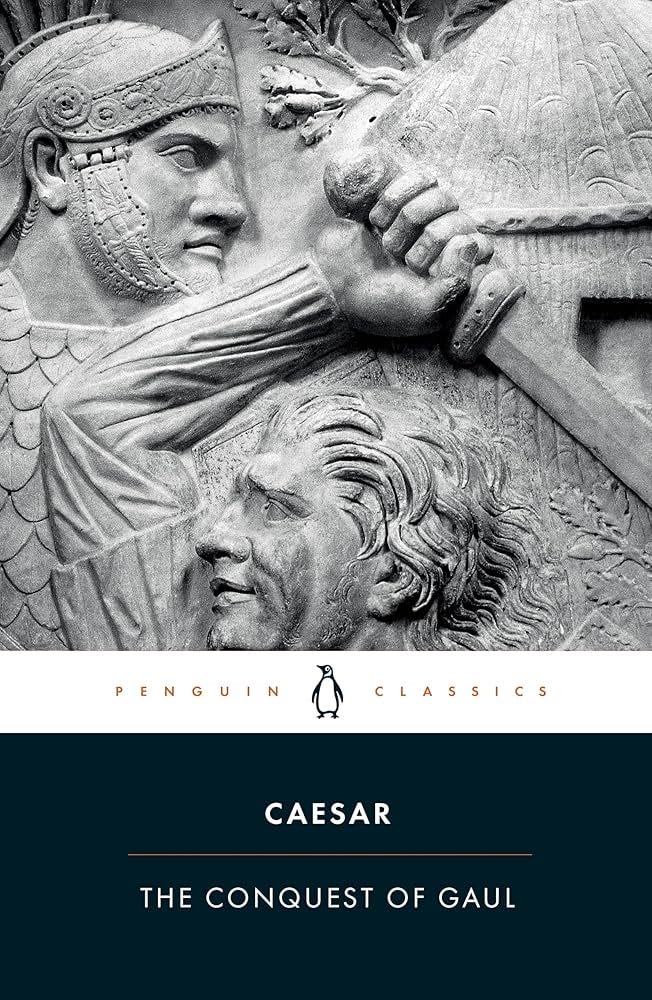
Written and published by the conqueror of Gaul himself, the Commentarii de Bello Gallico, covering the years 58 to 50 BC, were composed as political propaganda to build Caesar’s reputation back in Rome.
Written in the third person, in clear and economical Latin, the work describes how Caesar subdued the Gallic tribes one campaign at a time. Even as propaganda, it is an extraordinary primary source. Caesar led from the front and saw these events firsthand, and he provides unmatched detail on Roman military tactics, engineering, logistics, diplomacy, and the customs and internal politics of the Gallic tribes. It is the best surviving account of one of Rome’s greatest campaigns of expansion.
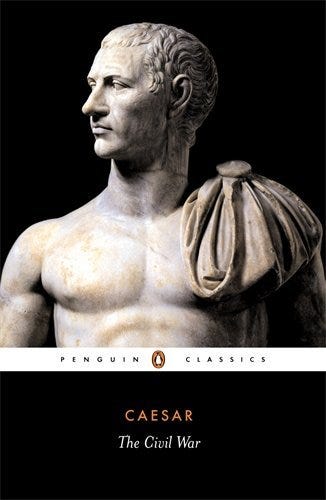
Like the Gallic War commentaries, this work, the Commentarii de Bello Civili, was written by Caesar to justify and commemorate his victory in the civil war against Pompey and the Optimates in 49 to 48 BC. The work remains incomplete though.
Again written in the third person for propagandistic effect, it presents Caesar’s actions as defensive, necessary to protect the rights of the tribunes and the Roman people. Even so, it delivers real insight into strategy, political maneuvering, and the conduct of the largest civil war Rome had seen up to that point. Caesar explains his reasons for crossing the Rubicon and lays out concrete detail on key operations, including the sieges and battles of Dyrrachium and Pharsalus. It is essential reading for understanding the collapse of the Republic from the perspective of the man who helped bring it about.
None of these books tells the full story on its own. Each book provides unique perspective or introduces new Roman heroes from whom we can learn. All of them must be read to better understand all periods of Roman state, their customs and way of life.
History often rhymes, and even today we can see same problems emerge in our modern lives, like those during the reign of Rome. That’s why we must study Rome and understand it. As only then we will learn how to thrive and avoid the same fate.
No posts
Comments
Nothing yet. Say the first thing.
Sign in to join the conversation.