
A couple of weeks ago, in the New Zealand High Court, the Professional Association for Transgender Health Aotearoa (PATHA) told a woeful tale of a life-saving drug that has been used without problems for decades being banned due, not to evidence, but to Trumpian style anti-trans rhetoric. It was not about medicine, said PATHA, but about identity. PATHA quoted families, surveys, and doctors all saying a ban was going to cause harm to the trans community. All the official advice provided by the Ministry of Health to the Minister was, according to PATHA, totally in line with PATHA’s position and this advice was being irrationally ignored by the Minister.
The High Court hearing happened because PATHA sought a judicial review of the Minister of Health’s decision to ban puberty blockers. The ban is currently not being enforced awaiting the outcome of the hearing.
There’s another take.
PATHA, an advocacy group, with open membership, and a fringe belief in gender identity, has enjoyed huge influence over New Zealand health and wider policy arenas. There has never been proper medical research into the impacts of puberty blockers but none the less, PATHA, part of an international network of similar organisations, repeatedly pushed the message that blockers were safe and reversible, despite their being no evidence of this at all1. PATHA’s supplementary message that puberty blockers save lives is not backed up by any evidence, only by anecdotes from kids and families, who have been told for years that the risk of suicide without blockers is immense. PATHA leads public information campaigns designed to ridicule, undermine and discount international research that calls into question PATHA-style approaches. PATHA endorsed clinical guidelines do not meet any of the internationally-agreed criteria for guidelines that are suitable for clinical use.
PATHA is not interested in clinical objectivity, it is on a mission. It is interested in a single, predetermined treatment pathway—gender-affirmation— and openly lobbies for its expansion. To date, it has done exceptionally well.
The Ministry of Health and Te Whatu Ora have treated PATHA as if it is a serious association of medical practitioners. These government agencies have used PATHA members as advisors, engaged PATHA to write website content on puberty blockers, used PATHA members to review work (possibly including PATHA’s own work), commissioned PATHA to write guidelines, has and continues to promote PATHA to the public despite PATHA being opposed to official government policy, has responded to official information requests about clinical advice by deferring to PATHA. In fact, PATHA is likely entirely correct when it said the official advice to the Minister was in line with the PATHA position, because PATHA members helped write that advice.
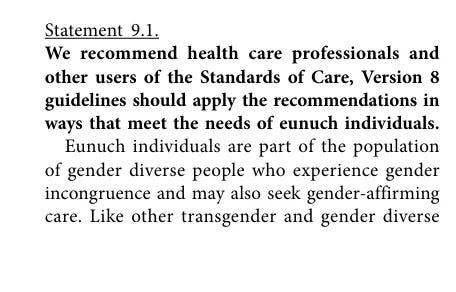
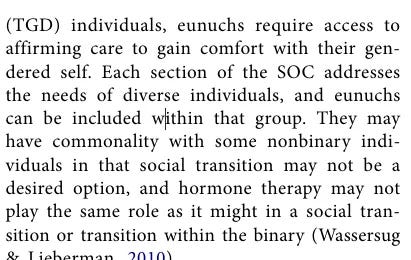
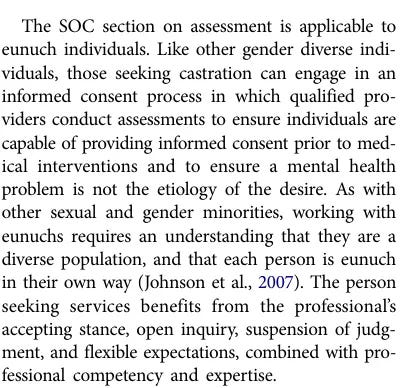
To reiterate: lobbyists who believe that children have gendered souls, that humans can literally change sex, that a eunuch is a legitimate gender identity and may require the removal of all genitalia based (on the advice of fetishists)2, have provided the “expert” opinion on which New Zealand’s policy on puberty blockers was based.
I can’t read Health Minister’s Simeon Brown’s mind. I disagree with him and the Coalition government on most things. What is true though, is that anyone looking seriously for robust evidence and sound clinical advice that could justify the continuation of puberty blocker prescription for gender dysphoria, would not be able to find it.3
PATHA’s undeserved reputation as a legitimate and serious organisation capable of providing unbiased best practice advice and guidance is under threat. It desperately wants to maintain its status, power and influence. It is pulling out all the stops. It will not go quietly.
It seems likely that robust evidence and sound clinical advice would point instead to a ban on blockers, a simultaneous ban on cross sex hormones for under 18s, and the urgent need to fix and properly fund New Zealand’s youth mental health services.
Comments
Nothing yet. Say the first thing.
Sign in to join the conversation.