
I know. I know. Trans activists claim to be burning the binary. They’re not.
Besides a few pockets of deep conservatism, by late last century, mainstream society and major institutions in countries like New Zealand had adopted many broadly feminist ideas.
Sexist stereotypes were generally considered ridiculous. Kids, it was thought, should be free to grow up expressing themselves as they wished, able to follow their passions and encouraged to use whatever talents they had regardless of their sex. Men could do ballet, be stay at home Dads, wear mascara in many circles, and love flowy clothing. Women did and could spurn dresses or makeup, drive trucks, play rugby, be brain surgeons or engineers. Women could love women; men could love men; and girls, well girls could do anything. Even when aspects of society lagged behind, we were indisputably on our way.
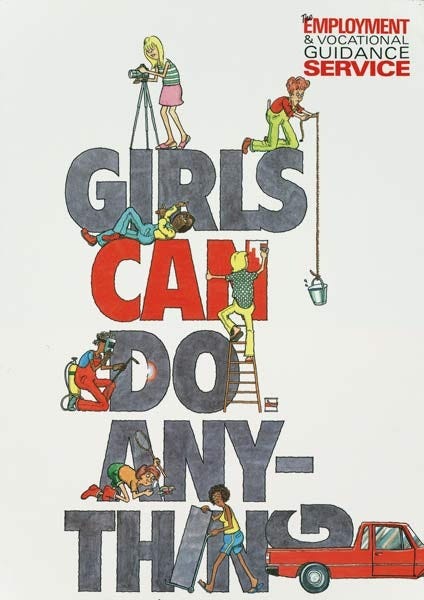
Trans activism started gaining real momentum in the 2010s. But a society that had abandoned a belief in the importance of strictly binary roles for men and women was no use to the trans movement. If gender is not a ruthless prison, than trans activism can not unlock the cages, brandish the key in front of roaring crowds, and present itself as the people’s great liberator.
At the heart of trans activism is a belief in an all important gender identity and in gender transition as a way to reconcile one’s body with one’s identity. But for these notions to make sense, you must believe that certain behaviours, preferences, clothing and haircuts belong exclusively to one sex or the other. Sex has to be restrictive and you need sexist ideas to be true, otherwise there’s nothing to escape from, and there’s no relief in adopting the identity of another sex. If either sex can do anything, like anything, or wear anything, then the whole idea of an incongruent gender identity collapses. If a female is not a collection of stereotyped preferences and behaviours, if she is not long hair, make up and high heels, then a man who likes those things is just a man who likes those things. He is not, as trans activism would have it, a man who is truly, in his deepest soul, a woman.
I’m interested in those early years of trans activism when the ideas really seemed to take hold here. From the mid-2010s we can track how New Zealand journalists were vigorously promoting the trans activist narrative. They reported, as if it were factual, the view that when someone didn’t conform to restrictive, largely obsolete gender roles, and perhaps was getting grief for that, this was proof of a true inner gender identity.
Stories about trans people in mainstream media followed a near unrelenting trajectory. A child or adult had always felt different, they or their parents recognised their difference through non conformity to a sex stereotype, and, like a miracle, transition fixed them. Frequently with this came a worrying supposition that medicalisation, even of minors, might be necessary. It is, of course, possible that the journalists missed out some complexities but the stories, as they stand, clearly suggest that liking or disliking certain clothes or activities is an indication of being transgender.
In the NZ Herald in 2014 Ben’s happier as a boy reported “He's never looked back and is now just like many other young boys—loving the outdoors, playing on the rock climbing wall at his school playground and battling his buddies and brothers in computer games.”
A female to male transitioner was described in Stuff in 2015, as dressing “in tomboy clothes growing up, and when he was old enough to buy his own clothes he bought boys’ clothes”.
From Stuff in 2016: “For as long as he can remember, Kieran (then Ciara) never resonated with dolls and girly clothes”
Also from Stuff in 2016, Never too late to choose the life you want featured Skye, born female and Annabel born male, both at the time of the article adopting a cross-sex identity.
Of Skye: “…an unworn dress that hangs limp in his wardrobe. A lack of interest in making daisy-chains. A burning desire to play rugby outside in the rain and mud. But there was one problem. Skye was born a girl.”
And Annabel: “…became infatuated with a friend's cream-coloured, see-through cardigan.…she says the woman’s cardigan made her feel like a weight had been lifted off her shoulders. And it was that cardigan that acted as a catalyst in Annabel’s transgender journey.”
A mother documents her thoughts in What I’ve learnt from my 5-year-old transgender daughter, in Stuff, from 2017. “At two-years-old, my daughter wanted to play with my jewellery and was reaching for anything pink. She was drawn to dolls and characters like Jessie from Toy Story and Merida from Brave”.
From all these media reports, transgender identity bears a remarkable resemblance to having particular clothes, hair and toy preferences, perhaps ones 1950s parents would balk at, but hardly odd in this century. I mean, really, all girls have to like daisy chains? Liking mud means you’re a boy, and fancying a see-through cardigan is indication you’re a woman? Yet again, sex, particularly the female sex, is reduced to gross caricatures.
I’ll note here, I feel nothing but compassion for young people who have absorbed from somewhere the idea that their desire to climb rocks and play video games means that they are a boy, or that an attraction to colourful, beautiful beads means they’re not. Sexism is a powerful social force, and this time, confusingly it has adopted the garb of being progressive and moral, its detractors branded as bigoted dinosaurs. The gaslighting is gargantuan.
But the media and its role in amplifying the sexist trans rights rhetoric needs to have a reckoning. While kids may not have been reading mainstream media, their parents probably were. Dormant and regressive ideas about what is and isn’t acceptable behaviour or preferences for boys and girls were reactivated.
Cruelly, in an age of ‘gender affirming’ medicine, the burden of society’s regression may fall most heavily on trans-identifying kids themselves. Medicalising gender non-conformity has been invoked and for some, there will be life-long health consequences.
Kids here may be more affected than in other places. New Zealand seems likely to be the most enthusiastic prescriber of puberty blockers in the world. From 2009 to 2018 our puberty blocker prescription rates were 1.7 times the rate of the Netherlands which had pioneered the use of blockers for gender dysphoria. By 2022, 416 out of every 100,000 12-17 year olds were on puberty blockers1. Our cumulative rate of prescription from 2008 to 2020 was 6.9 times the rate of England and Wales, which have since banned puberty blockers due to a lack of evidence that they are safe, effective or reversible.2
It’s hard not to see this medicalisation as sexism made concrete, as a kind of punishment for not following social norms. If you’re not a proper boy by some draconian made up macho measure, boy girl, do we have news for you. Mortified by grown men ogling your breasts or hate the idea of slathering on make up to impress boys, honey, we got ya. You brave authentic kids! No need to transform society like the fuddy duddy old feminists wanted, we can transform you!
Paul, C. A terrible trap, North & South, December, 2023.
Paul C, Tegg S, Donovan S. Use of puberty-blocking hormones for gender dysphoria in New Zealand: descriptive analysis and international comparisons. N Z Med J. 2024 Sep 27;137(1603):79-88. doi: 10.26635/6965.6587. PMID: 39326021.
Comments
Nothing yet. Say the first thing.
Sign in to join the conversation.