
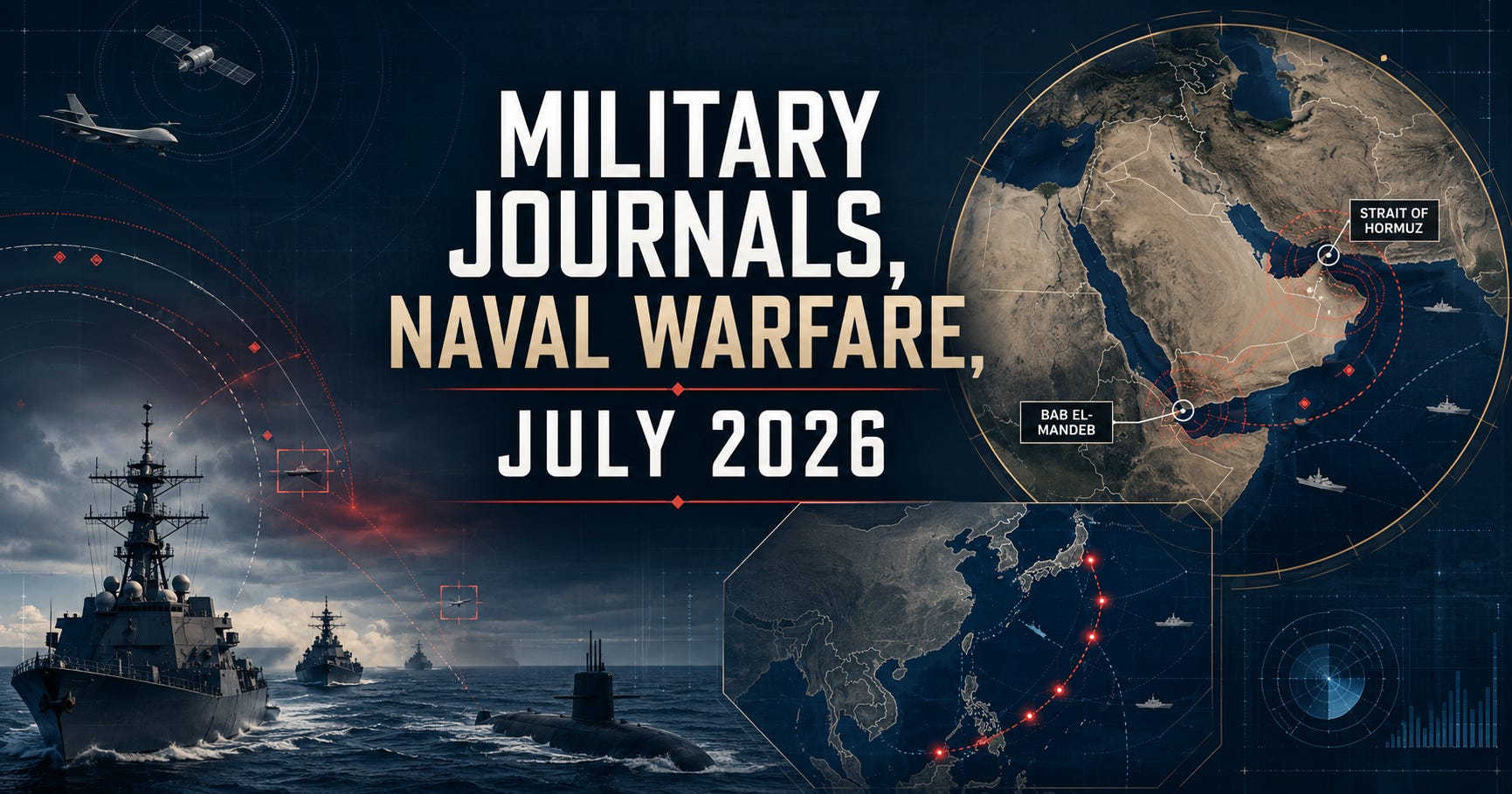
Anti-access/area denial, or A2/AD, refers to strategies designed to prevent an opposing force from entering a contested region or to restrict its freedom of movement once it arrives. It is not limited to advanced missiles or other high-end weapons. Geography, maritime chokepoints, surveillance, mines, drones, lower-cost weapons, and information operations can all help make an area appear too dangerous or costly to use. Lieutenant Keeley and Captain Bruce’s Proceedings article illustrates this idea through the Houthis’ Red Sea campaign and considers what those lessons could mean for operations in the western Pacific.
Since 2016, the IRGC has progressively weaponized the Bab el-Mandeb Strait through its Houthi proxy, supplying anti-ship ballistic and cruise missiles, attack drones, naval mines, unmanned surface vessels, and the intelligence and targeting systems needed to challenge maritime traffic. Since October 2023, the Houthis have employed these capabilities in a sustained A2/AD campaign against commercial shipping and U.S. and allied naval forces, forcing the U.S. Navy into its most sustained naval combat operations since World War II, requiring hundreds of missile and drone intercepts, continuous carrier strike group operations, and more than 1,000 strikes against Houthi targets.
The subject is particularly timely. U.S. operations involving Iran and the Strait of Hormuz demonstrate how naval power and access to a narrow waterway can carry global military and economic consequences; more than one-quarter of the world’s seaborne oil trade passed through the strait in 2024 and early 2025. At the same time, China’s expanding military reach continues to raise concerns across the first and second island chains. Together, the article and these three books give Military Reading Room readers a practical framework for understanding how geography, sea power, and denial strategies shape some of today’s most consequential security challenges.
Go deeper with the Military Reading Room. Become a paid subscriber for full access to our military journal highlights, strategic reading recommendations, and analysis of the issues shaping today’s force.

Proceedings Website (Membership Required after five article views - subscribe here: Join)
By 1stLt Hunter Keeley and Capt Henry Bruce, U.S. Marine Corps
What can U.S. naval forces learn from a comparatively low-cost campaign that disrupted one of the world’s most important shipping routes? In the July 2026 issue of Proceedings, First Lieutenant Hunter Keeley and Captain Henry Bruce examine how the Houthis used geography, uncertainty, and a varied arsenal to make the Red Sea appear too dangerous for routine commercial traffic.
The authors argue that similar lessons could help U.S. forces strengthen area-denial operations in the western Pacific. Their proposed “Houthi Menu” combines chokepoints, layered surveillance, missiles, drones, small-boat operations, decentralized decision-making, and information operations to shape an adversary’s perception of risk.
The article’s most important warning is that tactical success does not automatically produce strategic victory. Keeley and Bruce challenge readers to think beyond weapons and targeting, asking how geography, perception, logistics, and political objectives must work together in a future maritime conflict.
Read the full article in Proceedings here: Fight A2/AD With A2/AD
Comments
Nothing yet. Say the first thing.
Sign in to join the conversation.