
After consulting with Nielsen of Northwind A/C, installing window tint and curtains, and two years of experimenting, we’ve finally had success reducing our CFE bill. Not just a little, but ALOT by 54%. We took it from $9,747 mx down to $5,262 mx.
For those of you who are new here, let’s start with some context, including a question we get asked constantly: How do I even pay my electric bill in Mérida? Then we’ll get into the DAC; the tariff that quietly punishes high electricity use. And finally, the insider tips that actually moved the needle on our bill.

Comisión Federal de Electricidad, or CFE, is the government-owned energy company in Mexico. It’s the only provider of energy in the entire country. This means your rate is dictated by CFE. There’s no shopping around for a better deal.
Your CFE bill arrives every two months. Sometimes it’s in your mailbox; other times it’s folded up and stuck in your gate. Whether you receive a physical copy or not, you still owe the money. It’s worth keeping an old bill on hand so you can use the No. de Servicio to pay the next cycle even if the new one never shows up.
Miss the payment deadline? There is a 3-day grace period before your power is cut off. No warning calls, no grace period conversations. It just happens. Once you pay, service can come back within a few hours, or it can take a few days. Why the inconsistency? The only honest answer is: it’s Mexico.
Why is electricity so expensive here? Without competition, CFE sets the rates for the whole country, and those rates vary by region depending on climate. For example, hotter zones generally get a subsidy to offset the reality that you MUST run air conditioning to live comfortably. If you’re weighing cost of living here, know that electricity prices land in a similar range to what you’d pay in the U.S. If you’re used to running A/C freely, there’s usually a learning curve on cost.
Paying the bill used to mean a trip to a CFE office. Now you can pay online or at many local businesses. Don’t assume that because online payment worked once, it’ll work smoothly the next time. Patience is part of the process. I’m not going to list all the ways to pay here because they constantly change. We pay our CFE bill at a CFE-Matico machine similar to an ATM. These are found all over the city.
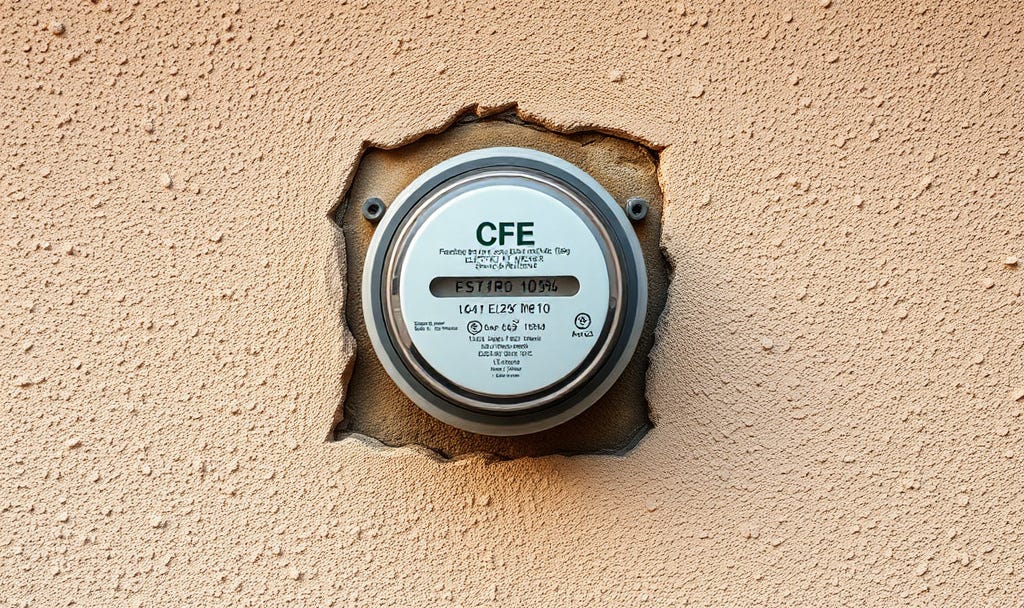
The bill itself lists your name and address, the amount due, the cutoff date, your Número de Servicio (your account number so be sure to keep this handy if you ever lose a physical copy), and your Tarifa, which is your billing rate.
The government subsidizes each household’s electricity based on that Tarifa and where the house is located. Summer rates differ from off-season rates. But the one you really want to watch for is a special tarifa called the DAC Doméstica de Alto Consumo, or Domestic High Consumption.
Here’s how it works for Tarifa 1D, the classification most common in Mérida:
The DAC limit: Your rolling 12-month average can’t exceed 1,000 kWh per month. Since CFE bills bimonthly here, that works out to a 2,000 kWh ceiling per billing cycle.
Summer subsidy: During CFE’s roughly six-month “summer” period (typically starting April or May), you get up to 600 kWh per month at the heavily subsidized base rate before hitting the pricier excess brackets.
Winter subsidy: From about November to March, that subsidized tier drops sharply to just 200 kWh per month. Go past it, and you’re immediately paying more per additional kWh.
If your average goes over the line, here’s what might be happening:
You pay more because now you are in the DAC classification.
The government subsidy no longer applies to your bill at all.
DAC classification sticks for a full 12 months.
Getting out isn’t automatic. Your average consumption has to drop back below the limit and stay there for the entire evaluation period. Only then can you request reclassification from CFE, receipts in hand as proof.
In other words: one hot 2-month cycle with the A/C cranked can follow you around for a year. Which is exactly why we got serious about bringing our usage down.
Before we get to what actually worked for us, here are some basics. Much of which you’ll find repeated across the internet and social media, but it’s worth having in one place:
Orientation matters. A north/south-facing house on an odd-numbered street catches more coastal breeze and less direct sun intensity.
Mosquito screens let you take advantage of that breeze, especially in the evenings, cutting down on how much you need the A/C. Also helps to air out your house from the humidity.
Turn A/C on when you enter a room, off when you leave. Use it sparingly and intentionally.
Regular Service. Clean your A/C filters and have your minisplits serviced regularly, ideally before the hottest months hit. Every 4-6 months is ideal.
Switch to energy-efficient bulbs. Older bulbs throw off heat in addition to burning more electricity.
Check the yellow energy tag. Before buying any new appliance, especially refrigerators, which are typically the biggest electricity draw in the house.
Use fans before reaching for A/C. A good fan moves a lot of air and helps you adapt to the climate rather than fight it.
Keep the fridge away from the stove and out of direct sunlight. Ensure enough clearance around it for heat to escape.
Size your appliances, A/C units, and pool pumps appropriately. Oversized equipment isn’t more effective, just more expensive.
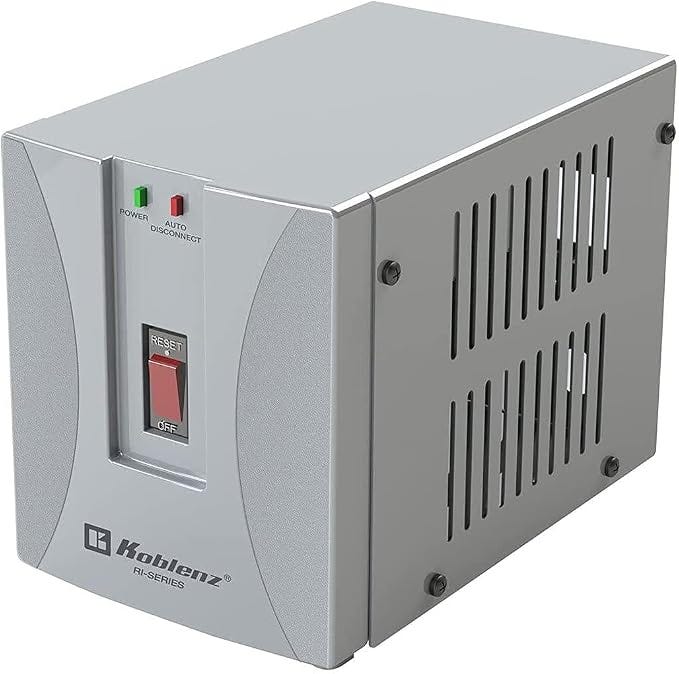
Koblenz has many models of regulators and can be purchased online (Amazon) or locally (Sears, Home Depot, etc.).
If you’re house-hunting or building, these details make a measurable difference:
Concrete block or mampostería (limestone construction) insulates exceptionally well.
High ceilings let hot air rise and circulate up and away from living space.
Lighter wall colors reflect light, keep interiors cooler, and reduce how much artificial light you need.
Clean your fans regularly — dust and oil buildup makes them work harder for less airflow.
A vent above the stove helps evacuate hot air from cooking.
Sunblock-lined curtains, closed during the day, block a huge amount of heat from coming into the house.
Open windows at night to let cooler air circulate through.
Odd-numbered streets get more cross-breeze than even-numbered ones, and north-facing houses catch even more. If you have an interior garden, even better for breezes.
Gas dryers are significantly cheaper to run than electric ones.
Check your door seals to make sure cool air isn’t escaping.
Have your fridge professionally cleaned at least once a year, especially the back panel around the fan and motor.
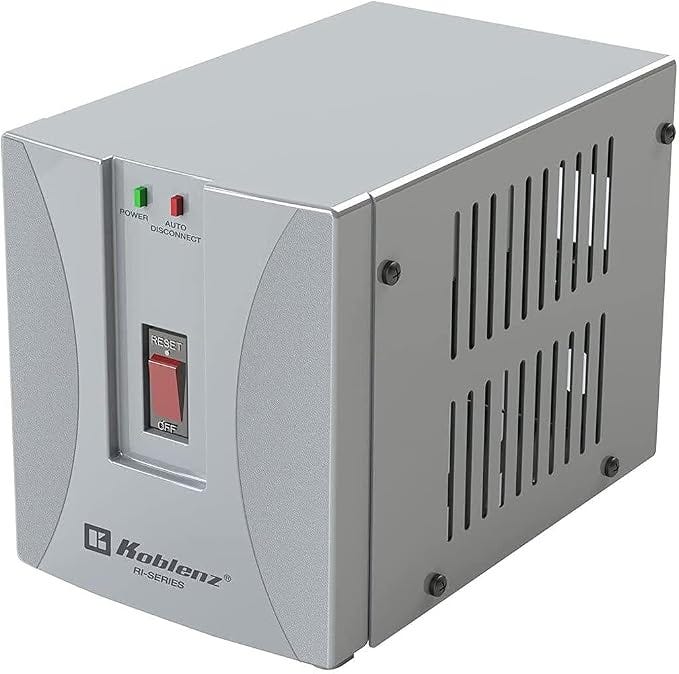
Use a current regulator to protect against and smooth out power spikes. These are specifically designed for large appliances.

Some of this is going to sound counterintuitive and goes against some of the advice above. But we have two years of data and a 54% lower bill to back it up.
We had an in-depth consultation with an A/C professional (Nielsen of NorthwindA/C) specifically about how to use and maintain our units; not just regular cleaning but actually using them correctly.
Every unit stays on the “dry” setting. On your remote, this will look like a tear drop or little drops of water.
We don’t cycle units on and off constantly. Instead, we keep one or two running in the shared living/kitchen area during the day and then turn them off at night. We turn on bedroom units at night and then turn them off in the morning.
Every unit gets cleaned and maintained at least twice a year. Units in the kitchen, or near rugs, need an extra cleaning because of grease and dust buildup. We have our kitchen unit cleaned every 4 months as it sits directly above our cooktop.
Hoses get blown out and outdoor units cleaned and maintained on the same schedule.
Any leak or issue gets addressed immediately. Units can freeze up if the temperature is set too low, so we keep everything between 21°C and 24°C. On the dry setting, the unit adjusts itself accordingly. This is probably the best advice that Nielsen gave us.
We installed window tinting. We got a quote from a window professional, and they were able to do the job the same day they came to measure. It took two full days for our house. We have a lot of windows (our house is 4 bedroom/3.5 baths), including floor-to-ceiling glass in our upstairs landing. Total cost: $18,000 MXN.
We made curtains for every window ourselves, to keep costs down. Simple tension rods (from Parisina) and 3M plastic hooks (from Home Depot) did the trick. We chose light fabric for the bedrooms, light curtain fabric for the rest of the house, and roller shades for the room that gets hit hardest by afternoon sun. In my former life, I was a seamstress. Many locations in the city can make inexpensive curtains for you if you take them the fabric.
We covered our upstairs terrace with a malla sombra (mesh shade) — that space faces east and was making the adjacent bedroom noticeably hotter before we addressed it.
We run ceiling fans in every room, all day, and turn them off at night. We’ve also added tower fans in rooms where the A/C unit is awkwardly placed. This helps distribute cold air more evenly instead of leaving half a room cold and the other half warm. We had a couple of rooms with low ceilings that didn’t have fans. So we purchased inexpensive socket fans - see below. These come in several different colors, pricing, brands, etc. We love this easy fix.
We stopped using overhead lighting almost entirely. It adds a surprising amount of heat to a room. Table and floor lamps do the job with far less thermal load.

Reducing our CFE bill by 54% wasn’t one big fix. It was two years of small, compounding decisions: consulting a professional to understand how our A/C units actually work instead of just running them, blocking heat before it enters the house rather than fighting it once it’s inside, and paying close attention to where we sat relative to the DAC threshold every single billing cycle. None of it required a total renovation or solar panels. If you’re staring down a high CFE bill right now, start with small changes: fan use, curtains, A/C maintenance and build from there.
For a running list of vendors we trust — A/C technicians, window tinting, and more — check the vendor page on our website.
Your Mérida Insiders,
Amy Jones, The Mérida Ambassador
Angel Rodriguez, The Local Insider
Founders, Life in Mérida™
Planning your next trip? Download our Free Visitor’s Guide to unlock insider itineraries, maps, and local secrets. Visit our website and find more articles on our Substack channel

#how-do-i-pay-my-electric-bill-in-merida
Comments
Nothing yet. Say the first thing.
Sign in to join the conversation.