
Brain-computer interfaces are no longer theoretical. They are happening right now, in real people, with real results. The question is no longer whether this technology works. It is what happens next.
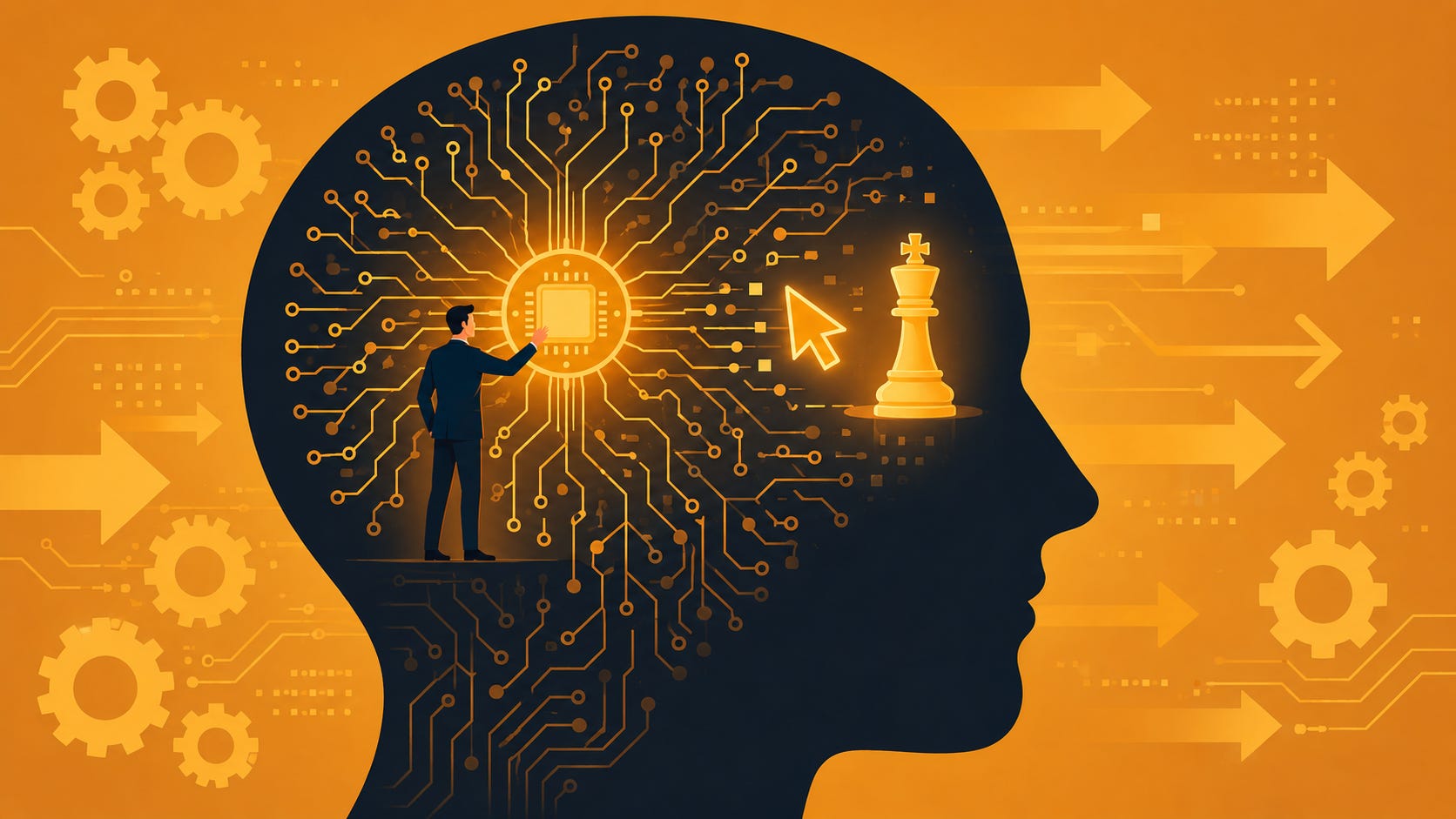
In January 2024, a man named Noland Arbaugh became the first human being to receive a Neuralink implant. Paralysed from the shoulders down following a diving accident, he had a chip the size of a small coin placed into his motor cortex by a surgical robot. Within weeks, he was using the device to move a computer cursor, browse the internet, play chess, and operate a smartphone. Using only his thoughts.
This is not science fiction presented as fact. It is the documented outcome of Neuralink’s PRIME Study, a clinical trial approved by the US Food and Drug Administration and currently in progress. By mid-2025, seven people with quadriplegia have received implants. Interim results report typing speeds of up to 40 words per minute using a virtual keyboard controlled entirely by neural signals, a rate comparable to able-bodied touchscreen typing. In November 2024, Neuralink launched a second trial called CONVOY, aimed at extending brain control to assistive robotic arms. In May 2025, the FDA granted the company breakthrough device designation for a speech restoration module, designed to help people with ALS, stroke, and cerebral palsy communicate again.
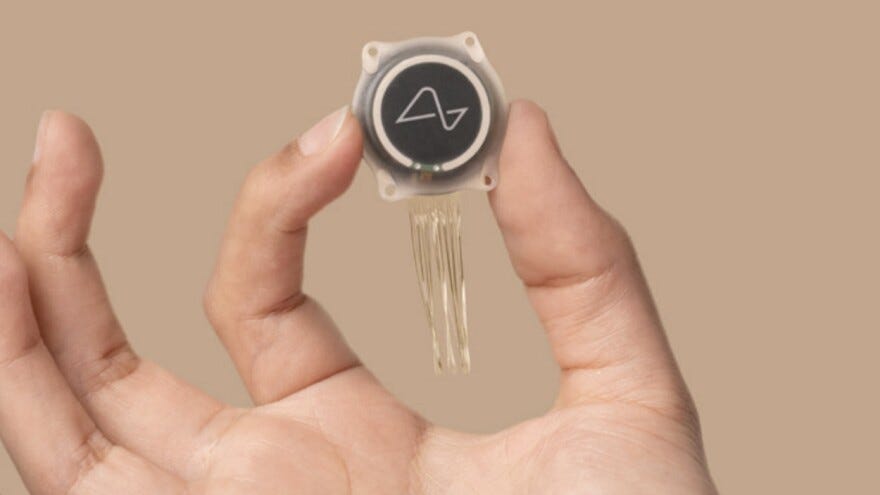
To understand what is actually happening inside the skull, it helps to understand the basic mechanism. The Neuralink device, called the N1, sits flush against the surface of the brain and deploys an array of electrode threads roughly four to six micrometres in diameter, thinner than a human hair. These threads detect the electrical firing patterns of individual neurons in the motor cortex, the brain region responsible for planning and initiating movement. A decoding algorithm then translates those patterns in real time into digital commands. The brain thinks about moving a cursor. The cursor moves.
Neuralink is technically ambitious but not without precedent. BrainGate, a research consortium involving Brown University and Massachusetts General Hospital, demonstrated cursor control via neural implant as early as 2004 using a device called BrainGate1, and has been refining the technology ever since (Hochberg et al., 2006). What Neuralink has added is miniaturisation, a fully wireless implant, robot-assisted surgery for greater precision, and, critically, the commercial infrastructure and funding to scale. In June 2025, the company closed a funding round of 650 million dollars, bringing total financing to over one billion dollars since its founding in 2016.
The technology is also expanding beyond movement. Neuralink’s Blindsight project, which received FDA breakthrough designation in September 2024, is developing a visual cortex implant designed to restore a form of vision to blind people whose optic nerves are damaged but whose visual cortex remains intact. The underlying principle draws on decades of research into cortical stimulation, including work by William Dobelle, who demonstrated rudimentary artificial vision via phosphene induction in blind patients as far back as the 1970s (Dobelle, 2000). What is new is the resolution and precision now achievable.
The brain does not know the difference between a signal from a limb and a signal from a chip. It learns. It adapts. And that plasticity, the same property that allows recovery from stroke or injury, is the very thing that makes BCIs work at all.
The immediate applications of this technology are, by any measure, extraordinary. For someone who cannot move or speak, a device that restores the ability to communicate, to operate a computer, to control a robotic arm, is not a convenience. It is a fundamental restoration of autonomy and personhood. On those grounds alone, the development of BCIs deserves serious attention and serious support.
But the implications do not stop there, and Neuralink has never suggested they do. Elon Musk has spoken openly about the longer-term vision: a high-bandwidth interface between the human brain and artificial intelligence, designed not just to assist people with neurological conditions but eventually to augment the capabilities of healthy brains. To allow people to access information, communicate, and process data at speeds the unaided brain cannot match.
This is where the questions become genuinely difficult, and where we think it is worth slowing down.
The brain is not a static processor that inputs and outputs information neutrally. It is a living organ that physically reorganises itself in response to experience. The same neuroplasticity that makes BCIs therapeutically effective, the brain’s capacity to adapt to new input sources, also means that sustained use of a brain-computer interface would likely alter the brain itself in ways we cannot yet fully predict. We know from decades of research on sensory substitution and prosthetic limb use that the brain reassigns cortical territory to incorporate new tools (Merzenich et al., 1984). What happens to the brain that spends years co-processing with a chip is an open and genuinely important empirical question.
There are also questions about identity, consent, and power that neuroscience alone cannot answer. If a device mediates your thoughts, your communication, your memory, who owns that data? If the chip is manufactured, updated, and controlled by a private company, what happens to your cognitive autonomy when the company changes its terms of service? When the subscription lapses? When the company fails? These are not hypothetical edge cases. They are structural features of the model being proposed, and they deserve the same rigorous public debate as the clinical results.
The philosopher Thomas Metzinger, who has written extensively on consciousness and neural interfaces, has argued that BCI development requires what he calls a “neuroethics of the self”: a framework for thinking about what it means to alter, augment, or connect a brain in ways that change the fundamental processes by which a person experiences being who they are (Metzinger, 2003). We do not yet have that framework. We are building the technology faster than we are building the thinking needed to govern it.
Comments
Nothing yet. Say the first thing.
Sign in to join the conversation.