
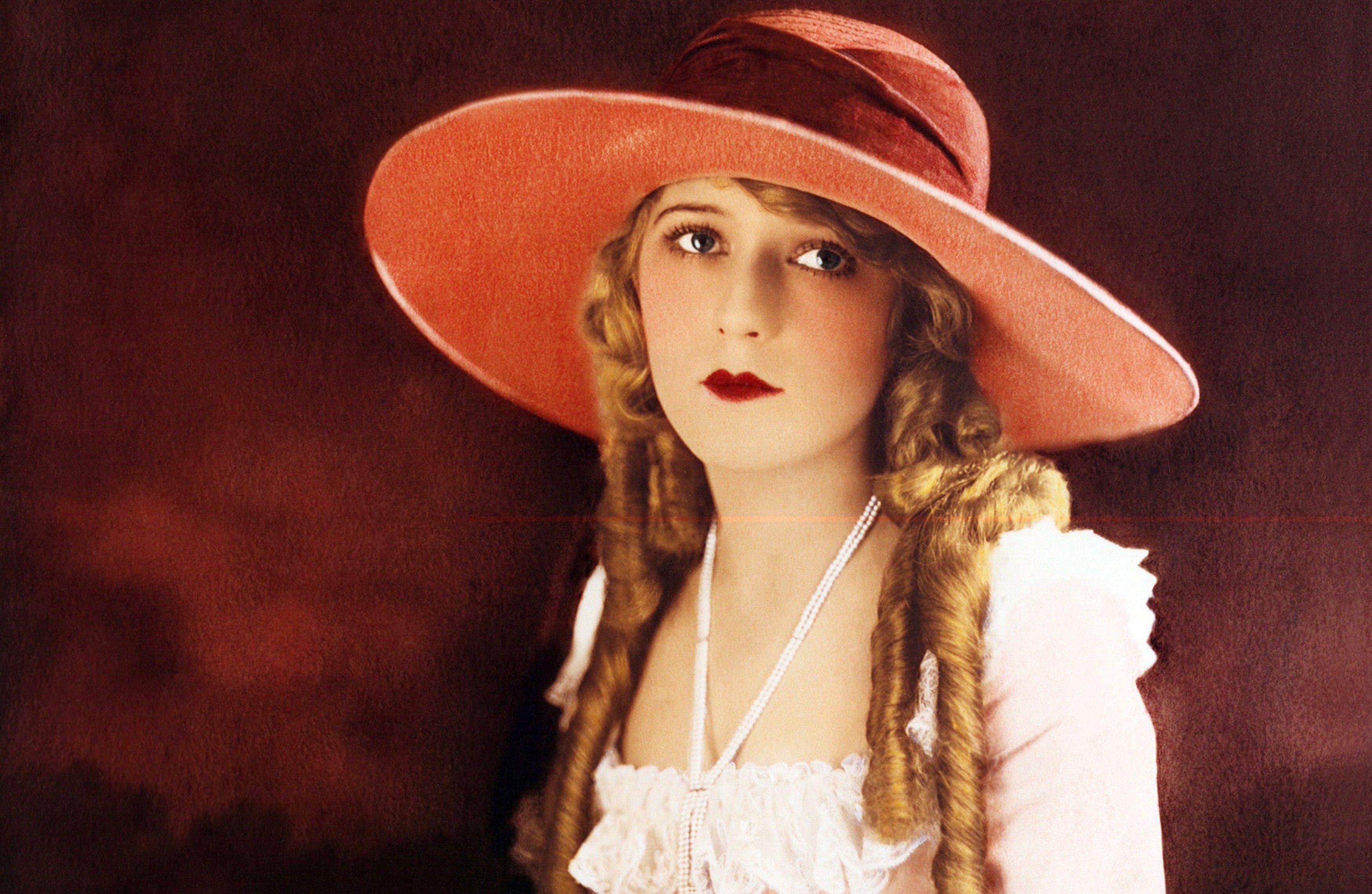
(via imdb.com)
When Jack Nicholson won his first Oscar for Best Actor with his performance in Miloš Forman’s One Flew Over the Cuckoo’s Nest (1975), near the end of his acceptance speech he commented: “I’d like to thank Ms. Pickford, who incidentally, I believe, was the first actor to get a percentage of her pictures.” I don’t think it’s hyperbole to suggest that the film industry as we know it is largely because a cute, petite, blonde Canadian woman with ringlet curls. First global, female, big screen superstar. First ‘ingenue’ of the silver screen. First woman to be coined ‘America’s Sweetheart.’ The original ‘Queen of the Movies’ and, as Jack noted, the first screen performer to have complete control over her career, making her the first ever millionaire celebrity. Smart, talented, pretty, savvy and unforgettable, Gladys Louise Smith, better known as Mary Pickford, is a tale for the ages. Already performing in local Toronto theatre as ‘Baby Gladys Smith’ with her two younger siblings, Lottie and Jack, the Smith family migrated over to the US in 1901 by the time Gladys was 9 years old; and successfully crossed over to major stage productions on Broadway, off-Broadway and national tours as a pre-teen and teenager. During her theatre roots, producer David Belasco came up with the stage name ‘Mary Pickford’ for young Gladys; and the Smith children became close friends with sisters and fellow future silent screen legends Lillian and Dorothy Gish.
Most associate Lillian as silent film pioneer and titan D.W. Griffith’s iconic screen muse, but it was actually Mary who starred in many DWG shorts before the later partnership flourished. When Broadway gigs started suddenly drying up in 1909, 17-year-old Mary auditioned for a single reel short for Griffith on a whim. Though she wasn’t called back, the director was impressed enough to keep her in mind for other shorts. While transitioning away from traditional stage to the newly formed movie business, Mary played a wide variety of characters and age ranges from little girls and teens to maids, secretaries, love interests and married women. This was way back when a director or actor could average 50-100 silent shorts a year, with a studio contract player earning $5 a day. Mary went from $5 to $10 in less than a week and was quickly one of the most in-demand performers for the Biograph Company. Initially, film actors weren’t credited on early silent pictures, and those who recognized Mary referred to her as ‘the Girl with the Golden Curls.’ When Biograph moved its headquarters from New York City to Los Angeles, CA in 1910, Mary would leave the studio just 10 months later to briefly return to Broadway, only for the thespian to realize she actually preferred screen acting.
Mary famously didn’t transition to ‘talkies’ as smoothly as Lillian did, but she was by far one of the biggest silent stars to get a swift boost from one-reel shorts to full length silent pictures. During her heyday as a leading lady, Mary was typecast as young girls in adaptations of classic plays and novels such as Maurice Tourneur’s The Poor Little Rich Girl (1916), Marshall Neilan’s A Little Princess (1917) and Rebecca of Sunnybrook Farm (1917), Paul Powell’s Pollyanna (1920), and John Robertson’s Tess of the Storm Country (1922); as well as original films like William Beaudine’s Little Annie Rooney (1925) and Beaudine’s Sparrows (1926). The latter two also included writing input from Mary, though under the pseudonym ‘Catherine Hennessey.’ Peer and later colleague, Charlie Chaplin was her only box-office competition throughout her prime. It’s general consensus that Mary’s Oscar for Best Actress—the second ever win for the award—with Sam Taylor’s pre-Code melodrama Coquette (1929) is a consolation prize for the Academy Awards not existing during the silent era, and more of a career achievement than an objective win for her performance. Though Mary was fine acting with sound dialogue, movie viewers associated her as precocious children and girls next door, which she was clearly too old to play by the time the talkies took over in the late 1920s to early 1930s. There was also a minor scandal when the blonde traded her signature ringlets for a bob that was more popular in the late ‘20s. Nevertheless, her iconic work in the early 20th century cemented her as timeless in her medium. Besides her Oscar, Mary received an additional, legitimate Honorary Oscar in 1976 for her lifetime achievements and impact in filmmaking; a star on the Hollywood Walk of Fame; hand and footprints in front of Grauman’s Chinese Theater; various buildings in LA named after her; and her home country Canada honoring her with a new stamp in 2006, to name a few of her public tributes up until and since her death in 1979.
But that’s not all. Crazy as it sounds, all of this just touches the surface of Mary Pickford’s influence on the film industry. Most fans and historians know Mary was very business savvy [you don’t become the highest paid actor at a major studio in under a week and the first movie star millionaire out of nowhere] and was an active producer off camera too. In 1916, she founded her own production company Pickford Film Corp and co-founded The Hollywood Studio Club with Constance Adams DeMille for young women starting in the film business to reside at. Most famously, Mary, Griffith, Chaplin and her second husband Douglas Fairbanks came together to form United Artists, the first official movie studio to be strictly independent distribution and have no official creative or professional input from theater chains. Mary and Douglas were also two of the first 36 members of AMPAS [Academy of Motion Picture Arts & Sciences] when the organization was founded in 1927, making her Best Actress win even less surprising; and the Fairbanks couple were known for throwing quite elaborate dinner parties at their famous Pickfair estate in Beverly Hills.
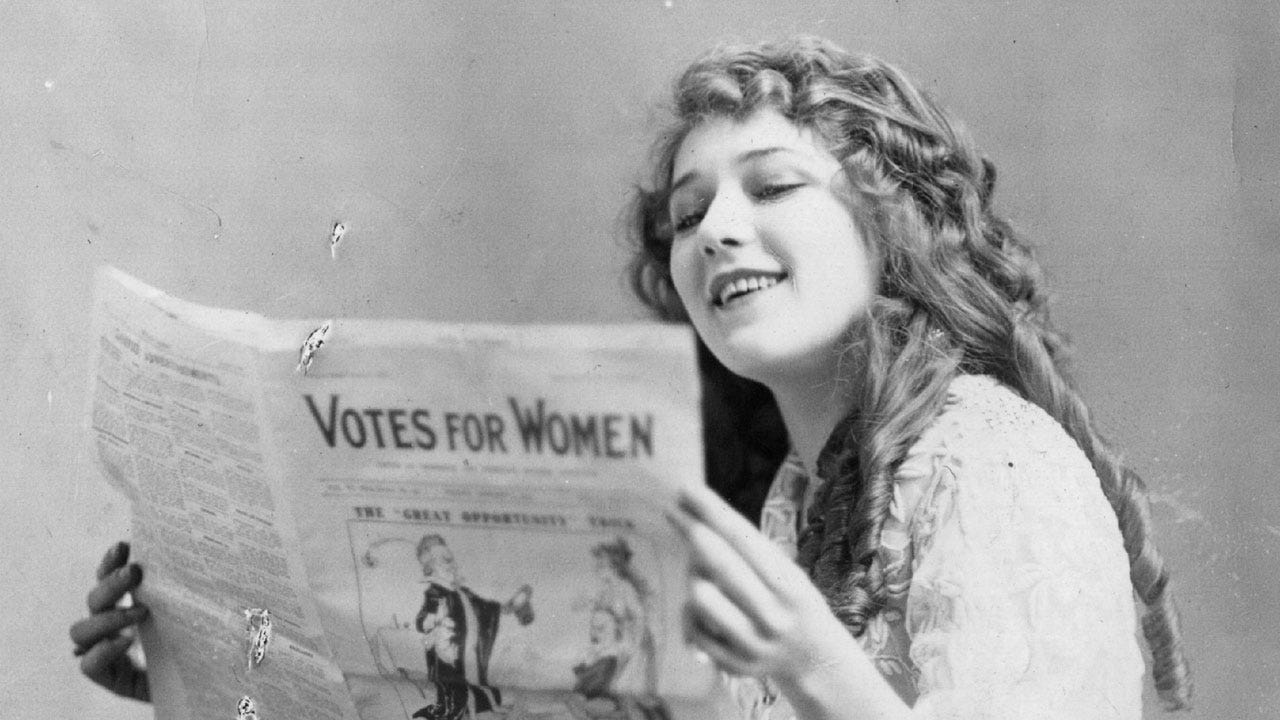
(via facebook.com)
As is typically the case, all this success didn’t stop Mary from experiencing personal demons along the way. During her first marriage to actor Owen Moore in 1911-1920, there was a medical document later found of Mary being pregnant, but ultimately not giving birth, leading to theories of a miscarriage or abortion. The Fairbanks marriage dwindled in the early ‘30s from both stars sinking into depressions once their relevancies started fading; as well as Douglas’ infidelity and Mary succumbing to her paternal family’s history of alcoholism. Her third marriage, to actor-musician Buddy Rogers, was a success from 1937 until her death, but she struggled to connect with their two adopted children, Ronnie and Roxanne, who later acknowledged their mother as a great artist despite her shortcomings at home. Interestingly, Mary and her one-time stepson Douglas Fairbanks Jr. always had a strong relationship; and the famous offspring later claimed both former spouses secretly regretted not reconciling. Ms. Pickford also published some personal essays and memoirs after she retired from acting, including Why Not Try God? in 1934, about her faith and spirituality practicing Methodism and Catholicism; a 1935 novel called The Demi-Widow; and her autobiography Sunshine and Shadow in 1955.
Nicholas Eliopuolos’ 2008 documentary on Mary is called The Muse of the Movies, and I think that’s a fairly accurate title. Not only as the cinematic muse for Griffith, Neilan, Beaudine and Taylor, but also paving the way for future stars like Lillian, Dorothy, Marion Davies and the second most iconic ‘little girl with golden curls,’ Shirley Temple. No career or legacy is perfect, but Mary got pretty close.
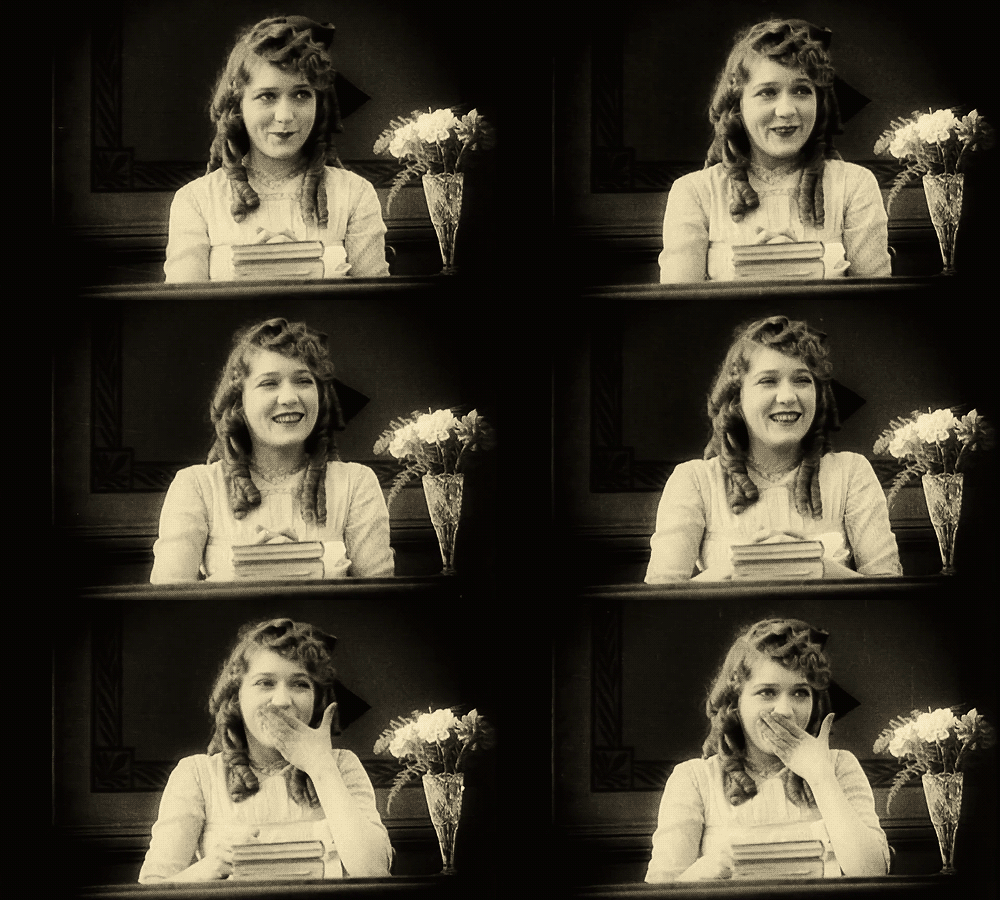
Editor note: This is a reminder that e-mailed responses to my articles are still being sent to my inbox’s spam folder. If you would like to share something with me, you can currently message me directly on Substack or upgrade to a paid account and leave a comment under the article you’re reading. ✏️
Editor note 2: If you enjoy reading my newsletter, please consider upgrading to a monthly or yearly paid subscription. If you don’t feel comfortable committing to an annual payment, you can also send a donation to my PayPal account instead. Since this is currently my main source of income creatively, it would be greatly appreciated and very helpful. Thank you again for your time and support of The Meggie Sue. 😊
No posts
Comments
Nothing yet. Say the first thing.
Sign in to join the conversation.