
For over a year, the conversation surrounding generative AI in the world of Hollywood and entertainment has, understandably, been dominated by fear — fear of IP theft, fear of job displacement, and fear of “dumbed down” art. I certainly discuss these themes regularly in these pages. But this week, let’s try a different narrative, because I certainly need to challenge myself too.
For decades, Hollywood has mostly followed a rigid compensation system of guild-defined and driven fixed payments, upfront fees, and — for a rare few Creatives, mostly superstar actors and directors — elusive “backend” percentage “points” that rarely materialize.
For decades, Silicon Valley backed tech startup ventures have attracted top-tier talent by offering them a real piece of the upside, so long as those employees sacrifice some degree of economic certainty upfront. Lower paychecks. But higher “back end” comp if their venture hits it out of the park — i.e., if your company sells, you, as the employee, get an actual piece of the “win.” And that “win” can be big.
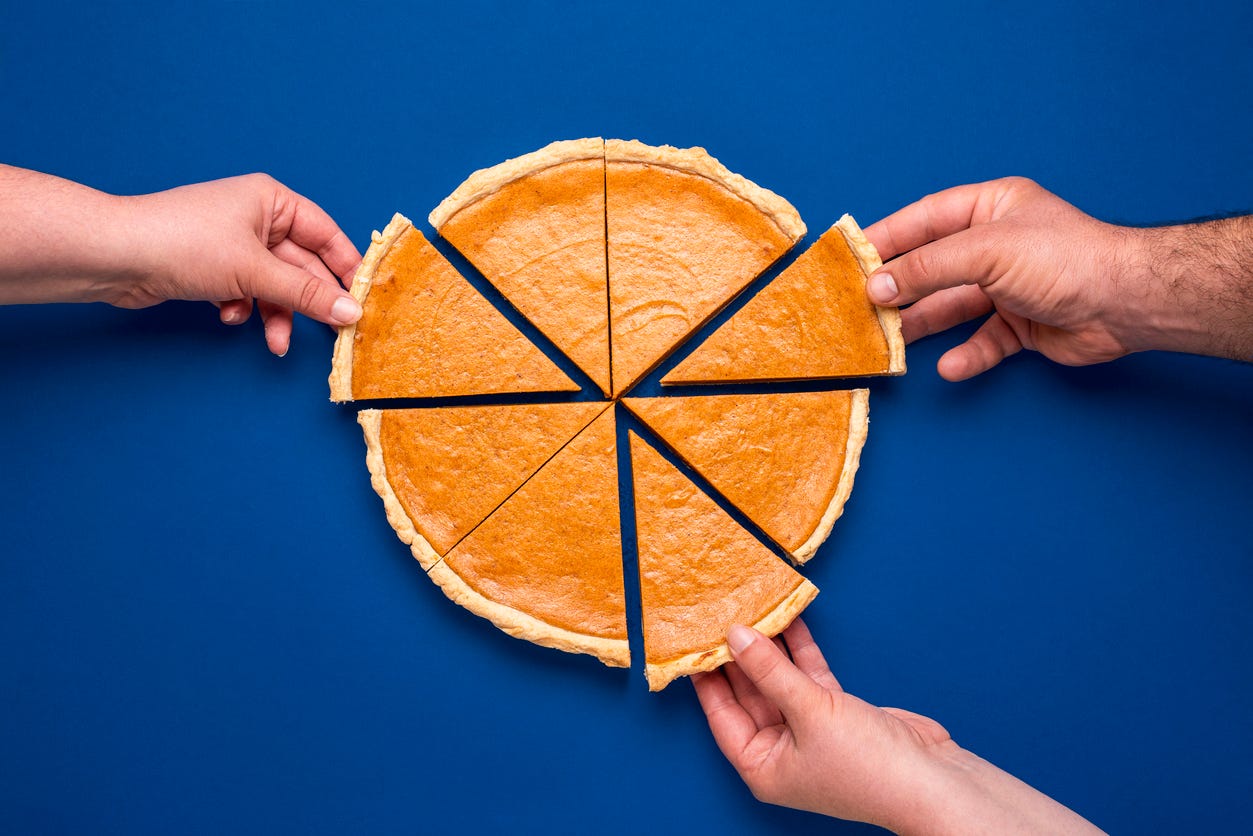
Applying this Silicon Valley comp model to Hollywood, Hollywood Creatives aren’t just work-for-hire employees anymore. They’re actual stakeholders — invested in the overall success of the creative enterprise. In a sense, they're now on the film’s “cap table” (just like a tech startup employees’s equity stake shows up on the startup’s cap table).
Let’s say I’m a “gaffer” (lighting technician) on the film. I joined the crew because I believed in Nolan’s vision. So I accepted less money upfront (essentially “investing” in Nolan’s vision), in exchange for 00.1% of the film’s net profits (1/10th of 1%). This is something that engineers do all the time in Silicon Valley startups. Now imagine The Odyssey hits big (which it is) and ultimately makes $500,000,000 in net profits. My seemingly tiny piece of the overall pie (.1%) gives me $500,000 on top of my upfront pay day.
A credible argument can be made that this type of “success based” compensation system incentivizes everyone on a film, TV, or video project to work even harder — and innovate even more — to create something that breaks out and connects with the audience.
Arguably, the lower upfront production costs that flow from lower “above” and “below-the-line” creative talent also enable the funding of even more ambitious creative visions (as in the Nolan The Odyssey example above) and even more creative projects (and potentially even the hiring of more crew members).
Even if this Silicon Valley startup compensation path is increasingly adopted in the world of AI-transformed Hollywood, however, human creative vision must remain at the top of the Hollywood food chain. Generative AI is potentially a creative accelerator and amplifier in film and television projects (like CGI was earlier). But AI will never replace the genius and vision of true Artists and Creators like Christopher Nolan.
As I wrote several newsletters ago, true “Art” requires the human soul, intent, and experience — not to mention a profound respect for creative IP. And, as I wrote just a couple weeks ago, audiences value real humanity over the artificial when it comes to the creative Arts.
That’s our collective Odyssey!
What do you think? Send me your thoughts to peter@creativemedia.biz.
My firm, Creative Media, is at the forefront of AI’s transformation of the worlds of media and entertainment. We represent innovators who leverage the power of AI. We know the issues. In fact, we’re ahead of them. We define real world, practical solutions — and do it far more responsively and cost-effectively than others. We specialize in entrepreneurial legal services and high impact business strategy and consulting. We can be your fractional business team or General Counsel.
Reach out to me at peter@creativemedia.biz to learn more.
Comments
Nothing yet. Say the first thing.
Sign in to join the conversation.