
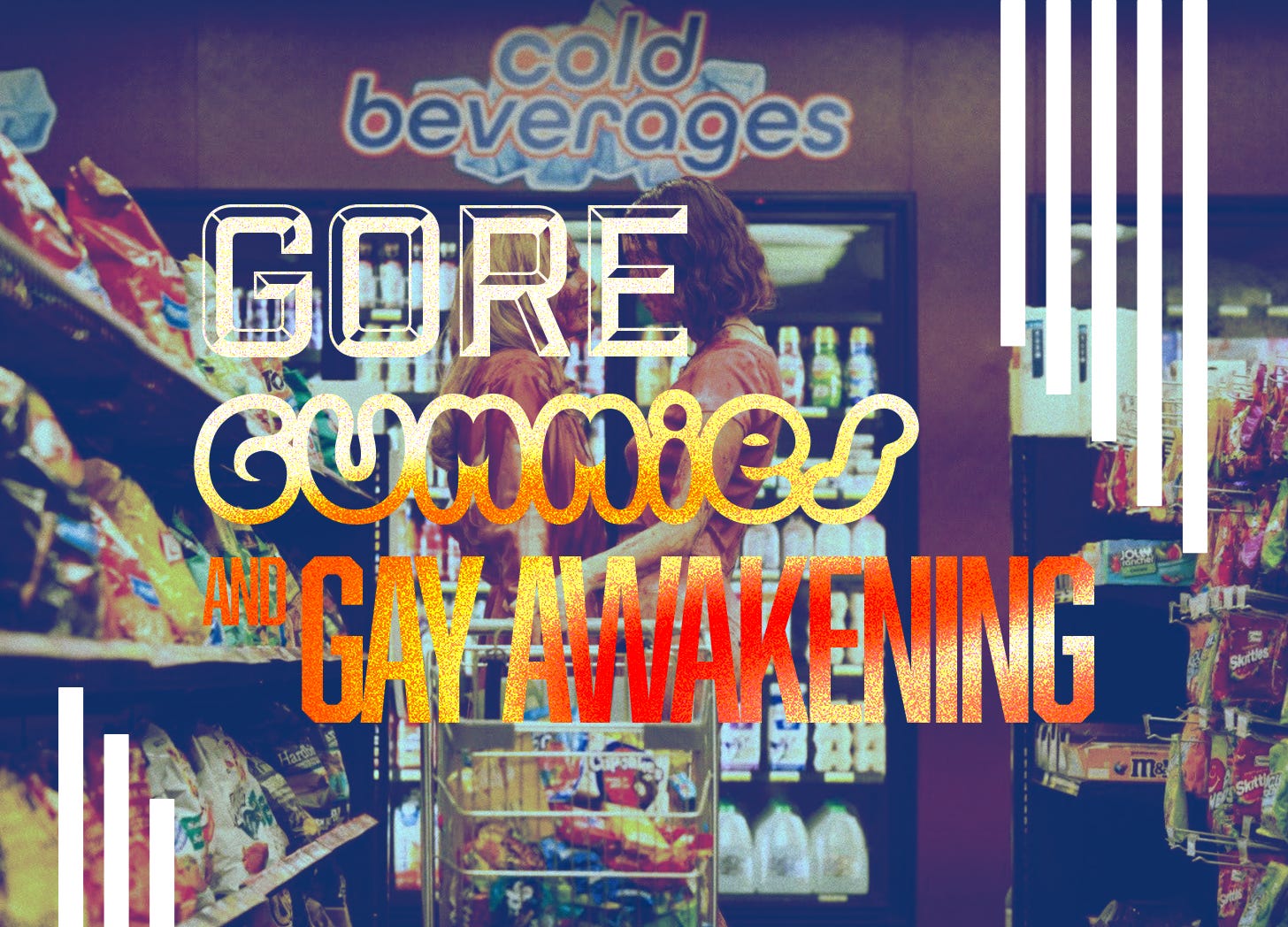
Jane Schoenbrun’s newest offering, Teenage Sex at Death at Camp Miasma, has the best opening credits of any film you’ll watch this year. Maybe that’s a bold claim given that the year isn’t over yet, but the film’s use of opening credits to convey world-building amidst the names of cast and crew is a clever use of cinematic real estate that seems impossible to top. Teenage Sex and Death at Camp Miasma revolves around a long-running slasher franchise whose rise and fall is documented through a series of film posters, VHS tapes, newspaper reviews, and tie-in merchandise during the opening credits. “Fall” is the key word here, as by the end of the montage, Camp Miasma has met an ignominious end, reduced to a series of laughably bad sequels and rightfully torn apart by critics for its problematic gender politics.
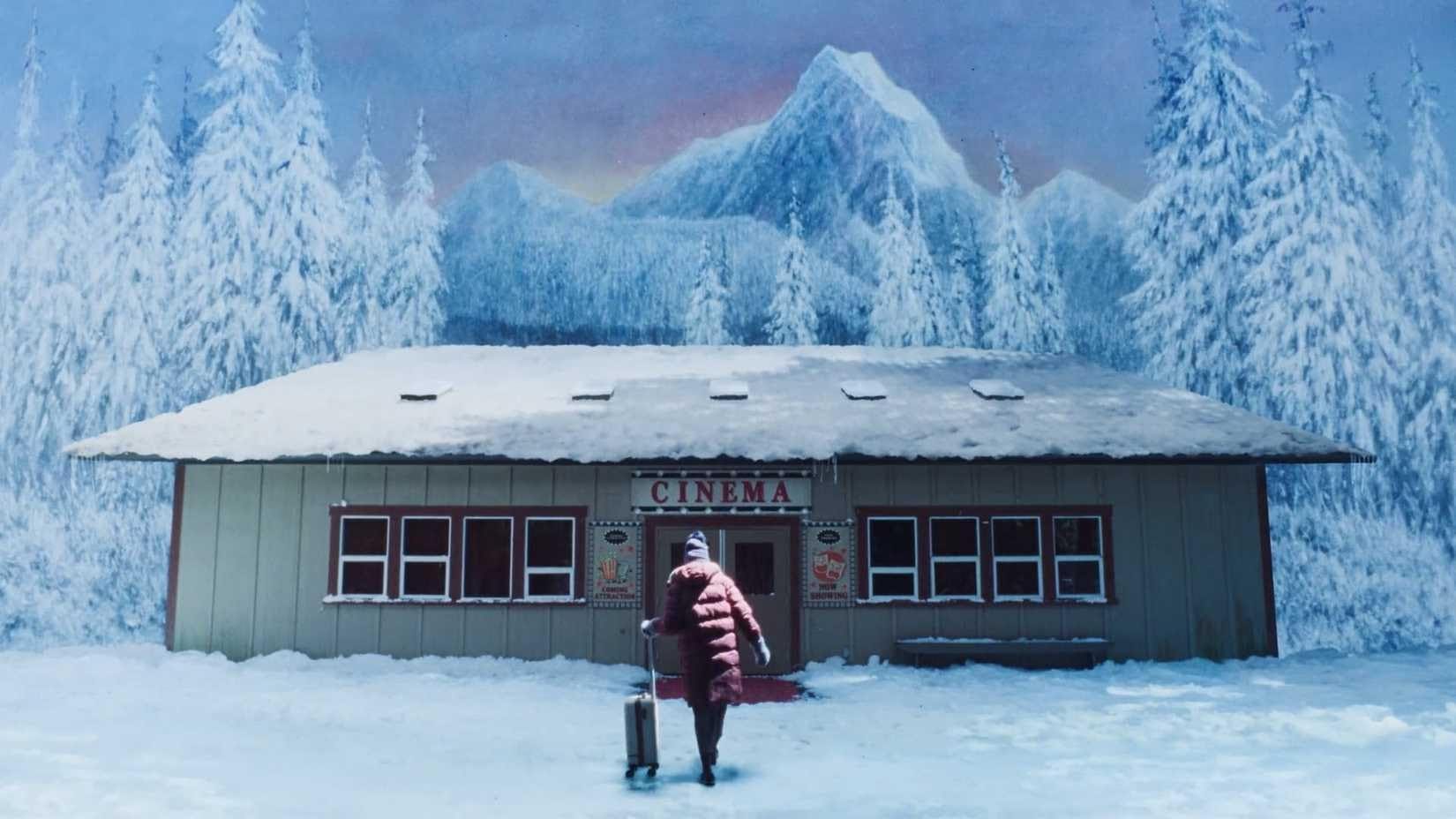
But nothing stays dead in Hollywood, especially not a once-successful franchise with the potential to be resurrected as a new cash cow. When the credits have stopped rolling, it’s the present day and indie darling filmmaker Kris (Hannah Einbinder, late of Hacks), has been picked to helm the newest Camp Miasma reboot. Kris is fully aware that as a queer filmmaker, she’s been selected to give the new Camp Miasma film a woke-enough veneer to make it profitable again, but she’s also a lifelong fan and is giddy at the opportunity. What’s more, Billy Presley–the reclusive star of the first Camp Miasma film, who declined to return for the sequels–has agreed to a meeting with Kris. Not to mention, they’ll be meeting in her isolated Pacific Northwest home, which also happens to be the very summer camp where Camp Miasma was filmed. No pressure!
Billy (Gillian Anderson, sporting a southern drawl) isn’t exactly what Kris expects: she’s not a reclusive shut-in, but funny, forward, and able to easily disarm Kris with her questions. Kris may be a director, but it’s Billy who deftly takes control of their meeting, cutting past Kris’s ramblings on film and franchises to the person behind the filmmaker. Alone in the snowy, isolated former summer camp, the film becomes a bit of a two-hander between Einbinder and Anderson as Billy and Kris circle each other. As it turns out, Kris is not just intellectually interested in the Camp Miasma films: she credits it with her queer awakening, and the dynamic between her and Billy quickly evolves from a business meeting into a seduction.
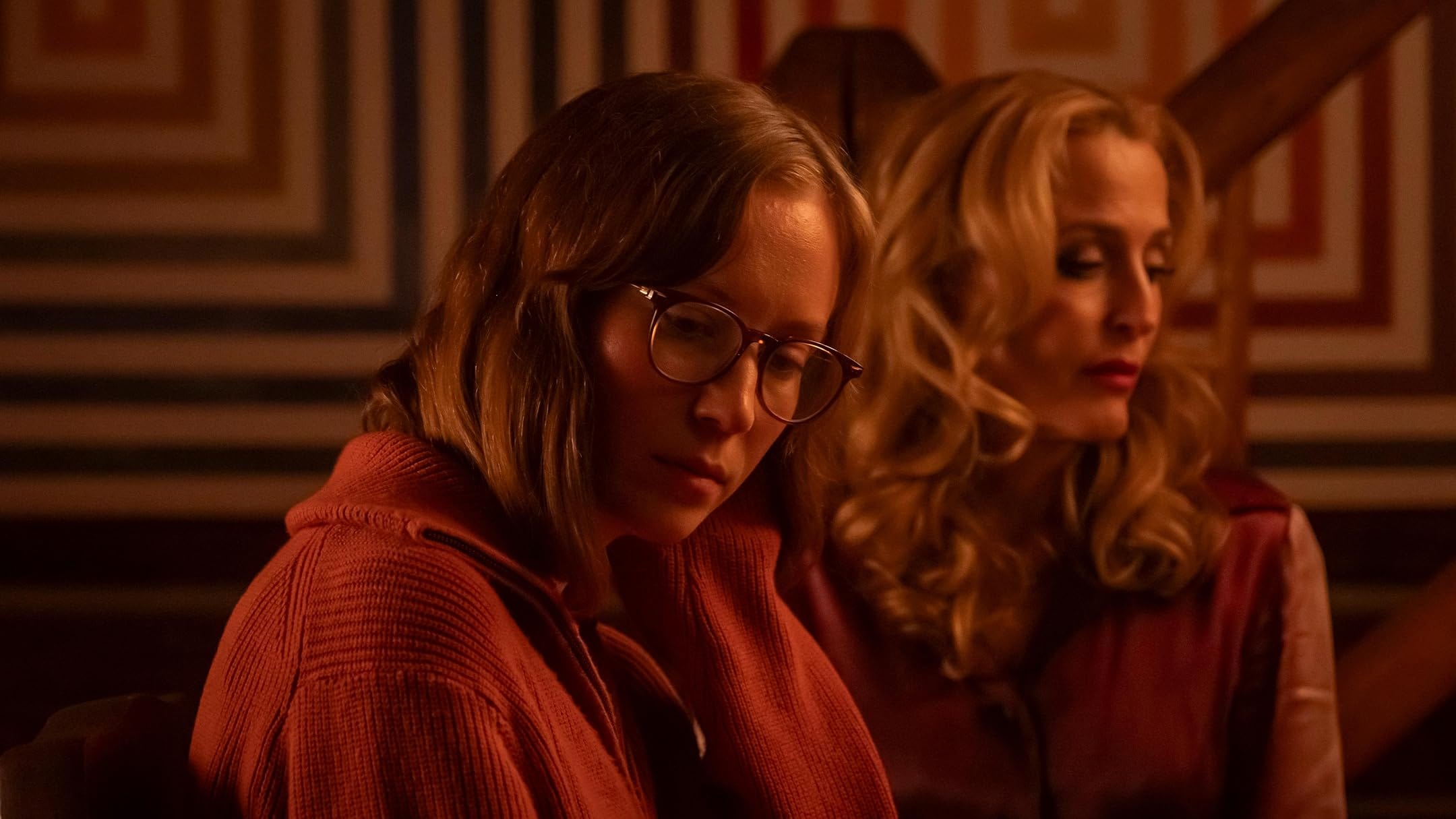
The idea that horror is often, at its roots, a conservative genre is not new. By reflecting the fears of a cultural moment, it can also reflect conservative values—fear of liberated sex, fear of independent women, fear of immigrants, and more. Teenage Sex and Death at Camp Miasma is not just aware of that: it’s the central tension the film is built on. The original Camp Miasma film is far from progressive, with the usual slate of horny teenagers sliced down as if desire requires punishment and a bloodthirsty killer whose crazed behavior is explicitly linked to a genderfluid identity. Kris isn’t blind to Camp Miasma’s flaws, but as a lifelong fan whose first stirrings of queer desire are associated with the film, it still holds real, deep-seated meaning for her.
It was impossible for me to watch Teenage Sex and Death at Camp Miasma without thinking of Schoenbrun’s prior film, I Saw the TV Glow. I don’t mean this to imply Camp Miasma is only valuable as an installment in Schoenbrun’s broader filmography, but that it’s interesting to see an artist grapple with similar themes and preoccupations across different projects. I Saw the TV Glow is an unnerving story about two lonely teenagers in the suburbs who become obsessed with a Buffy-esque television show, building towards an exploration of gender and repression refracted through the lens of a TV screen. It’s not a simple film, but it does elicit more typical horror film emotions: dread, fear, a sense of the uncanny, and the inescapable.
While both films explore the porous relationship between fiction and reality, Teenage Sex and Death at Camp Miasma is less straightforward. A slasher film might seem simple on the surface–the simple adrenaline of a killer with a blade in hot pursuit of a victim–but Schoenbrun understands that even mass-market pop culture can have an iceberg’s worth of depth below the surface. Consequently, Teenage Sex and Death at Camp Miasma is more than just a film about the enduring popularity of slasher films, but also a satire about the capitalist commodification of film, a trans filmmaker’s exploration of horror’s history of demonizing gender-nonconformity, and a journey into the real emotions that can be accessed through fiction.
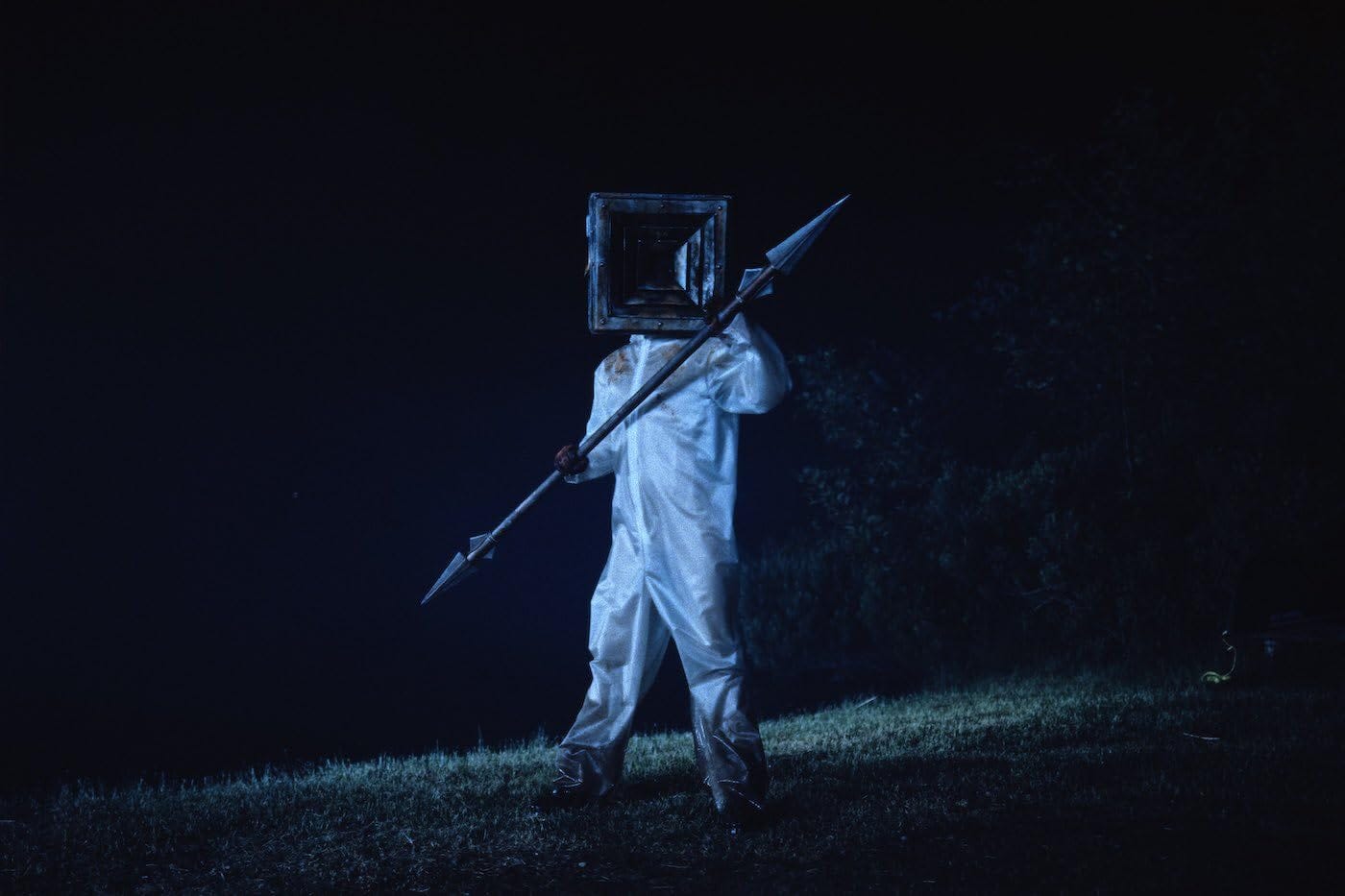
It almost feels too obvious to point out that the central killer in the Camp Miasma is called Little Death, a translation of the French “la petite mort”—a common euphemism for an orgasm. That sexual innuendo is no coincidence, as the central question raised between Kris and Billy is not how to redeem a problematic franchise, but how to reach an embodied connection with desire. Kris is younger and has more language to understand her queer identity and relationships, but is prone to intellectualizing and getting stuck in her head. It’s Billy who invites her to explore unfettered pleasure through their shared language of Camp Miasma. Aren’t fear and desire both a kind of thrill, death and sex both a kind of release?
The merging of film and reality goes both ways in Teenage Sex and Death at Camp Miasma. The movie becomes a bit of a cinematic matryoshka as Kris and Billy rewatch the first Camp Miasma film together. It’s intentionally schlocky and unrealistic in its gore, but the film-within-a-film is more than just a self-aware parody of an 80s slasher. Amanda Fix’s unnerved gaze as a younger version of Billy makes you understand why her performance has haunted Kris for decades, while Jack Haven kills it (pun intended) in a wordless role as Little Death. Yet there’s an intriguing sense that the segments of Camp Miasma we’re watching aren’t always a literal recreation of the film, but more of a reflection of how Kris understands the film after a lifetime of obsession, whether it be an anachronistic needledrop during a massacre or a humanizing peek beneath Little Death’s metal mask.
Teenage Sex and Death at Camp Miasma traffics in a number of tones and ideas during its two-hour runtime, a difficult task to pull off cohesively. I did find the film was strongest when, like Kris, it could abandon the Hollywood language and lean into its weirdness and viscerality. The meta jokes are good for a laugh, but the film is most engaging when it simply sits back and lets the viewer sink into the story without a layer of self-awareness.
Gas station gummy snacks and their increasing varieties across brands are a recurring motif throughout Camp Miasma. Maybe it’s nothing more than a reminder of the film’s roots in horror movies best watched at a sleepover with candy in hand or maybe it’s a visual gag on capitalism’s ability to produce endless almost-identical knockoffs in pursuit of profit. Teenage Sex and Death at Camp Miasma is also a bit of a gummy snack itself–bold, delicious, and unapologetic in its mass-market roots. In both I Saw the TV Glow and Teenage Sex and Death at Camp Miasma, Schoenbrun demonstrates that one of their greatest strengths as a storyteller is understanding how pop culture that can be deemed trashy or downmarket can still contain a wealth of depth and emotional resonance. Schoenbrun’s exploration of 80s slashers film is also less condemnatory and more empathetic–yes, they may be dated, but the fantasy that Kris finds in the world of Camp Miasma brings her real catharsis, a way of reclaiming and recontextualizing a genre often discarded as shallow or problematic. By the time the end credits roll, Teenage Sex and Death at Camp Miasma, like the best candy, will leave you plenty to savor.
Want to visit Camp Miasma too? Check out our showtimes website at themaineplayweek.com/showtimes to find a screening near you!
Comments
Nothing yet. Say the first thing.
Sign in to join the conversation.