
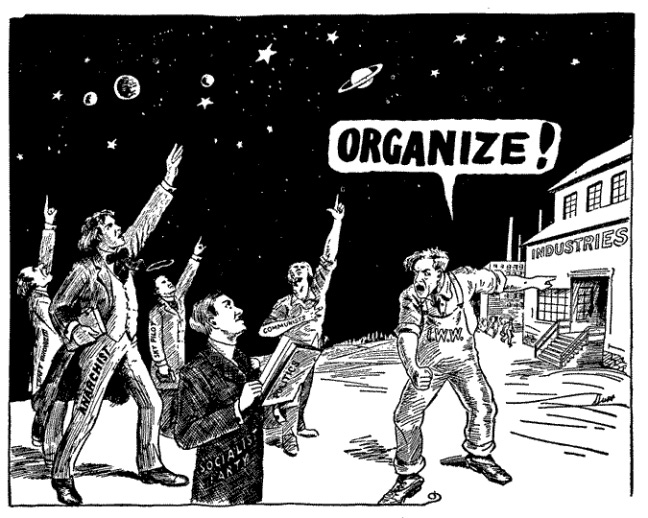
There is no perfect sentence in labor organizing. It is not merely marketing nor is it an advertising campaign. Focus groups, consumer testing and the strategic tricks of propaganda will only take us so far. Likewise, just as there is no perfect sentence to crack the code of solidarity, there is no perfect platform to ease the pain of community building.
What is lost in so many online labor conversation is how confrontational union organizing actually is. Unlike posting on social media, you don’t get to just throw it out there and wait for the algorithm to do its thing. It is about building relationships and trust, and in the overtly saccharine meme world of social media, organizing arguably requires a more personal and proactive approach than ever before. If my time as a shop steward has taught me anything, it is that malice in the workplace will only be displaced by solidarity on the shop floor.
Liking posts and commenting does very little to steel the spines of workers when their boss denies sick leave, writes them up for frivolous infractions, hosts anti-labor meetings with colleagues and shuns them or other union members on the shop floor. It is not that social media doesn’t have a place in the labor movement, of course it does, it is that social media is media, and therefore like the pamphlets and newspapers of old, not a substitute for conversations, community organizing or relationship building.
There is a difference between wanting to be a shop floor organizer and an online influencer. The latter is more akin to being a reporter, the other is community building. One relies on solidarity and the other aims to educate or even entertain. Both have their place, but commentators are not community organizers, and to be effective at either, I would argue that you must pick a primary focus.
Union philosophies are as diverse as the rank and file members who pay dues to them. However, it is largely agreed that education and organization is the two-pronged approach that has, and will continue to lead to real results. But that raises the question, where does the line in educating and organizing between real life and digital life actually fall?
I believe workplace organizing can only be effective if it includes the voices, thoughts and perspectives of your fellow workers. Those perspectives and that engagement is only available in real life. For one, all of your co-workers are at work, they aren’t online, let alone on the same platforms. And for two, they are likely overwhelmingly more comfortable talking with you casually than they are having those conversations documented by the likes of Sam Altman, Elon Musk and Mark Zuckerberg. It is nearly impossible to account for those voices when you post at them instead of talking with them.
A lot of good educational work can be done online, but as you can probably guess from my subscriber count or my numbers on Instagram, I know far less about how to do that. What I do know is that organizing happens through one on one conversations in person.
Taking the labor movement farther than it has gone before will require us to build on the wins of the past, without settling. We must have the courage to never accept the previous generation’s defeats while never settling for the previous generation’s progress. The world has changed, but I would argue that people really have not. While the tools of education have evolved, the message and the means of organizing remains largely the same.
Utah Phillip said, “The working class is defined not by income level but by your relationship to the means of production.” The labor movement must resist the online marketing traps of evaluating which jobs count as working class and which do not. Who is the most working class and ultimately, which people count and which do not. The reality any organizer will learn quickly on the shop floor is that there are Trump supporters and Trans Rights Activists in the same unions. Real life isn’t easily split into target demographics and marketing psychographics. It is made of people, people who transcend rigid identity regardless of their job or position. They are united as people of a certain relationship to the means of production.
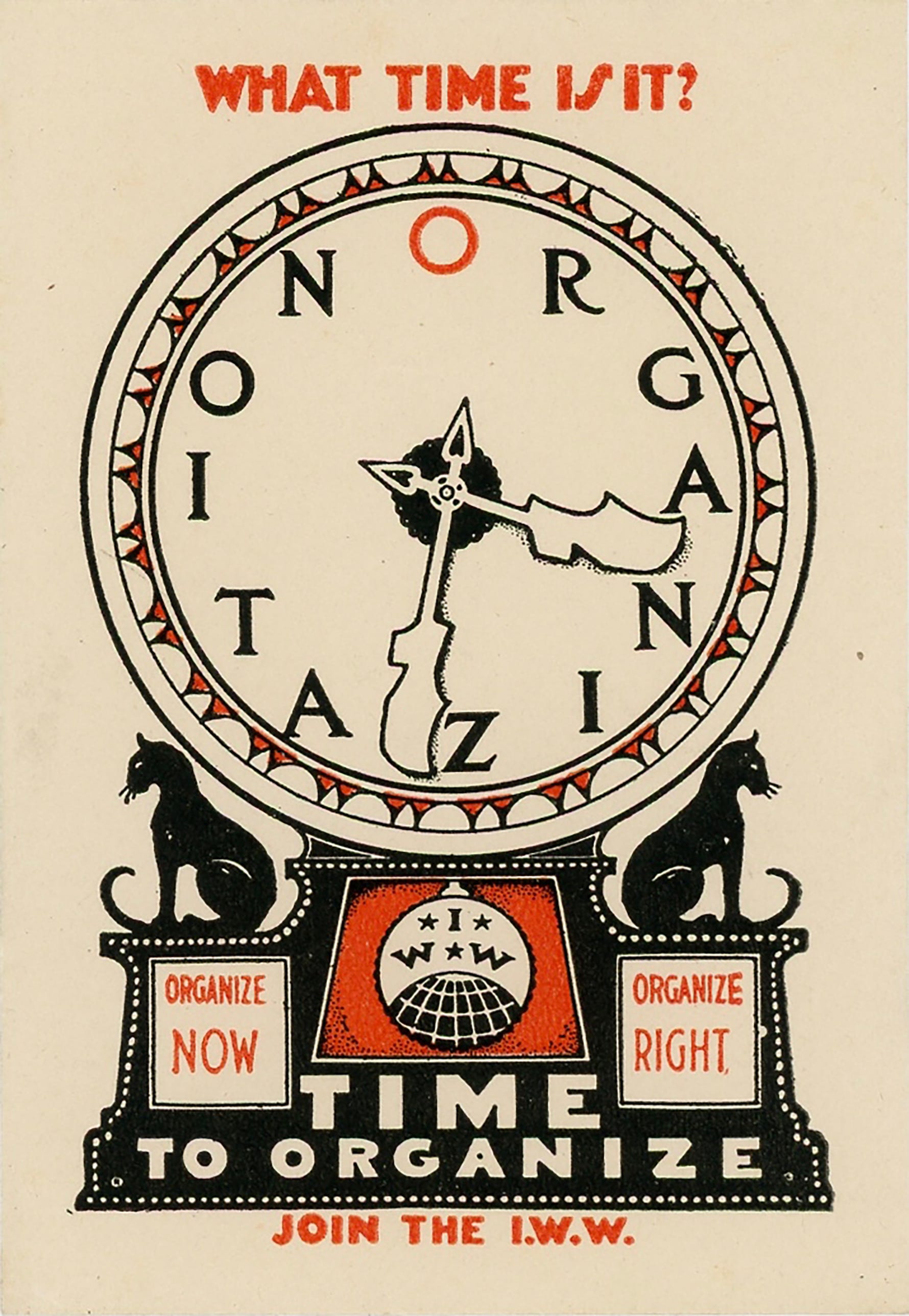
On the shop floor, organizing starts to gain momentum when we realize that we are in it together, whether we agree on who should be president or not. Instead of saying “The system is rigged” or “Democracy is an illusion” I believe the more accurate statement is that the wealthy practice class solidarity regardless of political persuasion, and it is time for the working class to do the same.
That solidarity must find a home outside of the digital mediums and algorithms that are controlled by the capital class. It must find its footing in the grass roots of organizing, in the community building of real conversations, and yes in the relationships between you and those who you disagree with–so long as you can agree that you are both fellow workers in a shared struggle.
These conversations won’t make for a good post, but they will build a stronger union and therefor a more potent working class. So don’t just post, organize!
“Yet what force on earth is weaker than the feeble strength of one, but the union makes us strong.” - Ralph Chaplin
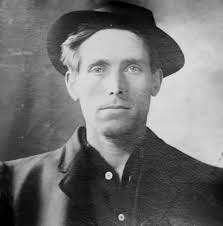
Before being executed on November 19, 1915 in Utah State Penitentiary by firing squad, labor organizer and songwriter Joe Hill wrote a telegram to Big Bill Haywood saying, “Goodbye, Bill, I die like a true blue rebel. Don’t waste any time mourning. Organize!”
Always the humorist, Joe Hill followed that telegram with another saying, “Could you arrange to have my body hauled to the state line to be buried? I don’t want to be found dead in Utah.”
No posts
Comments
Nothing yet. Say the first thing.
Sign in to join the conversation.