
I was called out on X as to what war I might support. It is not an unfair question, and the answer, even to some one might support is almost always nuanced. So below is a kind of answe
r.
2014 is the centennial of what President Wilson ridiculously called the war to end all wars. It has been getting a lot of media coverage including in this magazine.
With less notice, it is also the 75th anniversary of the beginning of World War II, a much bigger and far more destructive conflict. It began with what could be called the greatest betrayal of the 20th Century. Granted, in those hundred years there was no dearth of treachery, so it was a tough league for that competition.
Poland was given an undertaking by France and Britain that if Germany attacked her, they would come to her aid. Her allies would leave her in the lurch.
She was being squeezed by Hitler for the return of territory with a majority German population. Not unreasonable on the face of it. The problem was, after Munich, there was not too much trust left for the Fuhrer.
The Poles might have stood their ground even without the Allies’ promise or taken their chances and reached an accommodation with the Third Reich. After all, almost all historians agree, Dolph’s ultimate intention was the destruction of the Soviet Union.
So, 75 years ago on the day of this issue of the Sturbridge Times Magazine, German troops crossed the Polish border. The British and French declared war, but that was all they did. No aid was provided and the Allies made no real effort to fight the Germans.
The Teutonic onslaught initially swept everything before it. Their generals had understood the theory of mechanized warfare and had an overwhelming superiority in tanks. Had Poland’s allies attacked on the Western Front, the outcome would have certainly been different. Outside of a token advance against the lightly held German front, they just sat there.
They not only sold out the Poles but also betrayed themselves. This was the perfect time to advance against the fraction of the enemy that opposed them. For this, they would pay a severe price when Germany turned on them. With far larger armies, they did not even do as well as the Poles.
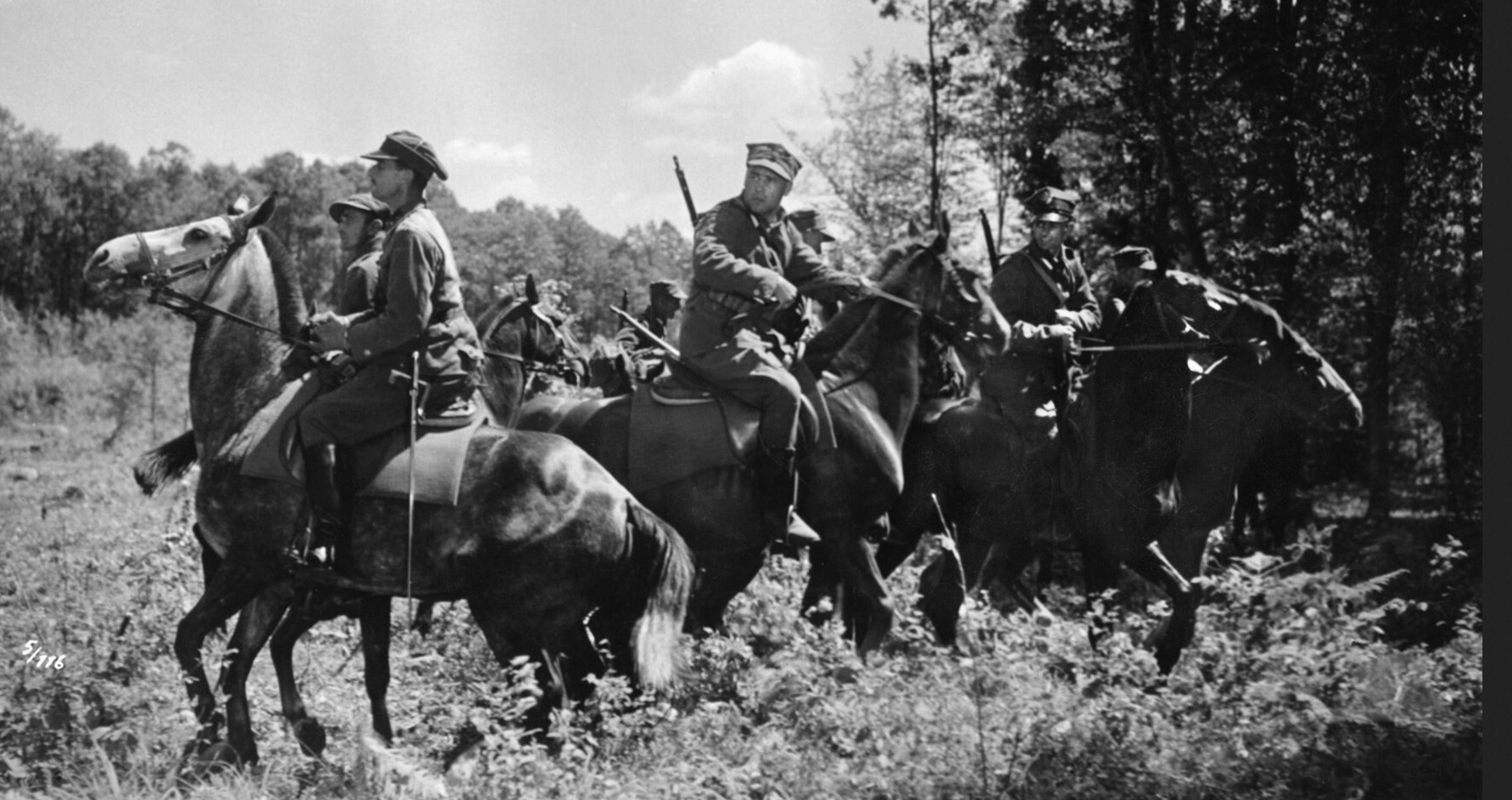
As bad as it was for Poland, it was no walkover. The legend has it that their cavalry attacked tanks. The Polish Army was not stupid and knew that their horse troops could be only used as mounted infantry. Only if caught in the open and without hope would they charge.
The Wehrmacht tankers were the tipping point, but here the Poles scored some success. Their use of the excellent Polish anti-tank gun was so effective that the Germans were forced to over paint the tank insignia because the Poles were using it as an aiming point to great effect.
Another lie told about the Poles is that their air force was destroyed on the ground. The Poles dispersed their planes and took off to attack the invading Luftwaffe. In truth, they gave the Germans a drubbing. This despite being outnumbered three to one. They inflicted far more losses on the enemy then they suffered and were still flying at the end of the campaign.
Germany, despite overwhelming force, did not defeat Poland. The Polish forces were still vigorously resisting when on September 17, 1939, the Soviet Union invaded from the East. Though Poland might have succumbed anyway, this sealed their fate. On October 6, 1939, the last independent Polish unit surrendered after punishing the Germans at the battle of Kock. They only capitulated because they were out of ammunition.
Poland may have been occupied, but she was not done. The stalwart pilots escaped and eventually made it to England and were crucial in the Battle of Britain.
Exiled units fought for the allies on all fronts, as did the navy, which had been able to escape the Baltic Sea.
The war effort owed much to the Poles. So how was the nation that had been referred to as “The First Ally” rewarded? They were again betrayed.
There was an understandable reason for that. Hitler turned on his erstwhile Soviet allies. The Russkies had a lot of divisions to contribute to the war effort, and the Brits were not doing so hot on their own. Stalin was a totalitarian like Hitler with a much larger body count under his belt. No matter, as Churchill would put it, “If Hitler invaded hell I would make at least a favorable reference to the devil in the House of Commons.”
Poland’s stock declined as the USSR’s appreciated. The situation was not helped by the presence of many Englishmen in government who were Soviet agents. The infamous Kim Philby and his circle actively worked against Polish interests.
Inside occupied Poland, the largest resistance organization of any subject country knew the Soviets meant to takeover as they pushed the Germans back. To forestall that, the Poles rose against the occupier so they would have a government on the ground when the Russians arrived.
The Warsaw uprising was as glorious as it was doomed. The Russians, just across the Vistula, did nothing to help. The other allies made some token attempts but did not want to rile Uncle Joe Stalin.
Rather than admit shame, the allies criticized the Poles for being unhelpful. How ungrateful of that nation to worry about being under the heel of someone with a record of terror as bad as National Socialist Germany. After all the British Crown had done for them (Damn little actually).
World War II would end with Poland being under the Soviets for several decades. With no army, they would liberate themselves with the trade union, Solidarity, from the sclerotic Soviet Empire. In 1990 the last Communist head of state resigned.
The Poles kept faith as a nation through thick and thin. How sad it all was when it could have been so different. If Stalin had not attacked them, The Polish army and air force to this day would be resisting in Eastern Poland. Of course, the feckless British and French would still be cowering on the Germany’s western border.
No posts
Comments
Nothing yet. Say the first thing.
Sign in to join the conversation.