
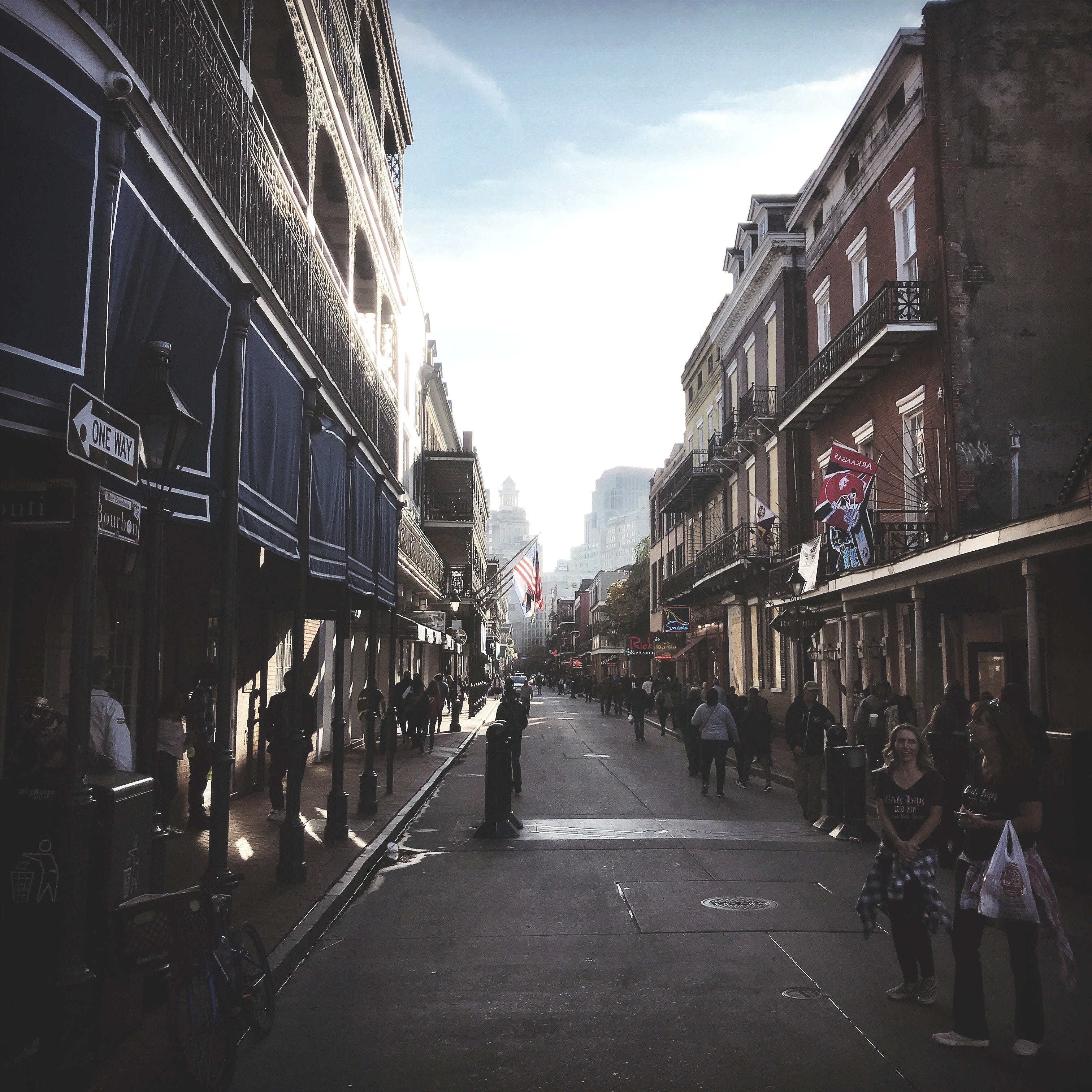
Hello! I’m in New Orleans this week at Tales of the Cocktail, where my chief work obligation is to oversee the official Tales walking tours. Eight are scheduled, and each lasts about ninety minutes. The tours, led by trained guides, are essentially seminars on foot — exploring some of the drinks-related landmarks that have made this city so iconic in the cocktail world.
These tours include one that covers the basic history of New Orleans cocktail culture (Sazeracs, Ramos Gin Fizzes), one on the role absinthe played in the city, and one exploring the history of gay bars. Unlike other seminars, these involve stops at active bars. Drinking is often involved.
I’m leading a tour called “Bourbon Street and How It Got That Way.” Bourbon Street is one of the most famous streets in America, and for all the wrong reasons. If you like to imbibe, yes, it’s a fascinating open-air mall for drinking and carrying on. But if your interests extend to how urban life evolves, it’s even more remarkable. Richard Campanella summed up the miracle of Bourbon Street in his terrific book, Bourbon Street: A History:
“The dizzying, deafening artifact we see today originated organically, without an inventor or a vision or a legislative act. There is no Bourbon Street logo, no headquarters, no board of directors, no visitors’ center, no brochure, not even a website. The nightlife that made the street famous — after two hundred years of utter normalcy — was created spontaneously by a cast of local characters, who, in an uncoordinated attempt to make a living individually, succeeded collectively.”
On the tour I explore that intersection of urbanism and cocktails, which may be one of the most intriguing intersections anywhere.
Not everybody can make it to New Orleans for the Tales tours (and they’ve all sold out), so for your sedentary pleasure, I’ve written up a highly abbreviated virtual walk down Bourbon St., from the Old Absinthe House to Lafitte’s Blacksmith Shop.
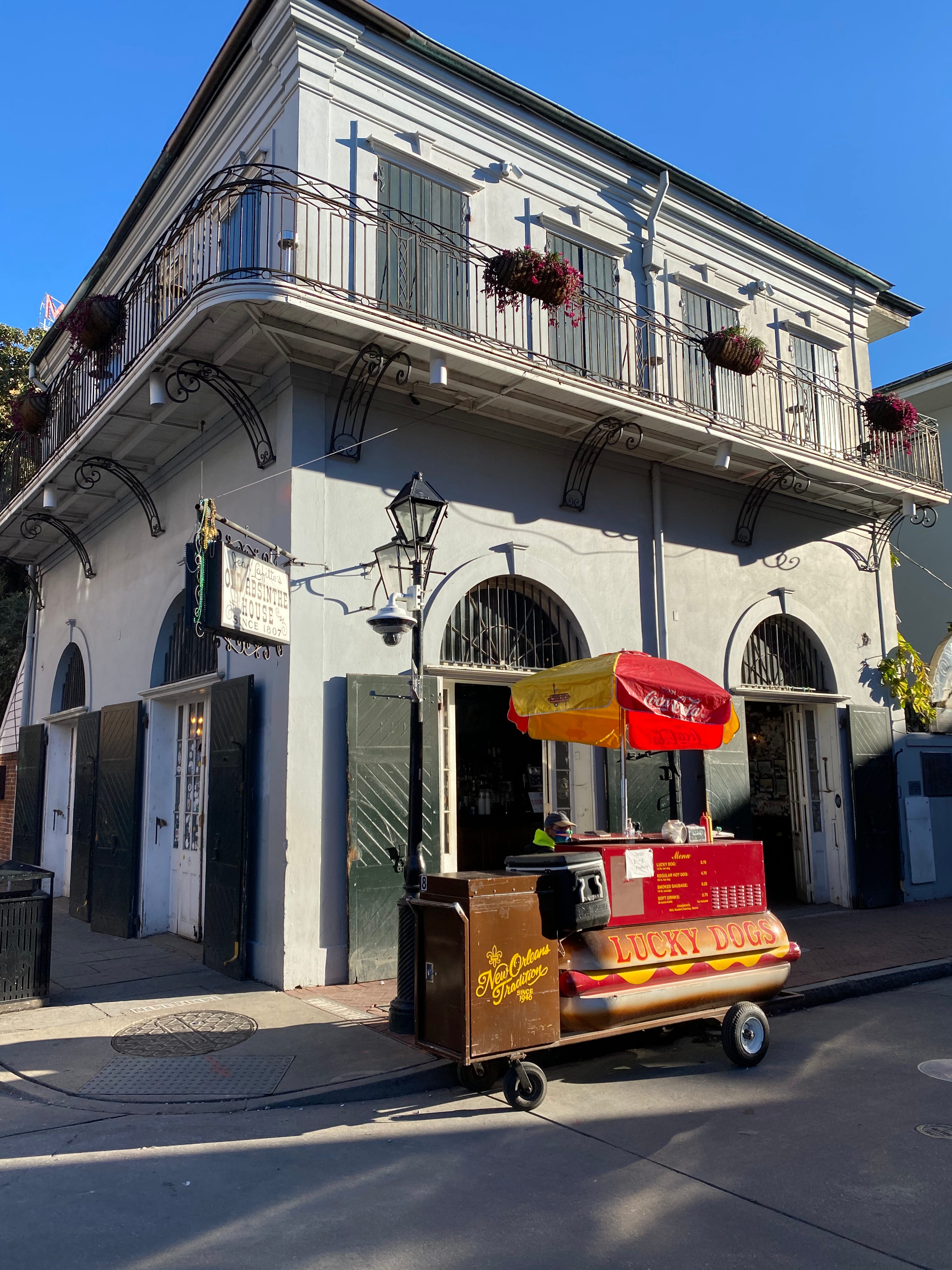
The Old Absinthe House
This landmark on the corner of Bourbon and Bienville was built as a grocery in 1806 for merchants from Barcelona. About thirty years later it was converted to a coffee house, which is local parlance for “bar.” It was named the Absinthe House in 1869, reflecting its specialty drink and connections with continental Europe — absinthe had been popular here since earlier in the nineteenth century, made into absinthe frappés and absinthe drips. The owner invested in marble counters and fancy absinthe fountains, some of which can still be seen in the back room, if it’s open.
The bar enjoyed a second life in the twentieth century as a tourist attraction, when New Orleans was cashing in on an American fascination with all things ancient. In the 1940s the bar hired a man who played the banjo downstairs and would take people upstairs to the “secret mezzanine.” Here a life-sized diorama depicted Andrew Jackson and Governor Claiborne meeting with the Lafitte brothers to plan for fighting the British in the War of 1812.
At which point one of the mannequins would abruptly stand up — it was a live person pretending to be a wax person. Startled gasps and hilarity ensued.
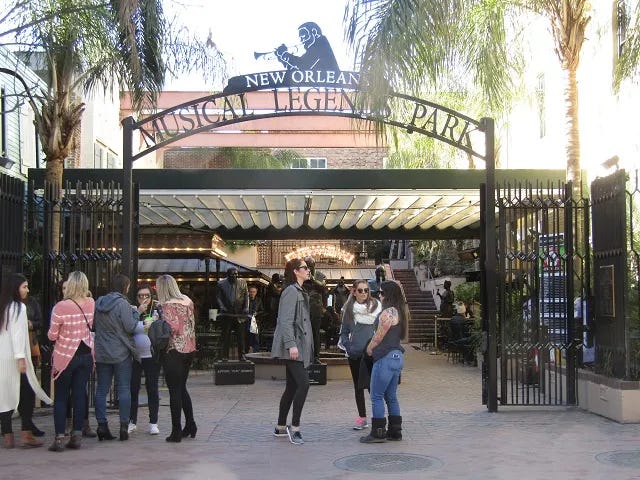
Musical Legends Park
This lacuna in the streetscape is now home to statues of local music greats. It was once an electric substation — it provided power for the streetcars that ran down Bourbon Street and for the elaborate electric street lighting, in which bulbs were strung every few feet. It was decommissioned and turned into Edison Park in 1970, then overhauled in 1977, when the grand reopening featured 700 black-tie guests and a band called “The Las Vegas Connection.” The statues were installed in 1983, when the park was leased to a restaurant with the mandate of keeping the space open to the public. It’s the only public space on the street, although doesn’t feel very public.
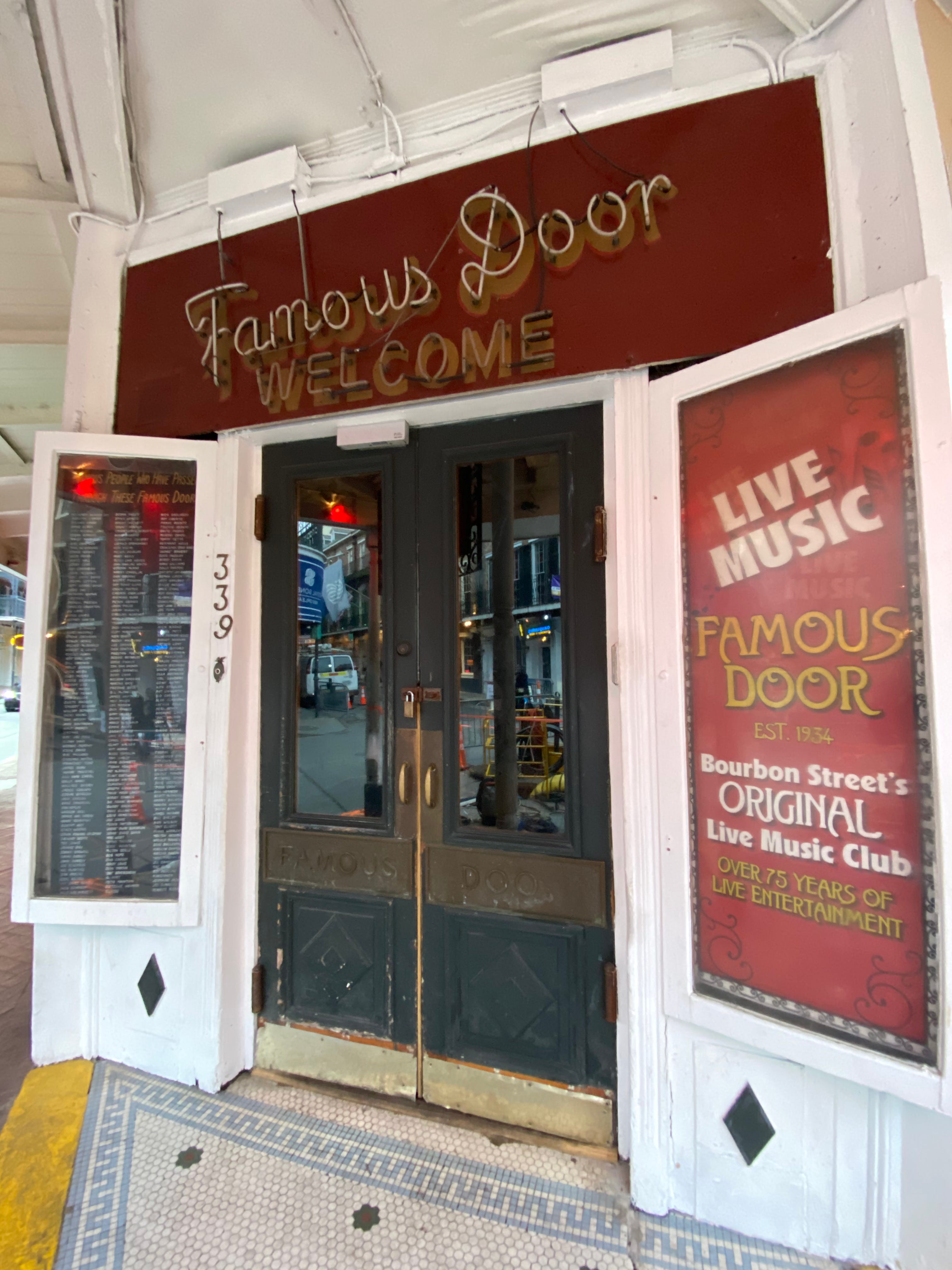
Famous Door
This is the oldest music club on Bourbon St., and it’s an artifact from the golden age of Bourbon Street nightclubs. It opened in 1934, founded by a Creole couple — Hyp and Genevieve Guile. It was one of many clubs noted for its quality jazz along the strip. Other clubs included the Nut Club, the Paddock Lounge, Swing Club, New Silver Slipper, El Morocco Lounge, the Gunga Den, Moulin Rouge, and the Torch Club.
It’s no longer a jazz club and skews more toward classic rock. That’s true for much of Bourbon St., which can feel stuck in the 1980s or ‘90s. It’s helpful to think of Bourbon St. as “Mustang Sally National Park.” In fact, if you walk the length of the street and don’t hear a cover of “Mustang Sally,” “Brown Eyed Girl,” or “Sweet Home Alabama,” I’ll give you a whole nickel.
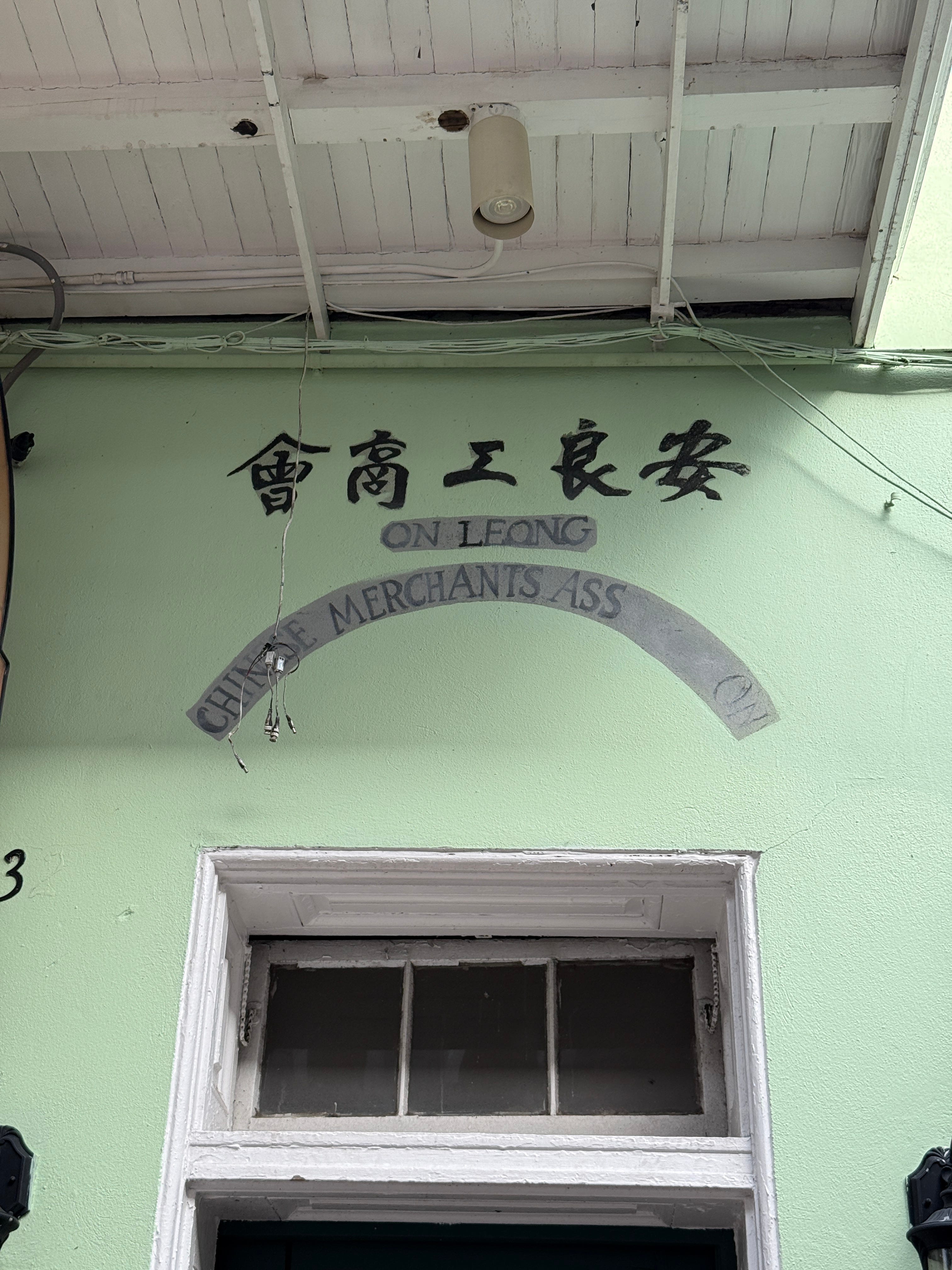
Chinatown
New Orleans attracted Chinese immigrants starting in the 1870s, and most Chinese businesses were first established in what’s today the Central Business District. In the 1930s many of the businesses were pushed out because of redevelopment in the CBD, and some ended up on Bourbon St., where the rents were cheap.
By the 1950s, visiting Chinatown became part of the Bourbon St. experience — tourists would venture here for Chinese trinkets at gift shops. In A Streetcar Named Desire (1951), Tennessee Williams has Blanche DuBois hang a paper lantern that, she says, she bought at a Chinese shop on Bourbon St.
Today, the only remnant of this community is this sign, which has somehow survived repeated repaintings of the building.
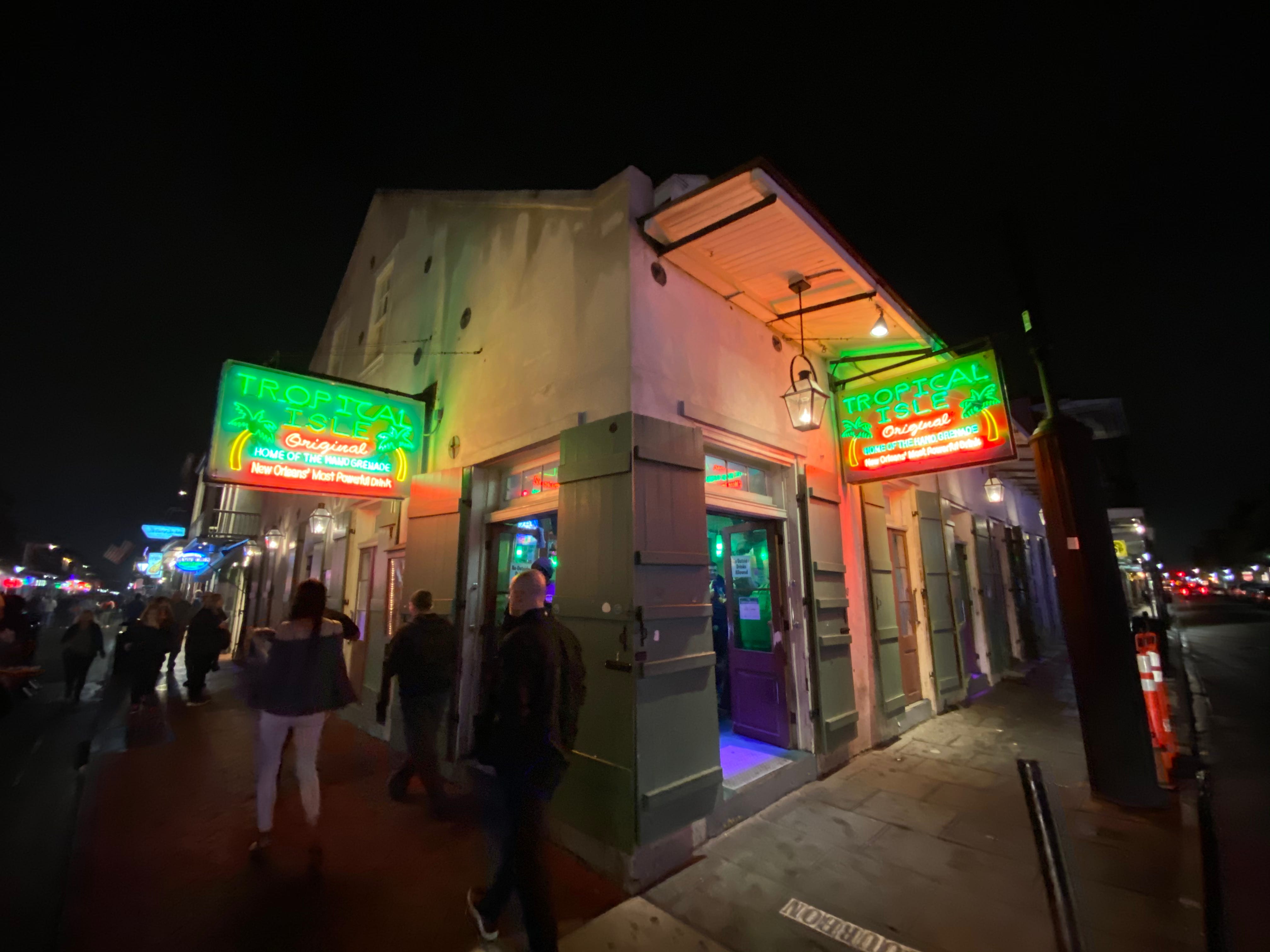
Tropical Isle
This bar is central to what Bourbon St. is today — a fly in 1980s amber. Tropical Isle was founded by Earl Bernhardt and his partner Pam Fortner in the 1980s. Earl grew up in Mississippi, and was a radio reporter when he decided to open a concession stand at the 1984 World’s Fair. He set up in an octagonal beach hut, bought eight commercial blenders, hired eight workers he called “spinners,” and whipped up frozen drinks with liquor, cream, and fresh fruit. Classic 1980s drinks.
When the fair closed, he opened a shop in the French Quarter. Soon after, he and Pam invented the Hand Grenade, after finding tiny toy hand grenades for sale in a Mardi Gras shop and deciding they’d make a fun drink. The Hand Grenade is famous not for how it tastes — it’s sort of a Midori sour — but for its legal protections. It’s one of the few drinks that is trademarked, and thanks to Earl’s lawyers, no one else can sell a Hand Grenade, anywhere. Earl offered a $250 reward for anyone who reported a violation, and he apparently put one Chicago bar out of business when it refused to stop selling them.
Because he controlled where these drinks were sold, he ran ads for the Hand Grenade on TV. These weren’t ads for his bars — just for the drink itself, the way you’d advertise a Coca-Cola. Because if you wanted a Hand Grenade, you had to go to one of his bars.
Novelty drinks are a hallmark of Bourbon St. Another notable quaff is the Shark Attack, in which you get a a side of drama served with a very sweet drink.
.Earl embraced the happy-go-lucky Jimmy Buffett vibe of trop rock, which infected much of the rest of Bourbon St. The Bernhardt era ended in 2019, when Earl died at the age of 80.
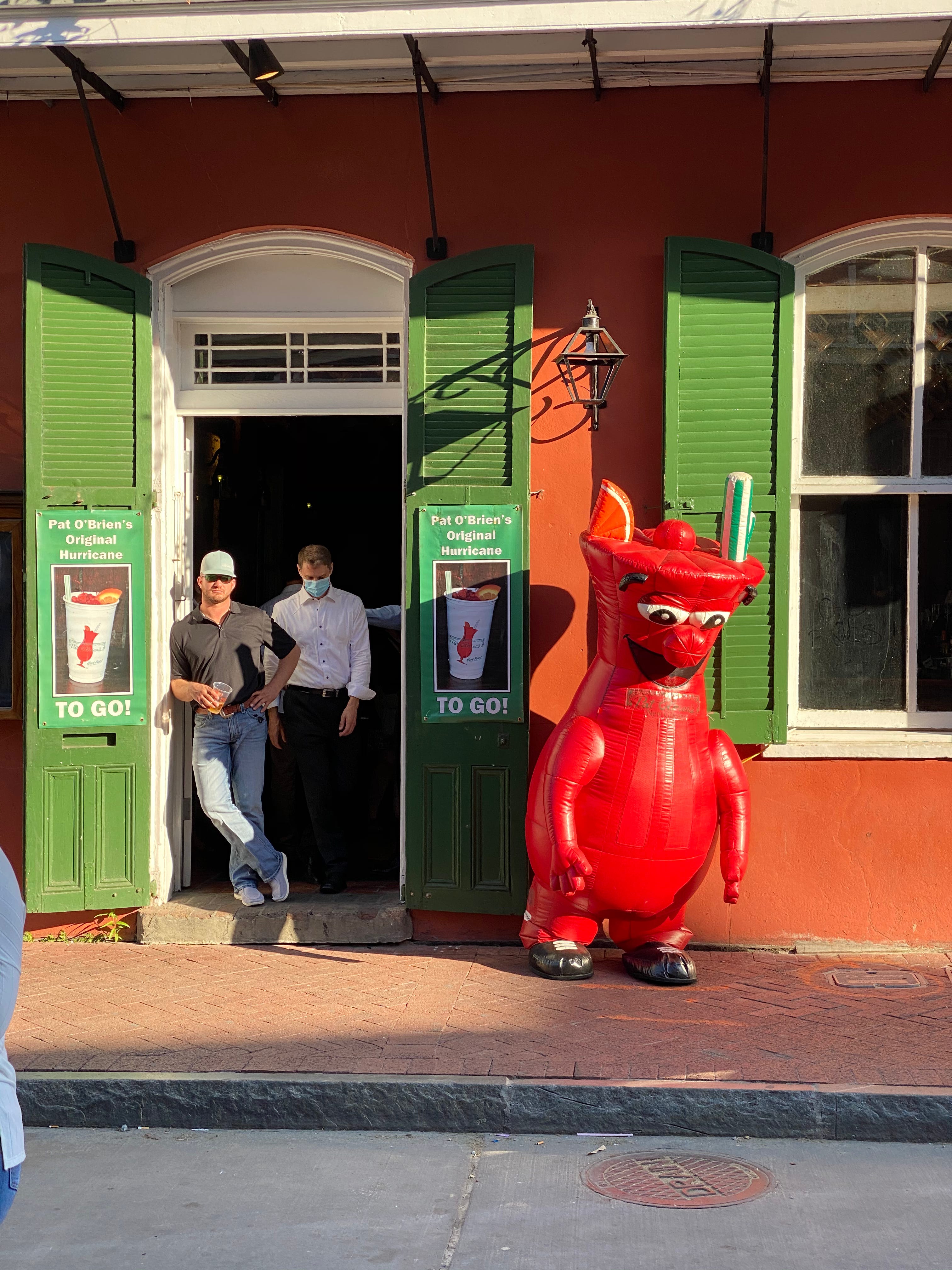
Pat O’Brien’s
Pat O’Brien’s is likely the most famous bar on Bourbon St. It opened about an hour after Prohibition was repealed — O’Brien and his partner Charlie Cantrell had been active during Prohibition, then hit the ground running when drinking became legal.
This was where the Hurricane was invented. The lore holds that Cantrell had a surplus of rum — during the war years, to order a case of increasingly rare Scotch, you had to order a few cases of rum to keep the liquor salesman happy.
So O’Brien and Cantrell needed a way to get rid of a stockroom filled with rum. One way of doing that was with a rum-heavy drink: they put four ounces of rum into a twenty-one-ounce glass shaped like a hurricane lamp, filled it with a lot of ice and citrus and passion fruit juice, and sold it cheaply.
It became popular, and then became an icon. For at least three generations, visitors to New Orleans would typically head here to begin their visit. It’s a tradition in a glass.
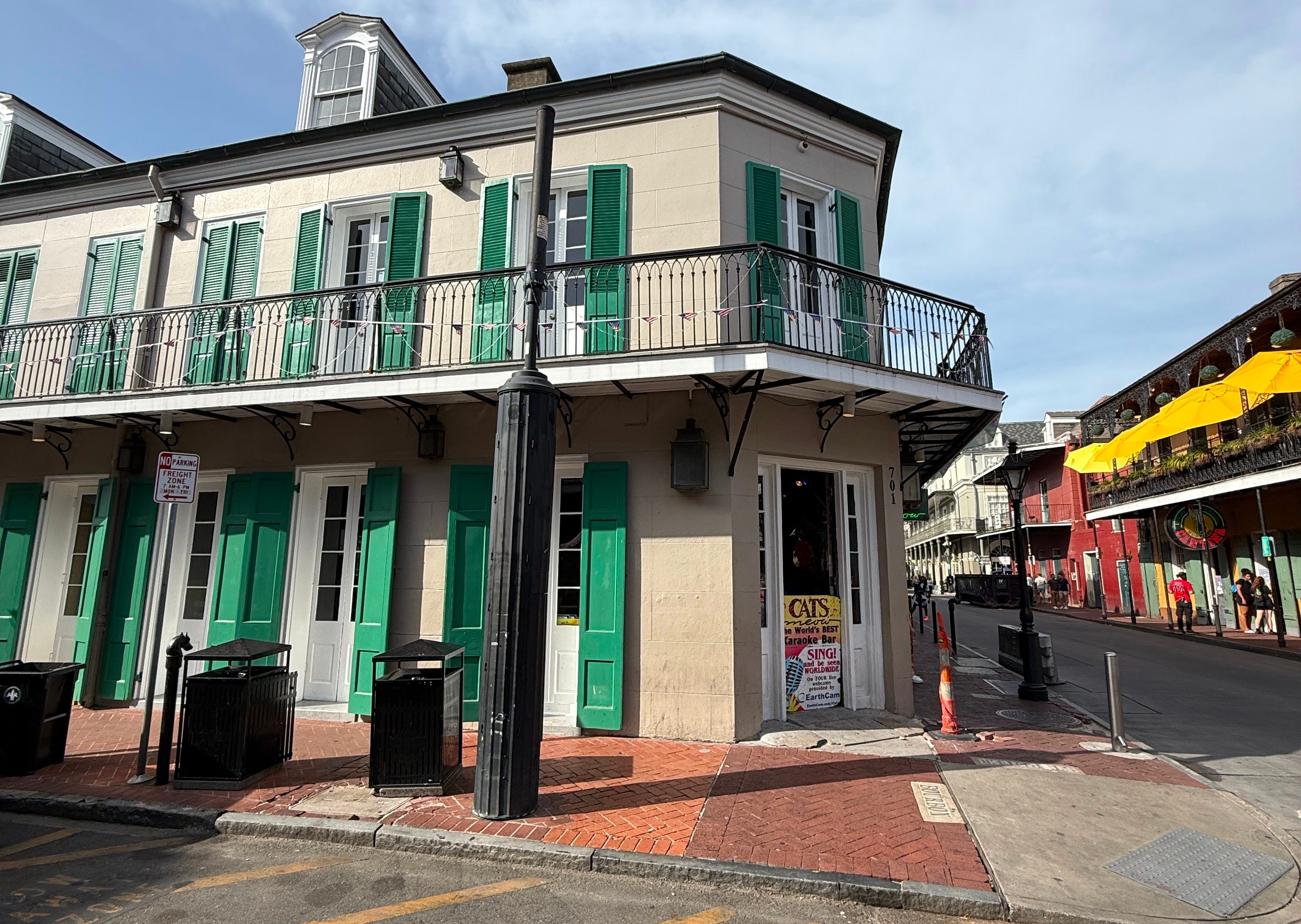
Dixie’s House of Jazz
This was one of the first and most notable gay bars in the city. It was owned and operated by Yvonne Fasnacht, whom everyone called Dixie. She was herself a talented musician — she played the saxophone and toured the Northeast in an all-girls band before returning to New Orleans and setting up shop.
She opened her first bar in 1939 on St. Charles in the Central Business District, then moved to the French Quarter in 1949. Her bar was downstairs, and she lived upstairs with her sister, Irma. She welcomed everyone here to listen to music, but quietly attracted a gay clientele. Miss Dixie was gay, but this wasn’t a bar where you could be openly gay — she maintained an image to appeal to what she called the “cufflink set.” She was Catholic, and devout enough to unplug the jukebox on Good Friday.
This was a time when cops raided gay bars and marched everyone off to the hoosegow. But Miss Dixie had a lot of contacts, and often got word from cop friends when raids were coming, so she’d send everyone home first. The bunco squad would show up, and she’d be sitting alone at the bar, talking to her bartender.
She closed her bar in 1964 (it’s now the Cat’s Meow) and moved to an apartment a few blocks down Bourbon St. She lived there until 2011, when she died at the age of 101.
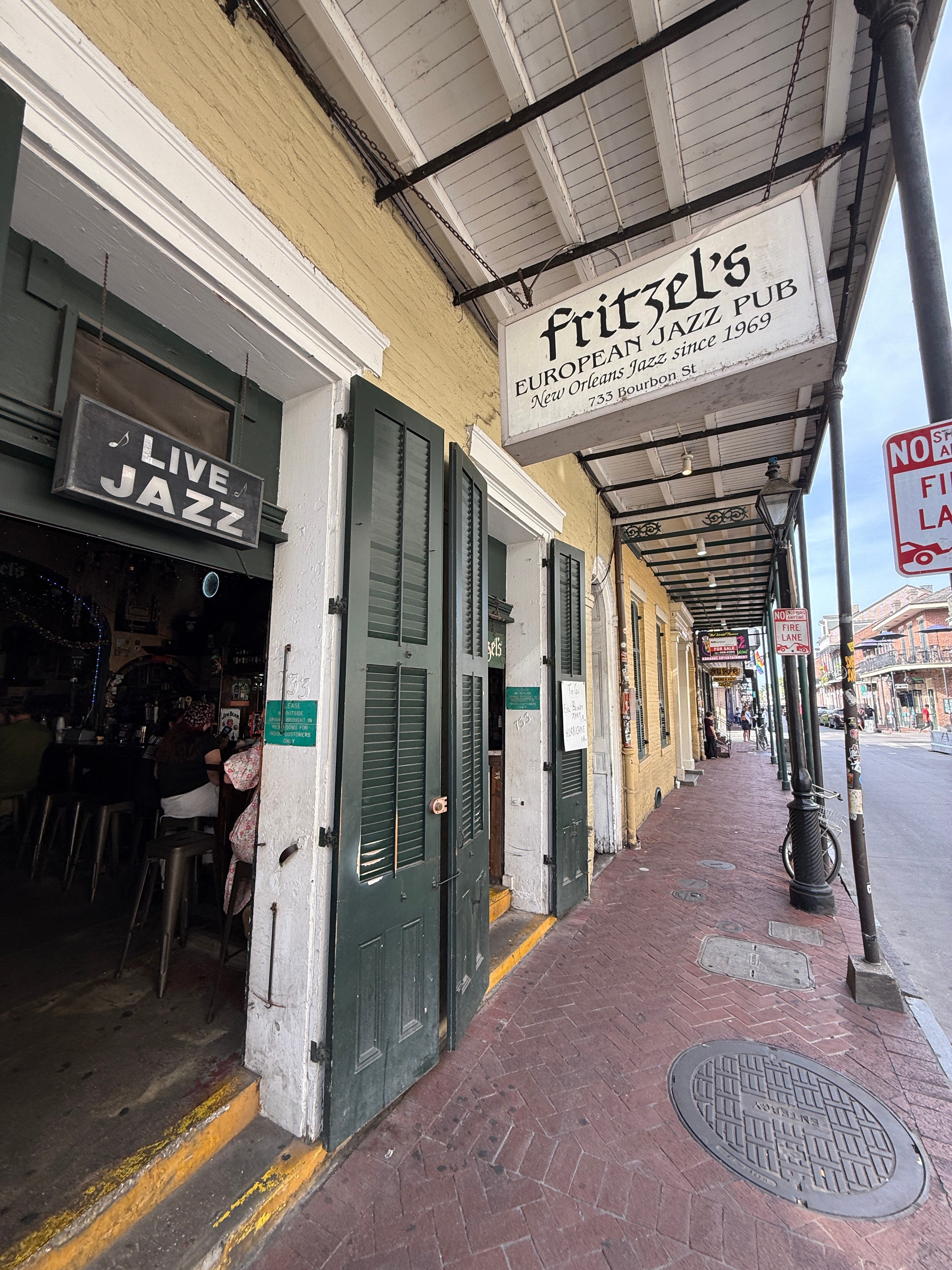
Fritzel’s European Jazz Pub
This building dates to 1831, but the bar was founded by Gunter Seutter, whom everyone called Dutch, in 1969. He was German, and had been in the army, a semi-pro hockey player, and a beverage manager for a hotel chain before deciding to settle here.
He favored traditional jazz bands, but the bar may be best known as one of the places where Jägermeister became popular in the United States.
Jägermeister, of course, is the German herbal liqueur invented in 1934, made with 56 herbs and spices. It was strictly a local drink in Germany until about 1973, when it surfaced in New Orleans. The story goes that German seamen brought bottles to Dutch when they came through town. He started serving it, and it soon became a cult drink, particularly with college kids, who believed it contained opiates. It had nicknames like “liquid Quaalude” and “liquid Valium.”
It was eventually picked up by liquor marketing genius Sidney Frank, better known for creating Grey Goose vodka and selling it to Bacardi for $2 billion.
You can still get a chilled Jäger here and listen to traditional jazz. It’s managed to maintain a classic vibe, and has largely avoided becoming a 1980s go-cup bar.
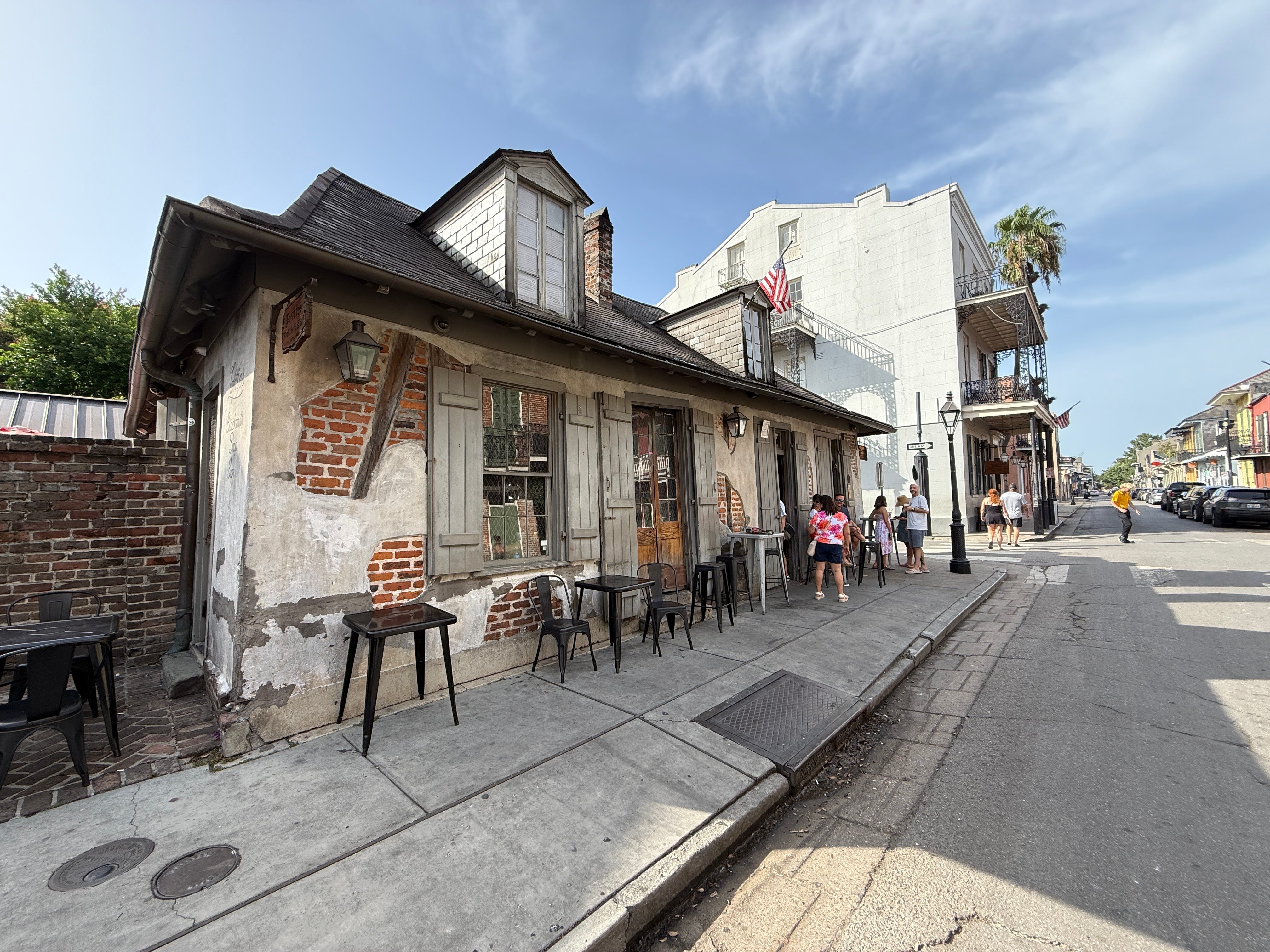
Lafitte’s Blacksmith Shop
So many layers of history here! This building was a landmark well before it became a bar. Early on, two major fires had destroyed the city — in 1788 and 1794. The first fire took out about 80 percent of New Orleans — around 850 houses. But that fire stopped just short of here, and this building survived.
It’s got the classic double hipped roof and cross-timber construction typical of French Colonial buildings. This is the sort of building you would have seen throughout the French Quarter if you’d done this tour in 1787.
It’s been called Lafitte’s Blacksmith Shop for decades, despite the fact that records can’t confirm it was either a blacksmith shop or owned by the Lafittes — although city records do confirm that the Lafittes owned a property on one of these corners. So this might be it?
It became a tavern sometime in the nineteenth century, and by most accounts a pretty unremarkable one. But when the city’s nostalgia industry blossomed in the later nineteenth century, the bar became famous — it had a name that associated it with pirates, and had a candlelit interior, piano, and dusky faded glory. It was all part of a loose plan to make the city more exciting for visitors, along with places like Pirate’s Alley nearby.
Lafitte’s hasn’t changed all that much since. It sits along a quieter end of Bourbon St. — zoning eventually prohibited new bars and shops past St. Ann, though those already there were grandfathered in. It’s lit by candles, and has a more settled air than many Bourbon St. establishments.
If you happen to be in town, stop in to recuperate from the tour and order their infamous Purple Drank (yes, the 1980s have maintained an outpost here). This apparently consists of bourbon, pure grain alcohol, grape flavoring, and — maybe? — fruit juices.
No posts
Comments
Nothing yet. Say the first thing.
Sign in to join the conversation.