
There is a kind of morality that is only performance.
It wants to appear good. It wants to be seen as kind, harmless, evolved, spiritual, compassionate, progressive, traditional, pure, wise, or enlightened. It knows the correct language. It knows how to signal virtue. It can sound tender, sophisticated, and sincere.
But beneath that, the system may still be untrained.
The body may still be impulsive. Speech may still be careless. Desire may still be sovereign. The heart may still be full of self-justification. The mind may still be distorted by fantasy, resentment, longing, fear, or pride.
So morality cannot simply mean “being good” in the social sense.
Morality, at its deepest level, is training.
It is the training of the whole human system so that perception, desire, speech, action, relationship, and worship become less distorted. It is not merely about obeying rules in a shallow way. It is about becoming capable of seeing and living truthfully.
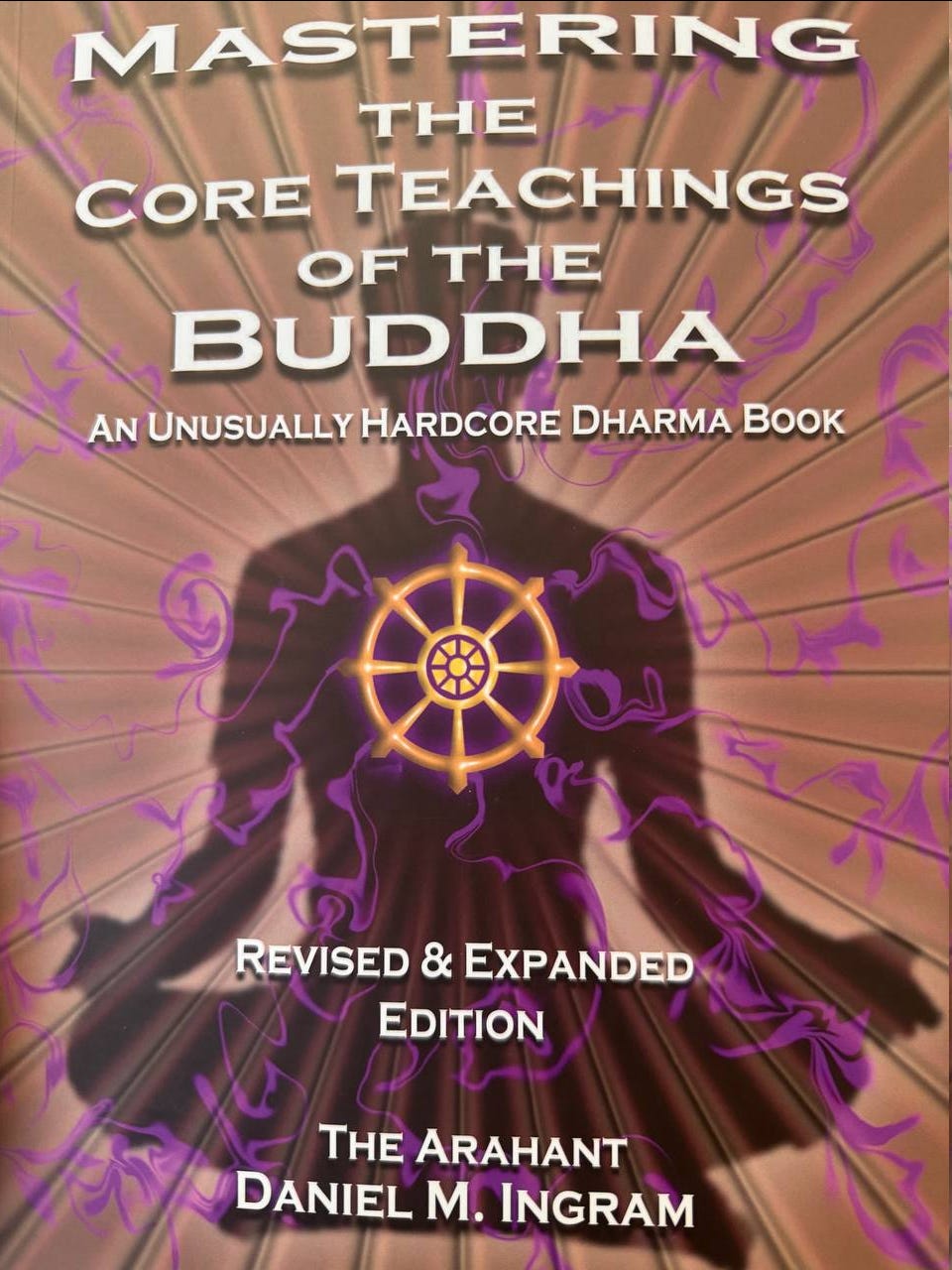
This is something Buddhist wisdom traditions often understand with great precision. In Mastering the Core Teachings of the Buddha, Daniel M. Ingram describes morality not as sentimental goodness, but as a practical foundation for clarity. Ethical conduct trains the system. It stabilizes perception. It reduces suffering. It prevents contemplation from being polluted by the consequences of untrained action.
That struck me deeply, because Islam also teaches this, but with a firmer and more complete foundation.
The Buddhist framing sees morality as a technology of liberation: conduct shapes consciousness.
Islam agrees that conduct shapes the soul. But Islam does not leave morality to the self to invent, negotiate, or endlessly reinterpret.
That is the decisive difference.
Because the self is not sovereign.
And if the self is not sovereign, then the self cannot be the final source of morality.
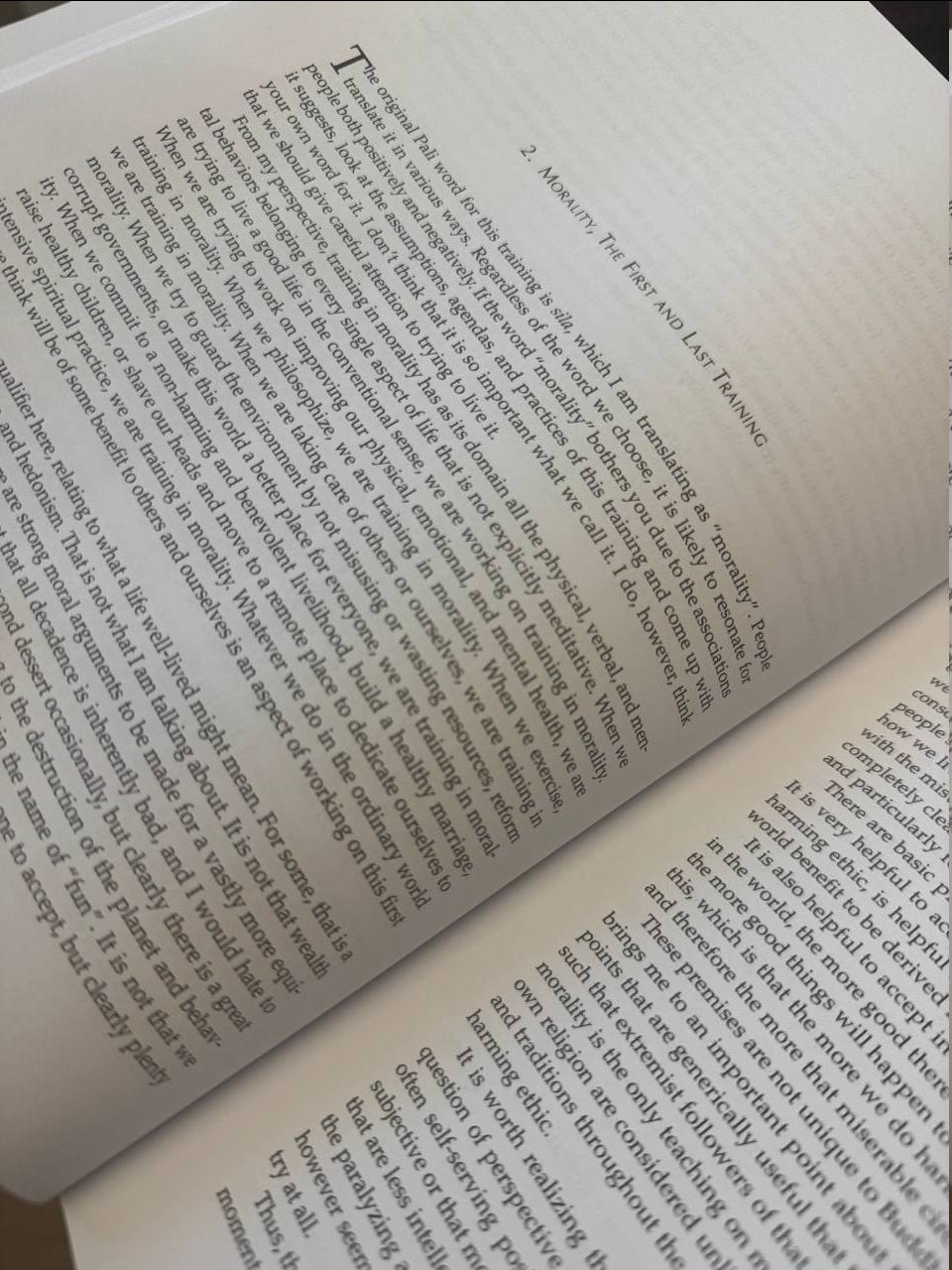
The passage from Mastering the Core Teachings of the Buddha points toward something important: morality is not simply obedience to a list of rules, and it is not merely social respectability. It is a form of training.
In this framing, morality trains the body, speech, mind, livelihood, relationships, restraint, kindness, honesty, balance, and attention. It is not only about avoiding “bad actions” in an external sense. It is about shaping the conditions under which perception becomes clear.
When a person lies, exploits, indulges impulsively, chases pleasure without restraint, violates boundaries, manipulates others, or lives in contradiction, the mind becomes noisy.
That person may still be intelligent.
They may still be articulate.
They may still be spiritual.
They may still have insights.
They may still speak beautifully about consciousness, healing, love, trauma, liberation, God, or truth.
But the inner instrument becomes distorted.
This is the subtle point:
Immoral action does not only harm the world outside the self. It also damages the self’s ability to see reality clearly.
This is why morality is not separate from contemplation. If the body is acting against truth, if speech is careless, if desire is untrained, if relationships are confused, then contemplation itself becomes polluted.
The person may believe they are seeing deeply, but often what they are seeing is their own untrained nafs projected onto reality.
In that sense, morality is operational spirituality.
It is the daily discipline that makes deeper perception possible.
The Buddhist wisdom tradition often frames morality as practical training in reducing suffering.
Ethical conduct stabilizes the system. Restraint reduces agitation. Non-harming reduces karmic consequences. Truthful speech reduces fragmentation. Simplicity reduces craving. Compassion reduces alienation.
This is powerful because it refuses to treat morality as decoration.
Morality is not there so the person can appear noble. It is there because actions have consequences in the nervous system, in relationships, in attention, and in perception.
If one lives in greed, aversion, delusion, fantasy, indulgence, and compulsive self-concern, then the mind becomes trained in those patterns. The person becomes less free.
If one practices restraint, honesty, kindness, patience, generosity, clarity, and steadiness, then the mind becomes more workable. Reality becomes less distorted by reactive patterns.
The Buddhist framing sees morality as a technology of liberation:
Conduct shapes consciousness.
This is very close to what Islam teaches.
But Islam gives the structure a different metaphysical foundation.
Islam also understands that conduct shapes the soul.
But Islam does not leave morality to the self to invent, negotiate, or endlessly reinterpret.
This is the crucial distinction.
In some modern spiritual frameworks, the self becomes the final authority. The person asks:
“What feels aligned?”
“What seems loving?”
“What feels authentic?”
“What produces less suffering according to my current perception?”
Those questions can be useful. They are not meaningless. But they are not enough.
Because the self is not neutral.
The self is not sovereign.
The self is not a pure instrument of truth.
In Islam, the human being is honored, responsible, and capable of moral discernment, but the human being is not the source of morality.
Allah is.
Islam does not rely on the self to produce morality, because the self itself requires purification, discipline, and guidance.
The nafs can justify almost anything when it wants something badly enough.
It can call desire “love.”
It can call fear “wisdom.”
It can call avoidance “peace.”
It can call impulsiveness “authenticity.”
It can call attachment “destiny.”
It can call self-exposure “truth.”
It can call rebellion “freedom.”
It can call spiritual pride “clarity.”
This is why revelation matters.
Islam gives boundaries before the self becomes intoxicated by its own explanations.
There is a sharper personal point here.
Thirteen-plus years of contemplation did produce real insight. It was not wasted. It gave me direct, lived recognition that the self is not sovereign, that perception is conditioned, that reality is contingent, and that the “I” cannot honestly pretend to be the absolute center of existence.
That insight matters.
It means contemplation was able to diagnose something true: the self is not ultimate.
The self is unstable, dependent, narrated, affected, wounded, desiring, interpreting, and constantly shaped by conditions it did not create.
But contemplation did not produce the constraints required to live under that truth.
This is the missing bridge.
Contemplation showed that the self is not sovereign, but it could not become the sovereign authority that tells the self how to live.
Contemplation can deconstruct false sovereignty.
It can reveal the emptiness, contingency, instability, and dependence of the self. It can expose egoic narration. It can show how desire distorts perception. It can make the person deeply suspicious of the “I” as final authority.
But after that insight, the embodied question remains:
What do I do with desire?
What do I do with sexuality?
What do I do with anger?
What do I do with money?
What do I do with speech?
What do I do with longing?
What do I do with attention?
What do I do with power?
What do I do with beauty?
What do I do with relationship?
What do I do when I want something intensely?
Who tells me “no” when my own insight is compromised?
This is where contemplation, by itself, reaches a limit.
It can say: “You are not sovereign.”
But it cannot, from within the self alone, generate the binding law that follows from that discovery.
The self cannot discover its non-sovereignty and then crown itself as the lawgiver.
That would be a contradiction.
If the self is contingent, conditioned, and not ultimate, then the self cannot be the final source of moral constraint. It can recognize. It can reason. It can receive. It can submit. It can be trained.
But it cannot be God to itself.
This is why Islam did not merely add “religious content” to an already complete contemplative path. It supplied the missing structure: command, prohibition, ritual, obligation, boundary, accountability, repentance, and submission.
Contemplation diagnosed the problem.
Revelation gave the form of life.
Thirteen years of contemplation taught me that the self is not sovereign; Islam gave me the constraints that follow from that truth.
Or, more directly:
Contemplation deconstructed my false sovereignty, but it could not legislate my life. Revelation did.
This is the clean formulation.
Islam does not negate the contemplative insight. It completes its demand.
If the self is not sovereign, then the next question is not: “How do I become more self-authentic?”
The next question is:
“Who is sovereign, and how do I live under that sovereignty?”
Islam answers: Allah is sovereign.
So the human being does not merely contemplate non-self, contingency, impermanence, dependency, or the instability of ego.
The human being submits to the One who is not contingent.
That is the decisive difference.
Contemplation showed: I am not sovereign.
Islam answered: then live as a servant of the One who is.
The phrase “the self is not sovereign” is central.
In Islam, the human being does not belong to themselves in an absolute sense.
The body is an amānah.
Time is an amānah.
Speech is an amānah.
Beauty is an amānah.
Desire is an amānah.
Intelligence is an amānah.
Relationships are an amānah.
Even spiritual openings are an amānah.
The self is not the owner. The self is entrusted.
This changes everything.
If the self were sovereign, then morality would ultimately be self-legislation: “I decide what is good according to my own inner authority.”
But Islam says the self is a servant, not a god.
The self receives guidance. The self submits. The self is trained into alignment with what is real, not allowed to define reality according to appetite, trauma, fantasy, or mood.
The Islamic moral project is not self-expression.
It is servanthood, purification, and alignment with Allah’s command.
This does not make morality shallow or legalistic.
It makes it safer.
Because without divine boundaries, the ego can hijack spirituality.
This connects directly to taqwā.
Taqwā is often translated as God-consciousness, piety, reverence, guardedness, or protective awareness. But it is not merely an emotion. It is a whole-system orientation.
Taqwā means the person lives with awareness that Allah sees.
It means one becomes careful with the body, careful with speech, careful with desire, careful with money, careful with attention, careful with power, careful with emotional influence, careful with other people’s dignity.
Taqwā is not fear in the crude sense.
It is protective consciousness.
It protects the soul from heedlessness.
It protects relationships from injustice.
It protects worship from hypocrisy.
It protects love from becoming possession.
It protects desire from becoming intoxication.
It protects intelligence from becoming arrogance.
It protects softness from becoming boundarylessness.
It protects spirituality from becoming self-worship.
Taqwā is morality with Allah at the center.
The Buddhist framing might say:
“Act ethically because unethical action destabilizes perception and produces suffering.”
Islam can affirm that, but it adds:
Act ethically because Allah is real.
Because you are accountable.
Because the self is not divine.
Because the soul is shaped by obedience or disobedience.
Because true freedom is found in submission to the Real.
This also connects to tazkiyah, the purification and growth of the soul.
Tazkiyah is not a vague spiritual aesthetic. It is not simply feeling pure, soft, poetic, or emotionally elevated. It is the disciplined purification of the nafs so that the person becomes more truthful, more humble, more restrained, more grateful, more patient, more merciful, and more obedient to Allah.
Tazkiyah includes many of the same qualities named in Buddhist ethical training:
kindness toward oneself and others.
Honesty.
Respect for boundaries.
Skillful support of oneself.
Skillful support of others.
Gratitude.
Patience.
Persistence.
Clarity.
Integrity.
Dedication to service.
Restraint.
Non-harming.
Balance.
Right livelihood.
Careful speech.
Careful relationship.
But Islam grounds these not merely in psychological wellbeing or reduced suffering.
Islam grounds them in the reality of Allah, the guidance of revelation, the accountability of the ākhirah, and the purification of the heart.
Tazkiyah is not the self perfecting itself by itself.
It is the servant being purified through guidance, struggle, repentance, worship, and mercy.
This matters because the self cannot always diagnose itself accurately.
Sometimes the self needs a command.
Sometimes it needs a prohibition.
Sometimes it needs a limit.
Sometimes it needs to be stopped before it can produce a beautiful explanation for its own corruption.
This is where Islam feels clearer than many self-generated moral systems.
Islam gives boundaries around desire, money, sex, speech, food, anger, marriage, gender interaction, business, worship, family, public conduct, privacy, and power.
From the outside, the nafs may experience this as restriction.
But spiritually, these boundaries are mercy.
They protect the human being from having to reinvent morality every time the self becomes activated.
When desire rises, the boundary is already there.
When anger rises, the boundary is already there.
When attraction rises, the boundary is already there.
When ambition rises, the boundary is already there.
When sadness rises, the boundary is already there.
When the ego wants revenge, exposure, validation, fantasy, dominance, seduction, or escape, the boundary is already there.
A divine boundary is not a cage for the soul.
It is a guardrail against the nafs when the nafs is least trustworthy.
This is why Islam does not say “follow your heart” in the modern sentimental sense.
The heart can be purified, yes.
But the heart can also be diseased.
The nafs can whisper.
Shayṭān can beautify.
Trauma can distort.
Desire can intoxicate.
Social approval can corrupt.
Loneliness can make almost anything feel meaningful.
So Islam gives a structure that remains stable even when the inner weather changes.
The deeper point is that morality and perception are linked.
A person does not simply “see reality” as they are.
They see through the condition of the heart.
If the heart is trained in truthfulness, restraint, remembrance, gratitude, patience, and humility, perception becomes clearer.
If the heart is trained in self-justification, indulgence, envy, resentment, fantasy, performance, and heedlessness, perception becomes darker.
This is why sin is not only a legal category.
It is also perceptual damage.
It leaves marks.
It changes taste.
It changes what feels normal.
It changes what one is willing to tolerate.
It changes what one calls love.
It changes what one calls freedom.
It changes what one calls spirituality.
Every repeated action trains perception.
The question is: trained toward Allah, or trained toward the nafs?
This is where Buddhist moral training and Islamic tazkiyah strongly overlap. Both understand that repeated conduct shapes the field of experience.
But Islam adds a more explicit vertical axis.
The purpose is not merely clarity, calm, or liberation from suffering.
The purpose is knowing, worshipping, obeying, and returning to Allah.
The passage’s warning that “negative” and “positive” action can become arbitrary is important.
Human beings often define good and bad according to culture, mood, convenience, ideology, trauma, or group belonging.
One society praises what another condemns.
One subculture calls something healing while another calls it selfish.
One person calls something honest while another experiences it as cruelty.
One spiritual group calls something liberated while another sees it as heedless.
Without a deeper criterion, morality becomes unstable.
Islam’s answer is not that human reason is useless. Islam honors reason. But reason is not left alone as the final authority.
Reason is guided by revelation.
The fitrah recognizes truth, but the fitrah can be covered.
The heart can know, but the heart can also be diseased.
The intellect can discern, but the intellect can also rationalize.
Revelation does not erase moral intelligence.
It protects moral intelligence from being enslaved by the nafs.
This is the key difference.
Islam does not ask the human being to abandon discernment.
It asks the human being to place discernment under Allah.
This matters especially when desire is involved.
The issue is not that desire exists.
Desire is part of the human design.
Attraction is not automatically corruption.
Softness is not automatically weakness.
Longing is not automatically misguidance.
The wish for marriage, intimacy, tenderness, protection, children, beauty, and companionship is not inherently dirty.
Islam does not require hatred of embodiment.
Islam does not teach escape from being human.
But desire must be trained.
Desire must be placed inside taqwā.
Desire must be tested by time, boundaries, character, prayer, counsel, and reality.
Desire cannot be allowed to crown itself as revelation.
Desire is not the enemy.
Untrained desire is the danger.
The nafs can take a real human longing and inflate it into a private mythology.
It can turn a person into a symbol.
It can turn attraction into destiny.
It can turn emotional intensity into certainty.
It can turn longing into spiritual interpretation.
It can turn softness into surrender before there is any real trustworthiness.
So the test is not simply: “Do I feel something?”
The test is:
Does this feeling remain within the boundaries of Allah?
Does it increase prayer or distract from prayer?
Does it produce clarity or intoxication?
Does it make me more truthful or more performative?
Does it protect dignity or expose dignity?
Does it respect reality or feed fantasy?
Does it move slowly enough for character to be revealed?
Does it make me more obedient or more self-justifying?
Does it strengthen taqwā or weaken it?
This is the central practical question.
Not: “Is this person good?”
Not: “Am I attracted?”
Not: “Is this destiny?”
Not: “Is this a sign?”
Not: “Can I make a beautiful interpretation out of this?”
The real question is:
Can you remain morally trained while emotionally activated?
That means keeping boundaries even when the heart becomes soft.
Speaking truthfully even when fantasy would feel sweeter.
Avoiding emotional intoxication.
Not using spirituality to justify attachment.
Keeping ṣalāh central.
Protecting your dignity.
Protecting the other person’s dignity.
Refusing public performance of private longing.
Refusing to turn a human being into a spiritual object.
Moving slowly enough for reality to disclose itself.
Staying obedient when desire wants exceptions.
Letting Allah reveal, with time, what is real and what is projection.
This is morality as training.
This is taqwā under activation.
This is where the theory becomes real.
There is a shared architecture between Buddhist ethical training and Islamic purification.
Both recognize that conduct shapes perception.
Both understand that desire can distort reality.
Both recognize that restraint is not merely repression, but protection.
Both see that harmful action harms the one who acts.
Both understand that morality is not just outward behavior, but inward training.
But the foundations are not identical.
Buddhist moral training often begins from suffering, delusion, craving, and the instability of the self. It trains ethical conduct, restraint, compassion, and mindfulness so that perception becomes clearer and suffering is reduced.
Islam begins from Allah.
It understands the human being as created, entrusted, tested, accountable, and in need of guidance. It trains the soul through taqwā, tazkiyah, adab, worship, obedience, repentance, and revealed boundaries.
Buddhist moral training can show how ethics stabilizes consciousness.
Islam shows why consciousness itself must submit to Allah.
That distinction matters.
Because if consciousness is not sovereign, then clarity is not enough.
The clear mind still needs guidance.
The insightful self still needs boundaries.
The contemplative person still needs revelation.
If morality depends only on what the self can perceive, then morality becomes vulnerable whenever perception is compromised.
And perception is often compromised precisely when morality is most needed.
When a person is angry, they see selectively.
When a person is attracted, they idealize.
When a person is hurt, they distort.
When a person is lonely, they attach meaning too quickly.
When a person is praised, they inflate.
When a person is rejected, they collapse.
When a person is spiritually excited, they may mistake intensity for guidance.
When a person is intellectually powerful, they may mistake explanation for truth.
This is why the self cannot be the final judge.
The nafs is most dangerous when it can speak in spiritual language.
It can quote wisdom while avoiding obedience.
It can speak of love while violating boundaries.
It can speak of authenticity while indulging impulse.
It can speak of healing while refusing accountability.
It can speak of intuition while ignoring revelation.
It can speak of freedom while becoming enslaved to appetite.
Islam interrupts this with command, prohibition, worship, repentance, and accountability.
Not to humiliate the human being.
But to save the human being from self-deception.
Another Islamic word that belongs here is adab.
Adab is often translated as manners, but it is much deeper than politeness. Adab is rightful placement. It means putting things where they belong.
Allah is not placed beneath the self.
Desire is not placed above revelation.
A person is not placed in the position of Lord.
Marriage is not placed above obedience.
Public speech is not placed above dignity.
Emotional intensity is not placed above truth.
Spiritual language is not placed above action.
The body is not treated as an enemy.
The nafs is not treated as a god.
Adab is the moral architecture of reality: everything in its proper place before Allah.
This is why adab is so stabilizing.
It prevents the inner world from becoming a monarchy of mood.
It teaches the person to relate correctly: to Allah, to the self, to others, to knowledge, to desire, to pain, to love, and to limits.
Do not use spirituality to escape embodiment.
Use revelation to guide embodiment.
Islam is not asking for dissociation from the body. It is not asking for hatred of desire. It is not asking for coldness, numbness, or performative purity.
It is asking for guidance.
Embodiment needs guidance.
Desire needs guidance.
Love needs guidance.
Anger needs guidance.
Speech needs guidance.
Beauty needs guidance.
Power needs guidance.
Tenderness needs guidance.
Without guidance, even beautiful things become dangerous.
Islam does not erase embodiment.
It disciplines embodiment so the body can serve Allah rather than enslave the soul.
This is a much more precise frame than “desire bad” or “desire good.”
Desire is a force.
Like fire, it can warm or burn.
It depends on placement, container, intention, and boundary.
The integration is not abstract.
When emotionally activated, the work is not to suppress every feeling.
The work is to place every feeling under Allah.
Return to ṣalāh before interpretation.
If a feeling makes prayer harder, that is information.
Do not rush meaning.
Let reality unfold before naming something destiny, sign, love, or danger.
Keep speech clean.
No exaggeration. No seductive ambiguity. No unnecessary exposure. No public emotional performance.
Protect dignity.
Your dignity and the other person’s dignity are both part of taqwā.
Test by boundaries.
What cannot survive a halal boundary is not love. It is appetite, fantasy, or dependency.
Watch the nervous system.
If something produces agitation, obsession, compulsive checking, emotional intoxication, or prayerlessness, slow down.
Prefer reality over symbolism.
Symbols can illuminate, but they can also intoxicate. Character is revealed through action over time.
Let Allah be the criterion.
Not chemistry.
Not loneliness.
Not fantasy.
Not aesthetic resonance.
Not intellectual compatibility alone.
The sign of healthy desire is not intensity.
It is whether the desire can remain obedient, patient, truthful, and dignified.
The deeper synthesis is this:
Buddhist moral training correctly sees that unwholesome action clouds perception and increases suffering. It understands that morality is not arbitrary social performance but a practical discipline that shapes consciousness.
Islam affirms that actions shape the heart, but gives a clearer anchor.
Allah is the source of moral reality.
Revelation gives boundaries.
The Prophet ﷺ shows embodied guidance.
The self must be purified rather than obeyed as sovereign.
In Buddhist language, morality stabilizes the system.
In Islamic language, taqwā protects the soul.
In cybernetic language, ethical conduct purifies the feedback loops.
In Qur’anic language, the human being must not follow desire as if desire were a lord.
The shared architecture is clear:
Conduct shapes perception.
The Islamic completion is clearer:
Perception itself must be submitted to Allah.
This book still belongs in my system, but not as an authority above Islam.
It belongs as a comparative mirror.
It can help name certain mechanics: how action shapes consciousness, how restraint reduces suffering, how morality stabilizes perception, how harmful conduct creates noise.
But Islam gives the criterion.
The boundary.
The vertical axis.
The final authority.
So the takeaway is this:
Do not use spirituality to escape embodiment.
Use revelation to guide embodiment.
Desire is not the enemy.
Untrained desire is the danger.
Softness is not the enemy.
Boundaryless attachment is the danger.
Love is not the enemy.
Projection is the danger.
The self is not sovereign.
Allah is.
Morality is not self-invention.
It is purification under guidance.
Before, this was contemplation.
Now it is integration.
The question is no longer only whether a teaching is beautiful.
The question is whether it trains the soul into truth.
And in Islam, truth is not whatever the self can elegantly explain.
Truth is what aligns the servant with Allah.
No posts
Comments
Nothing yet. Say the first thing.
Sign in to join the conversation.