
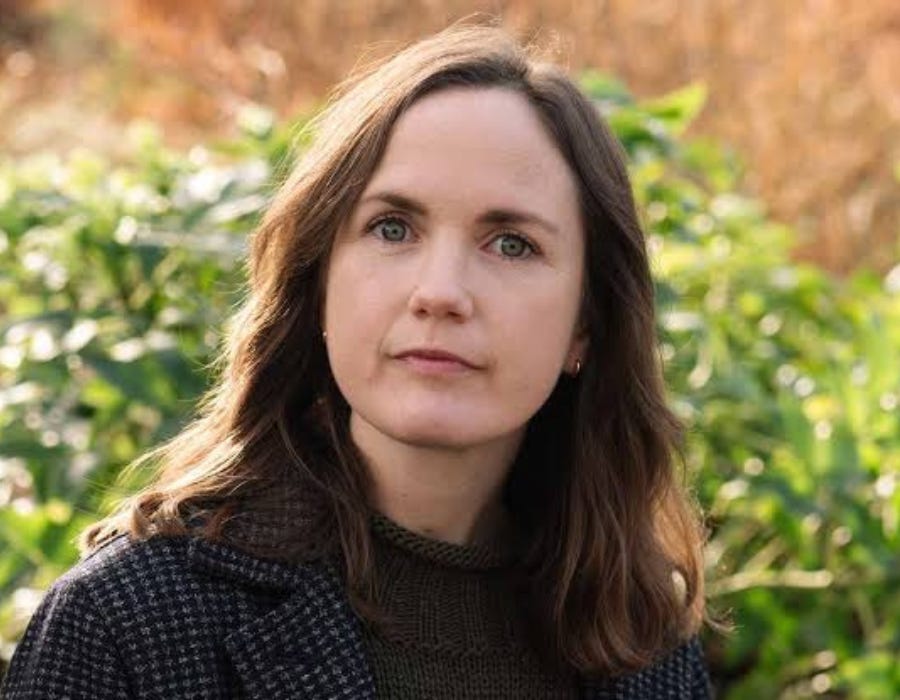
I have an entirely unproven theory that if you start a month with a good book, said month will continue in much the same way: with one good read after another. Luckily for me, nine days (and four books) into August, and my theory has thus far been proven correct, all thanks, I think, to kicking it off with Family Friends by Chloë Ashby. It’s a summery read, but a smart one—following two families who have spent twenty years holidaying together in the south of France, and the secrets and shifting alliances that emerge when everyone arrives for their annual two weeks together. These are people who have known each other for decades, but, as it turns out, perhaps don’t know each other quite as well as they think they do.
It’s the type of book that (hallelujah) makes you forget about your phone entirely. Sultry and atmospheric, it’s a brilliant exploration of the complicated nature of long-term friendships and relationships. Everyone is keeping something from someone, and you spend much of the book becoming increasingly frustrated with a group of deeply flawed, selfish people making some spectacularly questionable decisions—while simultaneously wondering whether you might behave any differently in their shoes. It’s exactly the sort of book to read during a heatwave (I say, having read it on my balcony during the exact (and only) ninety minutes every morning that it’s swathed in sunshine), and it’s propulsive, a real page-turner, and, I think, one you’re all going to love. So do go and buy yourself a copy now. Paid subscribers, as always, get access to a brilliant extract below.
I try to write as much as I can without a paywall, but it does take time. If you’re enjoying this post, why not treat me to a nice glass of prosecco?
And now, onto Chloë’s Desert Island Books. From a beloved classic to her favourite Ali Smith (which I’d never heard of before, and which—after reading Chloë sing its praises—I immediately ordered), read on to discover which eight books she’d take with her to the sandy shores of a desert island…
Villette by Charlotte Brontë
As an author and a critic, I’m constantly drowning in new releases—but the postman won’t be able to reach me on a desert island, will he? So, what better time to hunker down (in a hammock, of course) with a beloved classic: Villette by Charlotte Brontë. It’s less famous than Jane Eyre or Wuthering Heights, but equally brilliant, a tale of unrequited love born from the author’s own unhappy experiences. The narrator, Lucy Snowe, takes a job in a girls’ boarding school, and grapples with her knotty feelings towards first a doctor, then a professor.
The Past by Tessa Hadley
I feel like I’m in safe hands with Hadley; no other author gives me such unwavering pleasure. She writes brilliantly about families and the passing of time, and has a way of inhabiting not only a scene but her character’s minds in a way that’s utterly convincing. So, I’d love to take all her books with me, but if I had to pick just one, I’d probably go with The Past. It takes place over three weeks and sees four siblings and their families come together in the house they’ve inherited. It’s great on marriage, parenthood, and money.
Middlemarch by George Eliot
I’ve started it, and I’ve stopped. Started it, stopped. Might a distraction-free desert island be the backdrop that helps me finally finish Eliot’s widely hailed masterpiece? Over the course of 900 pages, Eliot weaves together the stories of 19-year-old Dorothea Brooke, the finicky scholar Casaubon, ambitious Dr Tertius Lydgate, and beautiful but shallow Rosamond Vincy. Virginia Woolf proclaimed it “one of the few English novels written for grown-up people”.
Atonement by Ian McEwan
I’m always drawn to child disruptors in fiction, and who better than Briony Tallis and the terrible misjudgement she makes in McEwan’s best-known novel? The book begins on a sweltering summer’s day in 1935 in the grounds of an English country house. Then we’re in Flanders, witnessing the British military retreat to Dunkirk in 1940. And finally a London hospital ward filled with wounded Allied soldiers. The writing is precise and rich, the mood intoxicating. If there happens to be a TV on this island I’d also like to rewatch the star-studded screen adaptation.
Dead and Alive by Zadie Smith
I nabbed a copy of Smith’s latest collection of essays when I was last in the Penguin offices, and a secluded sandy beach feels like an appropriate enough setting for diving in. I’m especially eager to read her writing on artists Celia Paul, Toyin Ojih Odutola and Kara Walker, and her homage to writers from Joan Didion to Toni Morrison. The book also features her thoughts on politics and technology. Whatever happens, I know I’ll come away from it having learned something.
The Hero of This Book by Elizabeth McCracken
I recently read and loved this not-quite novel, not-quite memoir about a woman whose mother has recently died, and who walks across London one Sunday recalling everything that made her extraordinary. It’s witty and sharp and perceptive—the sort of book I would happily while away a day with. When I was reading it I folded over the corners of multiple pages. Take this sentence on page eight: “Don’t trust a writer who gives out advice. Writers are suckers for pretty turns of phrase with only the ring of truth.”
The Story of Art Without Men by Katy Hessel
I’d be happier on a desert island with a dose of art, and Hessel’s rallying cry is lavishly illustrated. Her take on the story of art stretches from the 1500s to the 2020s and is divvied into five parts that focus on major moments. Together we marvel at how Emily Mary Osborn used her paintings to critique setbacks during women’s suffrage and Emma Amos explored Black domestic life during the Civil Rights era. How Wangechi Mutu sparks discussions about the sexualisation of the body and Gillian Wearing makes us see the familiar afresh.
The Accidental by Ali Smith
Finally, an Ali Smith. This is my favourite of her novels. It’s about an English family—mother, son, daughter, stepfather—whose world crumbles when a mysterious woman shows up at their door. Her name is Amber, and she rings the doorbell and announces, “Sorry I’m late. Car broke down.” My favourite character in the book is Astrid, a bright, lonely 12-year-old girl who’s obsessed with language; at the beginning of the novel her favourite word is “substandard”, by the end it’s “preternaturally”. What great company on a desert island.
And if you’re in the mood to extend your own August reading with a some sultry sunshine, secrets and south-of-France escapism, paid subscribers can enjoy a sneak peek of Family Friends below.
Comments
Nothing yet. Say the first thing.
Sign in to join the conversation.