
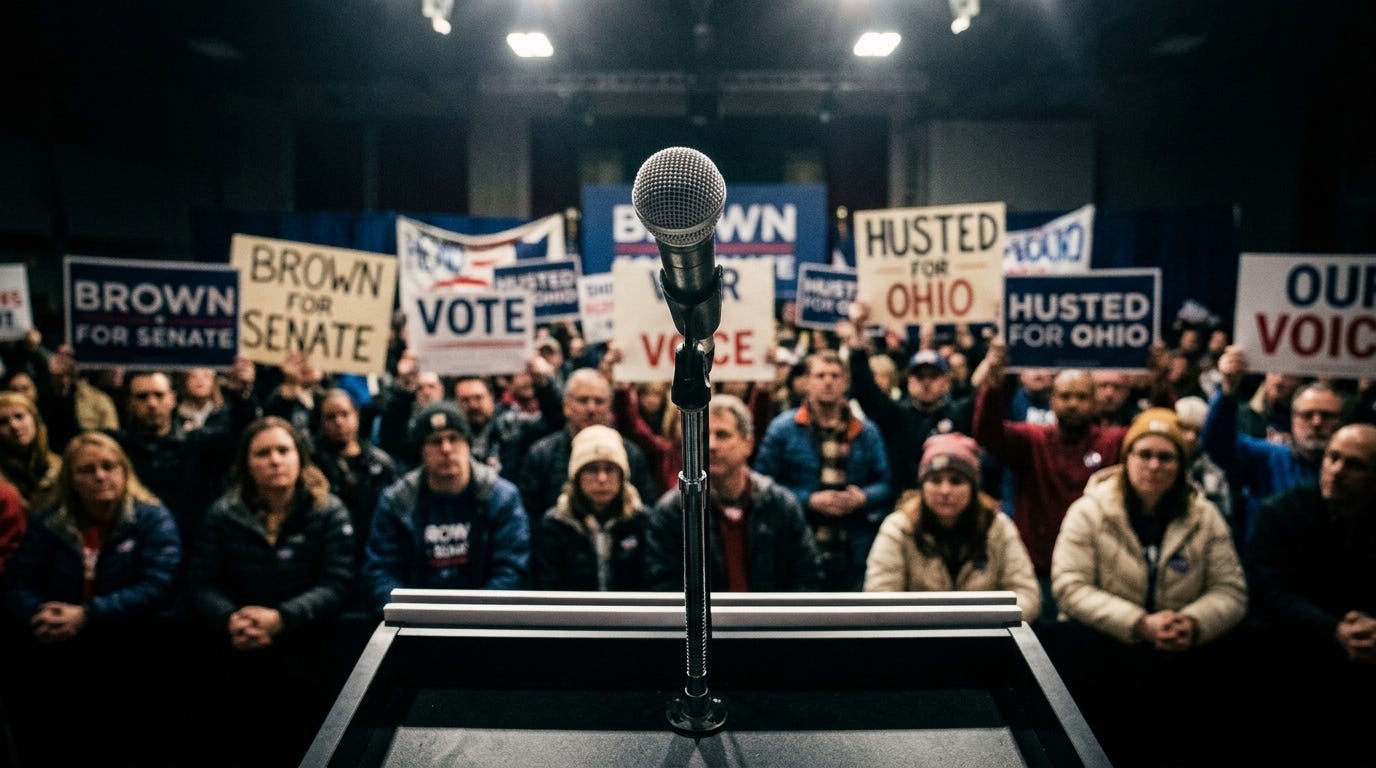
In 2001, I watched firms build server farms nobody needed. In 2008, I watched banks bundle things nobody grasped. In 2026, I’m watching data centers become the thing nobody wants next door.
Seventy-one percent of Americans now oppose AI data centers in their area. That’s per Gallup. It’s not a polling blip. It’s a political quake with a clear cause: Ohio.
This week, a leaked GOP memo warned AI firms that data centers are “the anchor” dragging down a sitting senator. Ohio utilities and Big Tech quietly pooled $18 million. That money offsets the electric bills their own sites helped inflate. State regulators also set new rules forcing data centers to pay their own way.
Three signals. One clear pattern. The AI buildout just hit democracy, physics, and household budgets—all at once.
Let’s look under the hood.
Start with the load curve. AEP Ohio data shows data center power demand in Central Ohio went from 100 MW in 2020 to 600 MW by 2024. That’s six times more in four years.
Signed deals could push that to 5,000 MW by 2030. That’s over three times AEP Ohio’s full 2023 peak load.
Here’s the cost chain that matters:
New Load → Not Enough Power → Emergency Buys → Higher Prices → Your Bill Goes Up
PJM capacity prices tell the story plainly. They rose from $28.92 per MW-day in 2024–2025 to $329.17 two years later. That’s a 1,038% jump. Data centers drove about 63% of it.
Those costs don’t stay in a file. They flow right into your bill. AEP Ohio said average monthly bills rose about $27 in summer 2025. Columbus-area bills were over 7% higher in August 2026 than a year prior. Statewide, Ohio bills rose 22% from May 2025 to May 2026, per the EIA.
The math is simple:
• 100 MW → 600 MW (2020–2024): Grid strained but okay
• 600 MW → 5,000 MW (2024–2030 target): Grid model breaks
• Price jump: $28.92 → $329.17/MW-day
• Data center share of that jump: ~63%
• Bill impact: +22% year over year, statewide
This isn’t guesswork. It’s metered, public data. And it’s the base of all that came next.
West Virginia Governor Patrick Morrisey recently welcomed a massive $850 million project to Mason County. This announcement aligns directly with Washington’s aggressive push for American energy dominance. Instead of burning coal, Frontieras North America uses its patented With global patents across 9 countries, Frontieras is positioning itself to capture a major share of the $2.1 trillion energy market. They have already reserved the NASDAQ ticker “FASF” and raised over $45M from 14,000 investors alongside a $150M institutional commitment. Before they officially list on the stock exchange, everyday Americans can acquire shares in this private Reg A+ round. Shares are currently priced at $9.87 per share with a $1,352.19 minimum investment.
(sponsored)
Ohio regulators moved first. The state’s Public Utilities Commission now requires data centers to give AEP Ohio at least 180 days’ notice before linking to the grid.
That lead time lets the utility buy extra power through auctions or short-term deals. The key part: data center clients must cover those added power costs in full.
No more spreading costs across 1.5 million homes.
The logic chain:
Grid Request → 180-Day Notice → Utility Buys Power → Data Center Pays Full Cost → Homes Protected
An older tariff already made large data centers pay at least 80% of energy costs. A newer one pushes that to 85% of reserved power for 12 years. The trend is clear: whoever creates the demand pays for it.
Ohio isn’t alone. Pennsylvania’s governor signed an order with GRID rules. New developers must file a notice of intent. They must also pay all power costs tied to their sites.
Ohio lawmakers also filed House Bill 983. Key points:
• Locals can vote on data center projects within five miles
• Builders are liable for water and air quality impacts
• Local bodies can’t offer property tax breaks to data centers
• Rules apply to existing sites after eighteen months
Ohio expects about $40 billion in data center spending over four years. HB 983 would put much of it up for a public vote.
The trend is clear:
2024: Tax breaks and fast permits → 2025: Cost-sharing tariffs → 2026: Full cost rules + voter approval
If you model data center costs for any firm—Meta, Amazon, Google, QTS—the price of grid access in these states just changed. A lot.
Did you claim your $2,000 tariff dividend from Trump yet?!
Because it’s not just a payout it’s the first sign of a massive wealth shift already in motion. Trump’s calling it a
Others say it’s “America’s next great reset.” Here’s the truth: The first checks are just the beginning.
This isn’t about charity, it’s about taking control back.
Your savings. Your retirement. Your freedom.
The real opportunity? Is what comes next.
👉 Tap here to claim your Restoration Access now »
By the time the media catches up… it’ll already be too late.
(sponsored)
Now the part that should worry every AI investor.
The GOP’s Senate campaign arm sent a private memo to top AI firms. Axios and ABC News got hold of it. The gist: “Fix this or lose big.”
The memo’s core claim: data centers are “the anchor” around Senator Jon Husted’s neck in Ohio. His rival, former Senator Sherrod Brown, made data center pushback “the heart” of his campaign. And it’s working.
Fox News poll: Brown 53%, Husted 45%. The GOP’s own poll calls it a “dead heat.”
Brown’s attack is sharp and simple:
Husted as Lt. Governor → Brought Data Centers → Gave Tax Breaks → Bills Went Up → Blame Him
Three ads have hit this theme hard. Brown’s rally line: “He gave billions in sweet tax deals. Ohioans now pay thousands more on their bills.”
Husted’s reply: he filed a federal bill to make data centers pay their own power costs. But the defense is late. The harm is baked in.
The GOP memo warns AI firms plainly: “If he loses and data centers get the blame, leaders across the country will take notice. They won’t touch the next one.”
That’s not spin. That’s a permit forecast.
The $18 million fund from this week tells the same story. Meta put in $10M over five years. Amazon: $2.5M. QTS: $3M over three years. SoftBank Energy, Google, and AEP Ohio: $1M each.
The fund helps people who can’t pay their power bills. Good cause. But the optics are stark: the firms building data centers now pay to offset the bills those sites helped raise.
Marketing Line → “Data centers don’t raise your bills” → 22% bill hike → $18M aid fund → Quiet admission
Gold bars sat inside a bank vault pay $0 in income.
Nothing. Zero. Zip.
While central banks lock up billions in dead metal, smart income investors are using a hidden $15 fund to pull real cash out of this rally.
No speculative mining stocks.
No complex options trading required.
And not a single physical coin to store in a safe.
Just a simple gold mechanism delivering real cash payouts directly to your account every single Friday.
Here is what the recent Friday payouts looked like:
$246 $264 $273 $344
(sponsored)
Let’s split the noise from the signal. Here’s what truly changed this week if you view AI sites as an asset class.
The old model was simple:
Cheap Land + Tax Breaks + Friendly Rules + Plenty of Grid Power = Low-Cost AI Buildout
The new model looks like this:
Full Cost Rules + 180-Day Notice + Voter Risk + Political Fallout + Federal Rules Pending = Much Higher Deploy Cost
Every input shifted. Not in theory. Through real rules, filed bills, and proven political fallout.
Here’s what it means across four areas.
1. Site Costs
Builders saw Ohio as a cheap option. Tax breaks, helpful utilities, central location. Governor DeWine paused new tax breaks in May 2026. HB 983 would ban local property tax deals. The 180-day notice adds time and cost.
If you hold signed deals for 5,000 MW by 2030, your budget just changed. Ohio projects now carry risks that didn’t exist 18 months ago. Price that in.
2. Power Cost Pass-Through
The 85% tariff and full-cost order mean data centers can’t push grid costs onto others. That’s the right outcome. But it shifts the math for every big builder’s plan.
The cost chain to model:
Reserved MW × $329.17/MW-day × 365 × 85% Floor = Yearly Power Cost Base
At 100 MW, that’s roughly $10.2 million per year—just for grid access. At the old $28.92 rate, it was $898,000. That’s an 11x jump in one line item.
• Old cost (100 MW): ~$898K/year
• New cost (100 MW): ~$10.2M/year
• Gap: +$9.3M/year per 100 MW
Scale that to 5,000 MW. The numbers get ugly fast.
3. Political Risk as a Line Item
This is new. Before this week, political risk for data centers was just a theory. Now it has numbers.
A senator may lose his seat partly due to data center anger. 71% of Americans oppose nearby builds. The GOP’s own team is telling AI firms to fix public views or face permit walls across the country.
Political risk now belongs in every data center thesis. Not as a footnote. As a core risk factor.
For due diligence on data center plays, add these checks:
• What do local polls say about data center support?
• Has the state passed or filed full cost tariffs?
• Are voter approval rules pending for large projects?
• What is the current PJM (or similar) price trend?
• Does the builder have its own power, or does it lean on the grid?
• What’s the political cycle risk over the project’s payback window?
4. The Honesty Test
The $18 million fund is telling. Not for its size—it’s small next to the total spend. But because it exists at all.
For years, the line was: data centers don’t raise home bills. That claim is dead. The fund proves it. The 22% bill hike confirms it. The political fallout seals it.
Here’s my tracker note for this cycle:
Kira’s Tracker — AI Infrastructure Political Risk (August 2026)
Ohio capacity price (PJM): $329.17/MW-day (+1,038%) → Unit costs shifted
Ohio home bills: +22% YoY → Political trigger hit
Gallup poll: 71% oppose nearby DCs → Permit risk nationwide
OH Senate race: Toss-up, DC-driven → Political risk now real
PA executive order: Signed (GRID rules) → Multi-state trend
OH HB 983: Filed → Voter approval + no tax breaks
Federal bill (Husted): Filed → National rules coming
The bottom line:
If you hold stakes in firms that build or fund data centers—cloud giants, REITs, utilities, cooling firms—the risk changed this month. Not because the tech is wrong. Because the deploy model assumed rules and politics that no longer hold.
The AI buildout isn’t stopping. But the cost base just moved. A lot. And the market hasn’t fully priced it yet.
Model it. Don’t panic. But do the math.
Three times a week—a rigorous engineering and financial breakdown of IT trends without the hype, saving you time and money.
*This is a paid advertisement for Frontieras’s Regulation A offering. Please read the offering circular at https://invest.frontieras.com/
Reservation of the ticker symbol is not a guarantee that we will be listed on the NASDAQ. Listing on the NASDAQ is subject to approvals.
Under Regulation A, a company may change its share price by up to 20% without requalifying the offering with the Securities and Exchange Commission.
Sources* The global market for our products is worth a combined value of over $2.1 trillion
No posts
Comments
Nothing yet. Say the first thing.
Sign in to join the conversation.