
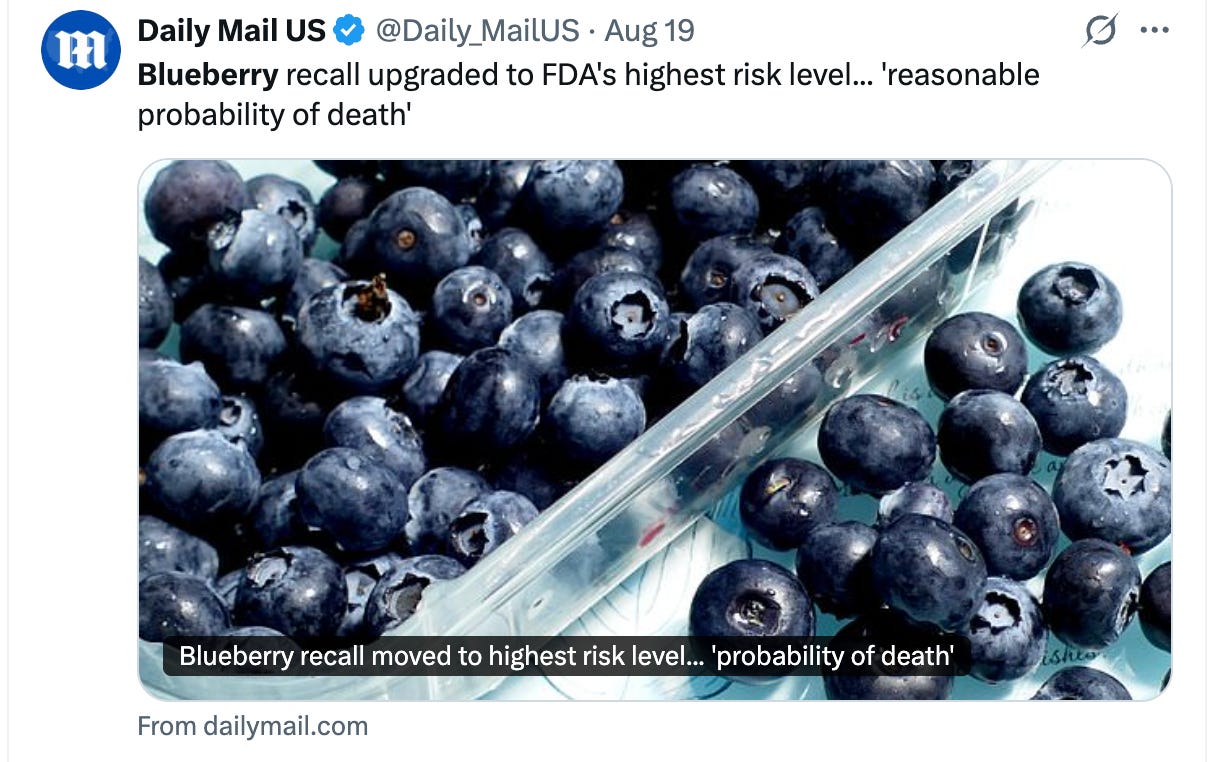
Returning to the United States after spending time abroad offers a jarring study in contrasts. Across Europe, stringent agricultural standards and consumer protections ensure that fresh food is accessible, safe, and governed by comprehensive regulatory oversight. By contrast, re-entering the American domestic landscape often highlights the tangible consequences of systemic administrative rollbacks.
Public health safety nets in the United States face unprecedented strain. A surge in nationwide food recalls—ranging from contaminated produce to foreign object contamination in consumer products—underscores a severe breakdown in federal oversight. Rather than an anomaly, these occurrences represent the predictable output of systematic deregulation, corporate cost-cutting, and a political ecosystem that prioritizes administrative loyalty over functional governance.
The primary function of executive regulatory agencies—such as the Food and Drug Administration (FDA) and the Department of Agriculture (USDA)—is to maintain a baseline of public safety. When policy directives deliberately weaken these agencies in favor of broad corporate deregulation, the consumer bears the physical and financial risk.
Systemic Recall Spikes: The recent uptick in severe food recalls, including hazardous pathogens in frozen fruits and industrial contaminants in household staples, directly correlates with diminished inspection frequency and weakened compliance mandates.
The Cost of Governance Breakdown: Stripping regulatory bodies of their enforcement capabilities does not generate market efficiency; it shifts the burden of risk directly onto the public. When oversight is branded as unnecessary bureaucracy, essential checks on manufacturing and agricultural processing disappear.
Infrastructure Neglect: Beyond food safety, municipal failures—such as multi-day grid collapses in working-class communities and inadequate disaster responses—reflect a broader pattern where vital infrastructure is allowed to deteriorate while administrative focus is diverted elsewhere.
While regulatory frameworks erode, the surrounding political discourse is frequently occupied by personal loyalty tests, internal staff dynamics, and managed spectacles. The contemporary news cycle often prioritizes the interpersonal drama of executive aides and palace intrigue over substantive policy failures.
This dynamic serves a structural purpose: it draws media focus away from actionable policy critique and directs it toward low-stakes, highly sensationalized narratives. When media coverage centers on loyalty dynamics within an administration rather than the operational breakdown of federal agencies, public accountability is effectively bypassed.
When political figures challenge this reality—pointing out the absurdity of neglecting basic governance in favor of personal optics—the response from political echo chambers is rarely a defense of policy. Instead, it is an aggressive attempt to reframing critique as personal hostility, deflecting from the original institutional critique.
A persistent gap exists between the priorities of corporate media outlets and the material needs of the electorate. During televised interviews with emerging political figures, mainstream framing often relies on ideological litmus tests designed to generate soundbites rather than address structural issues.
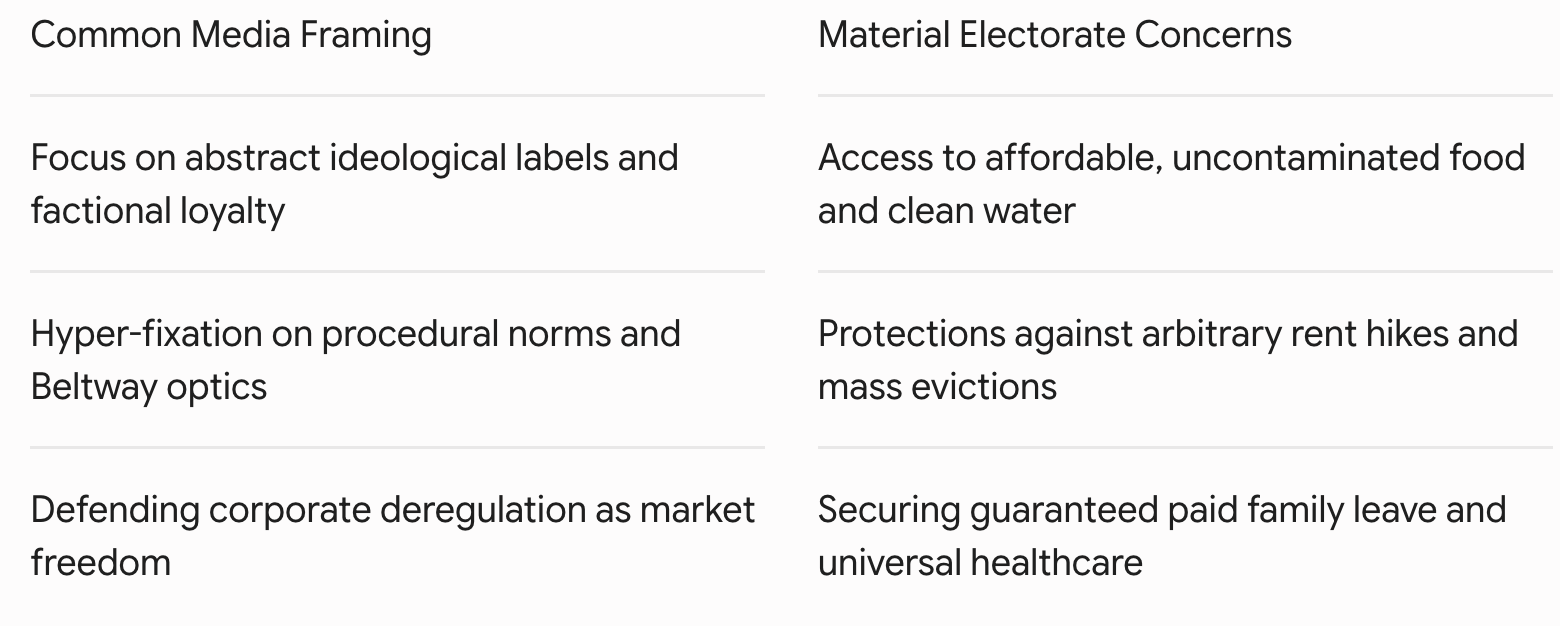
When candidates are pressed on institutional platforms rather than their concrete proposals for local constituents, it highlights how out-of-touch centralized political journalism can be. Electors across the country consistently demonstrate that they are less concerned with partisan labels than with immediate solutions to economic instability and failing infrastructure.
Despite systemic resistance from both major political parties and established donor networks, grassroots movements continue to demonstrate that voters respond to clear, material platform goals. Recent legislative primary victories illustrate that organized community action can overcome significant financial disadvantages.
When political campaigns focus directly on working-class priorities—such as healthcare access, tenant protections, and corporate accountability—they build coalitions that bypass conventional party machinery. The success of these campaigns proves that the electorate is increasingly skeptical of status-quo governance that shields corporate interests while fundamental public protections collapse.
The ongoing erosion of public safety standards, paired with the distraction of political theater, presents a clear challenge to the electorate. A functioning society cannot operate when basic necessities—food, water, electricity, and health infrastructure—are compromised by ideological deregulation.
Rebuilding effective governance requires a shift in priority: away from corporate leniency and performative politics, and toward strict regulatory enforcement, robust public investment, and leaders who prioritize institutional integrity over partisan loyalty. Until public safety is restored as a non-negotiable duty of the state, the cost of deregulation will continue to be paid by everyday citizens.
***Because I’m a terrible capitalist, here’s a great 25% off discount for new paid subscribers. It’ll only be about $3.75/month or $38/year.
There are no paywalls, and The Left Hook continues depending on the kindness of our readers
Thanks for reading The Left Hook with Wajahat Ali! This post is public so feel free to share it.
Thank you Lev Parnas, Deuce Davis, Robin Payes, LeftieProf, Rasha Refaie, and many others for tuning into my live video with Danielle Moodie! Join me for my next live video in the app.

Available for iOS and Android
Comments
Nothing yet. Say the first thing.
Sign in to join the conversation.