
I’ve been gardening for decades, and like everyone who does, I’ve developed strong preferences along the way. But in the last few years, as my ecological education has advanced, I’ve become more and more committed to native plants, which has led me to experiment with a whole host of new species.
The reason for this commitment is simple: a “native” plant is one that co-evolved within the web of life found in a specific place. Over those thousands of years of evolution, that web of life becomes immeasurably intricate, its interdependencies so varied and elaborate and complex as to vastly exceed our comprehension.
This goes far beyond pollinators and songbirds. It includes the boundless and barely understood relationships that exists beneath the soil, where the unfathomably complicated interplay between bacteria, fungi, and roots--among many other variables--unfolds. It includes the biochemical byproducts of leaf litter decomposition under local conditions: the tannins, phenols, VOCs, and nutrients unique to each plant, and how they interact with insects, animals, fungi, microbes, and other plants. It includes the innumerable chemical signals constantly sent out by plants--totally invisible to us--which communicate life-or-death information to a multitude of creatures in the local ecosystem.
For these reasons and many, many more, native plants are the bedrock of healthy ecosystems, even if many of their contributions aren’t obvious to us. We depend on them, and in the world we live in today, they depend on us.
So I’m very committed to native plants, and I think you should be, too. Since my focus is on creating healthy ecosystems in which humans serve a regenerative role, I’ve spent a lot of time lately testing edible native species. In the interest of sharing what I’ve learned so far, I’ll be writing a series of newsletters profiling different edible native plants with which I’ve had success. I’ll continue this series with a new species each time, grounded in my own experience cultivating and eating them.
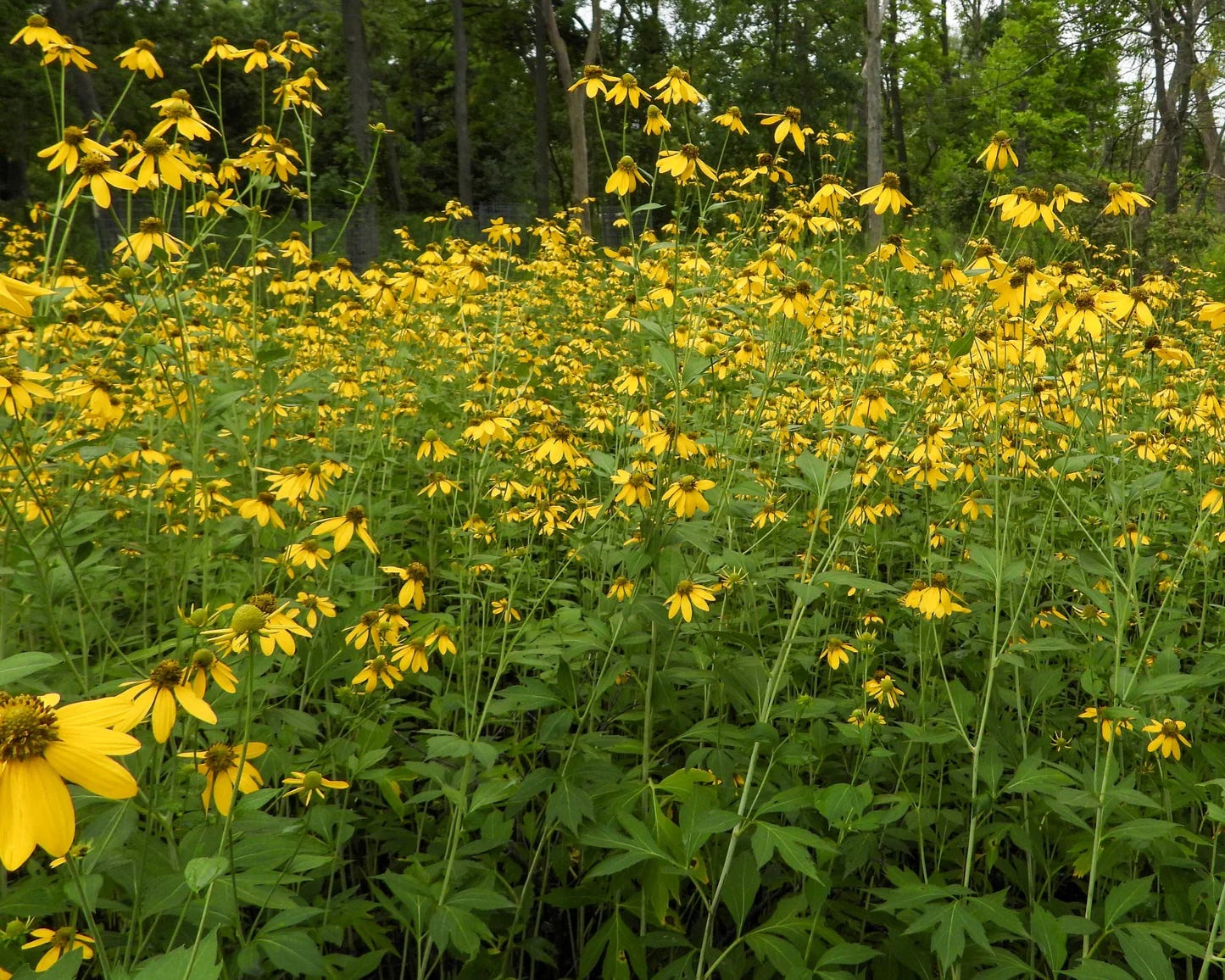
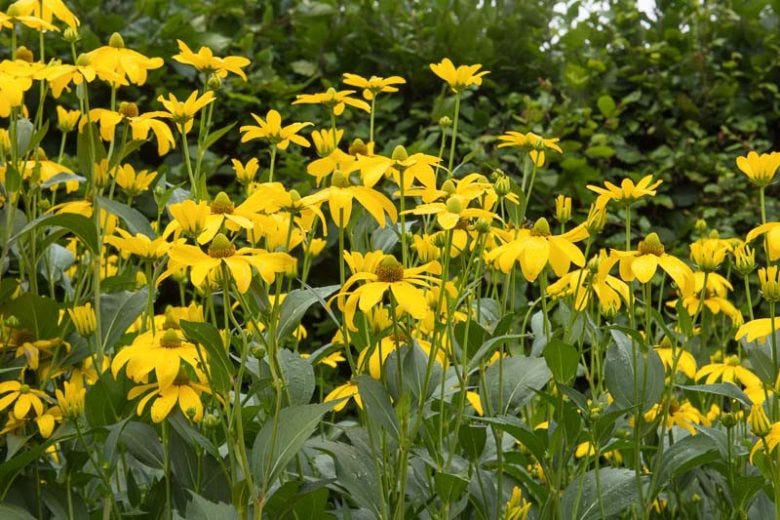
A stunningly gorgeous wildflower native to most of North America, it’s also known as sochan or Wild Golden Glow. It served as a cornerstone of the Cherokee diet for millennia, before falling into obscurity post-colonization, a trend that is now fortunately changing.
Here’s the crux of my argument: Cutleaf Coneflower should be far, far more common than kale. It’s a perennial greens producer par excellence, both in flavor and yield, on top of being a stunningly beautiful and valuable plant in its native range.
Here’s how to eat it, grow it, and harvest it, so you’ll get massive yields with minimal effort for many years to come.
Comments
Nothing yet. Say the first thing.
Sign in to join the conversation.