
Sponsored by Altra
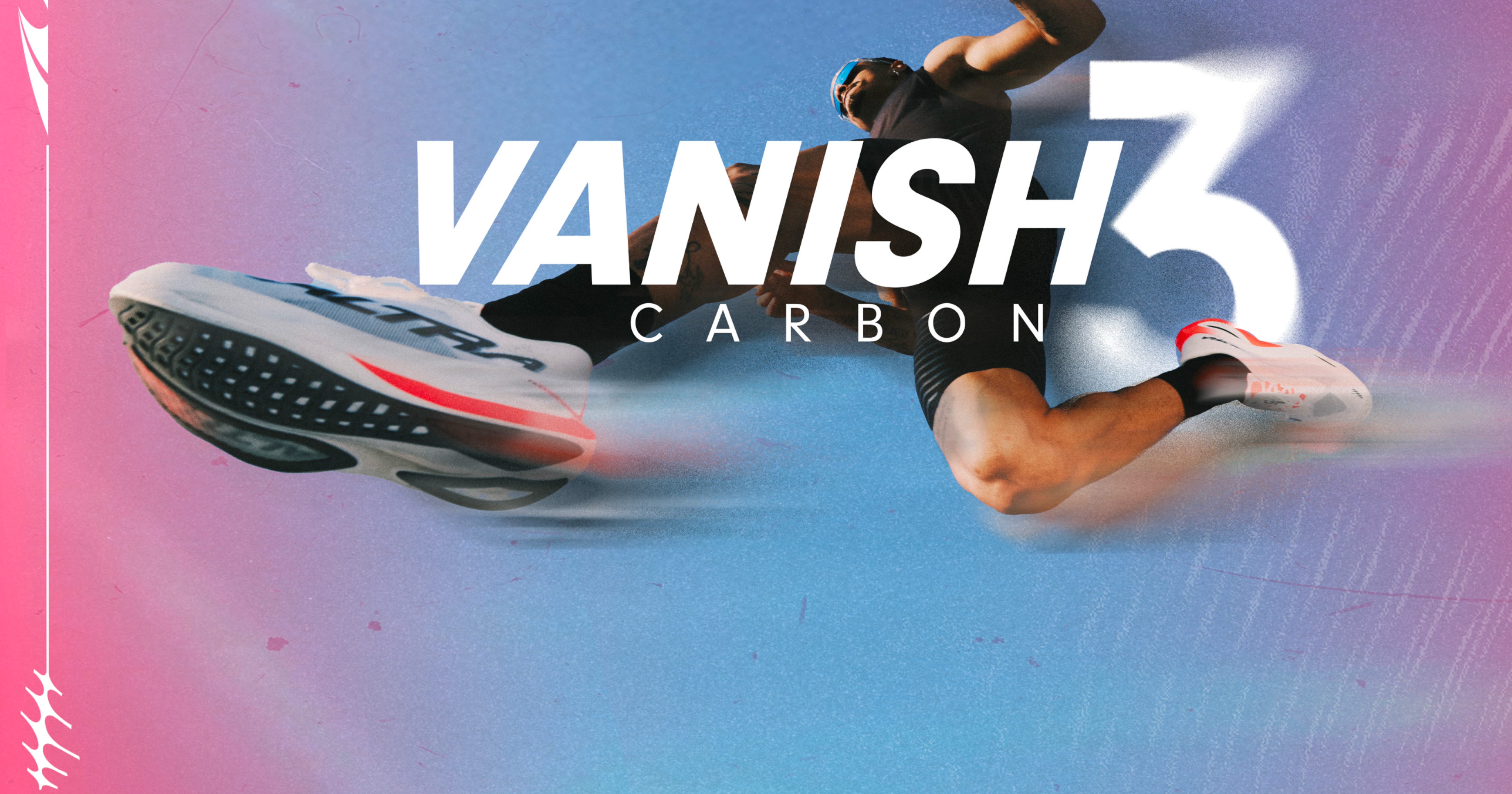
The new Vanish Carbon 3 was built for race day. A patent-pending split-toe carbon plate delivers the rigidity you need for speed while letting the big toe engage in a more powerful way. Underneath it, a supercritical two-piece full PEBA foam — Altra’s lightest and most responsive ever. And Altra’s Racing FootShape leaves room for your toes to splay and generate power.
The result: a 2.6% running economy improvement over the Vanish Carbon 2, rivaling the current super shoes on the market.
Don’t just run. Vanish. Head to AltraRunning.com and use code CITIUS10 for 10% off your first purchase.
Compiled by David Melly, Paul Snyder, & Kyle Merber
The Diamond League returned last week with a bang. Or two bangs, more precisely: one in Lausanne, Switzerland and another in Silesia, Poland, two days and a few hundred miles apart.
After weeks of national and regional championships where programs are broken up by rounds and padded generously to facilitate doubling, a return to the two-hour straight-final format felt a bit like drinking from a fire hose. (In a good way!)
It caused performances like Letsile Tebogo’s 19.87, Masai Russell’s 12.27, and Marileidy Paulino’s 48.87 to fade into the background—not because they weren’t impressive, but because they were simply expected returns to form after a month off. Paulino, especially, deserves a few more flowers, as she clocked her sixth straight 48-second performance, something no woman in history has ever done.
Something else noticeable was the immediate and dramatic impact that the return of American and Caribbean athletes to the scene had on the dynamics of many events. Commonwealth Games and European Championships are fun because they showcase a subset of performers who don’t normally shine, particularly in the sprints, but the full come-one, come-all Diamond League format was a reminder that the sport is at its best the more global it is.
Rai Benjamin tested something resembling the schedule he may take on at World Ultimates, running 46.67 in the 400m hurdles on Friday in Lausanne then dipping under 44 seconds for the flat 400m for the first time, thanks to a duel with Collen Kebinatshipi. Benjamin ended up at 43.83 behind Kebinatshipi’s 43.56, a great showing from both men as the Motswana athlete picked up his fifth DL victory of the year and Benjamin moved to #3 on the 2026 descending order list in his secondary event.
Speaking of hurdlers: the U.S. men have a streak even longer than Kebinatshipi’s going. The last 14 winners of the 110m hurdles at DL races have all been American, the two most recent being Jamal Britt in Lausanne (13.13) and Ja’Kobe Tharp in Silesia (13.05). Tharp led a dominant 1-2-3-4 finish of U.S. hurdlers, which is impressive in and of itself… until you remember that the most decorated American hurdler of the last decade doesn’t even include Grant Holloway.
Kayla White beat European champ Amy Hunt in the 200m and Oblique Seville stared down Kenny Bednarek in a record-setting 100m, where for the first time in history all nine finishers broke 10 seconds. Of that group, five are from the Western Hemisphere and four hail from Africa. Lachlan Kennedy, the fastest Australian in history and Commonwealth silver medalist, was the first man out of the final. The man who beat him, Emmanuel Eseme, finished ninth in both the qualifying and the final. This isn’t to diminish the accomplishments of the athletes who’ve spent much of August satisfyingly entertaining us, but to highlight just how worthwhile the reunification of the sprinting fields has been.
But there were three events in particular where the thrill wasn’t just the results themselves, but what they suggest about the races to come, namely the Diamond League final and the World Ultimate Championships—plus another great meet tomorrow in Zurich.
Let’s start with the women’s 800m, an event we’ve (rightfully) spilled plenty of ink on already. Audrey Werro continued doing Audrey Werro things. She put on a show for the home crowd in Lausanne with a 1:55.33 victory, leading two of her countrywomen to top-five finishes as well, which suggests that a nation of 9 million residents may have a good shot one day at the world record in the 4x800m. It’s almost comical how routine Werro has made 1:55 seem this season, especially when you consider that one year ago this week was the first time she’d ever cracked 1:57.
No, the big news wasn’t that Werro won, or that she ran fast. It was the margin by which she broke the tape: just 0.08 seconds ahead of Femke Broeders-Bol, who claimed sole possession of the Dutch national record in 1:55.41, another personal-best. Coming down the homestretch, Werro tapped into the same strength she displayed in holding off Keely Hodgkinson to win in Birmingham, but Broeders-Bol looked even stronger, reeling her in and nearly pipping her at the line. It’s one thing for a 400m runner to move up in distance and enjoy some success; it’s quite another for her to close her final 100 meters in 14.8 seconds, faster than anyone else in a world-class field.
Unfortunately, the reunion of Werro, Broeders-Bol, and Hodgkinson will have to wait as the Olympic champ withdrew from Zurich. But fear not! We’ll get a Femke-Audrey rematch with the extra zest of World silver medalist Georgia Hunter Bell, herself a sub-1:55 runner. Now we get to see where Broeders-Bol stacks up against the Commonwealth Games champ, who hasn’t lost an 800m all year (although she’s only raced three). And based on how the end of that race in Lausanne played out, that 0.08 second gap may shrink even more, or *gasp* disappear entirely—and then we’ll truly have a flip of a three-sided coin on offer for World Ultimates and beyond.
Another event where the intrigue continues to build is the men’s 1500m. Last week, we asked a simple but open-ended question: “WTF is going on?” And after Silesia… we could say the same thing.
Jakob Ingebrigtsen and Cole Hocker made their highly-anticipated returns to the circuit after both battling setbacks earlier in the year (okay… in Ingebrigtsen’s wasn’t a setback so much as a two-year derailment via Achilles injury). For the first two-thirds of Sunday’s race, it looked like they’d Freaky-Friday’d each other, with Hocker getting out on the pacers’ heels early and Ingebrigtsen buried in the crowd, hoping to trust his kick. By the bell lap, Ingebrigtsen had made his way to the front, but he ended up a little boxed coming off the final turn as Phanuel Koech hit the front and then the rail.
All that jockeying for position shuffled Hocker backward while opening a lane for a perfectly-timed kick from 23-year-old Ethan Strand, who slingshotted onto the homestretch and put daylight between himself and the rest of the world en route to a 3:30.77 victory—the first of his short pro career on the DL circuit.
Regardless of who you’re rooting for in this field, this was probably the best-case scenario from a narrative standpoint. Hocker and Ingebrigtsen still finished well—finishing third and fourth, respectively, in a pair of 3:31s—but neither man has the pure fitness nor tactical prowess at the moment to dominate like they can at their best. They’ll go into tomorrow’s race against each other, Timothy Cheruiyot, and Yared Nuguse encouraged knowing they’re healthy and capable, but plenty hungry.
Strand, for his part, continues to show flashes of world-beating brilliance that suggests he’ll have a long and fruitful professional career—and one that may start delivering medals sooner rather than later. As his seventh place, 3:49.13 finish in London showed, he’s not quite at the level of racing the best milers in the world at their best at any time… but he’s getting there, improving in both confidence and consistency. Should he race his way into the Diamond League final (likely) or the World Ultimate Championship (less likely, but possible), it’s clear that his range of outcomes now includes winning.
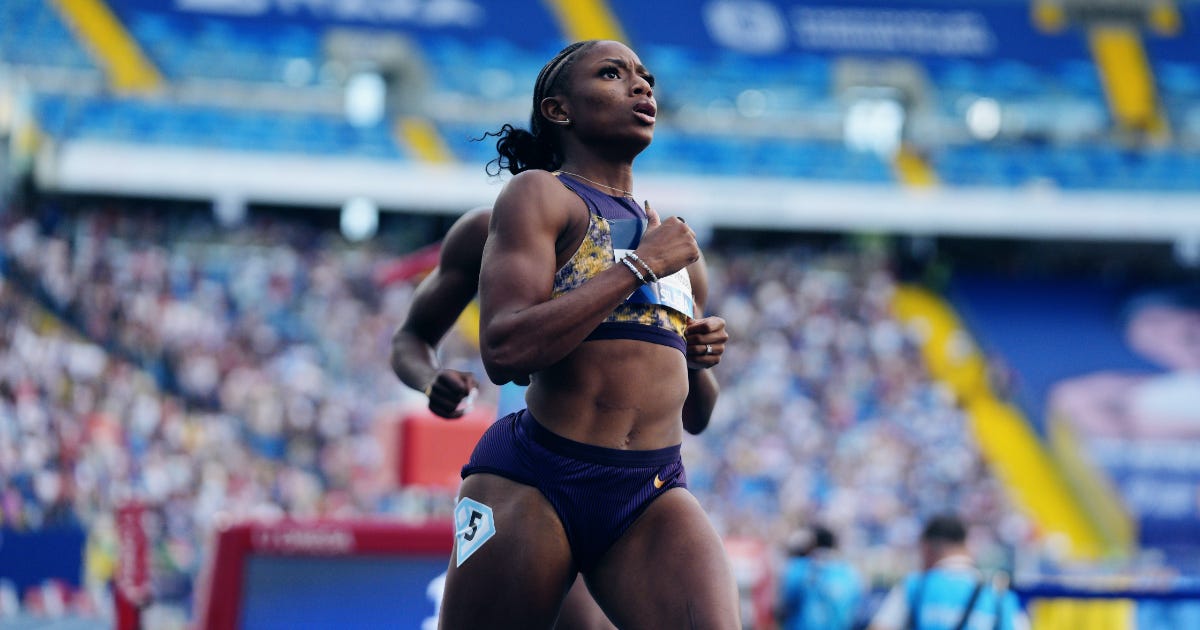
Last, but certainly not least, the excitement coming out of Silesia could all come down to a very critical 0.05 seconds. That’s the margin by which Melissa Jefferson-Wooden, the World champion, beat Julien Alfred, the Olympic champion, in the 100m. That being said, Alfred’s reaction time to the starting gun was 0.04 seconds slower than MJW’s, meaning that the two sprint superstars covered 100 meters in nearly the same exact time. The detailed results show that Alfred and Jefferson-Wooden were between 0.03 and 0.05 seconds apart at every 10-meter checkpoint in the race, confirming what the eye test tells us: these two athletes are so, so close in ability right now that every time they line up it’s going to be a battle of inches.
That being said, Jefferson-Wooden has not lost a 100-meter race since the Paris Olympic final two years ago. So while the margins are small, there’s an undisputed #1 sprinter in the world right now. But for how long? It’s also worth mentioning that Sha’Carri Richardson finished third in what she called her “worst race of the season,” and the U.S. champ was 0.01 seconds behind her training partner at Pre. They’re also 0.01 seconds apart by season’s best (Richardson is ahead at 10.77), and even though they just raced head-to-head-to-head, it doesn’t feel like those results are set in stone. Quite the opposite.
Should Richardson and Alfred bring their best stuff, MJW will in turn need to bring her best stuff to stay undefeated, which means that results with multiple runners under 10.70 feels like a distinct possibility. That’s only happened once before in history, when Shelly-Ann Fraser-Pryce beat Elaine Thompson-Herah in Lausanne in 2021, shortly after the latter’s second Olympic title. That was a race between two of the all-time greats at the top of their games, and yet it doesn’t feel like hyperbole to say that we might see something similar before the year is out.
One of the oldest adages in showbusiness is that you want to leave the audience wanting more, and last weekend’s results did just that. Putting on a performance that doesn’t let down the crowd and makes them even more excited to shell out for tickets to the next one is a tricky kind of alchemy, but that’s exactly what Silesia and Lausanne delivered. Sure, we were drinking from the firehose earlier, but we’re still thirsty, and that’s going to make the next few weeks of track and field very satisfying.
Rules were made to be broken, especially if you’re the one who made the rules. That seemed to be what the legal minds at World Athletics thought when they carved out a near-perfect loophole: “what if we put in a rule that says Seb Coe can do whatever he wants?” They gave him nearly unlimited power to dictate the fields at the World Ultimate Championships… but they should have given him more!
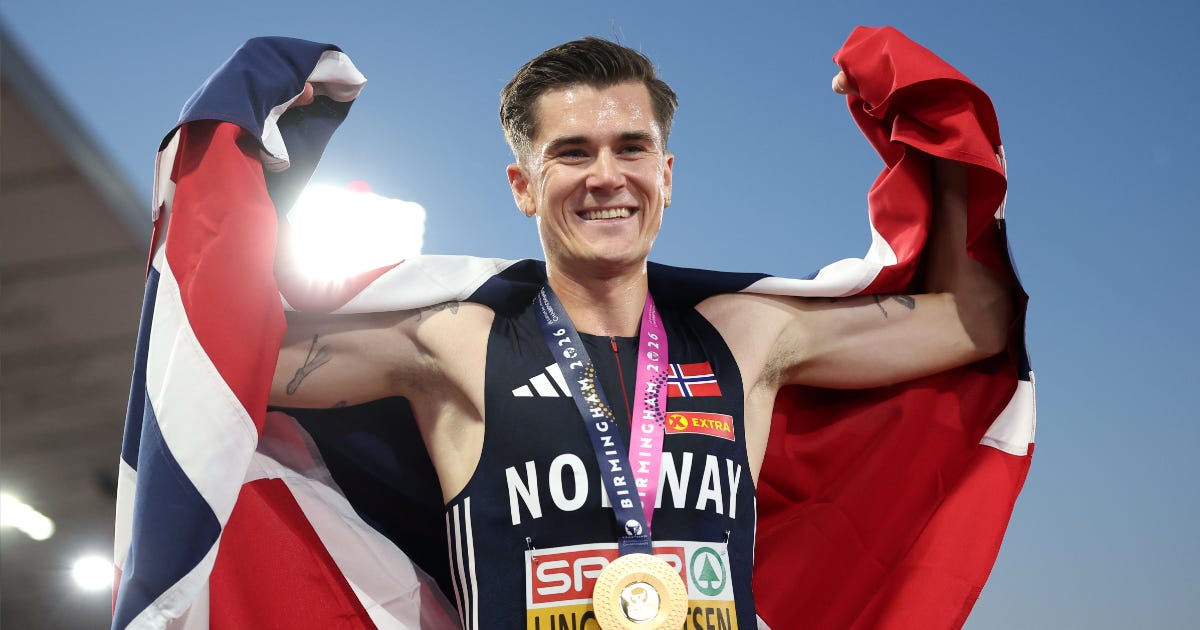
The Exceptional Invitation to World Ultimates was intended to max out at one per event. But we quickly learned, well, it wasn’t enough. Aside from a cohort of Hungarian athletes—given spots as thanks to Budapest for hosting the party—and a well-deserving Gianmarco Tamberi in the high jump, there was an impossible decision for Coe to make: Josh Kerr or Jakob Ingebrigtsen? So he just said “screw it, let ‘em both in.”
Although the field has been expanded to 13 athletes to avoid bumping someone deserving out, surely the likes of Ethan Strand and Phanuel Koech are wondering, “what about me?” But for the large majority of fans the Kerr and Ingebrigtsten news was received quite warmly because it’s a match-up that we all want to see—given their rivalry, the presence of both in the race adds some serious spice in addition to even more talent. And with this decision World Athletics is giving us a nod and a wink to remind us: this is an entertainment product!
Given the precedent and bylaws surrounding the Olympics and World Championships, this sort of leniency would never fly at a regular global championship. But Ultimates is not about fairness and should you need a reminder of that then just ask the shot putters, who will be watching from the couch like the rest of us. Even at its least conventional, track and field is thankfully not the Savannah Bananas. The competition itself is still serious. But with this move, we are veering into UFC territory, which is very popular.
A fascinating byproduct of Ultimates being an exclusive event is the lack of quotas by country, meaning entries aren’t limited to three. Depending on what matters to each individual fan—or perhaps just where they’re from—that might lend them to interpret this lack of diversity as a good or bad thing. The good is all the best athletes will be there. The bad is some major markets like Japan, China, Germany, and Brazil, will suddenly have a fraction of the presence they’d be accustomed to.
Let’s compare the number of athletes that competed at 2025 Worlds vs. those projected to be at Ultimates:
Japan - 70 down to 3
Germany - 63 down 5
China - 57 down to 2
Brazil - 42 down to 3
Not including relays, the U.S. leads the way with 64 athletes, then Jamaica (28), Great Britain (17), Australia (13), Ethiopia (13), Kenya (12), and France (11).
This newsletter has long argued that every season should start as a clean slate with no performances from previous years carrying over for automatic bids or ranking points. But this year is different—it’s headlined by a new event that unequivocally NEEDS the stars to show up to establish its long term viability. Hence all the different paths being taken to ensure they’re there.
To aid with that, World Athletics has gotten creative. There isn’t another professional sport that is embedding its own stars into the production of the event like this, with Mondo Duplantis singing the theme song, Noah Lyles hosting the after party, Tara Davis-Woodhall leading the content creation. If we may adjust our tinfoil hats for a moment, the compensation those athletes will receive for work provided is definitely NOT an appearance fee!
All that to say, Citius Mag has booked its flights and will be on the scene with enthusiastic coverage. And we are going in with an open mind for future iterations, which will likely evolve to improve. With that said, regardless of any hiccups in its first go-round, World Ultimates is gonna feature some incredible competition.
With just over two weeks to go, here are the top storylines that have us most excited for Budapest:
The Olympic 1500m Rematch: Who doesn’t love a re-run? Obviously with the top four finishers—Hocker, Kerr, Yared Nuguse, and Ingebrigtsen—now all in, we’re dying to witness a second crack at one of the greatest 1500m races in history. Can Kerr hold on? Is there enough time for Jakob? Will Cole peak again? And can Yared get his turn?
A New Queen Crowned: Unfortunately, Faith Kipyegon had to call it a season due to health issues, however, without the three-time Olympic and four-time World champion in the field, it opens the door to an heiress. Georgia Hunter Bell has won three major golds already this year, Tsige Duguma is figuring out the 1500m quickly, Jess Hull is always right there, and Nikki Hiltz is Nikki Hiltz.
Double Trouble: 90 seconds. That’s what Rai Benjamin’s personal bests at the 400m Hurdles (46.17) and open 400m (43.83) add up to. It may not sound like much, but he’s going to have to race four times in three days if he’s going to come away with the $300,000 he’s eligible to earn. Benjamin dominated his only 400m Hurdles race in Lausanne, but he has yet to face Alison dos Santos or Karsten Warholm this year. Meanwhile, Collen Kebinatshipi is 3-0 against him on the flat, but one could argue he’s still figuring out the event.
What do these plotlines have in common? They’re dependent on enticing the best to show up, the rest be damned. If there’s one rule World Athletics appears to be committed to sticking to, it’s “quality over quantity.” Exceptional exceptions may not be fair in the letter-of-the-law sense, but they’re effective tools in service of delivering the best possible product, which World Ultimates is designed specifically to present.
At the end of the meet, track and field fans—especially the casuals we’re desperate to turn into diehards – won’t be thumbing through the terms and conditions to decide whether or not they enjoyed the meet; they’ll be thinking about the races themselves and how satisfied they, as viewers, feel. By that measure, bringing Josh and Jakob back together is a move that falls squarely between the lines.
– After trying to muscle out a bad joke about the Coriolis effect making the second hands on the clock move in the opposite way, we’re giving up and presenting this information sans goof: Yomif Kejelcha lowered the half marathon world record in Buenos Aires to 56:51. He’s the first man under 57 minutes in an official performance – second, if you count Jacob Kiplimo’s 56:41 that was later invalidated because he ran too close to the pace car.
– After being hospitalized following a scary collapse at a June community track meet in North Carolina, Jenny Simpson has shared the details of her medical diagnosis and what the future holds for her.
– Girmawit Gebrzihair and Isaia Kipkoech Lasoi were the outright Antrim Coast Half Marathon champions, going 1:06:12 and 58:26, respectively. Meanwhile, Galen Rupp was the over-40 American champion in 1:01:30. In doing so he snagged the U.S. master’s record from Bernard Lagat. And one last fun fact: he placed one spot behind fellow Oregon Duck legend Edward Cheserek, who finished ninth in 1:01:27.
– This fall’s New York City Marathon elite fields have been announced and there’s plenty to be excited about. The obvious headliners are returning champs Hellen Obiri and Benson Kipruto, but we’ll also get a look at most of the top American women and men, Sifan Hassan, plus the debut of Andreas Almgren.
– On a modified course—altered due to wildfires—at the Leadville 100 Miler, Adrian McDonald (15:47:23) picked up his third win in the men’s race, and McKendree Hickory broke the tape in the women’s race 19:39:12, which also made her the 10th finisher overall.
– The World Ultimate 1500m crown is officially up for grabs for unfortunate reasons, as Faith Kipyegon has shut her season down after struggling through several races with a hamstring injury.
– It turns out that last week’s Edmonton Marathon was 674.7 meters long. Congratulations to every single finisher on your new 42.8427 kilometer PB!
– Aleia Hobbs has accepted a six-month ban from USADA for receiving an intravenous infusion of saline while not qualifying for a TUE.
Interested in reaching 20,000+ dedicated runners and track and field fans? Advertise with us here.
No posts
Comments
Nothing yet. Say the first thing.
Sign in to join the conversation.